Peneiramento de Pó Metálico: Como Escolher o Tamanho da Malha, o Tipo de Tela e o Sistema de Proteção
Escolher um sistema de peneiramento de pó metálico exige mais do que combinar um pó a um número de malha. A solução correta depende da distribuição granulométrica desejada, da fluidez do pó, da capacidade necessária, dos limites de contaminação e de riscos como oxidação, eletricidade estática ou poeira combustível. Peneiras vibratórias convencionais são geralmente adequadas para pós de fluxo livre e separação mais grosseira, enquanto sistemas ultrassônicos são mais eficazes para pós finos, coesivos ou eletrostáticos. Pós reativos também podem exigir construção selada, proteção com gás inerte, aterramento e componentes à prova de explosão.
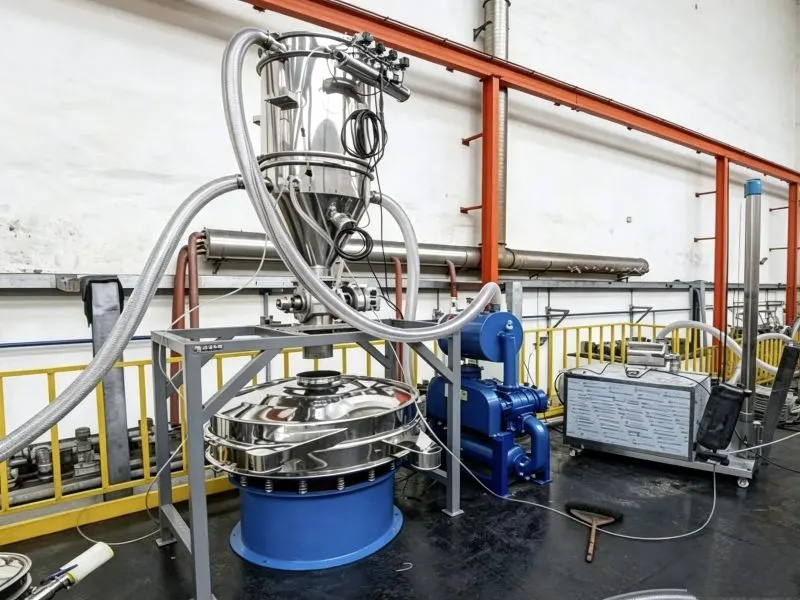
O que é o peneiramento de pó metálico?
O peneiramento de pó metálico é usado para controlar o tamanho de partícula e manter o pó limpo e consistente. Ele remove material estranho e partículas superdimensionadas, desfaz grumos macios e separa o pó na faixa de tamanho necessária. Também pode recuperar pó reutilizável e proteger processos posteriores, como prensagem, sinterização, aspersão térmica e manufatura aditiva.
Classificação, peneiramento de segurança e recuperação de pó
O peneiramento de pó metálico geralmente atende a três propósitos:
- Classificação: Separa o pó em diferentes faixas de tamanho de partícula para atender aos requisitos de produção.
- Peneiramento de segurança: Remove material estranho, partículas grandes e aglomerados indesejados antes do próximo processo.
- Recuperação de pó: Recupera pó utilizável deixado após impressão 3D ou outros processos de produção, ajudando a reduzir o desperdício de material.
O tamanho de malha necessário e o método de peneiramento dependem das propriedades do pó, do tamanho de partícula desejado, da capacidade de produção e dos requisitos de segurança.
Quais informações são necessárias antes de selecionar um sistema de peneiramento?
Antes de selecionar um sistema de peneiramento de pó metálico, você precisa entender tanto as propriedades do pó quanto os requisitos de produção. Esses fatores determinam o tamanho de malha correto, o tipo de tela, a capacidade da máquina e o sistema de proteção. Selecionar equipamentos apenas com base no nome do metal ou na malha desejada pode resultar em baixa capacidade, entupimento da tela ou problemas de segurança.
Propriedades do pó metálico
Diferentes pós metálicos se comportam de maneira diferente durante o peneiramento. Propriedades importantes incluem:
- Densidade aparente: Afeta o carregamento da tela, o movimento do material e o tamanho necessário da máquina.
- Fluidez: Pós de fluxo livre são mais fáceis de peneirar, enquanto pós com baixa fluidez podem permanecer na superfície da tela.
- Forma da partícula: Partículas esféricas, irregulares e lamelares passam pela malha de maneiras diferentes.
- Eletricidade estática: Pós finos podem aderir à tela e reduzir a capacidade.
- Aglomeração: Grumos macios podem bloquear a malha ou afetar a precisão do tamanho de partícula.
- Risco de oxidação: Alumínio, magnésio, titânio e outros pós reativos podem exigir equipamento selado ou proteção com gás inerte.
- Valor do material: Pós de ligas de alto valor ou metais preciosos podem exigir um sistema fechado para reduzir perda de material e contaminação.
Tamanho de partícula e requisitos de produção
A faixa de tamanho de partícula necessária e a meta de produção também devem ser confirmadas. Informações importantes incluem:
- Distribuição granulométrica atual, incluindo D10, D50 e D90
- Ponto de corte necessário em mícrons
- Níveis aceitáveis de partículas superdimensionadas e subdimensionadas
- Capacidade necessária por hora
- Número de frações de tamanho de partícula
- Operação em batelada ou contínua
- Limites de limpeza e contaminação cruzada
Essas informações fornecem a base para escolher o tamanho de malha, o equipamento de peneiramento e o sistema de proteção.
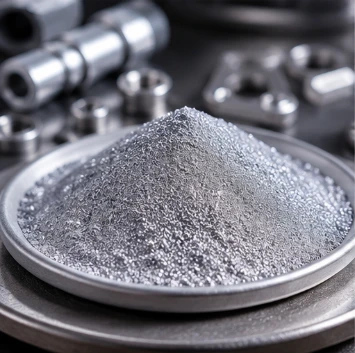
Como escolher o tamanho de malha correto
O tamanho de malha correto depende do tamanho de partícula desejado, da distribuição do pó e da capacidade necessária. Primeiro, decida quais partículas devem passar pela tela e quais partículas devem ser removidas. Em seguida, selecione a abertura da tela em mícrons. Para pós metálicos finos, o tamanho em mícrons geralmente é mais preciso do que o número de malha.
Pós metálicos podem ser descritos pelo seu tamanho de partícula:
- Pó convencional: 50–1.000 μm
- Pó fino: 10–50 μm
- Pó muito fino: 0.5–10 μm
- Ultrafine powder: Below 0.5 μm
- Nano powder: 0.1–100 nm
These ranges are general references and may vary between industries.
Mesh Size vs Micron Size
Mesh number shows how many openings are present in one inch of screen. A higher mesh number normally means a smaller opening. Micron size shows the actual opening or particle size more directly.
The same mesh number may have slightly different opening sizes because of wire diameter and screen standards. For this reason, fine metal powders should be specified in microns whenever possible.
Common Mesh-to-Micron Reference
| Mesh | Microns (μm) | Mesh | Microns (μm) |
|---|---|---|---|
| 20 mesh | 830 | 200 mesh | 75 |
| 40 mesh | 380 | 325 mesh | 45 |
| 60 malhas | 250 | 400 mesh | 38 |
| 80 malhas | 180 | 500 mesh | 25 |
| 100 mesh | 150 | 800 mesh | 18 |
| 140 mesh | 106 | 1,000 mesh | 13 |
The values are for general reference. Always confirm the actual screen opening before ordering.
Choose Mesh Based on Particle Size Distribution
Mesh size can be selected in three steps:
- Define the target particle size. Confirm the largest acceptable particle and the required powder range.
- Choose a starting mesh. A coarse mesh can remove large impurities, while a fine mesh can control smaller particles.
- Check the particle-size distribution. Use D10, D50 and D90 data when the powder size must be controlled more accurately.
Mesh size only defines the screen opening. It cannot fully describe the particle-size distribution. For example, metal powder used in additive manufacturing may have a specified range such as 15–53 μm. In this case, the complete particle-size distribution should be considered instead of converting the whole range into one mesh number.
Why Finer Mesh Is Not Always Better
A finer mesh does not always produce a better result. If the opening is too small, several problems may occur:
- Fine particles can block the screen.
- Screening capacity can fall.
- More usable powder may remain above the screen.
- The screen may require frequent cleaning.
- Very fine woven mesh may have a low open area.
For screening above 325–400 mesh, it is usually clearer to specify the required opening in microns. Fine, electrostatic or easily agglomerated metal powders may also require an ultrasonic vibrating sieve to reduce screen blockage and maintain a stable screening rate.
How to Choose the Right Screen Type
The right screen type depends on the powder size, flowability, required capacity and production process. Rotary vibrating screens are suitable for general screening, while ultrasonic vibrating sieves are better for fine powders that easily block the mesh. Linear and inline screens are used for higher capacities or continuous production lines.You can also compare different types of vibrating sieving machines before selecting a model for your process.
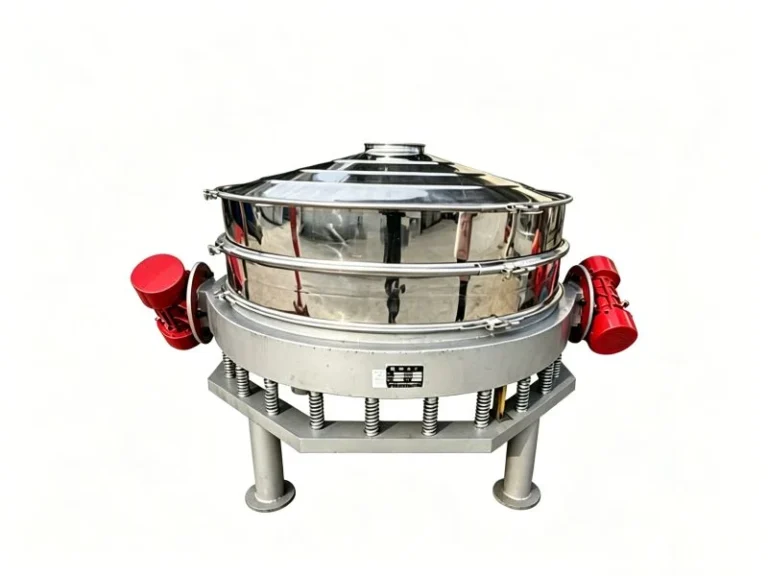
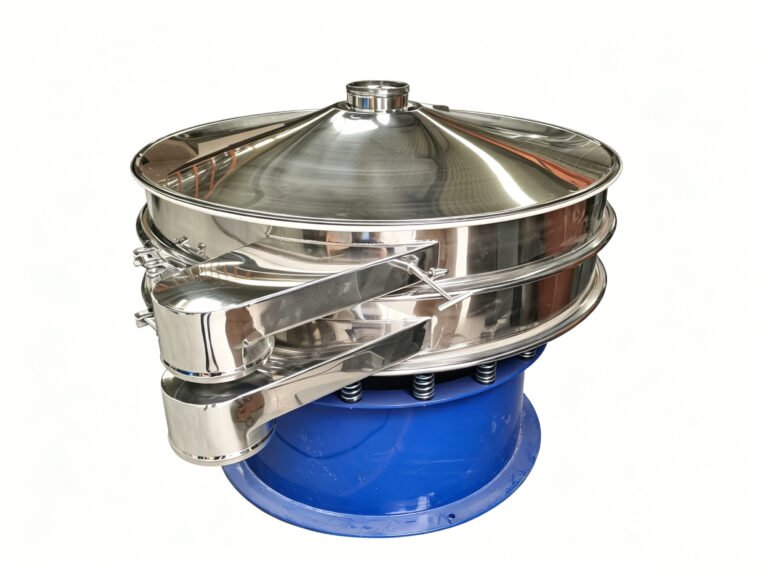
Peneira Vibratória Rotativa
A rotary vibrating screen is suitable for free-flowing metal powders and general particle classification. It has a compact design and can separate the powder into one or more particle size ranges.
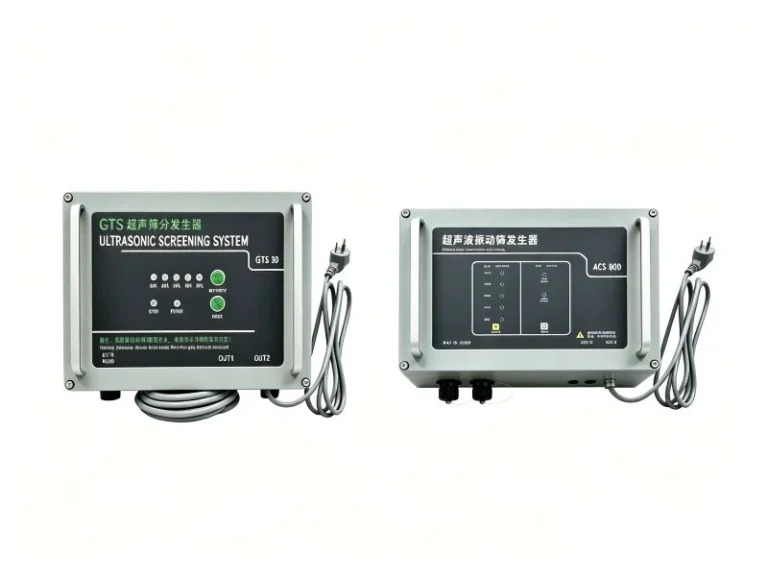
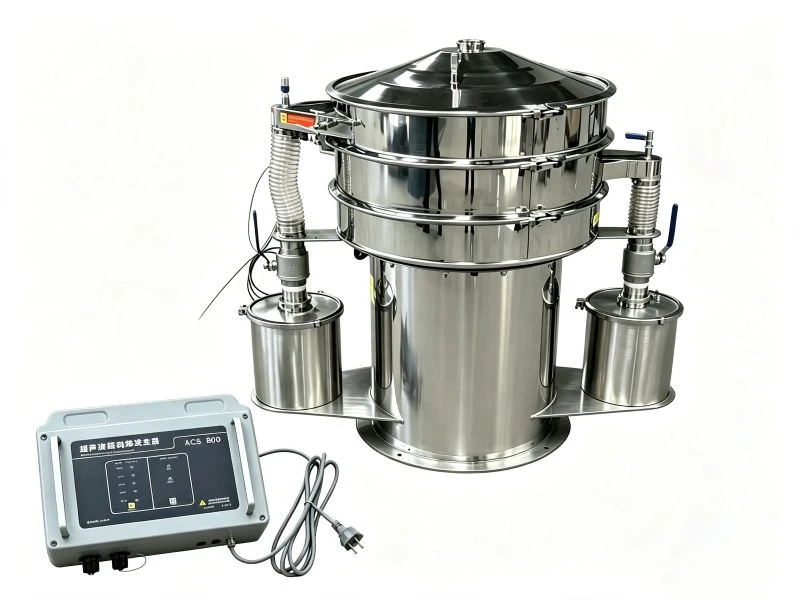
Peneira Vibratória Ultrassônica
Uma peneira vibratória ultrassônica is suitable for fine, electrostatic or easily agglomerated powders. The ultrasonic system reduces mesh blockage and improves screening efficiency.
Linear and Inline Vibrating Screens
A linear vibrating screen is suitable for high-capacity screening of coarse powders and particles. An inline vibrating screen is mainly used for safety screening in continuous production lines.
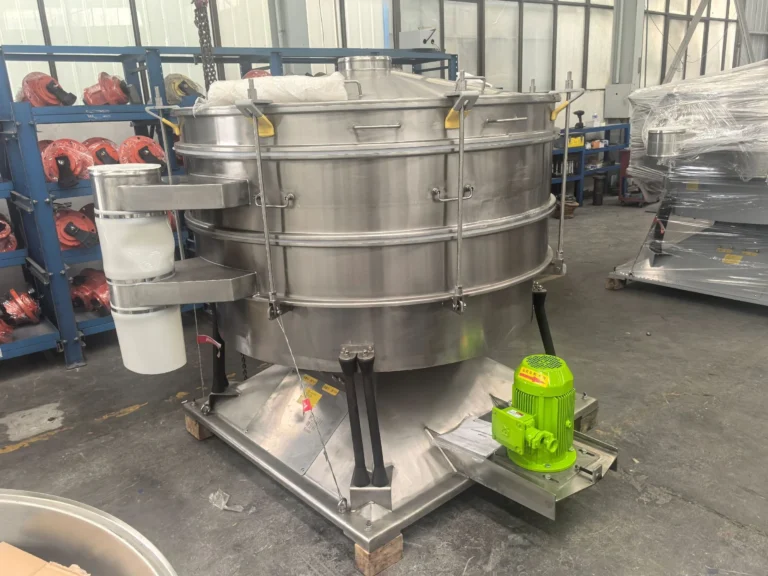
Single-Deck vs Multi-Deck Screen
A single-deck screen separates the powder into two particle sizes. A multi-deck screen can produce three or more particle size ranges in one process.
How to Choose a Protection System
The protection system should be selected according to the powder’s oxidation risk, dust characteristics, corrosion and safety requirements. A suitable system can reduce powder leakage, contamination, material loss and operating risks.
Sealed and Dust-Tight Design
Fine metal powders can easily escape into the working area. A fully enclosed screen with sealed inlets, outlets and covers helps control dust and prevents outside material from entering the product.
Inert Gas Protection
Aluminum, magnesium, titanium and some alloy powders may react with oxygen. For these materials, a sealed screening system can be filled with nitrogen or argon to reduce contact with air.
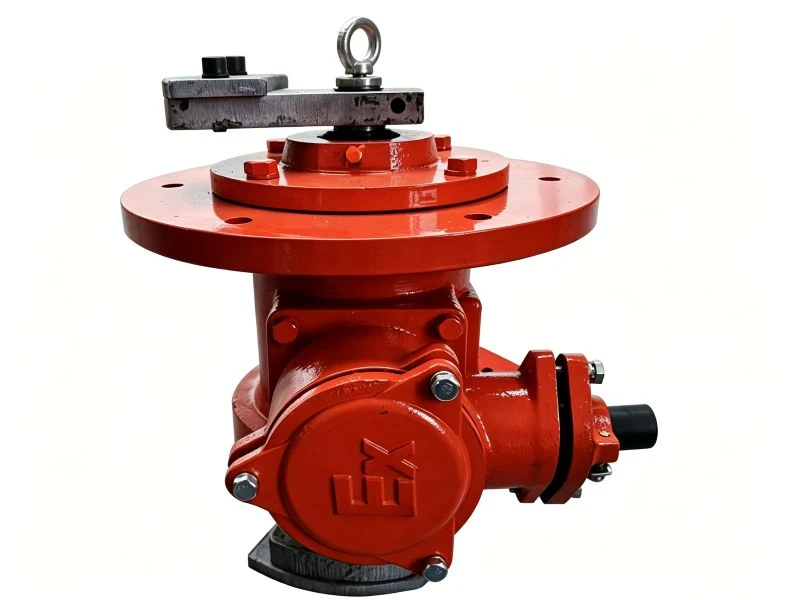
Explosion Protection and Static Control
Combustible metal powders may require explosion-protected motors and electrical parts. The machine, pipelines and connected equipment should also be properly grounded to reduce static buildup.
Contact Material and Contamination Control
Product-contact parts are commonly made of 304 or 316L stainless steel for corrosion resistance and easy cleaning. The screen should also be checked regularly for wear or damage to prevent particle mixing and product contamination.
Recommended Solutions for Common Metal Powders
| Powder or application | Main challenge | Recommended screen | Protection system |
|---|---|---|---|
| Iron and stainless steel powder | High density and screen wear | Rotary or linear vibrating screen | Dust-tight design and wear-resistant screen |
| Aluminum and titanium powder | Oxidation, static and combustible dust | Enclosed ultrasonic vibrating sieve | Inert gas, grounding and explosion-protected parts |
| Fine alloy powder | Agglomeration and mesh blockage | Ultrasonic vibrating sieve | Sealed design and static control |
| Additive manufacturing powder | Fine particle range and high recovery requirement | Precision ultrasonic vibrating sieve | Closed system and contamination control |
| Battery material powder | Fine particles, static and strict purity requirements | Ultrasonic vibrating sieve | Sealed construction and clean contact parts |
The final configuration should be based on the powder’s particle-size distribution, flowability, required capacity and safety assessment.More metal powder screening solutions are available for iron, copper, nickel, alloy and other metallurgical materials.
Conclusion
Choosing a metal powder sieving system starts with three key decisions: mesh size, screen type and protection system. The mesh should match the target particle size, while the screen type should suit the powder’s flowability, fineness and required capacity. For reactive or combustible powders, sealing, grounding, explosion protection or inert gas may also be required.
Because every metal powder behaves differently, the final configuration should be confirmed through material data or a screening test.
Contact us with your powder type, target particle size and required capacity. Our engineers will recommend a suitable metal powder sieving machine for your production process.
Perguntas Frequentes
What mesh size is suitable for metal powder?
The correct mesh size depends on the target particle size and particle-size distribution. Coarse screening may use 20–100 mesh, while fine metal powder screening may require 200–635 mesh. For better accuracy, use the required opening size in microns.
When is an ultrasonic vibrating sieve required?
An ultrasonic vibrating sieve is recommended for fine, electrostatic or easily agglomerated metal powders. It helps prevent mesh blockage and improves the screening of powders below 75 μm.
Which screen type is best for metal powder?
A rotary vibrating screen is suitable for general metal powder sieving. An ultrasonic sieve is better for fine powders, while a linear vibrating screen is suitable for higher-capacity screening of coarser materials.
How can mesh blockage be prevented?
Mesh blockage can be reduced by controlling the feeding rate, selecting the correct mesh and using an ultrasonic de-blinding system. Powder moisture, static electricity and agglomeration should also be checked.
Does metal powder sieving require inert gas protection?
Not every metal powder requires inert gas protection. Reactive powders such as aluminum, magnesium and titanium may need a sealed system with nitrogen or argon to reduce contact with oxygen.
Is an explosion-proof metal powder sieving machine required?
Explosion protection may be required when processing combustible metal powder. The system may include explosion-protected electrical parts, dust-tight construction and proper grounding. The final design should follow the powder safety data and local regulations.