غربلة المسحوق المعدني: كيفية اختيار حجم الشبكة ونوع الشاشة ونظام الحماية
Choosing a metal powder sieving system requires more than matching a powder to a mesh number. The correct solution depends on the target particle-size distribution, powder flowability, required capacity, contamination limits, and risks such as oxidation, static electricity or combustible dust. Conventional vibrating screens are generally suitable for free-flowing powders and coarser separation, while ultrasonic systems are more effective for fine, cohesive or electrostatic powders. Reactive powders may also require sealed construction, inert gas protection, grounding and explosion-protected components.
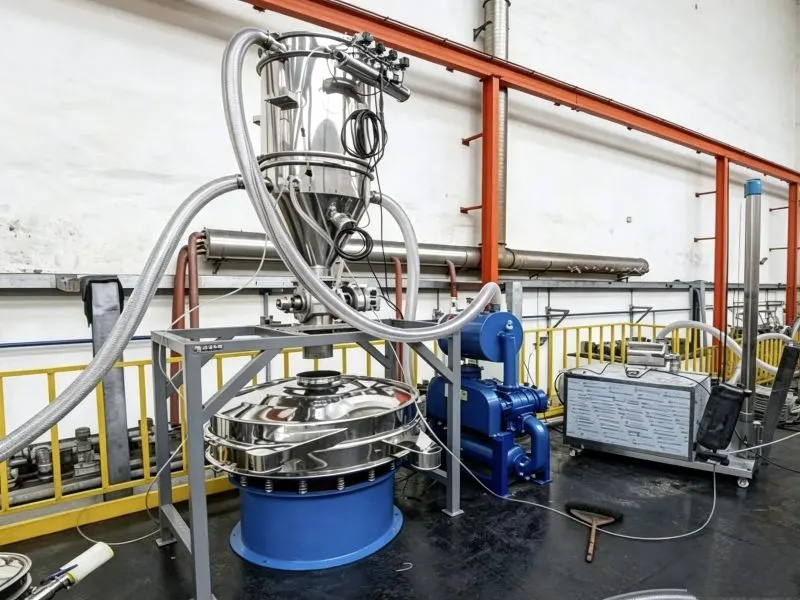
What Is Metal Powder Sieving?
Metal powder sieving is used to control particle size and keep the powder clean and consistent. It removes foreign material and oversized particles, breaks up soft lumps, and separates the powder into the required size range. It can also recover reusable powder and protect later processes such as pressing, sintering, thermal spraying, and additive manufacturing.
Classification, Safety Screening and Powder Recovery
Metal powder sieving generally serves three purposes:
- Classification: Separates the powder into different particle size ranges to meet production requirements.
- Safety screening: Removes foreign material, large particles, and unwanted agglomerates before the next process.
- Powder recovery: Recovers usable powder left after 3D printing or other production processes, helping reduce material waste.
The required mesh size and screening method depend on the powder properties, target particle size, production capacity, and safety requirements.
What Information Is Needed Before Selecting a Sieving System?
Before selecting a metal powder sieving system, you need to understand both the powder properties and the production requirements. These factors determine the correct mesh size, screen type, machine capacity and protection system. Selecting equipment based only on the metal name or target mesh may result in low capacity, screen blockage or safety problems.
Metal Powder Properties
Different metal powders behave differently during sieving. Important properties include:
- Bulk density: Affects screen loading, material movement and required machine size.
- Flowability: Free-flowing powders are easier to screen, while poorly flowing powders may stay on the screen surface.
- Particle shape: Spherical, irregular and flaky particles pass through the mesh differently.
- Static electricity: Fine powders may stick to the screen and reduce capacity.
- Agglomeration: Soft lumps can block the mesh or affect particle-size accuracy.
- Oxidation risk: Aluminum, magnesium, titanium and other reactive powders may require sealed equipment or inert gas protection.
- Material value: High-value alloy or precious metal powders may require a closed system to reduce material loss and contamination.
Particle Size and Production Requirements
The required particle-size range and production target must also be confirmed. Important information includes:
- Current particle-size distribution, including D10, D50 and D90
- Required cut point in microns
- Acceptable oversized and undersized particle levels
- Required capacity per hour
- Number of particle-size fractions
- Batch or continuous operation
- Cleanliness and cross-contamination limits
This information provides the basis for choosing the mesh size, screening equipment and protection system.
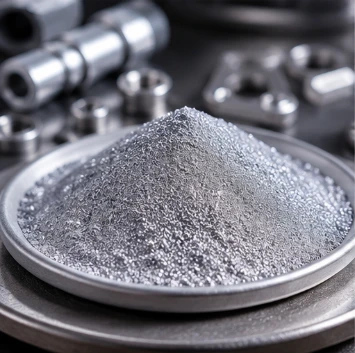
How to Choose the Right Mesh Size
The right mesh size depends on the target particle size, powder distribution and required capacity. First, decide which particles should pass through the screen and which particles should be removed. Then select the screen opening in microns. For fine metal powders, micron size is usually more accurate than mesh number.
Metal powders can be described by their particle size:
- Conventional powder: 50–1,000 μm
- Fine powder: 10–50 μm
- Very fine powder: 0.5–10 μm
- Ultrafine powder: Below 0.5 μm
- Nano powder: 0.1–100 nm
These ranges are general references and may vary between industries.
Mesh Size vs Micron Size
Mesh number shows how many openings are present in one inch of screen. A higher mesh number normally means a smaller opening. Micron size shows the actual opening or particle size more directly.
The same mesh number may have slightly different opening sizes because of wire diameter and screen standards. For this reason, fine metal powders should be specified in microns whenever possible.
Common Mesh-to-Micron Reference
| الشبكة | Microns (μm) | الشبكة | Microns (μm) |
|---|---|---|---|
| 20 mesh | 830 | 200 mesh | 75 |
| 40 شبكة | 380 | 325 mesh | 45 |
| 60 شبكة | 250 | 400 mesh | 38 |
| 80 شبكة | 180 | 500 mesh | 25 |
| 100 شبكة | 150 | 800 mesh | 18 |
| 140 mesh | 106 | 1,000 mesh | 13 |
The values are for general reference. Always confirm the actual screen opening before ordering.
Choose Mesh Based on Particle Size Distribution
Mesh size can be selected in three steps:
- Define the target particle size. Confirm the largest acceptable particle and the required powder range.
- Choose a starting mesh. A coarse mesh can remove large impurities, while a fine mesh can control smaller particles.
- Check the particle-size distribution. Use D10, D50 and D90 data when the powder size must be controlled more accurately.
Mesh size only defines the screen opening. It cannot fully describe the particle-size distribution. For example, metal powder used in additive manufacturing may have a specified range such as 15–53 μm. In this case, the complete particle-size distribution should be considered instead of converting the whole range into one mesh number.
Why Finer Mesh Is Not Always Better
A finer mesh does not always produce a better result. If the opening is too small, several problems may occur:
- Fine particles can block the screen.
- Screening capacity can fall.
- More usable powder may remain above the screen.
- The screen may require frequent cleaning.
- Very fine woven mesh may have a low open area.
For screening above 325–400 mesh, it is usually clearer to specify the required opening in microns. Fine, electrostatic or easily agglomerated metal powders may also require an ultrasonic vibrating sieve to reduce screen blockage and maintain a stable screening rate.
How to Choose the Right Screen Type
The right screen type depends on the powder size, flowability, required capacity and production process. Rotary vibrating screens are suitable for general screening, while ultrasonic vibrating sieves are better for fine powders that easily block the mesh. Linear and inline screens are used for higher capacities or continuous production lines.You can also compare different types of vibrating sieving machines before selecting a model for your process.
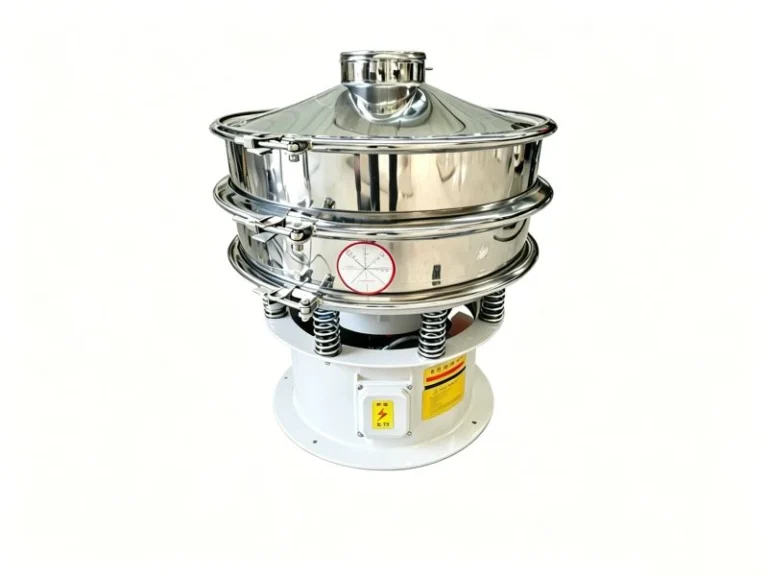
الغربال الاهتزازي الدوار
A rotary vibrating screen is suitable for free-flowing metal powders and general particle classification. It has a compact design and can separate the powder into one or more particle size ranges.
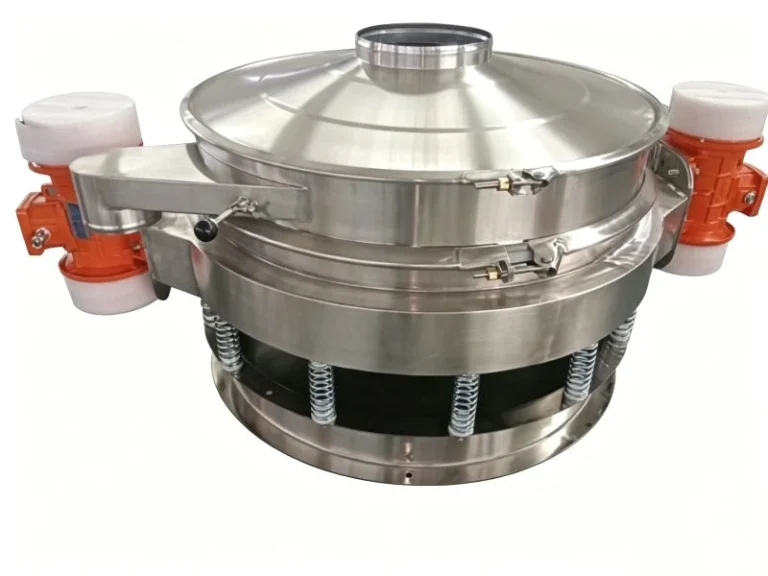
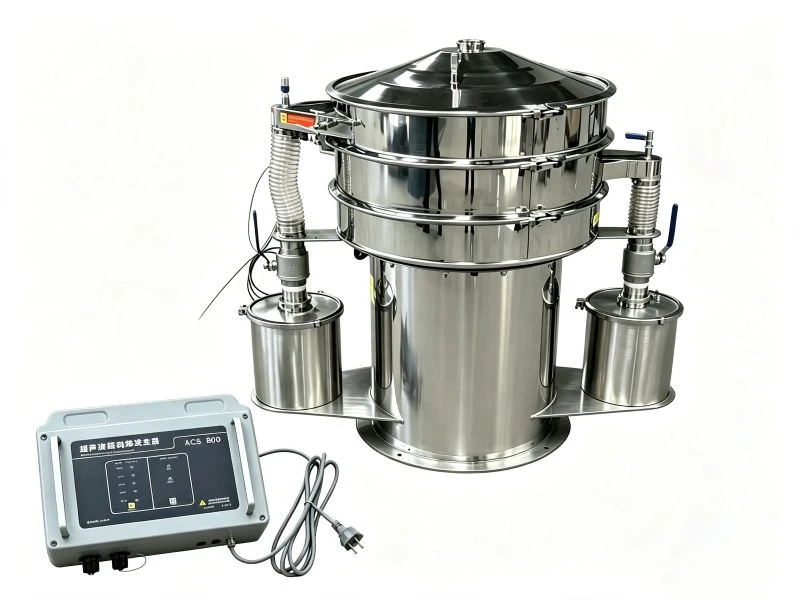
الغربال الاهتزازي بالموجات فوق الصوتية
إن الغربال الاهتزازي بالموجات فوق الصوتية is suitable for fine, electrostatic or easily agglomerated powders. The ultrasonic system reduces mesh blockage and improves screening efficiency.
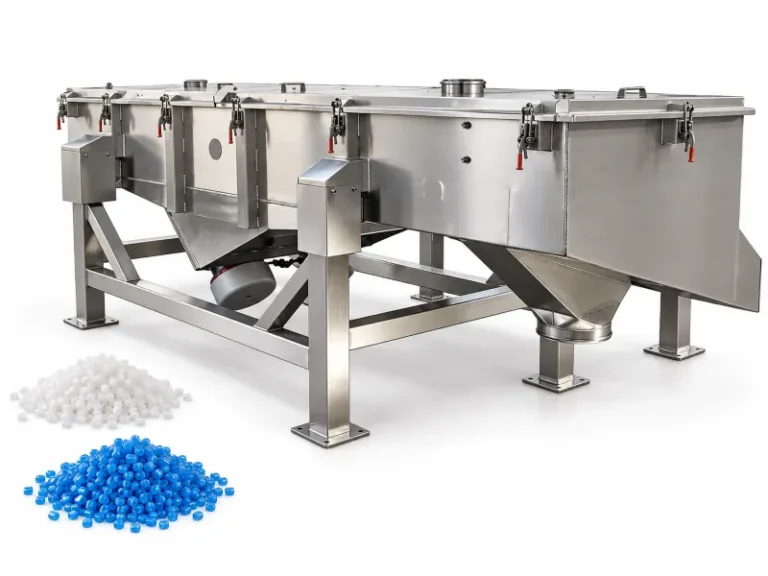
Linear and Inline Vibrating Screens
A linear vibrating screen is suitable for high-capacity screening of coarse powders and particles. An inline vibrating screen is mainly used for safety screening in continuous production lines.
Single-Deck vs Multi-Deck Screen
A single-deck screen separates the powder into two particle sizes. A multi-deck screen can produce three or more particle size ranges in one process.
How to Choose a Protection System
The protection system should be selected according to the powder’s oxidation risk, dust characteristics, corrosion and safety requirements. A suitable system can reduce powder leakage, contamination, material loss and operating risks.
Sealed and Dust-Tight Design
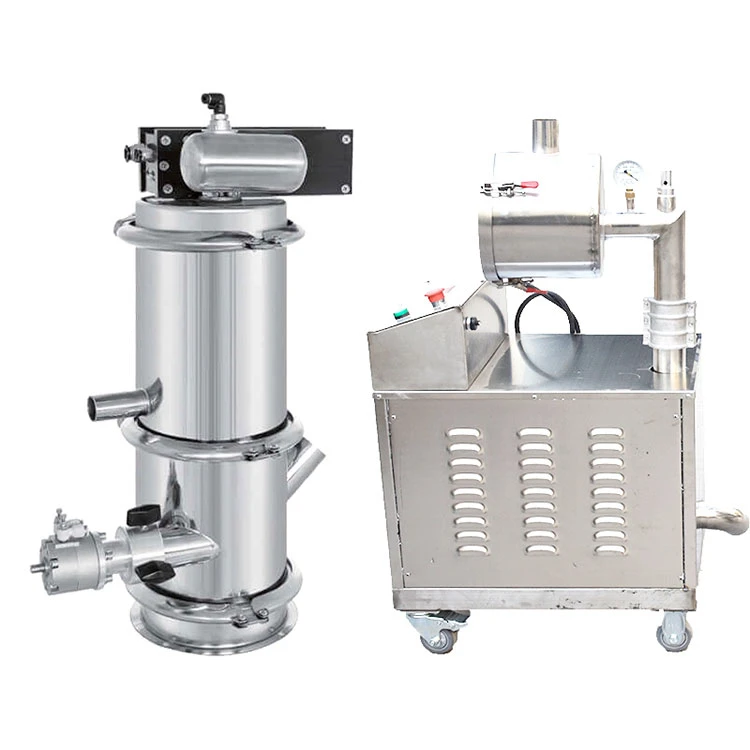
Fine metal powders can easily escape into the working area. A fully enclosed screen with sealed inlets, outlets and covers helps control dust and prevents outside material from entering the product.
Inert Gas Protection
Aluminum, magnesium, titanium and some alloy powders may react with oxygen. For these materials, a sealed screening system can be filled with nitrogen or argon to reduce contact with air.
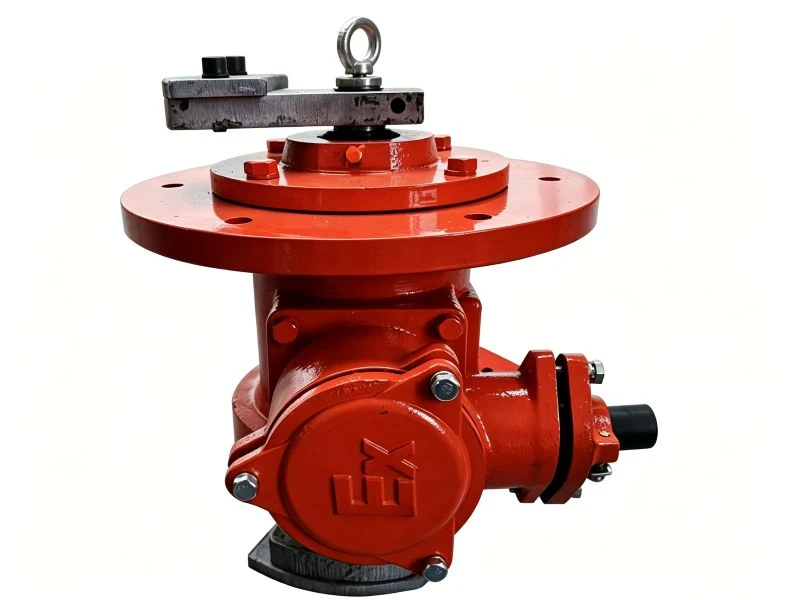
Explosion Protection and Static Control
Combustible metal powders may require explosion-protected motors and electrical parts. The machine, pipelines and connected equipment should also be properly grounded to reduce static buildup.
Contact Material and Contamination Control
Product-contact parts are commonly made of 304 or 316L stainless steel for corrosion resistance and easy cleaning. The screen should also be checked regularly for wear or damage to prevent particle mixing and product contamination.
Recommended Solutions for Common Metal Powders
| Powder or application | Main challenge | Recommended screen | Protection system |
|---|---|---|---|
| Iron and stainless steel powder | High density and screen wear | Rotary or linear vibrating screen | Dust-tight design and wear-resistant screen |
| Aluminum and titanium powder | Oxidation, static and combustible dust | Enclosed ultrasonic vibrating sieve | Inert gas, grounding and explosion-protected parts |
| Fine alloy powder | Agglomeration and mesh blockage | Ultrasonic vibrating sieve | Sealed design and static control |
| Additive manufacturing powder | Fine particle range and high recovery requirement | Precision ultrasonic vibrating sieve | Closed system and contamination control |
| Battery material powder | Fine particles, static and strict purity requirements | Ultrasonic vibrating sieve | Sealed construction and clean contact parts |
The final configuration should be based on the powder’s particle-size distribution, flowability, required capacity and safety assessment.More metal powder screening solutions are available for iron, copper, nickel, alloy and other metallurgical materials.
الخاتمة
Choosing a metal powder sieving system starts with three key decisions: mesh size, screen type and protection system. The mesh should match the target particle size, while the screen type should suit the powder’s flowability, fineness and required capacity. For reactive or combustible powders, sealing, grounding, explosion protection or inert gas may also be required.
Because every metal powder behaves differently, the final configuration should be confirmed through material data or a screening test.
Contact us with your powder type, target particle size and required capacity. Our engineers will recommend a suitable metal powder sieving machine for your production process.
الأسئلة الشائعة
What mesh size is suitable for metal powder?
The correct mesh size depends on the target particle size and particle-size distribution. Coarse screening may use 20–100 mesh, while fine metal powder screening may require 200–635 mesh. For better accuracy, use the required opening size in microns.
When is an ultrasonic vibrating sieve required?
An ultrasonic vibrating sieve is recommended for fine, electrostatic or easily agglomerated metal powders. It helps prevent mesh blockage and improves the screening of powders below 75 μm.
Which screen type is best for metal powder?
A rotary vibrating screen is suitable for general metal powder sieving. An ultrasonic sieve is better for fine powders, while a linear vibrating screen is suitable for higher-capacity screening of coarser materials.
How can mesh blockage be prevented?
Mesh blockage can be reduced by controlling the feeding rate, selecting the correct mesh and using an ultrasonic de-blinding system. Powder moisture, static electricity and agglomeration should also be checked.
Does metal powder sieving require inert gas protection?
Not every metal powder requires inert gas protection. Reactive powders such as aluminum, magnesium and titanium may need a sealed system with nitrogen or argon to reduce contact with oxygen.
Is an explosion-proof metal powder sieving machine required?
Explosion protection may be required when processing combustible metal powder. The system may include explosion-protected electrical parts, dust-tight construction and proper grounding. The final design should follow the powder safety data and local regulations.