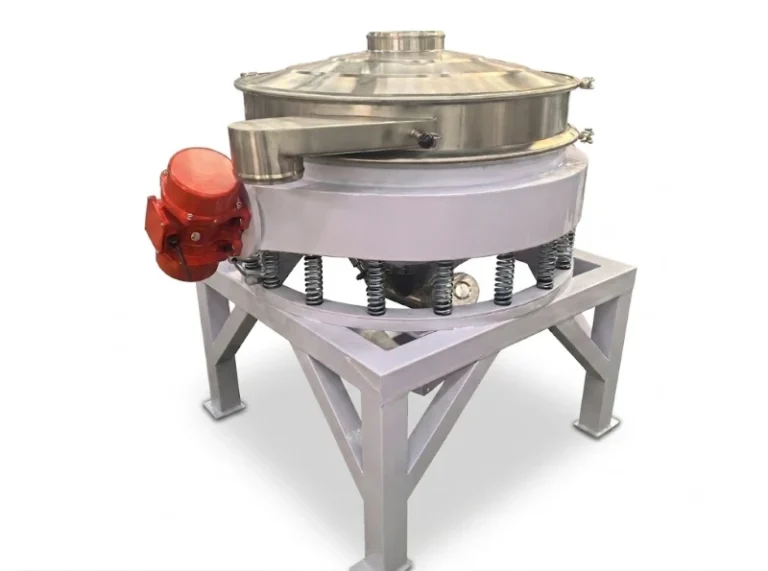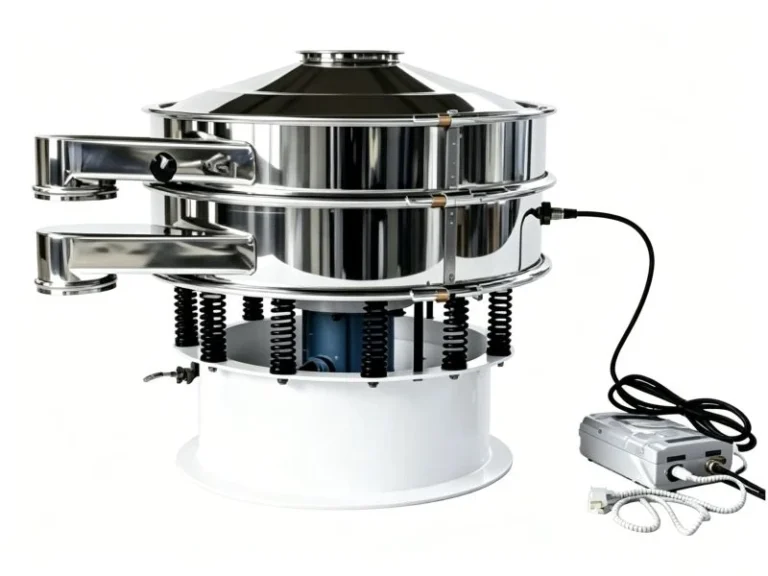
Sàng rung siêu âm so với sàng rung truyền thống: Loại nào tốt hơn?
Sàng rung truyền thống phù hợp cho việc sàng thông thường các loại bột và hạt chảy tự do, trong khi sàng rung siêu âm tốt hơn cho các loại bột mịn gây bít lưới, dính tĩnh điện hoặc năng suất thấp.
Lựa chọn tốt hơn phụ thuộc chủ yếu vào kích thước lưới, đặc tính vật liệu, công suất yêu cầu và liệu có xảy ra tắc lưới hay không.
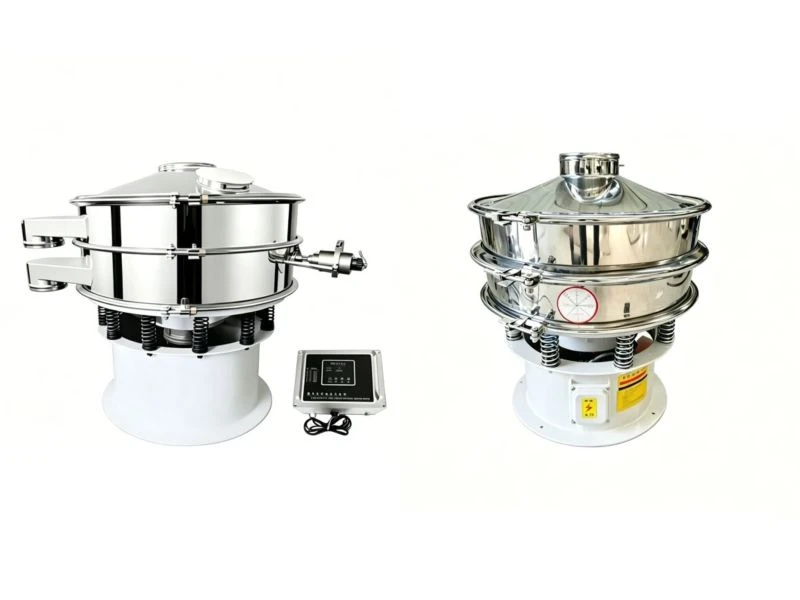
Sàng rung siêu âm so với sàng rung truyền thống: So sánh nhanh
| So sánh | Nguyên lý sàng | Sàng Rung Siêu Âm |
| Hệ thống rung | Rung động cơ tần số thấp đơn | Động cơ tần số thấp + rung siêu âm 36 kHz |
| Làm sạch lưới | Bi cao su nảy làm sạch lưới thông qua tác động cơ học | Tự làm sạch bằng siêu âm liên tục giảm thiểu bít lưới |
| Phạm vi lưới khuyến nghị | 2–500 mesh (vật liệu thô đến trung bình) | 20–635 mesh (bột mịn đến siêu mịn) |
| Lợi ích chính | Tiết kiệm chi phí, thiết kế đơn giản, công suất cao cho sàng thông thường | Độ chính xác cao, chống tắc, cải thiện năng suất, kéo dài tuổi thọ lưới |
| Hạn chế | Dễ bị bít lưới khi sàng bột mịn | Chi phí mua ban đầu cao hơn |
| Ứng dụng điển hình | Ngũ cốc, cát, cốt liệu, hạt nhựa, phân bón và hóa chất dạng khối | Vật liệu pin, dược phẩm, bột thực phẩm, bột kim loại, gốm sứ và hóa chất mịn |
| Phù hợp nhất cho | Sàng đa dụng và vật liệu chảy tự do | Bột mịn và vật liệu khó sàng |
| Chi phí ban đầu | Đầu tư ban đầu thấp hơn | Đầu tư ban đầu cao hơn do hệ thống siêu âm |
Sàng rung siêu âm và sàng rung truyền thống khác nhau như thế nào
Sự khác biệt chính giữa sàng rung siêu âm và sàng rung truyền thống là cách chúng xử lý bột mịn và khó sàng. Sàng rung truyền thống hoạt động tốt cho sàng thông thường, trong khi hệ thống siêu âm mang lại hiệu suất tốt hơn khi tắc lưới, dính tĩnh điện hoặc năng suất thấp trở thành vấn đề.
Phương pháp rung
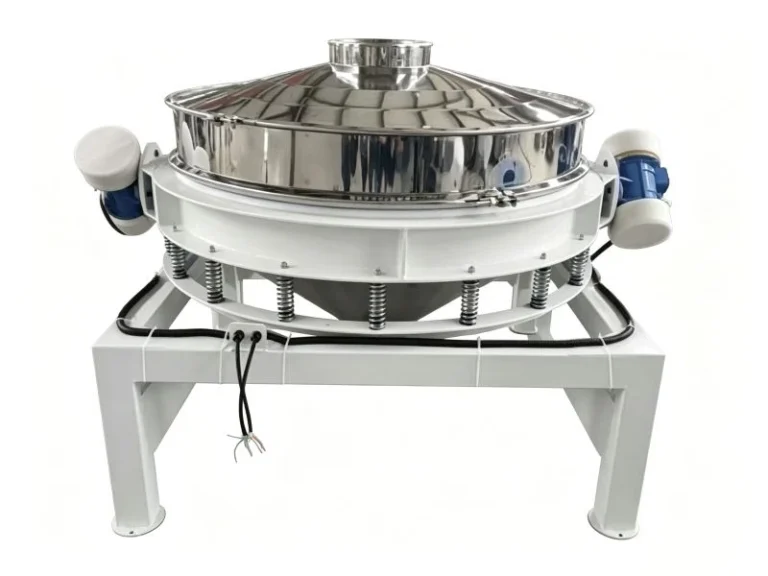
Sàng rung truyền thống dựa vào rung động cơ học để di chuyển và tách vật liệu.
Sàng rung siêu âm thêm rung động tần số cao trực tiếp vào lưới sàng. Điều này giúp các hạt mịn đi qua lưới và giảm tích tụ bột.
Tắc lưới và bít lưới
Tắc lưới là một trong những khác biệt chính giữa hai hệ thống.
Sàng truyền thống có thể gặp tình trạng bít lưới thường xuyên khi xử lý bột mịn, tĩnh điện, dính hoặc kết tụ. Rung siêu âm giữ các hạt mịn di chuyển trên bề mặt lưới, giảm dính hạt và bít lỗ.
Điều này làm cho sàng siêu âm phù hợp hơn khi việc làm sạch lưới thường xuyên làm gián đoạn sản xuất.
Sàng bột mịn
Sàng rung truyền thống thường đủ cho vật liệu thô hoặc chảy tự do. Khi bột trở nên mịn hơn và lỗ lưới nhỏ hơn, việc sàng trở nên khó khăn hơn.
Đối với sàng mịn và lưới cao, rung siêu âm giúp giữ nhiều lỗ lưới thông thoáng hơn và cho phép các hạt mịn đi qua dễ dàng hơn.
Tuy nhiên, một máy sàng rung siêu âm cho bột mịn không phải lúc nào cũng cần thiết. Nếu sàng truyền thống có thể duy trì công suất yêu cầu mà không bị tắc thường xuyên, nó vẫn có thể là lựa chọn kinh tế hơn.
Hiệu quả sàng và năng suất
Đối với vật liệu dễ sàng, cả hai hệ thống đều có thể cung cấp công suất sàng ổn định. Sự khác biệt trở nên rõ rệt hơn khi lưới mịn, tĩnh điện hoặc dính hạt hạn chế vật liệu đi qua.
Các thử nghiệm từ ứng dụng sàng rung siêu âm của chúng tôi cho thấy sự khác biệt với bột khó sàng:
| Vật liệu | Kích thước lưới | Sàng rung thông thường | Sàng rung siêu âm |
|---|---|---|---|
| Bột vonfram | 400 mesh | 10 kg/h | 300 kg/h |
| Cathode and Anode Materials | 600 mesh | No fine powder separated after 15 min | 400 kg/h |
| Alloy Powder | 300 mesh | Cannot be sieved | 1300 kg/h |
Actual screening capacity depends on the material properties, mesh size, machine size, and operating conditions.
5. Screening Accuracy
Both systems can provide accurate particle separation when the material flows well and the mesh remains open.
For difficult fine powders, however, blocked mesh openings can affect screening stability. Ultrasonic vibration helps keep the screen surface clear, making it easier to maintain consistent separation during continuous production.
6. Cleaning and Maintenance
Traditional vibrating screens commonly use rubber bouncing balls or other mechanical methods to clean the mesh. Fine powders may still require periodic manual cleaning when serious mesh blinding occurs.
An ultrasonic system continuously cleans the mesh during screening, reducing clogging and cleaning frequency. However, it also adds components such as an ultrasonic generator and transducer, making the system more complex than a traditional vibrating screen.
When to Choose an Ultrasonic Vibrating Screen
Choose an hệ thống sàng siêu âm when conventional screening struggles with fine powders, mesh clogging, or unstable separation. It is especially suitable for materials that are difficult to screen at fine mesh sizes.
- Fine powders: Suitable for fine and ultra-fine powders, especially when fine mesh sizes are required. For more specific mesh selection, see our 200–500 mesh powder screening guide.
- Frequent mesh clogging: Helps reduce blinding and blockage when particles build up on the screen mesh.
- Static or agglomerated materials: Useful for powders that stick to the mesh or form small agglomerates during screening.
- High screening accuracy: A good choice when consistent particle separation is important.
- Difficult-to-screen materials: Thường được sử dụng cho lithium battery materials, metal powders, pharmaceutical powders, graphite, and fine food powders.
If fine powder causes frequent mesh clogging or unstable screening, an ultrasonic vibrating screen is usually the better choice.
For a material-specific example, explore choosing a vibrating screen for powder coatings, including when conventional screening is sufficient and when ultrasonic assistance is worth considering.
When Traditional Vibrating Screening Is Enough
Traditional vibrating screens are suitable for coarse, free-flowing materials that do not easily clog the mesh. They are a practical choice for general screening where ultra-fine separation is not required.
- Coarse particles and granules
- Sand, gravel, and aggregates
- Grain and seeds
- Plastic pellets
- Fertilizers and bulk chemicals
- Materials without serious mesh clogging
If the material flows well and does not clog the mesh, a traditional vibrating screen is usually sufficient.
How Do the Two Screening Systems Work?
Both systems use vibration to separate materials by particle size, but they apply vibration to the screen mesh in different ways.
Nguyên lý sàng
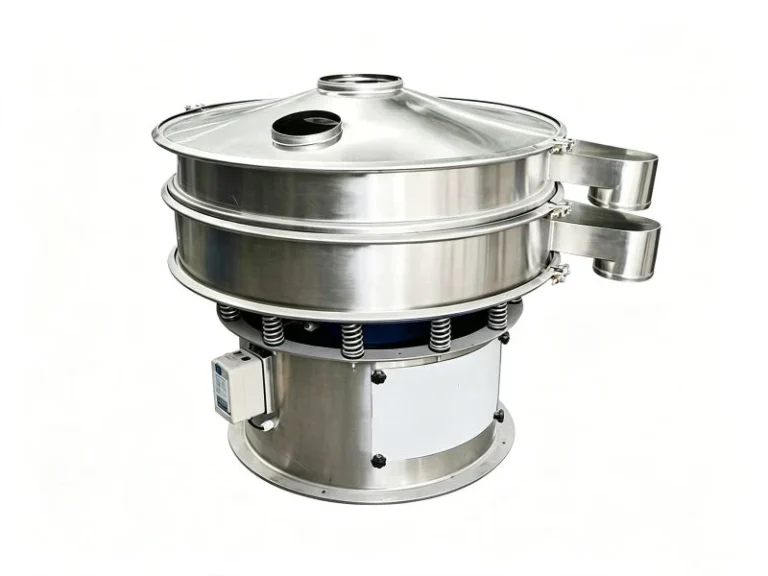
A traditional vibrating screen uses a vibration motor to move material across the screen surface. Particles smaller than the mesh openings pass through, while larger particles remain above the screen.
This method works well for general screening and free-flowing powders or granules where mesh clogging is not a major problem.
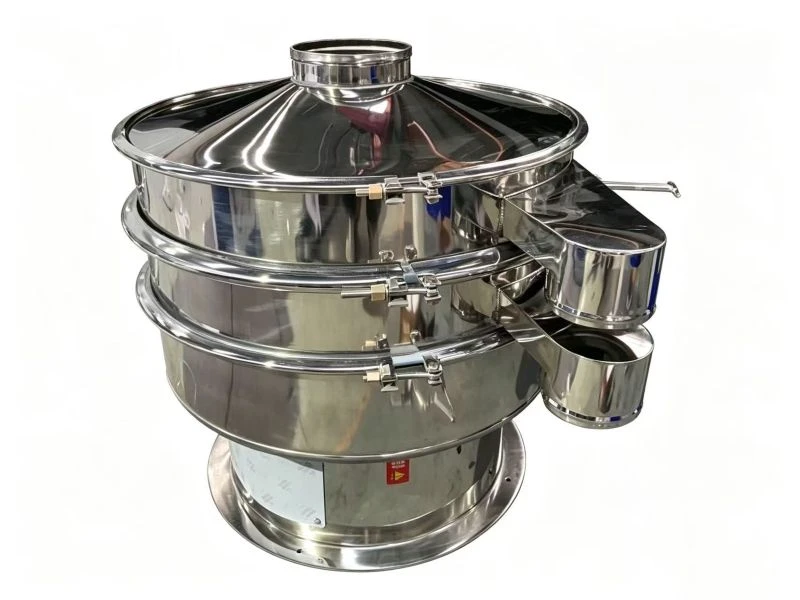
Sàng Rung Siêu Âm
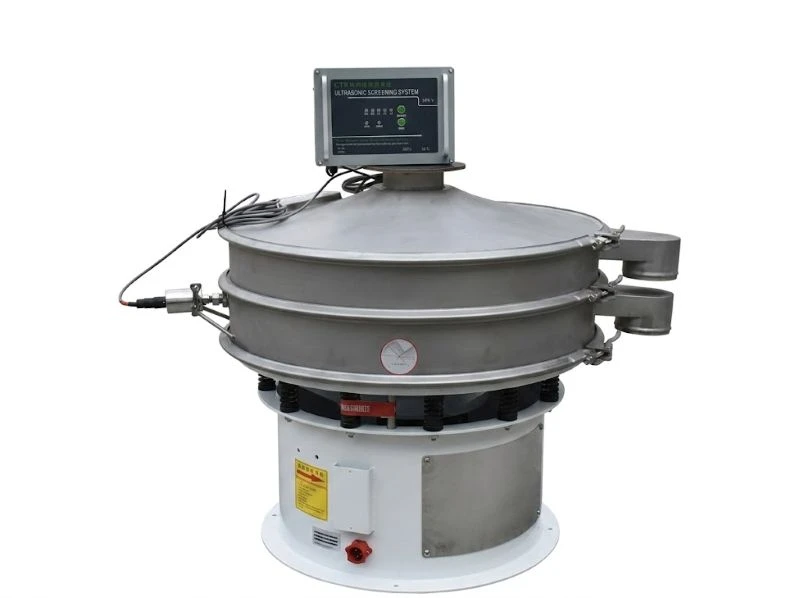
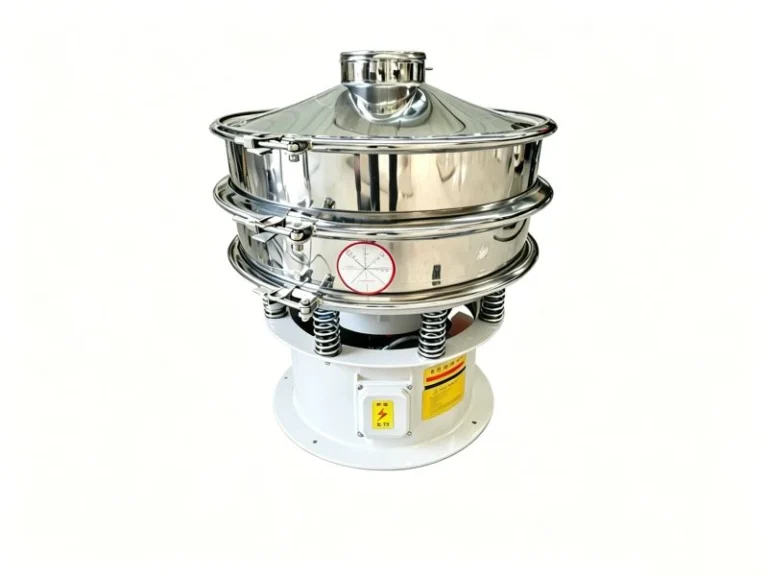
Một máy sàng rung siêu âm combines mechanical vibration with high-frequency ultrasonic vibration applied to the screen mesh. The ultrasonic system helps reduce particle adhesion and keeps fine mesh openings clear during screening.
It is mainly used for fine powders that are difficult to screen with conventional vibration, especially when mesh blinding, static buildup, or low throughput affects production.
Cost and Maintenance Comparison
| Cost Factor | Traditional | Ultrasonic |
|---|---|---|
| Initial equipment cost | Lower | Higher |
| System complexity | Simple | More components |
| Mesh cleaning | May require more cleaning | Reduced cleaning for difficult powders |
| Downtime from clogging | Higher for difficult fine powders | Usually lower |
| Best economic use | General screening | Difficult fine powder screening |
Ultrasonic screening is not automatically more economical. Its higher initial cost is mainly justified when mesh clogging, cleaning downtime, or throughput loss becomes a significant production problem.
How to Choose Between Ultrasonic and Traditional Vibrating Screens
The right screening method depends on the material, mesh size, required capacity, and whether clogging occurs during screening. A traditional vibrating screen is usually sufficient for free-flowing materials, while ultrasonic screening is more suitable when fine powder causes mesh blinding, static buildup, or reduced throughput.
| Screening Condition | Recommended Screen |
|---|---|
| Coarse or free-flowing material | Traditional |
| Fine powder but no serious clogging | Traditional may be sufficient |
| Tắc nghẽn mesh thường xuyên | Ultrasonic |
| Static powder sticks to mesh | Ultrasonic |
| Throughput drops significantly with fine mesh | Ultrasonic |
| High-mesh fine powder screening | Ultrasonic |
| Low initial investment is priority | Traditional |
| Frequent cleaning causes production downtime | Ultrasonic |
Fine powder does not always require ultrasonic screening. If a traditional vibrating screen can achieve the required capacity and screening accuracy without frequent mesh clogging, there is usually no need to add an ultrasonic system.
Kết luận
Traditional vibrating screens are a practical choice for general screening, especially for free-flowing materials where clogging is not a major issue. Ultrasonic vibrating screens are more suitable for fine powders, high-mesh screening, and materials that cause mesh blinding or static buildup.
The right choice depends on your material, mesh size, required capacity, and screening conditions. Send us these details, and we can help you select a suitable screening solution.