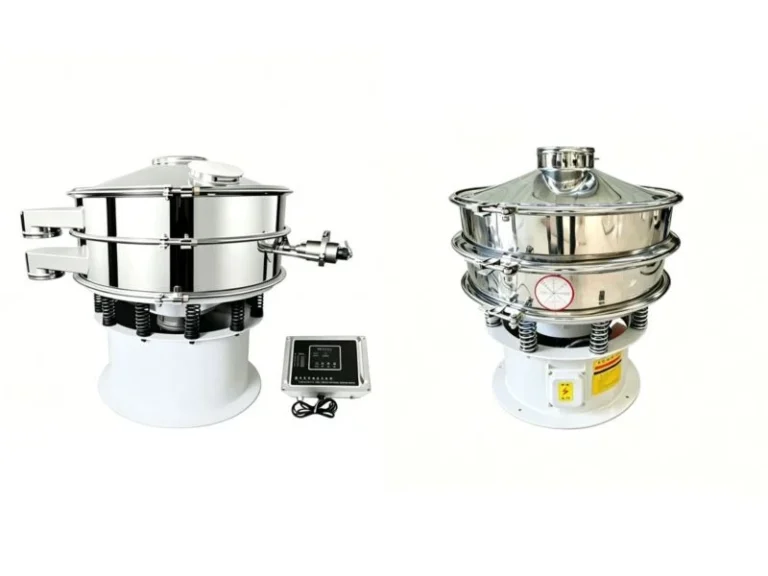
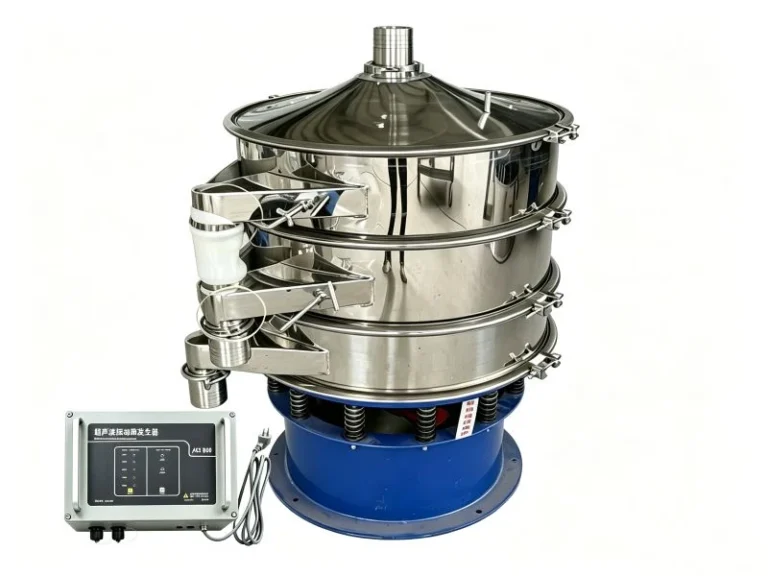
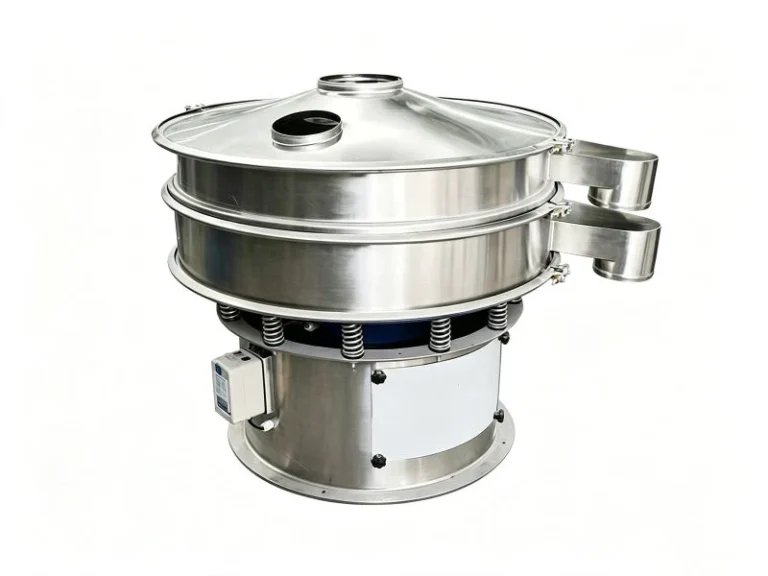
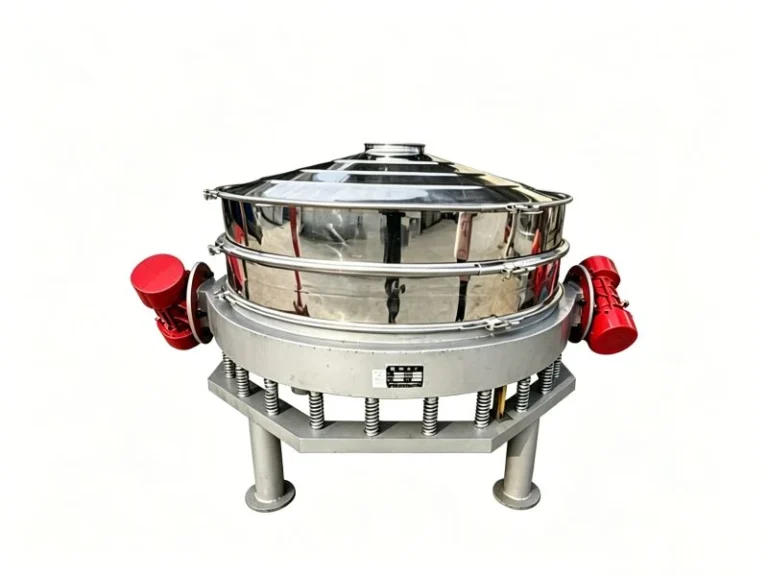
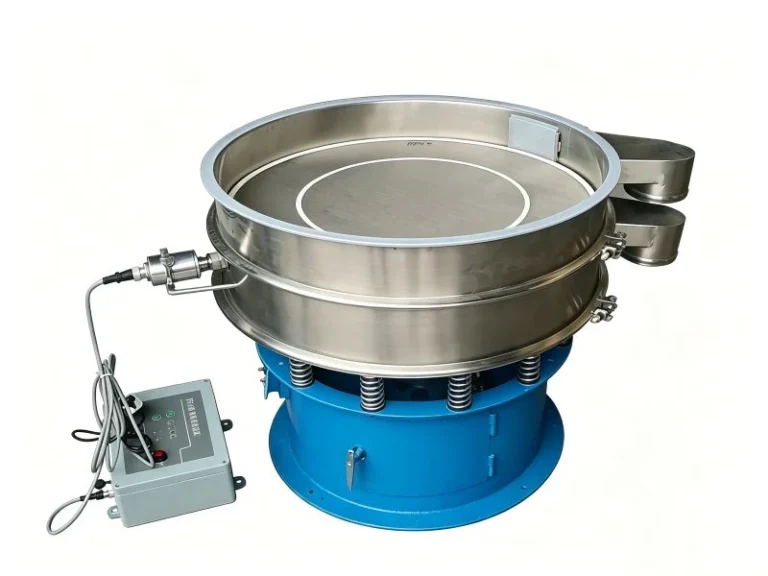
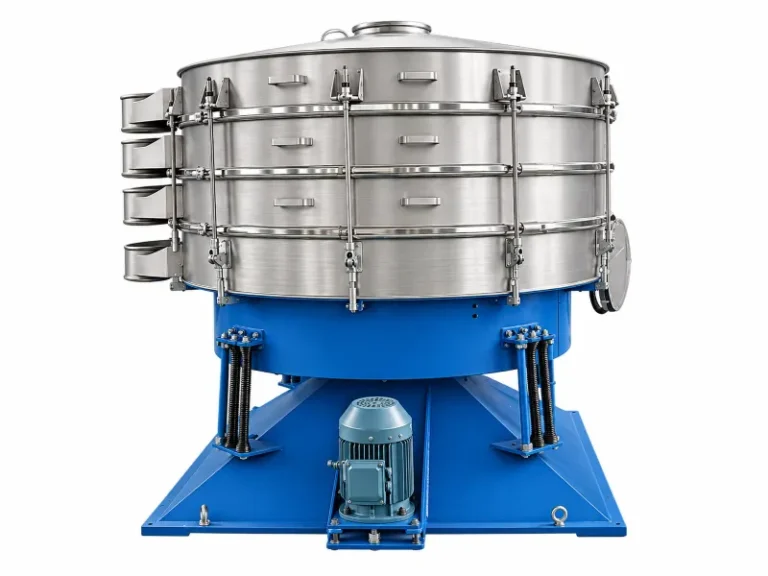
Multi-Deck Sifter Configuration: How to Specify Mesh Sizes and Product Fractions
Настройка многоярусного грохота начинается с определения диапазонов размеров частиц, которые необходимо собирать, а также допустимого содержания крупных и мелких частиц в каждом продукте. Эти требования определяют границы разделения, размеры отверстий сит и количество ярусов.
В стандартной многоярусной компоновке с верхней подачей размеры отверстий сит уменьшаются сверху вниз, а каждая фракция выводится через отдельный патрубок. Укажите размеры отверстий в микронах или миллиметрах, затем испытайте репрезентативный образец материала, чтобы проверить производительность и гранулометрический состав на каждом выходе.
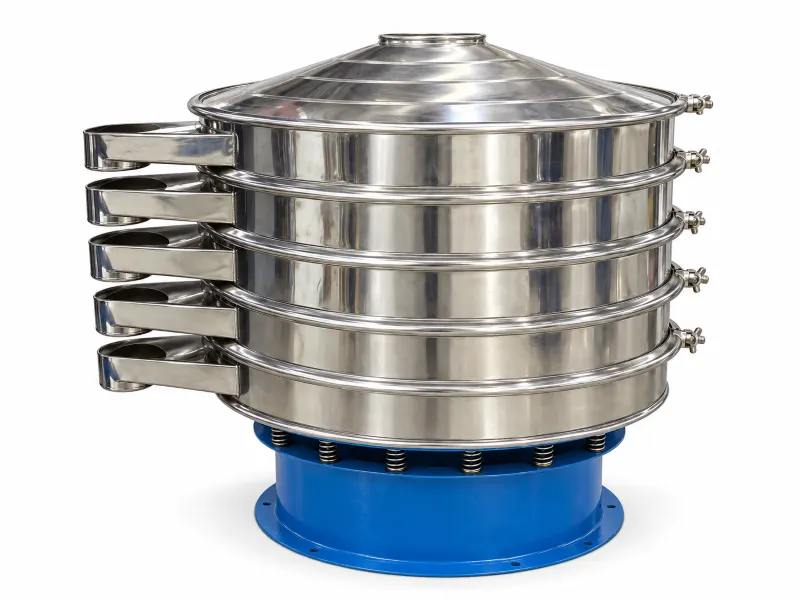
Определите фракции продукта до выбора ярусов сит
Количество ярусов сит зависит от границ размеров, по которым необходимо разделить материал. Перечислите все требуемые диапазоны размеров продукта, допустимое содержание крупных и мелких частиц, а также назначение каждой фракции.
Если вы не уверены, нужно ли вам несколько сортов продукта или достаточно контрольного отсева крупных частиц, ознакомьтесь с нашим руководством по проверка безопасности vs классификация частиц.
В некоторых случаях требуется лишь контрольный отсев крупных частиц. Например, просеивание кукурузного крахмала перед упаковкой обычно направлено на удаление комков и посторонних включений, а не на получение нескольких фракций по размеру.
Укажите диапазоны размеров продукта и границы разделения
Для получения четырех фракций не всегда требуется четыре сита. Например, исходный материал, не содержащий частиц крупнее 31,5 мм, можно разделить на номинальные диапазоны 0–5, 5–10, 10–20 и 20–31,5 мм с помощью трех границ разделения: 5, 10 и 20 мм. Если необходимо также удалить частицы крупнее 31,5 мм, потребуется четвертая граница разделения.
Этот пример объясняет, как подсчитать количество границ разделения; он не указывает, какая машина подходит для частиц таких размеров.
В стандартной многоярусной компоновке с отдельными выходами N просеивающих ярусов могут давать до N+1 фракций. Опорная сетка не считается дополнительным просеивающим ярусом.
Для молотой паприки одного сита достаточно, чтобы отделить готовый порошок от крупных частиц. Дополнительные ярусы нужны только тогда, когда требуется получить больше фракций по размеру. В нашем руководстве по просеивание порошка паприки объясняется, как выбрать между удалением крупных частиц и просеиванием на несколько фракций.
Для удаления мелочи из риса может потребоваться только одно разделение. Чтобы отдельно собирать мелкие фрагменты и мелочь, потребуется ещё одно разделение, если их размеры позволяют это сделать. См. наше руководство по отверстиям сит и просеивающим декам для риса с описанием расположения выходных отверстий и необходимых проверок.
Установите допустимые пределы содержания крупных частиц и мелочи
Целевой диапазон, например 100–300 мкм, не означает, что размеры всех частиц должны в него укладываться. Укажите максимально допустимое содержание частиц крупнее 300 мкм и мельче 100 мкм, а также метод испытания, используемый для определения этих показателей.
Эти критерии приёмки дают поставщику чёткую основу для выбора сит и оценки результатов испытаний.
Разграничьте товарные фракции и потоки отходов
Укажите для каждого выходного отверстия, собирается ли через него товарная фракция, материал для повторной обработки или отходы. Через четыре выходных отверстия могут собираться только две товарные фракции, а также крупные частицы и мелочь.
Добавляйте деку только в том случае, если необходимо ещё одно разделение. Дополнительные деки увеличивают высоту машины и объём работ по обслуживанию, а достижимая производительность зависит от материала, размеров отверстий сит и нагрузки на каждую деку.
Ломаный чай может пригодиться для другого продукта, а не стать отходом. Наше руководство по разделению чайных листьев и мелочи показывает, как требования к продукту определяют выбор фракций.
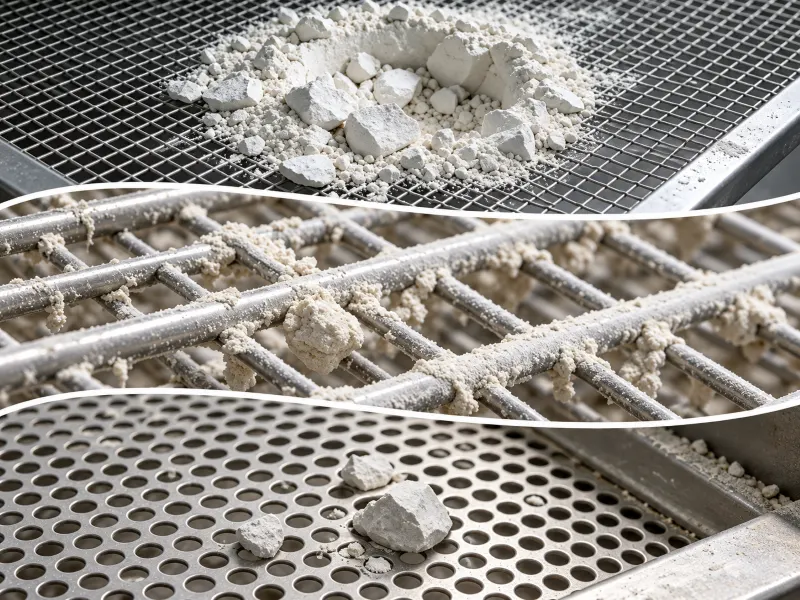
Укажите размеры отверстий сита для каждого разделения
Для каждой деки укажите необходимый размер отверстий в микрометрах (мкм) или миллиметрах (мм). Используйте целевые размеры частиц продукта для выбора пробных размеров отверстий, затем проверьте, как материал проходит через них. Перед заказом уточните число меш, диаметр проволоки и допуск на размер отверстий.
Число меш и размер отверстия: что следует указывать?
Число меш — это количество отверстий на погонный дюйм, то есть 25,4 мм. Сито с числом меш 80 имеет 80 отверстий на одном погонном дюйме, а не на квадратном дюйме. Размер отверстия — это ширина свободного просвета между соседними проволоками, а диаметр проволоки — толщина проволоки, из которой соткана сетка.
Более высокое число меш обычно означает меньший размер отверстий, однако точный размер зависит от диаметра проволоки. Для тканой сетки с квадратными ячейками:
Размер отверстия (мм) = 25,4 ÷ число меш − диаметр проволоки (мм)
Например, тканая сетка с числом ячеек 200 на дюйм, изготовленная из проволоки диаметром 0,053 мм, имеет расчётный размер ячейки 0,074 мм, или 74 мкм. Этот расчёт относится к данной сетке и не является универсальным для всех сит с числом ячеек 200 на дюйм.
Стандартные обозначения сит служат ещё одним ориентиром:
| Обозначение сита по стандарту США | Номинальный размер ячейки |
|---|---|
| № 100 | 0,150 мм / 150 мкм |
| № 200 | 0,075 мм / 75 мкм |
| № 325 | 0,045 мм / 45 мкм |
При использовании этих обозначений указывайте стандарт. Для производственных сит уточняйте фактический размер ячейки у поставщика.
Подробнее о том, как диаметр проволоки влияет на размер ячейки, см. в нашем руководстве по количество меш vs размер в микронах.
Соотнесите предлагаемые размеры ячеек с допустимыми размерами продукта
Если исходный материал содержит как крупные, так и мелкие частицы, для получения продукта номинальным размером 2–4 мм необходимы две границы разделения. Верхнее сито с ячейками 4 мм и нижнее с ячейками 2 мм можно использовать в качестве исходной конфигурации для испытаний: целевая фракция проходит через верхнее сито и остаётся на нижнем.
Пример применения двух границ разделения при просеивании см. в материале о контроле размеров гранул моющего средства.
От свойств материала зависит, позволят ли предлагаемые размеры ячеек выполнить заданные требования:
- Particle size distribution: A high proportion of particles close to either opening makes separation more demanding.
- Форма частиц: Flakes, needles and fibers may pass according to their orientation and smaller dimensions.
- Moisture and stickiness: Buildup can block openings. Review material conditioning and mesh cleaning before changing the aperture.
- Bulk density and flowability: These influence deck loading and throughput; they do not by themselves justify a larger or smaller opening.
- Abrasion and corrosion: These guide wire material selection and inspection requirements, since damaged or worn openings can affect the collected fractions.
A finer mesh does not automatically mean more accurate grading. Each opening must suit the required separation, and enlarging it to increase throughput may let unwanted particles enter the product.
Confirm Wire Diameter, Open Area and Aperture Tolerance
Prepare a separate specification for each deck. Open area is the percentage of the screen surface available for material passage. Aperture tolerance defines the permitted variation in opening size.
| Спецификация | Upper Deck | Lower Deck |
|---|---|---|
| Trial aperture | 4 mm | 2 мм |
| Separation duty | Remove oversize | Retain target product and pass fines |
| Mesh designation and standard | Confirm if used | Confirm if used |
| Wire diameter | Supplier to specify | Supplier to specify |
| Open area (%) | Supplier to specify | Supplier to specify |
| Aperture tolerance | Agree with supplier | Agree with supplier |
These openings are trial values for a nominal 2–4 mm fraction. Approve the final screens after representative material meets the agreed particle size limits and throughput.
Map the Screen Deck Arrangement to Every Product Outlet
The screen layout should show which opening each fraction passes through, where it is retained and which outlet collects it. For powder and granule grading, this connects the screen specifications to the products you need to collect.
Arrange Screen Openings from Coarse to Fine
In a conventional top-fed sifter, place the largest opening at the top and smaller openings below. Coarse material leaves through the upper outlet, while material passing through continues to the next screen.
For example, a three-deck screen arrangement can use 500 μm, 250 μm and 125 μm openings from top to bottom. Each deck retains one fraction, and material passing through all three screens reaches the bottom collection pan.
Three-Deck Configuration Example: Four Separate Fractions
The following example shows how three screen decks can produce four separate material streams.
| Screen or Collection Position | Nominal Opening | Material Collected | Outlet and Intended Use |
|---|---|---|---|
| Top deck | 500 μm | Retained on the 500 μm screen | A — Coarse material for review or rework |
| Middle deck | 250 μm | Passes through 500 μm; retained on 250 μm | B — Product A |
| Bottom deck | 125 μm | Passes through 250 μm; retained on 125 μm | C — Product B |
| Bottom collection pan | No screen | Passes through the 125 μm screen | D — Fines or by-product |
These are merely schematic representations of the screen apertures and do not constitute recommended settings for any specific material. The indicated particle size ranges represent nominal screening ranges rather than precise particle size limits. Please collect samples from all four discharge outlets for testing to verify the actual particle size distribution.
Label Outlets and Plan Collection or Rework
Mark outlets A–D on the equipment drawing and match each one to a labeled bag, bin or downstream connection. Record the material name and destination for every outlet before installation.
In this example, outlets B and C collect two product grades. Outlet A collects coarse material that must be assessed before rework, while outlet D collects fines that may be usable as a separate product. Keep these streams separate during collection and transfer.
Confirm outlet positions, connection sizes and collection space during design. Our guide to варианты исполнения круглых вибросит на заказ covers these installation requirements alongside material and cleaning choices.
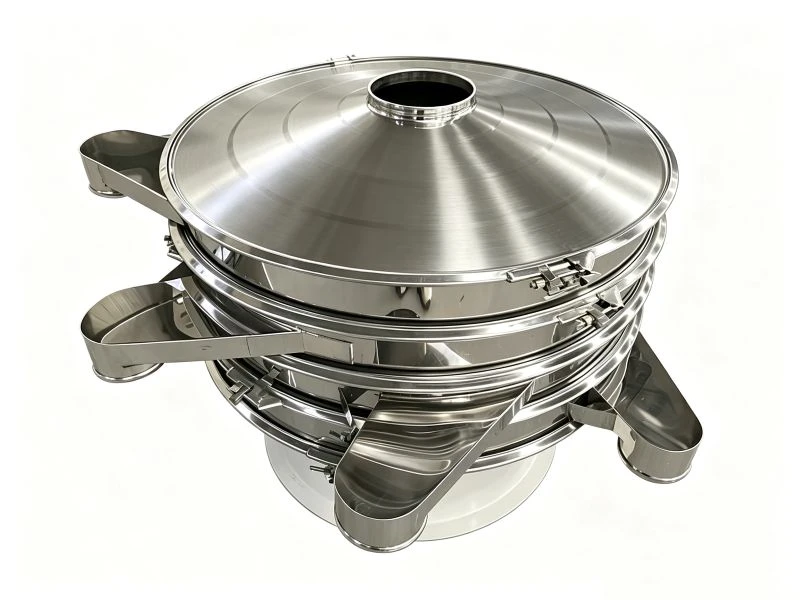
Validate Throughput and Fraction Quality
Test the multi-deck sifter configuration with representative material at the required feed rate. Check both throughput and the particle size distribution at every outlet. The machine must meet the product specifications while maintaining stable output.
Check Feed Distribution and Loading on Each Deck
Feed material evenly across the top screen. Each lower deck receives only what passes through the screen above, so its load depends on the feed’s particle size distribution.
Check for buildup on every deck during normal and peak feed conditions. Adding more screening layers does not automatically increase capacity.
Account for Near-Size Particles and Mesh Blinding
Particles close to the screen opening may need more time to pass through. Blocked openings reduce the available screening area and can send usable material to the wrong outlet.
During testing, watch for falling output or changing product quality, then review feed rate, screen area and cleaning needs. Run the trial long enough to reveal gradual buildup rather than judging performance from the first few minutes.
For further checks, see our guide to залипание сита при просеивании тонкого порошка.
Verify Size Compliance, Recovery and Mass Balance
Collect feed and outlet samples over the same steady operating period. Agree on acceptance limits before testing.
| Check | What to Measure | Acceptance Basis |
|---|---|---|
| Производительность | Feed and outlet mass per hour | Required production rate |
| Fraction quality | Particle size distribution at each outlet | Agreed oversize and fines limits |
| Извлечение целевой фракции | Target-size material reaching the correct outlet ÷ target-size material in the feed | Agreed minimum recovery |
| Mass balance | Feed mass compared with total collected mass, allowing for changes in material held inside the machine | Agreed measurement tolerance |
Outlet yield is the mass collected at an outlet divided by total feed mass. Recovery measures how much of the target-size material reaches the intended outlet. Multiply either ratio by 100 to express it as a percentage.
A high yield alone does not prove that the product meets its size specification. Check quality and recovery together to identify usable material being lost through other outlets.
Заключение
A workable multi-deck sifter configuration connects each required product fraction to a screen opening and a separate outlet. Define the size limits first, confirm the mesh specifications, and test the arrangement at the required production rate.
For help specifying a многодечное вибрационное сито, send your material details, feed particle size distribution, target fractions and required throughput. Include the permitted oversize and fines in each product so the proposed configuration can be assessed against clear requirements.
FAQ
How Many Screen Decks Do I Need for Four Particle Size Fractions?
Three screening decks can produce four fractions in a conventional stacked sifter with separate outlets. Count every stream, including oversize and fines. If you need four saleable grades plus a separate oversize stream, four separation points may be required.
Can a Two-Deck Sifter Remove Both Oversize and Fines?
Yes. The upper screen retains oversize, while the lower screen retains the target product and allows fines to pass through. This produces three streams. Choose both openings from the product size limits and confirm the results through testing.
What Is the Difference Between 200 Mesh and 75 Microns?
“200 mesh” describes a mesh count, while 75 microns describes an opening size. A U.S. standard No. 200 test sieve has a nominal 75 μm aperture, but production cloth sold as 200 mesh can have a different opening depending on wire diameter. Specify the aperture and applicable standard when ordering.
Which Screen Goes on Top of a Multi-Deck Sifter?
For conventional top-fed, serial classification, the screen with the largest opening goes on top. Smaller openings follow below it. This removes coarse material first and allows the remaining material to reach the finer screens.
Will Adding More Screen Decks Increase Throughput?
Not necessarily. Additional decks create more separation stages, but they do not automatically increase capacity. Throughput depends on the material reaching each deck, the screen openings, available area and mesh condition. Test the complete arrangement at the required feed rate.
What Information Should I Send for a Multi-Deck Sifter Quotation?
Provide the material name, feed particle size distribution, target product ranges, permitted oversize and fines, and normal and peak feed rates. Include bulk density, moisture content, material-contact requirements and outlet connections. A representative sample helps the supplier assess the proposed screens and trial conditions.