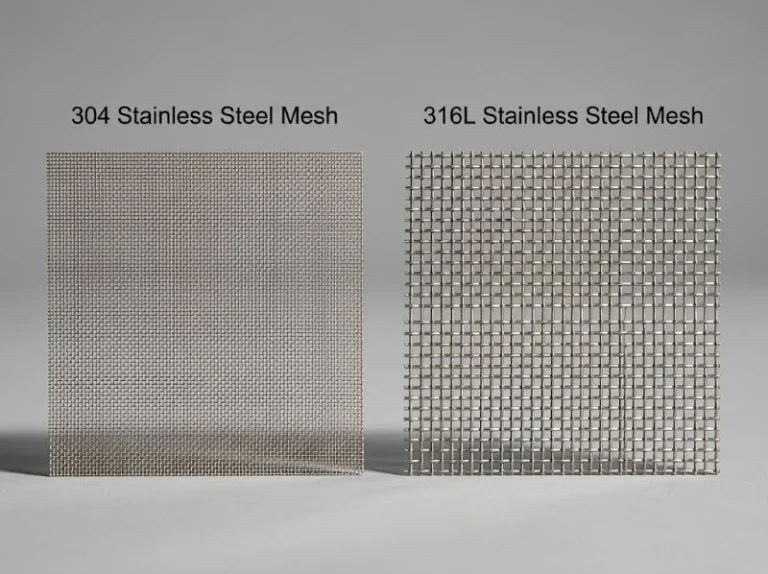
다중 데크 시프터 구성: 메시 크기 및 제품 분획을 지정하는 방법
다단 선별기의 구성은 수집해야 하는 입도 범위와 각 제품에 허용되는 규격 초과 입자 및 미분의 양을 정하는 것에서 시작합니다. 이러한 요구 사항에 따라 분리점, 스크린 개구 크기 및 데크 수가 결정됩니다.
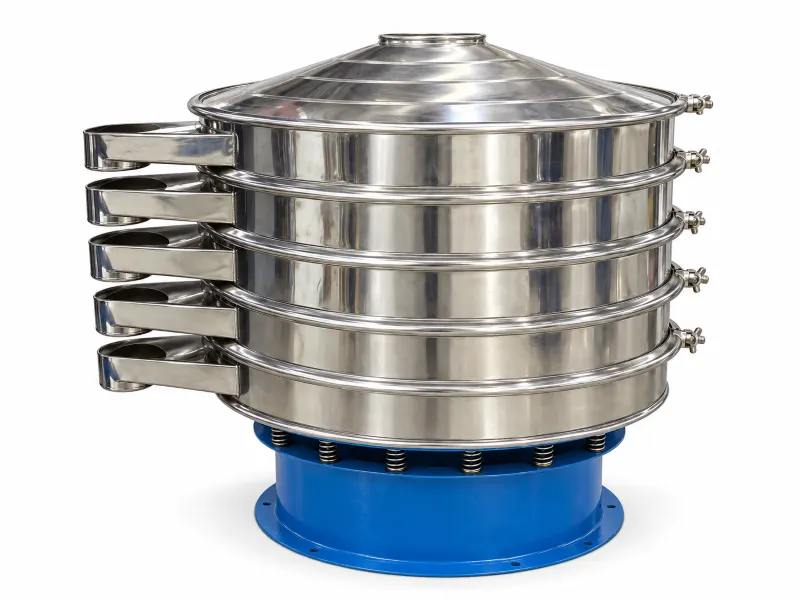
상부에서 원료를 투입하는 일반적인 적층식 배열에서는 스크린 개구가 위에서 아래로 갈수록 작아지며, 각 입도 분획은 별도의 배출구로 배출됩니다. 개구 크기를 마이크로미터 또는 밀리미터로 지정한 다음, 대표 시료를 시험하여 각 배출구의 처리량과 입도 분포를 확인하세요.
스크린 데크를 선택하기 전에 제품 분획 정의하기
스크린 데크 수는 분리해야 하는 입도 경계에 따라 달라집니다. 필요한 각 제품의 입도 범위, 허용되는 규격 초과 입자와 미분의 양, 각 분획의 후속 처리 경로를 나열하세요.
여러 제품 등급이 필요한지 아니면 단순히 규격 초과 입자 검사만 필요한지 확신이 서지 않는다면, 다음에 관한 가이드를 참조하세요. 안전 체질 vs 입자 분류.
일부 공정에서는 규격 초과 입자 검사만 필요합니다. 예를 들어, 포장 전 옥수수 전분 선별은 일반적으로 여러 입도 등급을 수집하기보다 덩어리와 이물질을 제거하는 데 중점을 둡니다.
제품 입도 범위와 분리점 지정하기
네 개의 분획을 얻는 데 항상 네 개의 스크린이 필요한 것은 아닙니다. 예를 들어, 31.5mm를 초과하는 입자가 없는 원료는 5, 10, 20mm의 세 분리점을 사용하여 0–5, 5–10, 10–20, 20–31.5mm의 공칭 입도 범위로 나눌 수 있습니다. 31.5mm를 초과하는 입자도 제거해야 한다면 네 번째 분리점이 필요합니다.
이 예는 분리점의 수를 계산하는 방법을 설명할 뿐, 해당 입자 크기에 적합한 기계를 지정하지는 않습니다.
배출구가 분리된 일반적인 적층식 배열에서는 N개의 선별 데크로 최대 N+1개의 분획을 얻을 수 있습니다. 지지망은 추가 선별 데크로 계산하지 않습니다.
분쇄 파프리카의 경우 스크린 하나로 완제품 분말과 규격 초과 입자를 분리할 수 있습니다. 추가 데크는 더 많은 입도 분획이 필요할 때만 필요합니다. 다음에 관한 가이드는 파프리카 분말 체별 굵은 입자 제거와 다중 등급 선별 중에서 선택하는 방법을 설명합니다.
쌀의 미분을 제거하는 데는 한 번의 체분리만 필요할 수 있습니다. 미분과 작은 파편을 별도로 수거하려면 크기상 분리가 가능하다는 전제하에 추가 분리 단계가 필요합니다. 다음 가이드에서 쌀 체분리용 체 눈 크기와 데크 에 대한 배출구 구성과 점검 사항을 확인하세요.
허용 가능한 조대 입자 및 미분 한도 설정
100–300 μm와 같은 목표 범위가 모든 입자가 반드시 그 안에 들어야 한다는 뜻은 아닙니다. 300 μm를 초과하는 입자와 100 μm 미만인 입자의 최대 허용량을 각각 지정하고, 이를 측정할 시험 방법도 명시하세요.
이러한 합격 기준은 공급업체가 체를 선정하고 시험 결과를 평가할 수 있는 명확한 근거를 제공합니다.
제품 등급과 불합격물 흐름 구분
각 배출구를 판매 가능한 등급, 재처리물 또는 불합격물로 구분하세요. 배출구가 네 개여도 판매 가능한 제품은 두 가지만 수거하고 나머지에서는 조대 입자와 미분을 수거할 수 있습니다.
추가 분리가 필요한 경우에만 데크를 추가하세요. 데크가 늘어나면 기계 높이와 유지보수 작업이 증가하며, 달성 가능한 처리량은 원료, 체 눈 크기 및 각 데크의 투입량에 따라 달라집니다.
부서진 찻잎은 폐기물이 되기보다 다른 제품에 유용하게 쓰일 수 있습니다. 다음 가이드에서 찻잎과 미분의 분리 에 대한 제품 요구사항이 입도별 분획의 선택에 어떤 영향을 주는지 확인하세요.
각 분리 단계의 체 눈 크기 지정
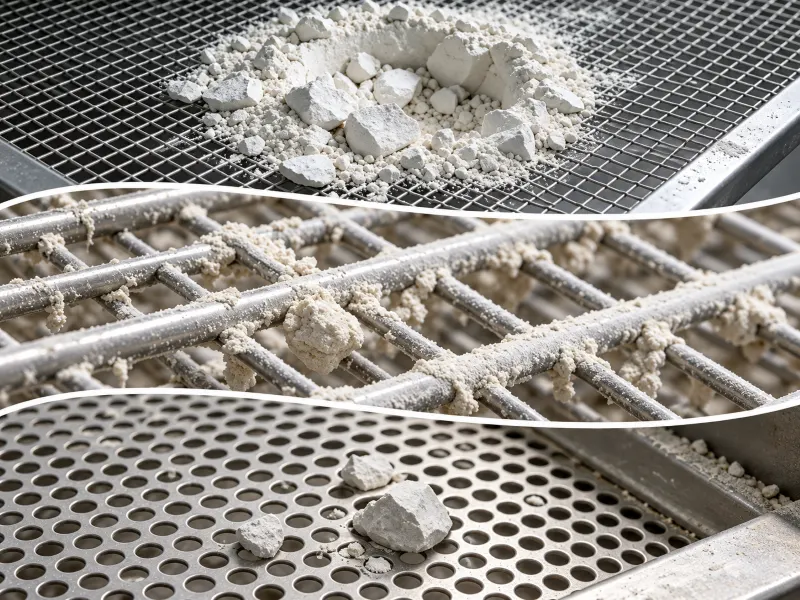
각 데크에 필요한 체 눈 크기를 마이크론(μm) 또는 밀리미터(mm) 단위로 지정하세요. 목표 제품 크기에 따라 시험할 체 눈 크기를 선택한 다음, 원료가 체를 통과하는 방식을 확인하세요. 주문하기 전에 메쉬 수, 와이어 지름 및 체 눈 크기 허용오차를 확인하세요.
메쉬 수와 체 눈 크기: 무엇을 지정해야 할까요?
메쉬 수는 길이 1인치, 즉 25.4 mm당 체 눈의 개수입니다. 80메쉬 체는 1인치 길이에 체 눈이 80개 있다는 뜻이지, 1제곱인치당 80개라는 뜻이 아닙니다. 체 눈 크기는 인접한 와이어 사이의 빈 공간 크기이며, 와이어 지름은 직조된 와이어의 두께입니다.
일반적으로 메쉬 수가 높을수록 체 눈이 작지만, 정확한 체 눈 크기는 와이어 지름에 따라 달라집니다. 정사각형 체 눈을 가진 직조 철망의 경우:
체 눈 크기 (mm) = 25.4 ÷ 메쉬 수 − 와이어 지름 (mm)
예를 들어, 선경이 0.053 mm인 와이어로 만든 200메시 철망의 계산상 망눈 크기는 0.074 mm, 즉 74 μm입니다. 이 계산은 해당 철망에만 적용되며, 모든 200메시 체에 적용되는 보편적인 환산값은 아닙니다.
표준 체 규격도 참고할 수 있습니다:
| 미국 표준 체 규격 | 공칭 망눈 크기 |
|---|---|
| 100번 | 150 mm / 150 μm |
| 200번 | 075 mm / 75 μm |
| 325번 | 045 mm / 45 μm |
이러한 규격을 사용할 때는 적용 표준을 명시하세요. 생산용 체의 실제 망눈 크기는 공급업체에 확인하세요.
선경이 망눈 크기에 미치는 영향을 자세히 알아보려면 다음 가이드를 참조하세요 메쉬 수 대 미크론 크기.
제품 입도 한계에 맞춰 망눈 크기 선정
투입물에 큰 입자와 미분이 모두 포함된 경우, 공칭 입도 2–4 mm의 제품을 얻으려면 두 단계의 분리가 필요합니다. 상단에 4 mm 체, 하단에 2 mm 체를 배치하여 시험을 시작할 수 있습니다. 목표 입도 분획은 상단 체를 통과하고 하단 체에 남습니다.
적용 사례로 두 번의 선별 분리가 어떻게 활용되는지 확인하세요: 세제 과립 입도 관리.
제안된 망눈 크기가 규격을 충족하는지 여부는 재료의 특성에 영향을 받습니다:
- 입도 분포: 어느 쪽 망눈 크기에든 가까운 입자의 비율이 높으면 분리가 더 어려워집니다.
- 입자 형상: 박편, 침상 입자 및 섬유는 방향과 작은 치수에 따라 통과할 수 있습니다.
- 수분과 점착성: 물질이 쌓이면 망눈이 막힐 수 있습니다. 망눈 크기를 변경하기 전에 원료 조정과 망 청소를 검토하십시오.
- 벌크 밀도와 유동성: 이는 스크린 단의 부하와 처리량에 영향을 미치지만, 그 자체로 망눈을 더 크게 또는 작게 할 근거가 되지는 않습니다.
- 마모와 부식: 손상되거나 마모된 망눈은 회수되는 입도 분획에 영향을 미칠 수 있으므로, 이를 고려하여 철망 재질과 검사 요건을 결정합니다.
더 고운 망을 사용한다고 해서 분급이 자동으로 더 정확해지는 것은 아닙니다. 각 망눈은 요구되는 분리에 적합해야 하며, 처리량을 늘리기 위해 망눈을 키우면 원하지 않는 입자가 제품에 섞일 수 있습니다.
선경, 개구율 및 망눈 허용오차 확인
각 스크린 단에 대한 별도 규격서를 작성하십시오. 개구율은 물질이 통과할 수 있는 스크린 표면의 비율입니다. 망눈 허용오차는 망눈 크기에 허용되는 편차를 정의합니다.
| 사양 | 상단 스크린 | 하단 스크린 |
|---|---|---|
| 시험용 망눈 크기 | 4 mm | 2 mm |
| 분리 목적 | 조대 입자 제거 | 목표 제품은 남기고 미분은 통과 |
| 망 규격 및 표준 | 사용 시 확인 | 사용 시 확인 |
| 선경 | 공급업체가 지정 | 공급업체가 지정 |
| 개구율 (%) | 공급업체가 지정 | 공급업체가 지정 |
| 망눈 허용오차 | 공급업체와 합의 | 공급업체와 합의 |
이 망눈 크기는 공칭 2–4 mm 입도 분획을 위한 시험값입니다. 대표 원료 시료가 합의된 입도 한계와 처리량 요건을 충족한 후 최종 스크린을 승인하십시오.
스크린 단 배치를 각 제품 배출구와 연결
스크린 배치도에는 각 입도 분획이 어느 망눈을 통과하고, 어디에 남으며, 어느 배출구로 회수되는지가 표시되어야 합니다. 분말 및 과립 분급에서는 이를 통해 스크린 규격과 회수해야 하는 제품을 연결할 수 있습니다.
스크린 망눈을 큰 것부터 작은 것 순으로 배치
일반적인 상부 투입식 체분리기에서는 망눈이 가장 큰 스크린을 맨 위에, 더 작은 스크린을 그 아래에 배치합니다. 굵은 입자는 상부 배출구로 배출되고, 스크린을 통과한 물질은 다음 스크린으로 이동합니다.
예를 들어 3단 스크린 배열은 위에서 아래로 망눈 크기가 500 μm, 250 μm, 125 μm인 스크린을 사용할 수 있습니다. 각 단에는 하나의 입도 분획이 남고, 세 스크린을 모두 통과한 물질은 맨 아래 수거 팬에 모입니다.
3단 구성 예시: 4개의 분리된 입도 분획
다음 예시는 3단 스크린으로 4개의 분리된 물질 흐름을 생성하는 방법을 보여줍니다.
| 스크린 또는 수거 위치 | 공칭 망눈 크기 | 수거된 물질 | 배출구 및 용도 |
|---|---|---|---|
| 상단 스크린 | 500 μm | 500 μm 스크린에 남은 물질 | A — 검토 또는 재처리할 굵은 물질 |
| 중간 스크린 | 250 μm | 500 μm 스크린을 통과하여 250 μm 스크린에 남은 물질 | B — 제품 A |
| 하단 스크린 | 125 μm | Passes through 250 μm; retained on 125 μm | C — Product B |
| Bottom collection pan | No screen | Passes through the 125 μm screen | D — Fines or by-product |
These are merely schematic representations of the screen apertures and do not constitute recommended settings for any specific material. The indicated particle size ranges represent nominal screening ranges rather than precise particle size limits. Please collect samples from all four discharge outlets for testing to verify the actual particle size distribution.
Label Outlets and Plan Collection or Rework
Mark outlets A–D on the equipment drawing and match each one to a labeled bag, bin or downstream connection. Record the material name and destination for every outlet before installation.
In this example, outlets B and C collect two product grades. Outlet A collects coarse material that must be assessed before rework, while outlet D collects fines that may be usable as a separate product. Keep these streams separate during collection and transfer.
Confirm outlet positions, connection sizes and collection space during design. Our guide to custom rotary vibrating screen options covers these installation requirements alongside material and cleaning choices.
Validate Throughput and Fraction Quality
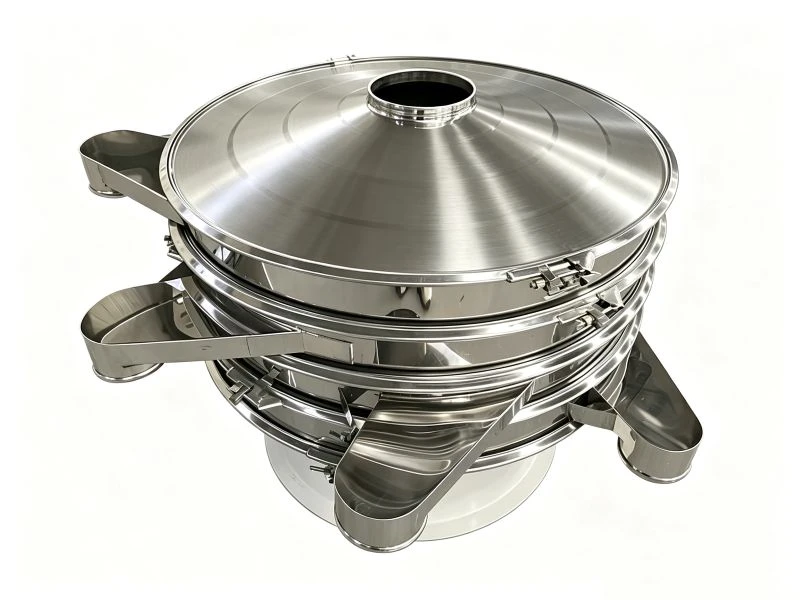
Test the multi-deck sifter configuration with representative material at the required feed rate. Check both throughput and the particle size distribution at every outlet. The machine must meet the product specifications while maintaining stable output.
Check Feed Distribution and Loading on Each Deck
Feed material evenly across the top screen. Each lower deck receives only what passes through the screen above, so its load depends on the feed’s particle size distribution.
Check for buildup on every deck during normal and peak feed conditions. Adding more screening layers does not automatically increase capacity.
Account for Near-Size Particles and Mesh Blinding
Particles close to the screen opening may need more time to pass through. Blocked openings reduce the available screening area and can send usable material to the wrong outlet.
During testing, watch for falling output or changing product quality, then review feed rate, screen area and cleaning needs. Run the trial long enough to reveal gradual buildup rather than judging performance from the first few minutes.
For further checks, see our guide to 미세 분말 스크린 블라인딩.
Verify Size Compliance, Recovery and Mass Balance
Collect feed and outlet samples over the same steady operating period. Agree on acceptance limits before testing.
| Check | What to Measure | Acceptance Basis |
|---|---|---|
| 처리량 | Feed and outlet mass per hour | Required production rate |
| Fraction quality | Particle size distribution at each outlet | Agreed oversize and fines limits |
| 목표 분획 회수율 | Target-size material reaching the correct outlet ÷ target-size material in the feed | Agreed minimum recovery |
| Mass balance | Feed mass compared with total collected mass, allowing for changes in material held inside the machine | Agreed measurement tolerance |
Outlet yield is the mass collected at an outlet divided by total feed mass. Recovery measures how much of the target-size material reaches the intended outlet. Multiply either ratio by 100 to express it as a percentage.
A high yield alone does not prove that the product meets its size specification. Check quality and recovery together to identify usable material being lost through other outlets.
결론
A workable multi-deck sifter configuration connects each required product fraction to a screen opening and a separate outlet. Define the size limits first, confirm the mesh specifications, and test the arrangement at the required production rate.
For help specifying a multi-deck vibratory sifter, send your material details, feed particle size distribution, target fractions and required throughput. Include the permitted oversize and fines in each product so the proposed configuration can be assessed against clear requirements.
자주 묻는 질문
How Many Screen Decks Do I Need for Four Particle Size Fractions?
Three screening decks can produce four fractions in a conventional stacked sifter with separate outlets. Count every stream, including oversize and fines. If you need four saleable grades plus a separate oversize stream, four separation points may be required.
Can a Two-Deck Sifter Remove Both Oversize and Fines?
Yes. The upper screen retains oversize, while the lower screen retains the target product and allows fines to pass through. This produces three streams. Choose both openings from the product size limits and confirm the results through testing.
What Is the Difference Between 200 Mesh and 75 Microns?
“200 mesh” describes a mesh count, while 75 microns describes an opening size. A U.S. standard No. 200 test sieve has a nominal 75 μm aperture, but production cloth sold as 200 mesh can have a different opening depending on wire diameter. Specify the aperture and applicable standard when ordering.
Which Screen Goes on Top of a Multi-Deck Sifter?
For conventional top-fed, serial classification, the screen with the largest opening goes on top. Smaller openings follow below it. This removes coarse material first and allows the remaining material to reach the finer screens.
Will Adding More Screen Decks Increase Throughput?
Not necessarily. Additional decks create more separation stages, but they do not automatically increase capacity. Throughput depends on the material reaching each deck, the screen openings, available area and mesh condition. Test the complete arrangement at the required feed rate.
What Information Should I Send for a Multi-Deck Sifter Quotation?
Provide the material name, feed particle size distribution, target product ranges, permitted oversize and fines, and normal and peak feed rates. Include bulk density, moisture content, material-contact requirements and outlet connections. A representative sample helps the supplier assess the proposed screens and trial conditions.