Cách khắc phục tình trạng tắc lưới sàng trong máy sàng bột cao lanh
When a kaolin powder sifter starts feeding the bagger more slowly, the first question is when the slowdown begins. Does powder pile up as soon as the hopper gate opens? Does the first charge pass easily, only for a layer of dry fines to build up later in the run? Or has a damp batch left a film around the wires?
It’s tempting to fit a coarser mesh, especially with bags waiting to be filled. Before you do, take a look at the oversize discharge. If the screen is catching hard grains that have to stay out of the finished bags, a larger opening could let them through.

What’s actually blocking the mesh?
On a bagging line, the hopper feeds kaolin onto the vibrating mesh. Powder small enough to pass falls straight to the outlet below. That short drop works well for a final check before packaging, when most of the kaolin already meets specification. A soft lump, though, has little time to break apart before it reaches the reject outlet. See the feed and discharge arrangement on an inline vibratory screen.
Watch one complete hopper cycle. Notice where the powder lands and whether the pile clears before the next charge. If you need to open the sifter, shut it down and isolate power according to the site procedure before examining either side of the mesh.
| What the operator sees | Likely cause | Những gì cần kiểm tra |
|---|---|---|
| A damp coating wraps around the wires, obscuring the edges of the openings. | Moist kaolin is sticking to the mesh. | Compare moisture content with a batch that ran well. Check how the bags were stored and how long they stood open. |
| Dry fines collect in patches. The same patches reappear shortly after cleaning. | Fine particles are clinging to the wires or forming loose agglomerates. | Inspect mesh tension and cleaning-ball condition. Note how far into the run the patches return. |
| Individual hard grains are wedged in openings. The surrounding wire is clean. | Particles close to the aperture size have lodged in the mesh. This is called pegging. | Examine a sample of the retained grains. Check that the cleaning balls can move freely beneath the mesh. |
| A pile forms under the hopper outlet but subsides when the gate closes. | Each charge arrives faster than the powder can spread across the screen. | Run a smaller charge or extend the discharge time, keeping the same mesh. |
The same sifter ran well yesterday. What changed with this batch?
Fine kaolin particles have a large surface area relative to their mass. Even a dry powder can form loose agglomerates through particle attraction and electrostatic effects. A damp batch tends to leave a different trace. Powder first sticks to the wires, then builds up around them. As the openings narrow, less powder reaches the bagger.
The reject outlet is worth a look here. Perhaps it usually collects a handful of hard grains, but today it’s discharging pale lumps that crumble under light pressure. Some usable kaolin may be leaving with those lumps. Keep small samples of the feed, screened powder, and rejects for comparison with a normal batch. Crumbling a lump tells you something about the oversize material. The usual particle-size test tells you whether the finished powder meets the customer’s specification.
If the trouble began with bags that had been standing open, try a normally stored batch of the same grade. Leave the mesh and feed setting as they were. If the discharge recovers, compare moisture and lumping in the two lots before making changes to the kaolin powder sifter.
A 300 kg/h bagging line can feed the sifter at 3,000 kg/h
Suppose the hopper drops 25 kg every five minutes. That averages 300 kg/h over a shift. Now suppose the gate releases all 25 kg in 30 seconds. During that half-minute, powder hits the screen at an equivalent rate of 3,000 kg/h.
You can often see the effect at the inlet. A deep pile sits beneath the hopper while mesh near the edge remains exposed. Once the gate closes, the pile works its way through. Try releasing the same charge over a longer interval and watch what happens to the pile. If it clears and the bagged powder still meets specification, you have improved the feed without changing the aperture.
When sizing a kaolin powder sifter, give the supplier the discharge cycle as well as the hourly tonnage. “25 kg in 30 seconds, once every five minutes” describes the load the machine actually sees. Read the inline vibratory screen selection guide.
New mesh, same mesh count, slower discharge
If throughput fell the day you replaced the screen, pull out the old mesh specification. Two screens marked 100 lưới can have different openings. The difference is in the wire diameter.
In a nominal 100-mesh square weave, the distance between wire centers is about 0.254 mm. Subtract the wire diameter to get the theoretical clear opening.
| 100-mesh square weave | Wire diameter | Calculated clear opening | Theoretical open area |
|---|---|---|---|
| Screen A | 0.100 mm | 0.154 mm | 36.8% |
| Screen B | 0.120 mm | 0.134 mm | 27.8% |
The wire in Screen B is only 0.020 mm thicker. Yet each opening is smaller, and the total area available for powder to pass is roughly one quarter lower than on Screen A. If the old screen worked, check its wire diameter and clear aperture alongside the mesh count before ordering another replacement. The figures above illustrate the geometry. Use the supplier’s actual dimensions and tolerances on the purchase order.
When are cleaning balls enough?
If the same kaolin powder sifter used to handle the same grade on the same mesh, inspect the cleaning deck first. The balls should move freely beneath the screen and strike its underside to dislodge trapped particles. Look for worn or missing balls, powder packed into the space where they travel, and mesh that has gone slack. On a fine screen, confirm that the ball size and cleaning arrangement suit the mesh.
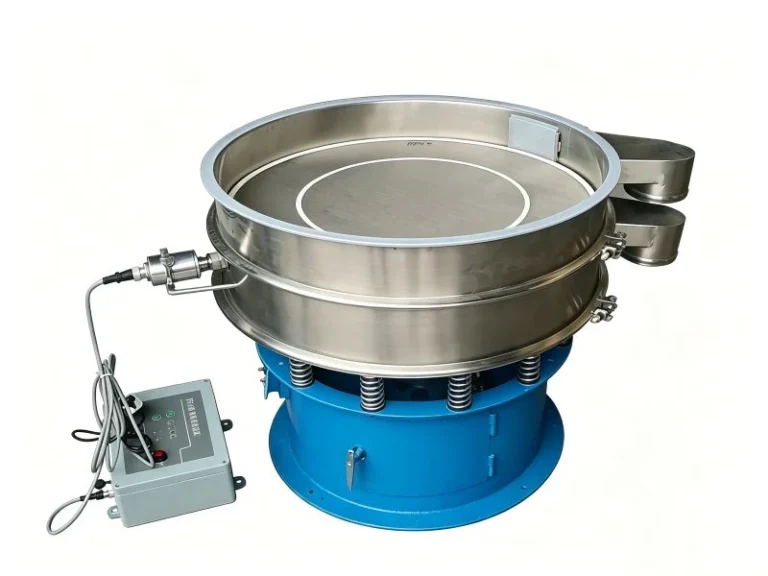
Ultrasonic deblinding is worth trying when dry fines keep coating a properly tensioned screen. The ultrasonic system applies high-frequency vibration to the mesh to help release adhering powder. Compare screened output with the system on and off, using the same batch, mesh, and feed rate. Run the comparison past the point at which production usually slows. Freshly cleaned mesh can give a good result for the first few minutes either way. See how an ultrasonic vibrating screen handles fine powder.
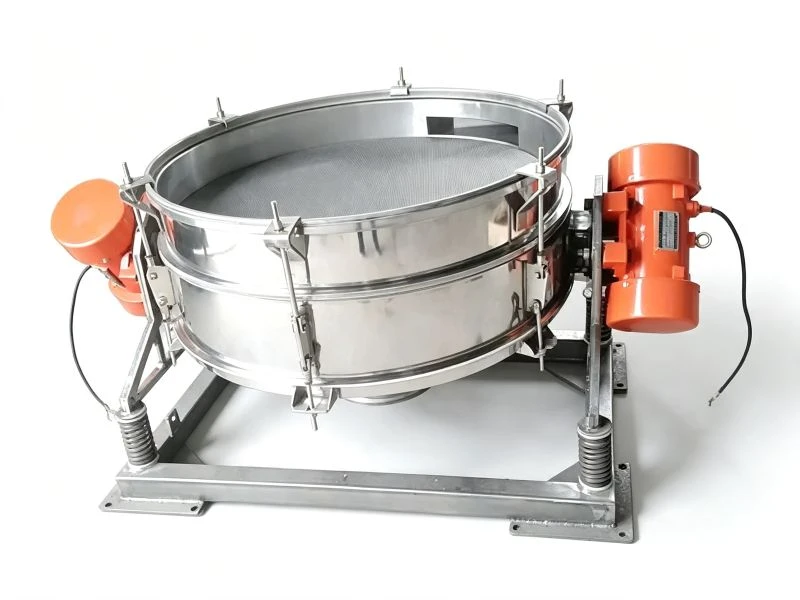
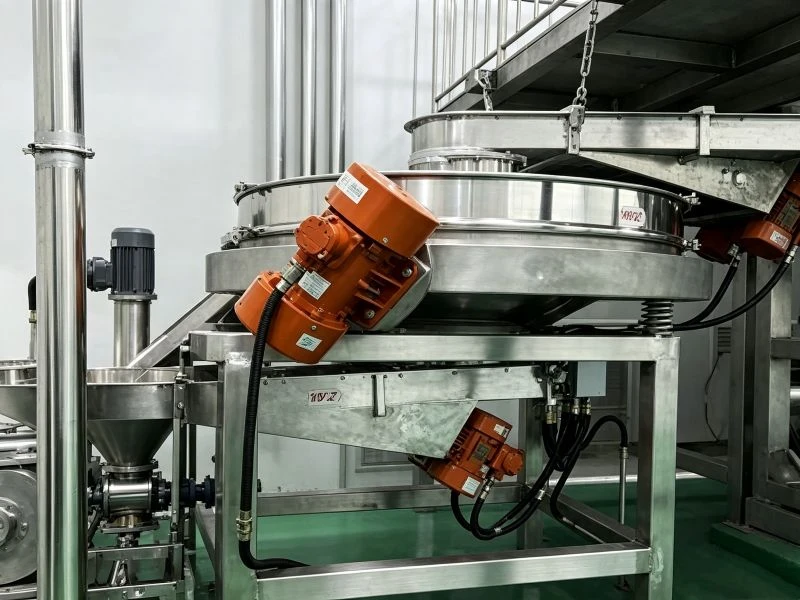
Choosing a kaolin powder sifter for 140, 200, or 325 mesh
Up to 140 mesh for a final check before bagging
For dry kaolin that already meets the product grade, 140 mesh or coarser is a practical starting range for removing occasional oversize. The actual aperture depends on the largest particle the customer will accept in the bag.
How much material stays on the screen also matters. A single-motor inline unit may suit a line that catches very little oversize, provided the operator can clear it. If the line needs to discharge coarse material continuously, consider a dual-motor unit and check where its reject outlet will feed.
A 200-mesh dry kaolin application
Yuan Jing lists 100 kg/h of dry kaolin screened at 200 mesh on a YJ-800-1S vibratory separator. The figure applies to that machine and application. For a comparable duty, supply a representative powder sample, the required hourly output, and the length of a normal production run. View the 200-mesh kaolin entry in the application table.
325 mesh and finer for classification
At 325 mesh, the job changes. Fine kaolin has to pass through small openings while the coarse fraction stays on the screen. If the reject outlet is carrying soft lumps that break down into fines, moving to an even finer mesh may lower output and send more usable powder into the rejects.
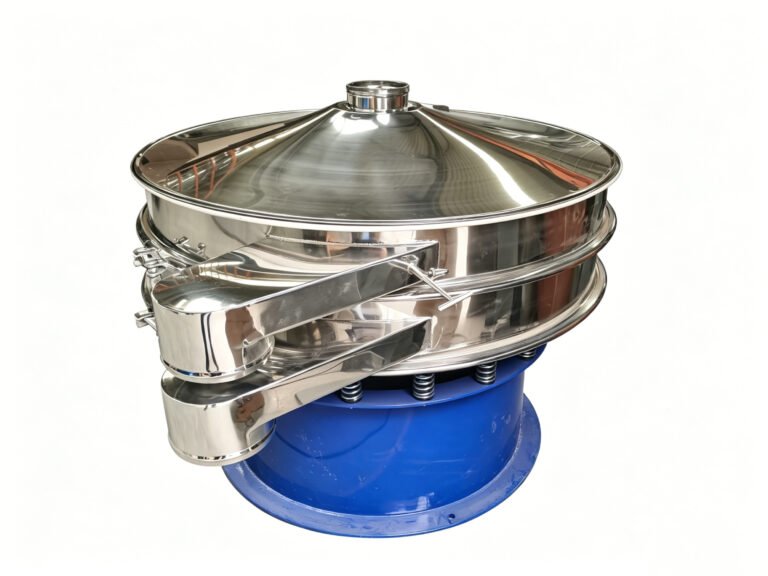
Compare a rotary vibrating sifter with an ultrasonic sieve using the same kaolin. Let each run long enough for the usual buildup to appear, then compare the weight of screened powder that meets specification. Keep a sample from each reject outlet. It can help explain why one machine delivered more usable powder than the other.
Kết luận
For an existing kaolin powder sifter, when the trouble began is often the most revealing detail you can give a supplier. “It slowed down as soon as we fitted a new 100-mesh screen” points toward wire diameter and aperture. “It piles up every time the hopper opens” points toward the feed cycle. For a 325-mesh application, include how much on-spec powder you need at the bagger so the supplier can compare rotary and ultrasonic options against that figure.
If your screen keeps blinding, send Yuan Jing your current mesh size, required output in kg/h, and a photo of the affected mesh. A second photo of what comes out of the reject outlet is useful, especially if it contains lumps that crumble into fine powder. With those details, we can help you decide whether to adjust the feed, improve screen cleaning, or select a different sifter. Discuss your kaolin screening application with Yuan Jing.
Câu hỏi thường gặp
1. How can I stop a kaolin powder sifter from clogging without fitting a coarser screen?
If the pile clears between hopper charges, keep the existing mesh and slow the release of each charge. If powder stays on the wires, examine the deposit. A damp coating warrants a moisture check. With a dry deposit, inspect mesh tension and the cleaning balls, then consider ultrasonic deblinding if the fines keep returning.
2. What vibrating screen mesh size should I use for kaolin before bagging?
Start with the coarse particle you need to keep out of the bag. For a final check on dry kaolin, 140 mesh or coarser is a useful starting range. Once you settle on a screen, record its clear aperture and wire diameter. A spare ordered by mesh count alone can change both the separation and the bagging rate.
3. Can a vibrating screen process 100 kg/h of dry kaolin at 200 mesh?
Yes. Yuan Jing reports 100 kg/h for dry kaolin on its 200-mesh YJ-800-1S separator. When requesting a machine for your line, say whether you need to feed 100 kg/h into the sifter hoặc deliver 100 kg/h of accepted powder to the bagger. The difference matters when an appreciable amount leaves through the reject outlet.
4. Do I need an ultrasonic sieve for 325-mesh kaolin powder?
A 325-mesh specification alone doesn’t settle the choice. Ultrasonic screening is worth evaluating if dry kaolin repeatedly coats the mesh or useful fines leave in loose lumps. Compare it with a rotary vibrating sifter at your required feed rate. Record the output that meets your fineness specification and how long each screen runs before it needs cleaning.
5. What is the difference between an inline sifter and a rotary vibrating screen for kaolin?
An inline sifter gives accepted powder a short, direct path to the bagger. It suits a line that needs to catch occasional coarse particles before packaging. A rotary vibrating screen moves powder across the mesh and can use several decks to separate size fractions. The choice depends on whether you need a final oversize check or separate grades of kaolin.
6. How do I size a kaolin powder sifter for an existing bagging line?
Provide the target screened output in kg/h, required aperture, weight per hopper charge, and discharge time. For a retrofit, measure the available height between the hopper and bagger and identify where the reject outlet can discharge. A machine that handles the powder still has to fit between those two pieces of equipment.