Jak wybrać przeciwwybuchowy przenośnik próżniowy: kompletny poradnik zakupowy
Obchodzenie się z palnymi proszkami wymaga większej ostrożności niż zwykły transport materiałów. W zakładach chemicznych, fabrykach baterii litowych i zakładach farmaceutycznych nagromadzony pył i elektryczność statyczna mogą stwarzać poważne zagrożenia dla bezpieczeństwa.
Materiały takie jak proszek aluminiowy, sadza techniczna, niektóre materiały do produkcji baterii litowych i pigmenty chemiczne mogą podczas transportu wytwarzać palny pył. Jeśli pył ten zetknie się ze źródłem zapłonu, może dojść do wybuchu.
Ultradźwiękowe sito wibracyjne Przeciwwybuchowy przenośnik próżniowy pomaga ograniczyć te zagrożenia, transportując proszek zamkniętymi rurami pod podciśnieniem. Ogranicza uwalnianie pyłu, zmniejsza potrzebę ręcznego przenoszenia materiału i zapewnia zabezpieczenia przeznaczone do materiałów niebezpiecznych.
Jednak nie każda maszyna oznaczona jako “przeciwwybuchowa” będzie odpowiednia dla Twojego zakładu. Konstrukcja urządzeń, ich podzespoły i poziomy ochrony mogą się znacznie różnić.
Przed zakupem sprawdź, czy producent przenośników próżniowych rozumie specyfikę Twojego materiału i warunków pracy. Odpowiednie urządzenie powinno być dopasowane do właściwości proszku, wymagań dotyczących strefy zagrożonej wybuchem i wydajności produkcji — sama wysoka cena lub duża liczba zabezpieczeń nie wystarczą.
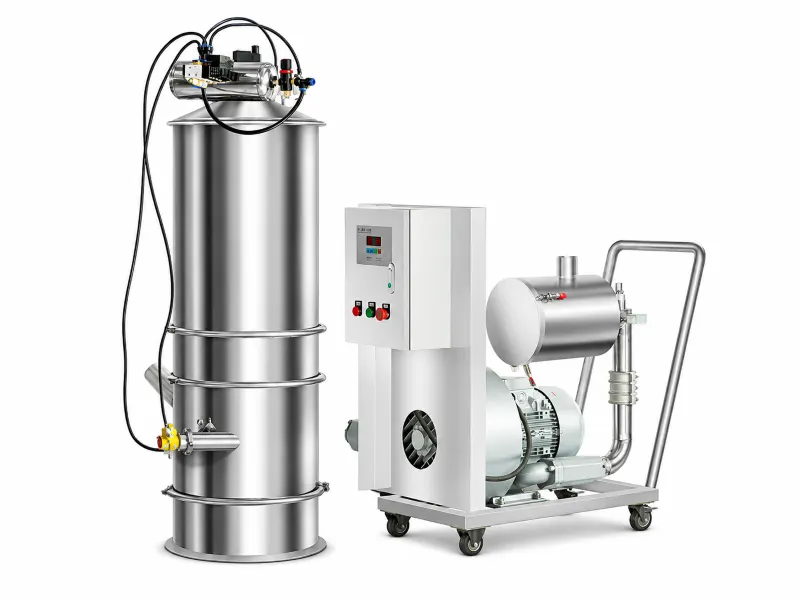
Czym jest przeciwwybuchowy przenośnik próżniowy?
Przeciwwybuchowy przenośnik próżniowy to zamknięty system transportu proszków przeznaczony do zastosowań, w których może występować palny pył lub atmosfera wybuchowa.
Wykorzystuje pompę próżniową lub sprężone powietrze do wytworzenia podciśnienia. Proszek jest transportowany zamkniętym rurociągiem do zbiornika odbiorczego, a następnie przekazywany do kolejnego etapu procesu.
Ogranicza to przedostawanie się pyłu do hali produkcyjnej i zmniejsza potrzebę ręcznego przenoszenia proszku. Więcej informacji o podstawowej zasadzie działania znajdziesz na naszej system podajnika przenośnika próżniowego page.
Jednak, zamknięty system nie jest automatycznie przeciwwybuchowy.
Podczas przemieszczania się proszku przez rury tarcie może powodować powstawanie elektryczności statycznej. Jeśli ładunki się nagromadzą i dojdzie do ich wyładowania, mogą spowodować zapłon palnego pyłu.
Standardowe podajniki próżniowe mogą nie mieć silników, węży, filtrów ani podzespołów elektrycznych odpowiednich do stref zagrożonych wybuchem. System przeciwwybuchowy wymaga odpowiednich zabezpieczeń elektrycznych, uziemienia, uszczelnień i innych środków ochronnych.
Przy wyborze należy uwzględnić cały system transportowy, a nie tylko silnik.
Sprawdź właściwości materiału i wymagania dotyczące ochrony przeciwwybuchowej
Przed wyborem przeciwwybuchowego przenośnika próżniowego należy jasno odpowiedzieć na dwa pytania: Jaki materiał będzie transportowany i gdzie urządzenie będzie pracować?
Poznaj zagrożenie wybuchem związane z Twoim proszkiem
Do typowych materiałów, które mogą wymagać specjalnej ochrony, należą:
- Materiały do produkcji baterii litowych: Niektóre surowce do produkcji baterii i palne proszki metali.
- Proszki chemiczne: Sadza techniczna, niektóre pigmenty, barwniki i substancje organiczne.
- Proszki metali: Proszek aluminiowy i inne palne proszki metali.
- Proszki spożywcze i farmaceutyczne: Niektóre rodzaje skrobi, cukier puder i składniki organiczne.
Nawet ten sam materiał może mieć różne właściwości wybuchowe w zależności od wielkości cząstek, wilgotności i składu.
Przekaż dostawcy kartę charakterystyki (SDS) oraz dostępne wyniki badań wybuchowości pyłu. Do ważnych parametrów należą minimalne stężenie wybuchowe, minimalna energia zapłonu oraz parametry określające gwałtowność wybuchu pyłu.
Inne właściwości również mają znaczenie. Proszki lepkie lub wilgotne mogą wymagać innych filtrów i konstrukcji rurociągów, natomiast materiały ścierne wymagają elementów o większej odporności na zużycie.
Dostosuj urządzenie do strefy zagrożonej wybuchem
Klasyfikacja stref zagrożonych wybuchem w zakładzie określa, jakie środki ochrony przeciwwybuchowej są wymagane.
Sprawdź oznakowanie ochrony przeciwwybuchowej urządzenia, jego certyfikację oraz przewidziane warunki pracy. Jeśli projekt wymaga urządzeń zgodnych z ATEX, odpowiednie elementy i konstrukcja systemu muszą spełniać obowiązujące wymagania.
Pamiętaj, że pył palny może również tworzyć atmosferę wybuchową wewnątrz rurociągów transportowych lub leja zasypowego.
Wybór najwyższego poziomu ochrony nie zawsze jest konieczny. Właściwe rozwiązanie zależy od materiału, miejsca instalacji i oceny ryzyka. Nigdy nie należy rezygnować z niezbędnych zabezpieczeń tylko po to, aby obniżyć cenę.
Pneumatyczne a elektryczne przeciwwybuchowe przenośniki próżniowe
Dwa często stosowane rozwiązania to pneumatyczne przenośniki próżniowe oraz systemy elektryczne z silnikami przeciwwybuchowymi.
Oba rozwiązania można stosować w odpowiednich zastosowaniach, ale różnią się źródłami zasilania i wymaganiami eksploatacyjnymi.
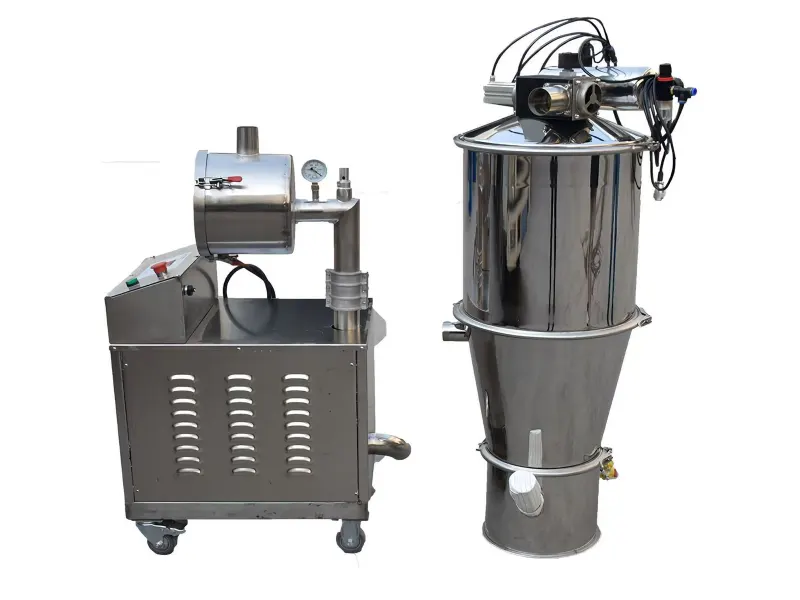
Pneumatyczny przenośnik próżniowy
Pneumatyczny przenośnik próżniowy wykorzystuje sprężone powietrze i generator podciśnienia do wytwarzania siły ssącej.
Generator podciśnienia nie ma elektrycznego silnika napędowego, dzięki czemu eliminuje się ten silnik jako potencjalne elektryczne źródło zapłonu. Może to być przydatne w zakładach, w których obowiązują surowe ograniczenia dotyczące urządzeń elektrycznych, lub w fabrykach dysponujących stabilnym zasilaniem sprężonym powietrzem.
Nasz pneumatyczny przenośnik podciśnieniowy strona wyjaśnia, jak działa ten typ urządzenia.
Jednak urządzenia pneumatyczne nie są całkowicie wolne od ryzyka wybuchu. Nadal należy uwzględnić elektryczność statyczną, gromadzenie się pyłu, tarcie mechaniczne i inne potencjalne źródła zapłonu.
Zużycie sprężonego powietrza również wpływa na koszty eksploatacji. Upewnij się, że sprężarka może zapewnić ciśnienie i przepływ powietrza wystarczające do uzyskania wymaganej wydajności transportu.
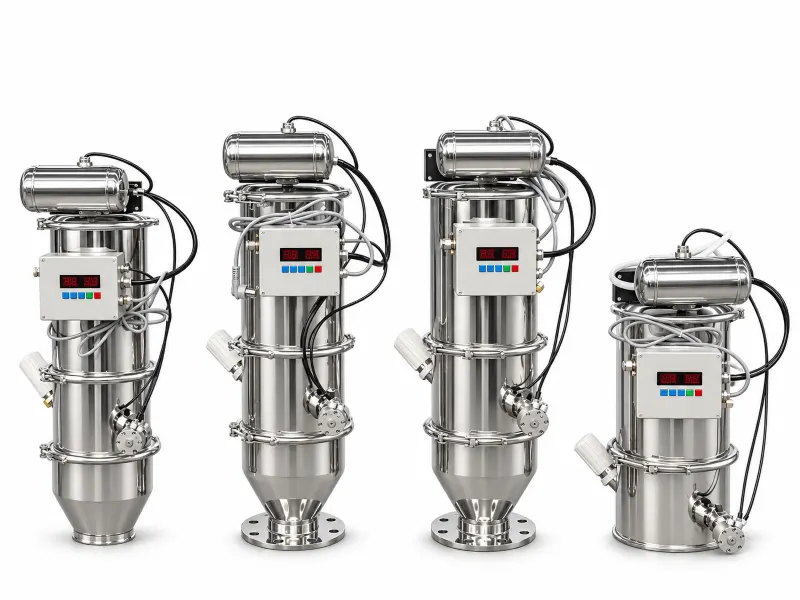
Elektryczny przeciwwybuchowy przenośnik próżniowy
System elektryczny wykorzystuje pompę próżniową napędzaną silnikiem do wytwarzania podciśnienia.
Można go skonfigurować pod kątem różnych odległości transportu, wydajności i czasu pracy. W przypadku dłuższych tras transportowych lub częstej pracy warto rozważyć system elektryczny.
Silnik nie jest jedynym elementem wymagającym ochrony. Pompy próżniowe, panele sterowania, czujniki i inne elementy elektryczne zainstalowane w strefach zagrożonych wybuchem również muszą spełniać odpowiednie wymagania.
Which Type Should You Choose?
| Pozycja | Pneumatic Type | Electric Type |
|---|---|---|
| Power source | Compressed air | Electric vacuum pump |
| Main feature | No drive motor in the vacuum generator | Motor-driven vacuum generation |
| Site requirements | Stable compressed air supply | Suitable electrical supply |
| Pojemność | Depends on air supply and vacuum generator | Depends on pump and system design |
| Main considerations | Air consumption, pressure, safety | Electrical protection, capacity, energy use |
Neither option is always better.
A producent przenośników próżniowych should consider your material, hazardous area, conveying distance, and available utilities before recommending a system.
Key Features to Check Before Buying
The performance and safety of an explosion-proof vacuum conveyor depend on more than its vacuum source. Pay attention to the following components.
Explosion-Proof Electrical Components
For an electric system, check the motor, vacuum pump, control panel, and sensors.
Ask the supplier whether these components are suitable for your hazardous area and whether the required certificates and technical documents are available.
A certified explosion-proof motor does not automatically make the entire conveyor suitable for hazardous environments.
Equipment Materials and Sealing
Material-contact parts are commonly made from 304 or 316L stainless steel.
304 stainless steel works for many general powder applications. For more corrosive materials or stricter cleanliness requirements, 316L may be a better option.
Sealing is equally important. Poorly sealed joints, discharge valves, and pipe connections may allow dust to escape.
For food, pharmaceutical, or multi-product production lines, choose equipment that is easy to open and clean to reduce material residue and cross-contamination.
Anti-Static Pipes and Hoses
Powder moving through pipelines can generate static electricity.
Use suitable conductive or anti-static pipes and flexible hoses based on the material. Metal hoppers, pipelines, and other conductive components should be properly bonded and grounded.
Pipe layout also matters. Too many bends or sudden diameter changes can increase conveying resistance, wear, and powder buildup.
Filters and Pulse-Jet Cleaning
Filters separate powder from the conveying air and help prevent material from entering the vacuum source.
For combustible powders, suitable anti-static or conductive filters may be required.
As powder builds up on the filter surface, suction can decrease and conveying cycles may become longer.
Many systems use pulse-jet filter cleaning to remove collected powder and maintain airflow. The cleaning method and gas supply must also be suitable for the material being handled.
Conveying Performance and Production Line Integration
Even a well-protected explosion-proof vacuum conveyor must deliver the required capacity without frequent blockages.
Material Properties and Conveying Capacity
Particle size, bulk density, moisture, stickiness, and flowability all affect conveying performance.
Dry, free-flowing powders are often easier to handle. Moist or sticky materials may need different suction settings, pipelines, or discharge designs.
The same conveyor can achieve different capacities when handling different powders.
For difficult materials, a conveying test before purchase can help confirm performance.
Conveying Distance and Lifting Height
When requesting a quotation, provide the horizontal conveying distance, vertical lifting height, number of bends, and required capacity in kg/h or t/h.
Longer routes and higher lifts increase resistance, so the vacuum source and pipe diameter must match the actual layout.
For batch conveying systems, remember that suction and discharge take place in separate parts of the cycle. Both affect the average hourly capacity.
Connecting with Other Equipment
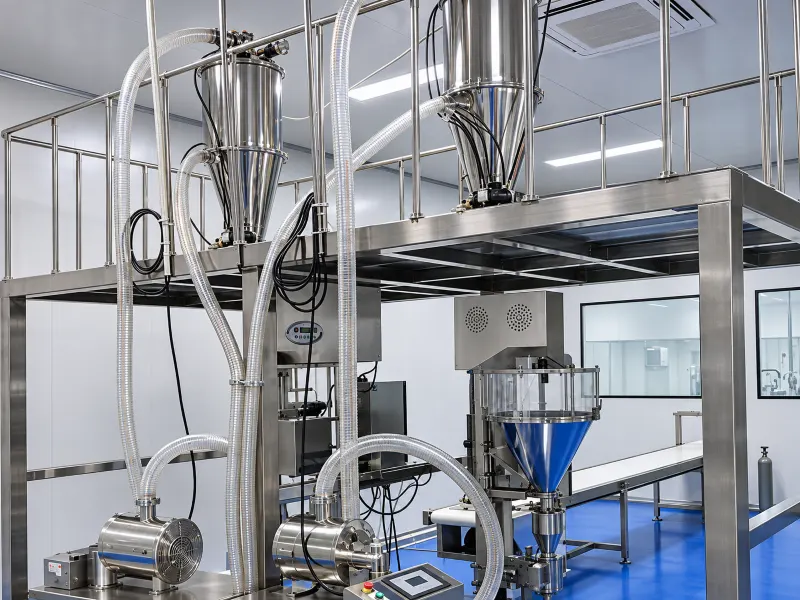
Vacuum conveyors often work with bag dump stations, bulk bag unloaders, vibrating screens, storage hoppers, and mixers.
For example, a bezpyłową stację rozładunku worków can feed powder into a closed conveying line, reducing manual handling and dust around the loading area.
If your process also requires screening, see our guide to connecting a vacuum conveyor and vibro sifter.
The entire production line needs to be assessed for dust hazards, not just the conveyor.
A producent przenośników próżniowych with system design experience can help plan the pipe route, equipment connections, and maintenance space while reducing areas where powder may collect.
How to Choose a Vacuum Conveyor Manufacturer
Explosion-proof equipment often costs more than standard powder feeders. But two machines that look similar may have very different safety components and performance.
Check Certifications
Some equipment sold as explosion-proof may only be a standard conveyor with a few modified parts.
Ask the producent przenośników próżniowych for the relevant certificates, technical drawings, and component list.
Check the equipment model, explosion protection marking, certification scope, and applicable conditions. Where possible, verify the documents through the issuing organization’s official records.
For projects that require safety inspection or approval, confirm the necessary documents before placing an order.
Compare Equipment Configurations
Do not compare quotations based on price alone.
Check the motor, electrical controls, stainless steel grade, filters, sealing parts, and safety features.
Once the equipment meets your safety and production requirements, compare its purchase price, energy consumption, maintenance needs, and spare parts costs.
Check After-Sales Support
Filters may become blocked, seals can wear out, and pipes may eventually need replacement.
Before buying, ask about installation guidance, commissioning, warranty, spare parts, and technical support.
Components that affect explosion protection should not be replaced with ordinary parts without a proper technical assessment.
Information Needed for Equipment Selection
To receive an accurate recommendation, provide the producent przenośników próżniowych with the following information:
| Informacje | What to Provide |
|---|---|
| Materiał | Name, particle size, bulk density, moisture, flowability, and explosion properties |
| Hazardous area | Area classification, applicable standards, and available test data |
| Conveying route | Horizontal distance, vertical lift, and number of bends |
| Pojemność | Required kg/h or t/h and operating cycle |
| Site conditions | Electrical supply, compressed air, and installation space |
| Equipment connections | Feeding point and receiving equipment |
| Special requirements | Material grade, cleaning, automation, and custom features |
These details help the engineering team choose the right vacuum source, filters, pipelines, and protection measures.
For complex factory layouts, a site review may also help before the final design is confirmed.
Wnioski
Choosing the right Przeciwwybuchowy przenośnik próżniowy starts with understanding your powder, hazardous area, and conveying requirements. The equipment should be safe, reliable, and easy to maintain.
Looking for a reliable producent przenośników próżniowych? Contact Yuanjing Machinery and share your material, conveying distance, required capacity, and explosion-proof requirements.
Our team can help you choose a suitable powder conveying solution for your production line.
Czy potrzebuję ultradźwiękowego przesiewacza wibracyjnego do drobnego proszku?
Q1: Is a Pneumatic Vacuum Conveyor Safer Than an Electric Model?
Not always. A pneumatic vacuum generator has no electric drive motor, but static electricity, mechanical friction, and dust buildup can still create risks.
An electric system can also be suitable when correctly designed and protected. Safety depends on the complete system, not just the power source.
Q2: Can I Convert a Standard Vacuum Conveyor into an Explosion-Proof Model?
Replacing the motor alone is not enough.
Electrical components, filters, hoses, static control, and other parts may also need changes. A qualified specialist should assess the equipment and confirm the required protection before it is used in a hazardous area.
Q3: Can a Closed Vacuum Conveyor Prevent All Dust Leakage?
Closed vacuum conveying greatly reduces dust release, but zero leakage cannot be guaranteed under every condition.
Sealing, filter performance, feeding methods, and maintenance all affect dust control. For cleaner operation, the system can be combined with a dust-free feeding station and suitable dust collection equipment.
Q4: Does an Explosion-Proof Certificate Guarantee That the Machine Will Pass a Safety Inspection?
No. A certificate covers only the equipment or components within its stated scope.
The complete installation must also meet the relevant requirements for hazardous area classification, electrical protection, grounding, and other safety measures.
Q5: Can an Explosion-Proof Vacuum Conveyor Handle Aluminum Powder, Carbon Black, or Lithium Battery Materials?
A system can be designed for certain grades of these materials, but not every model is suitable.
Aluminum powder and some battery materials can present serious dust explosion risks. The supplier should review the material properties, static control requirements, conveying distance, and capacity.
Additional safety assessments or conveying tests may be needed.
Q6: How Often Should the Filter Be Replaced?
There is no fixed replacement schedule.
Filter life depends on the powder, dust load, operating hours, and cleaning performance. If suction remains weak after cleaning, inspect the filter for blockage or damage.
Use replacement filters that meet the original filtration and anti-static requirements.