
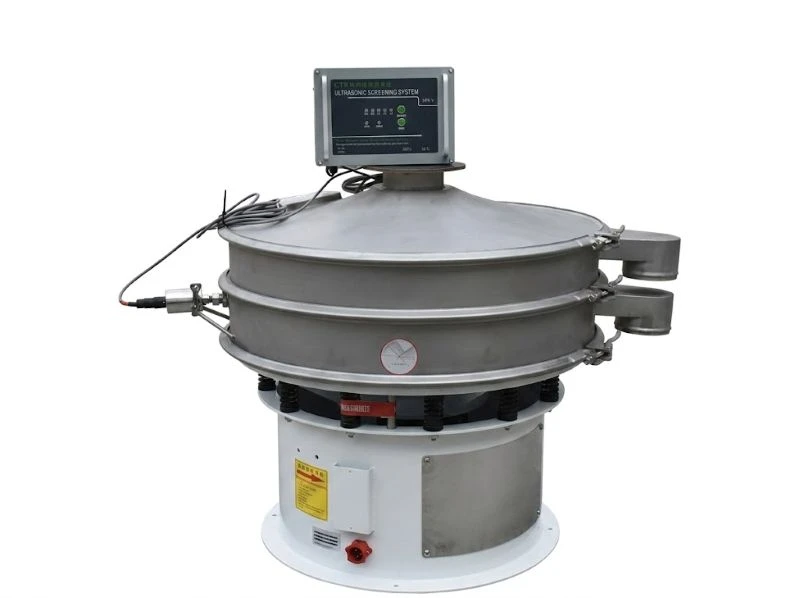
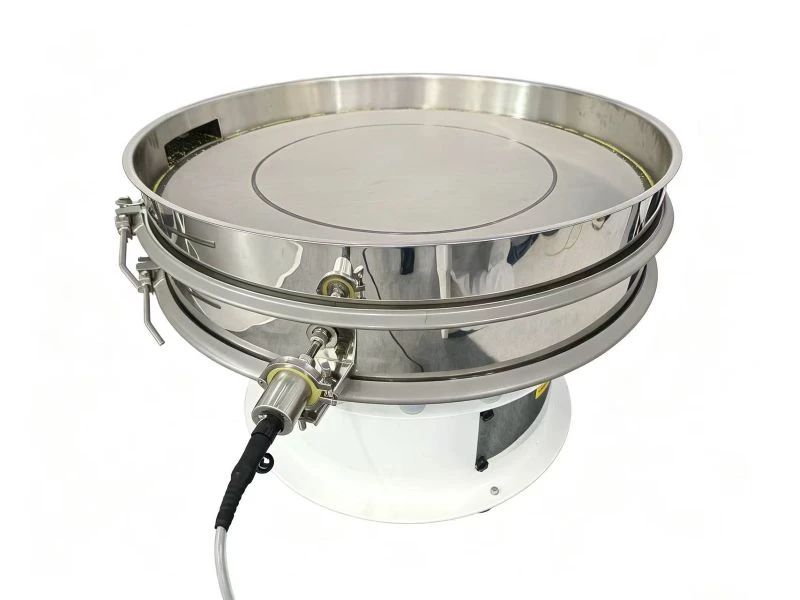
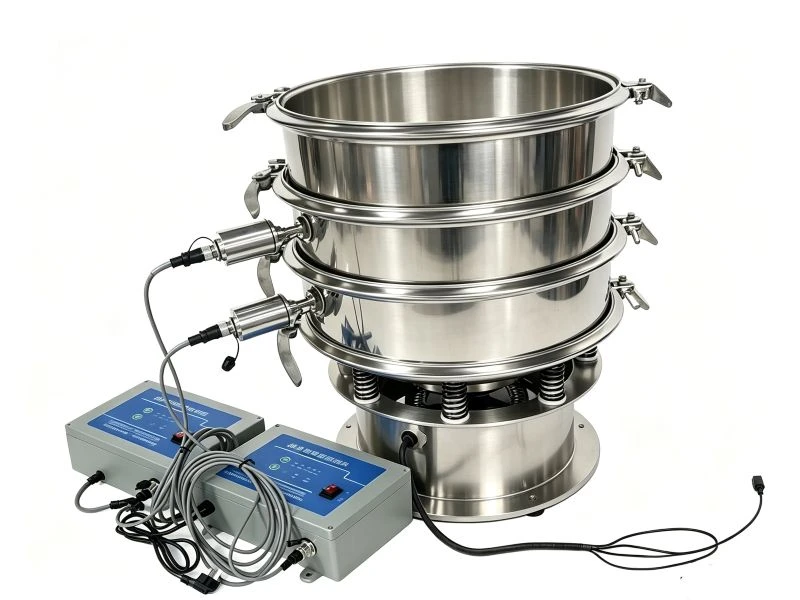
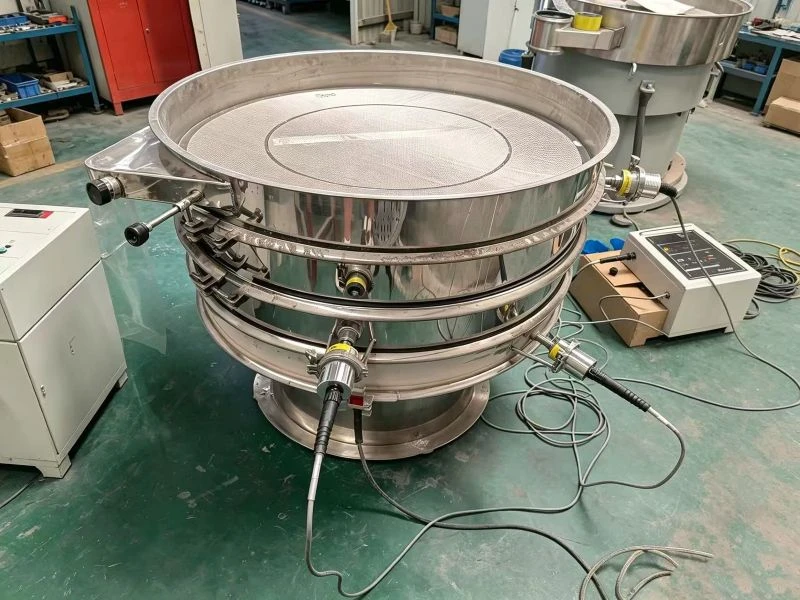
Ultrasonic Vibrating Screen for High-Precision Fine Powder Screening
The Ultrasonic Vibrating Screen is designed to improve screening accuracy for ultra-fine powders and difficult-to-screen materials. By introducing high-frequency ultrasonic vibration, it effectively prevents mesh clogging, increases throughput, and delivers consistent particle separation. It is widely used in pharmaceuticals, food processing, chemicals, battery materials, metal powders, and additive manufacturing industries.
What Is an Ultrasonic Vibrating Screen?
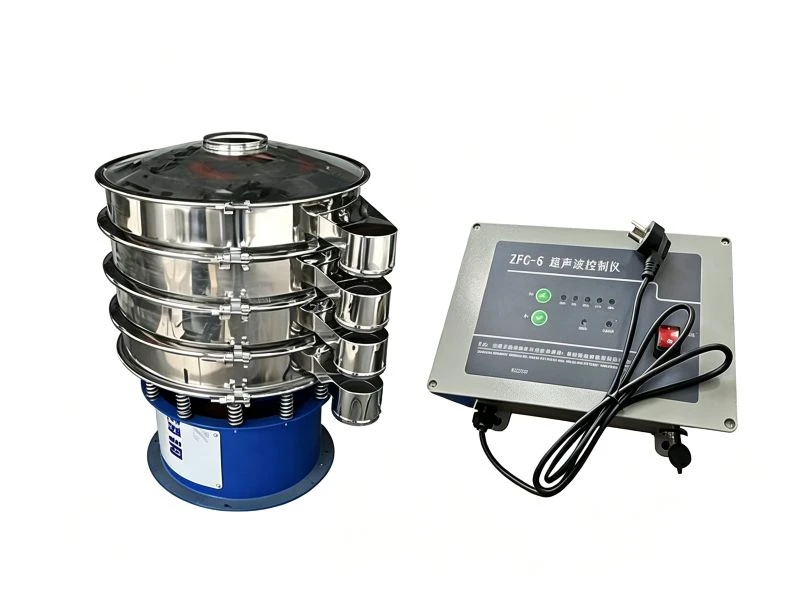
The ultrasonic vibrating screen is a type of vibrating screen that incorporates an ultrasonic system into the standard rotary vibrating screen design. This system introduces a low-amplitude, high-frequency mechanical wave to the screen mesh; the resulting high-speed action keeps the material on the screen surface in a suspended state, thereby preventing mesh clogging caused by factors such as adhesion, friction, settling, and wedging.
How Does an Ultrasonic Vibrating Screen Work?
Un tamis vibrant ultrasonique introduces a low-amplitude, high-frequency ultrasonic vibration wave onto the screen mesh. It converts standard electrical power (220V/50Hz or 110V/60Hz) into 18kHz high-frequency electrical energy and feeds it into an ultrasonic transducer, which transforms it into 18kHz mechanical vibration. Driven by the ultrasonic generator, this vibration causes the screen frame to resonate and transmits the energy to the screen surface, inducing high-frequency vibration that enables rapid screening and prevents mesh blinding.
Caractéristiques
Le tamis vibrant ultrasonique mitigates issues such as the “flat-fall” effect (where powder makes only light contact with the mesh openings) and sliding effects associated with low-density powders during gravity settling; it prevents high-density metal particles from becoming trapped or wedged in the mesh and reduces the adhesion of electrostatically charged powders, thereby enhancing both screening efficiency and quality.
1. Eliminates the need for anti-clogging devices like bouncing balls, extending the service life of the screen mesh.
2. Increases screening intensity by 1–70% and boosts throughput by up to 10 times.
3. Solves screening challenges associated with materials such as ultrafine powders, difficult-to-screen granules, and flocculent substances.
4. Prevents powder contamination caused by auxiliary components like bouncing balls.
5. Maintains consistent mesh aperture size, ensuring stable screening precision.
6. Breaks down agglomerated or adhered material, reduces the volume of oversize material (oversize residue), and minimizes the number of screening passes required.
Structure of the Crible vibrant à ultrasons
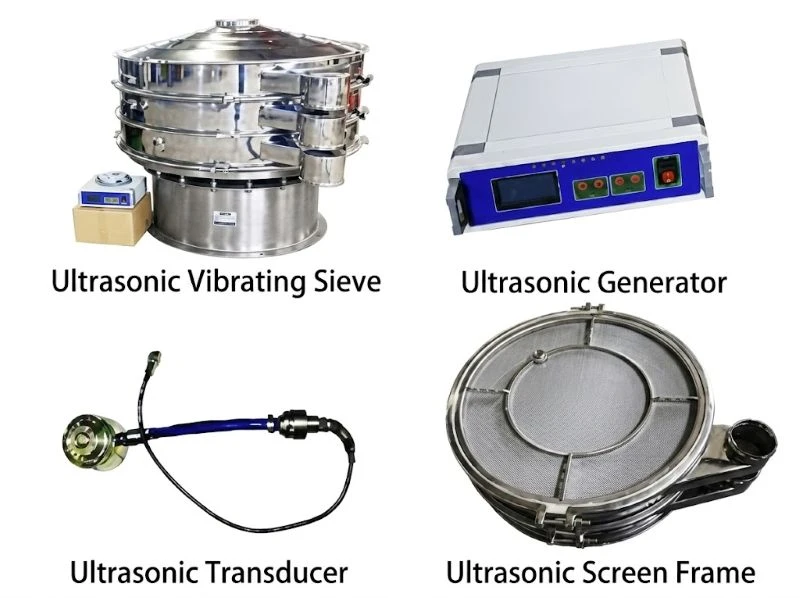
Le séparateur vibrant ultrasonique features a compact and rational design, primarily consisting of an ultrasonic generator, a transducer, an ultrasonic screen frame, a vibration motor, and a base.
Générateur ultrasonique
Converts electrical energy into high-frequency electrical signals.
Ultrasonic transducer
Converts the high-frequency electrical signals from the generator into high-frequency mechanical vibrations.
Ultrasonic screen frame
Can be configured as a single-layer or multi-layer unit depending on classification requirements; options include stainless steel woven mesh, polyurethane screens, and more.
Spécifications techniques
| Modèle | Diamètre (mm) | (mm) | Plateaux | Puissance (kW) | Précision (%) | Capacité (kg/h) |
| YJ-400 | 400 | 340 | 1-5 | 0.25 | ≥95% | 50-200 |
| YJ-600 | 600 | 530 | 1-5 | 0.55 | ≥95% | 100-500 |
| YJ-800 | 800 | 720 | 1-5 | 0.75 | ≥95% | 200-800 |
| YJ-1000 | 1000 | 900 | 1-5 | 1.1 | ≥95% | 500-1200 |
| YJ-1200 | 1200 | 1100 | 1-5 | 1.5 | ≥95% | 800-2000 |
| YJ-1500 | 1500 | 1400 | 1-5 | 2.2 | ≥95% | 1000-3500 |
| YJ-1800 | 1800 | 1700 | 1-5 | 3 | ≥95% | 1500-5000 |
Vidéos associées
Applications
Notre ultrasonic vibrating screens are specifically designed for screening ultra-fine, lightweight, and difficult-to-separate powders.
| Industrie | Typical Materials |
| Battery Materials | Lithium Carbonate, Lithium Hydroxide, Poudre de graphite, LFP Powder |
| Poudres métalliques | Stainless Steel Powder, Titanium Powder, Copper Powder, Aluminum Powder |
| Pharmaceutical | API Powder, Lactose, Starch, Herbal Extract Powder |
| Food Processing | Flour, Milk Powder, Starch, Cocoa Powder,Poudre de pollen |
| Chemical Materials | Calcium Carbonate, Silica Powder, Resin Powder, Activated Carbon |
Custom Crible vibrant à ultrasons
To meet the requirements of different industries and production environments, our ultrasonic vibrating screens offer a wide range of customizable options, including 304/316L stainless steel or carbon steel construction, explosion-proof motors, mobile wheels, dust covers, PLC control systems, and food-grade surface polishing.
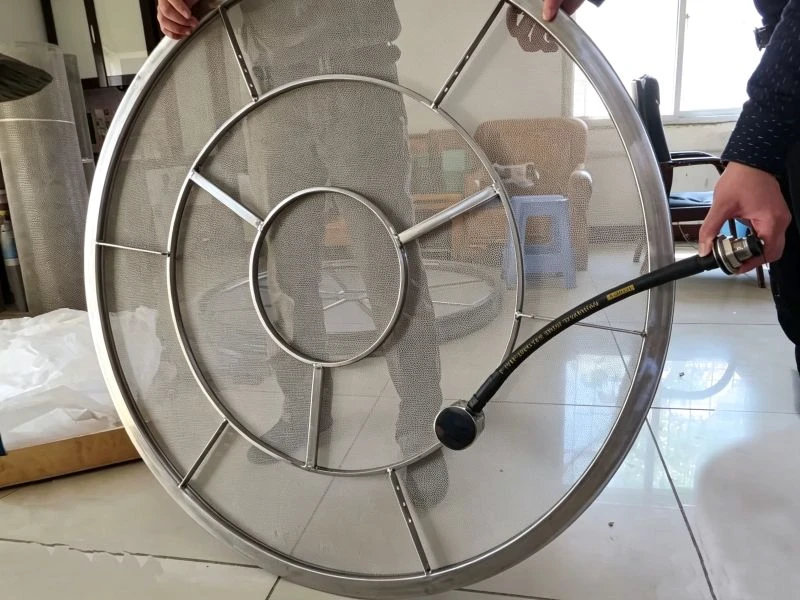 Space frame
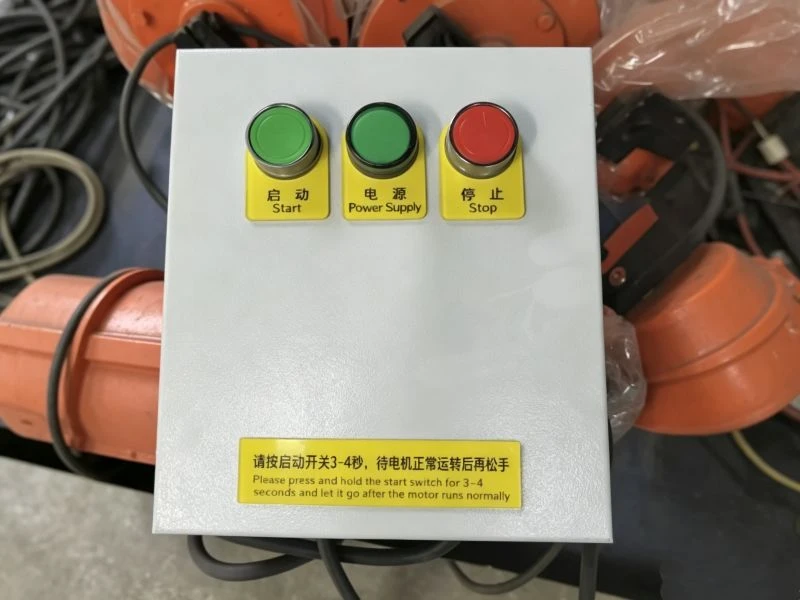 Control box
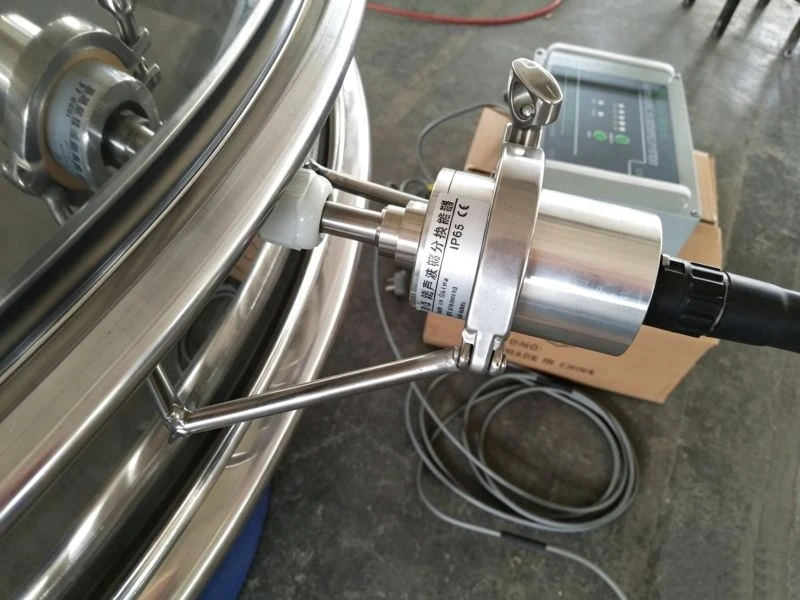 Transducteur
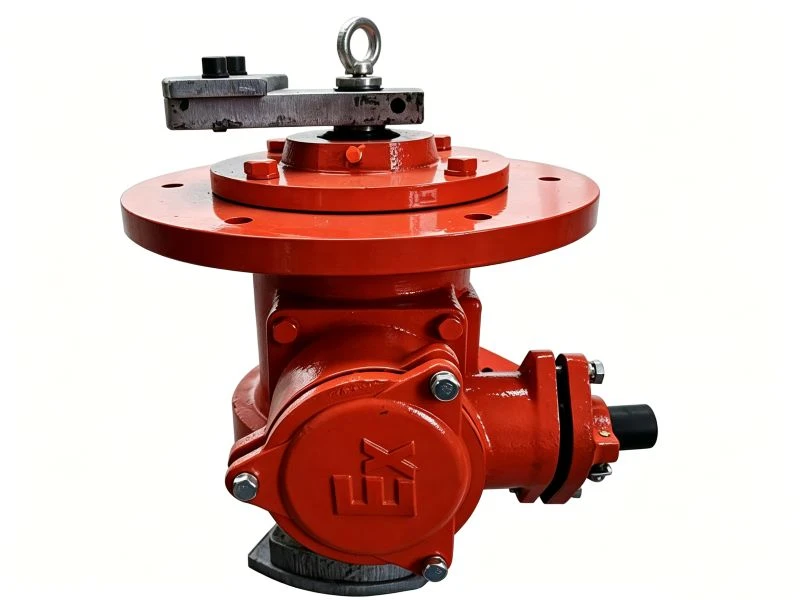 Moteur antidéflagrant
Ultrasonic Vibrating Screen vs Rotary Vibrating Screen
Supports various non-standard customizations to meet diverse operating conditions.
1. Differences
The standard rotary vibrating sieve is a general-purpose circular vibrating screen that relies solely on motor vibration and rubber cleaning balls; it is suitable for materials with coarse to medium mesh sizes.
The ultrasonic rotary vibrating sieve is an upgraded version of the standard model; it incorporates a high-frequency ultrasonic vibration system specifically designed to overcome the challenges associated with screening ultra-fine powders.
2. Selection Recommendations
For materials <200 mesh that are free of static electricity, do not easily stick to the mesh, and when the budget is limited: choose the standard rotary vibrating sieve.
For materials ≥200 mesh—such as ultra-fine powders, metal powders, graphite, lithium battery raw materials, powders prone to agglomeration or static, or for high-capacity continuous production: the ultrasonic rotary vibrating sieve is the necessary choice.
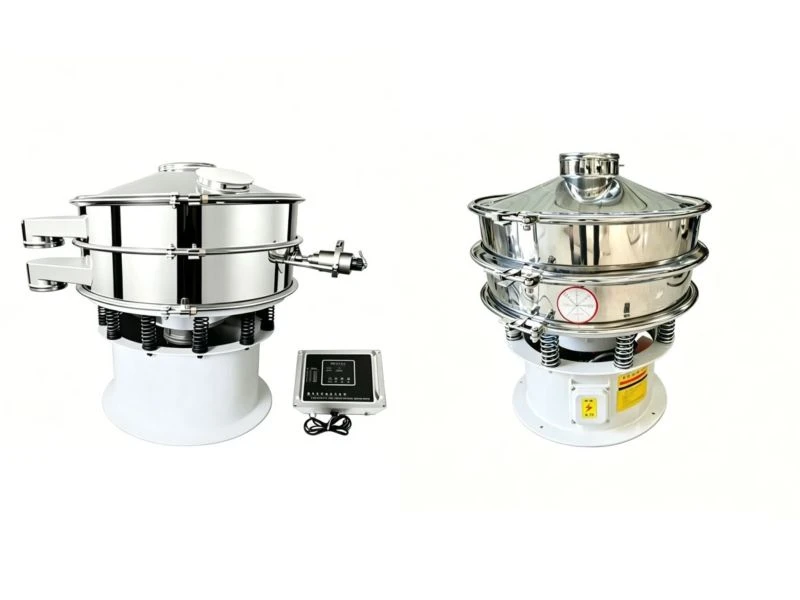
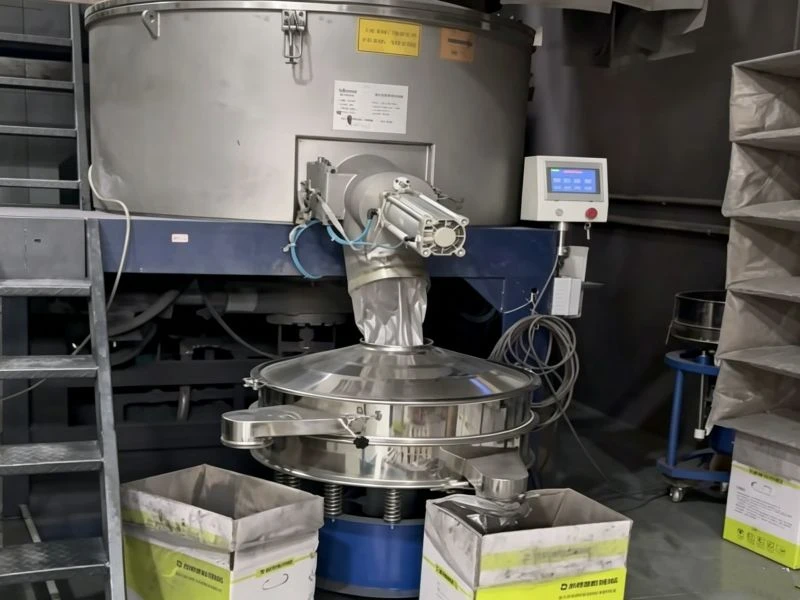
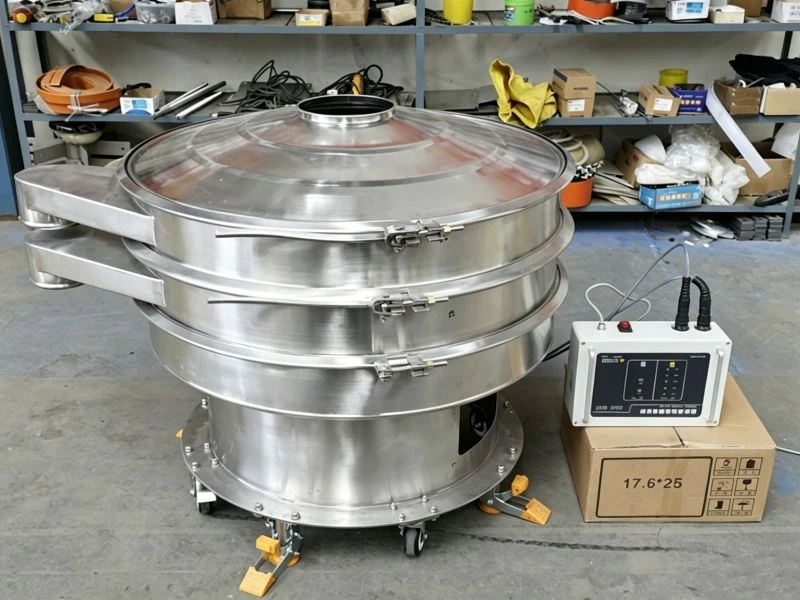
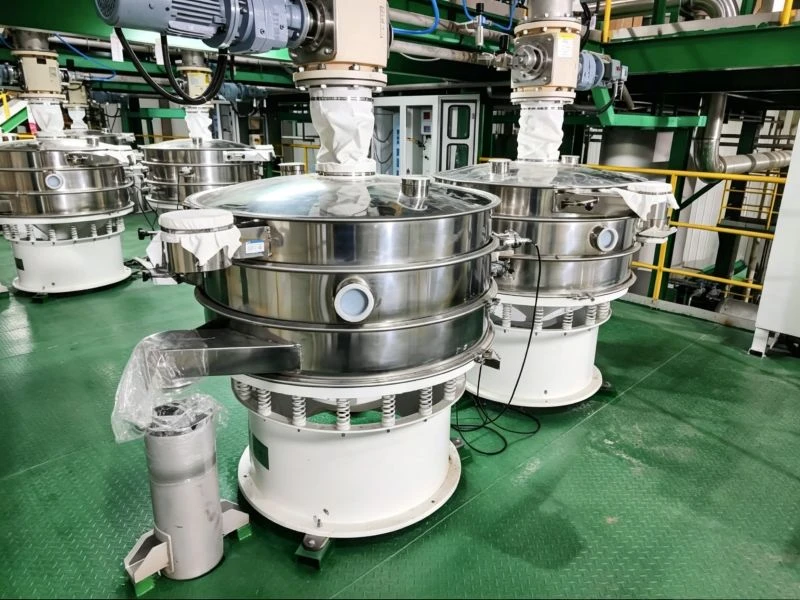
Nos réalisations
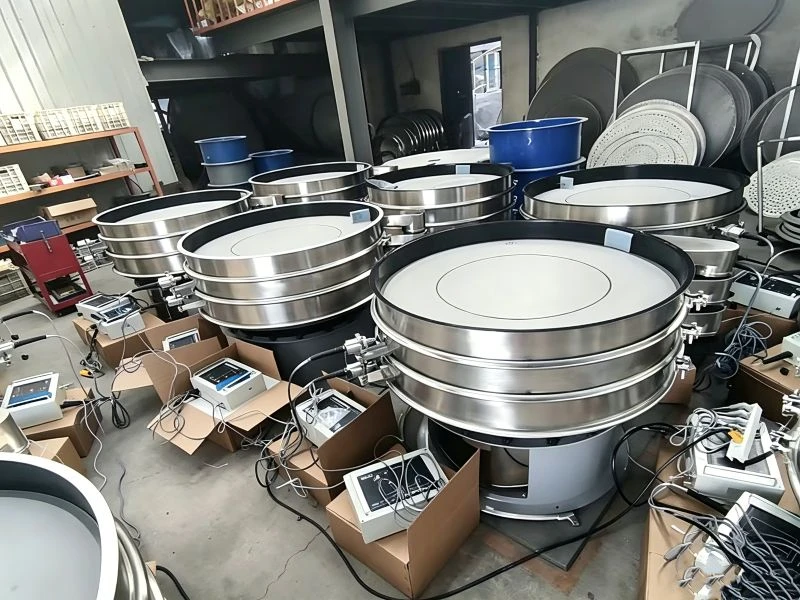
How to Choose the Right Ultrasonic Vibrating Screen
When selecting a suitable ultrasonic vibrating screen, the following points should generally be considered:
Material Characteristics
Consider particle shape, density, flowability, abrasiveness, and whether the material is prone to agglomeration or static buildup.
Particle Size & Mesh Requirement
Determine the target particle size distribution and the required mesh size to ensure the desired screening accuracy.
Production Capacity
Select the appropriate screen diameter, deck configuration, and motor power based on your hourly processing capacity.
Industry Requirements
Choose suitable construction materials and surface finishes, such as 304 or 316L stainless steel, to comply with food, pharmaceutical, chemical, or battery industry standards.
Produits associés
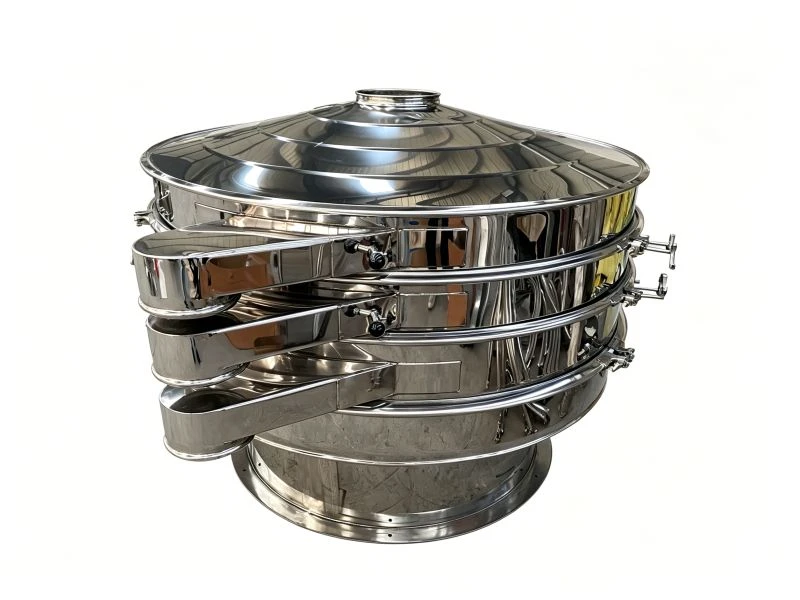
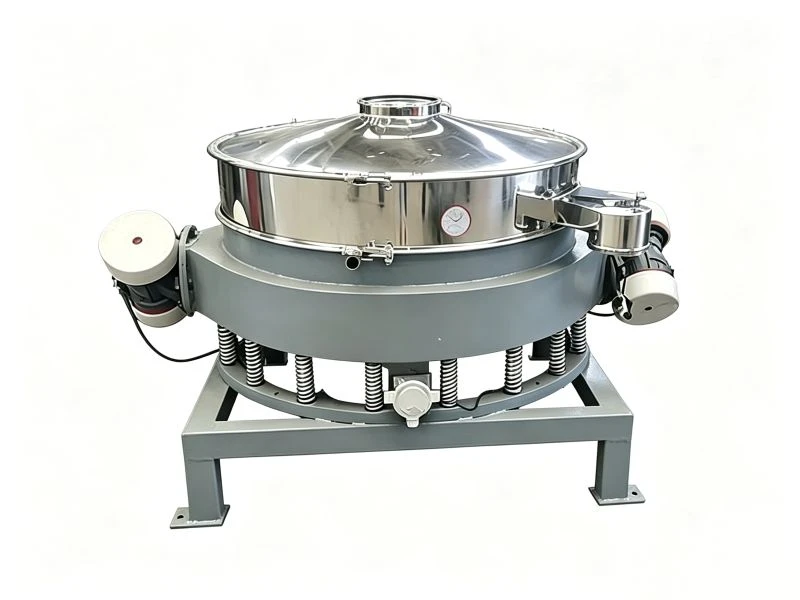
Crible vibrant rotatif
Tamis vibrant rotatif | Tamiseur vibratoire Le tamis vibrant rotatif est conçu pour la séparation efficace des poudres, granulés et liquides. Il offre des performances stables, une haute précision de criblage et un fonctionnement fiable en production continue. Nous proposons des configurations flexibles, notamment des conceptions à plusieurs étages, des systèmes ultrasoniques et des matériaux de qualité alimentaire pour répondre aux différentes exigences de traitement. YuanJing fournit des solutions de criblage pratiques…Tamis vibrant en ligne
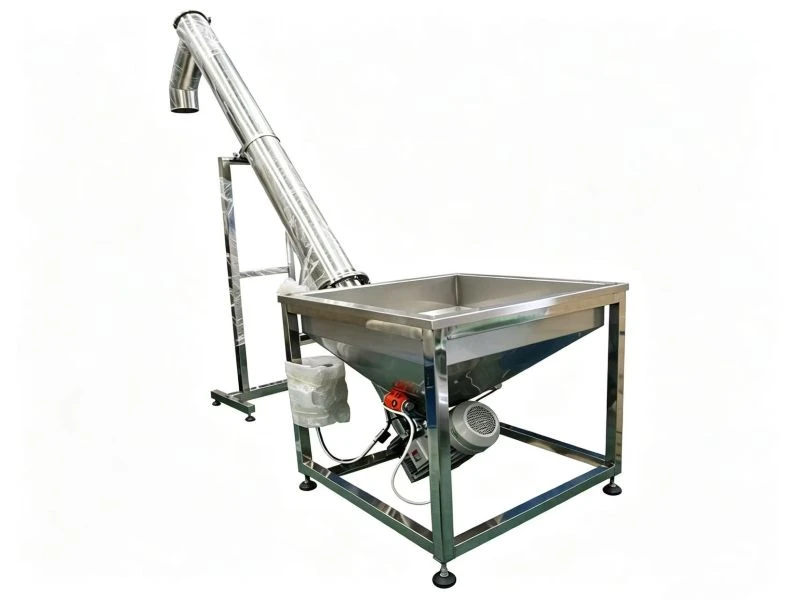
Tamis vibratoire en ligne pour les lignes de production continues Les tamis vibratoires en ligne sont conçus pour les lignes de production continues, permettant aux poudres et aux liquides d'être criblés directement dans le pipeline. La conception compacte économise de l'espace tout en maintenant des performances de séparation stables et précises. Ils sont largement utilisés dans le traitement alimentaire, pharmaceutique et chimique. Qu'est-ce qu'un tamis vibratoire en ligne ?…Convoyeur à vis
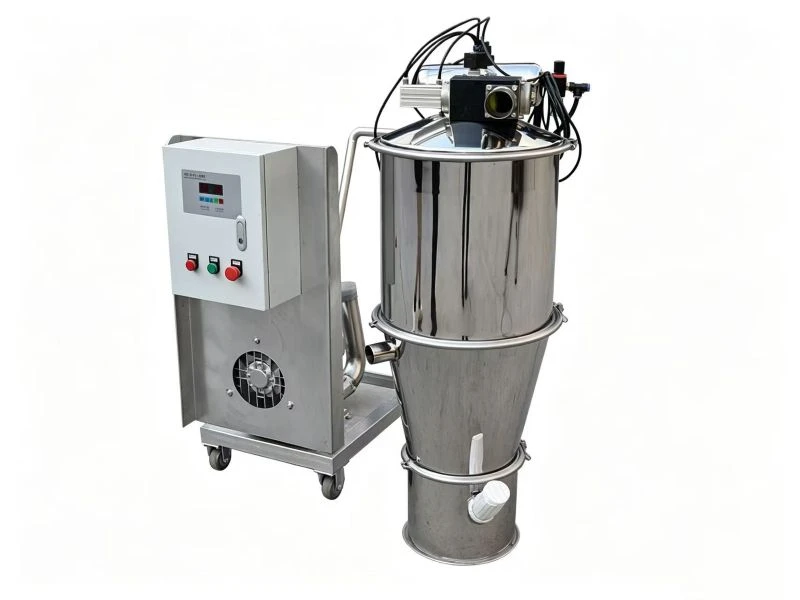
Systèmes de convoyeurs à vis industriels pour la manutention de matériaux en vrac Les convoyeurs à vis industriels sont conçus pour une manipulation continue et efficace de matériaux en vrac tels que les poudres, les granulés et les semi-solides. Avec une structure compacte et une conception fermée, ils assurent des performances de convoyage stables, une réduction des émissions de poussière et une faible maintenance dans diverses applications industrielles. YuanJing fournit des solutions de convoyeurs à vis personnalisées basées sur…Système d'alimentation par convoyeur à vide
Solutions de systèmes de convoyeurs à vide industriels pour poudres et matériaux en vrac Les systèmes de convoyeurs à vide transfèrent automatiquement divers matériaux dans les trémies des machines d'emballage, des machines de moulage par injection et des concasseurs. Ils peuvent également alimenter directement les mélangeurs en matériaux mélangés (tels que les mélangeurs de type V, 2D et 3D), réduisant considérablement la main-d'œuvre manuelle et éliminant les déversements de poussière pendant l'alimentation. En tant que…
Fabricant et fournisseur de tamis vibrants et de convoyeurs
Conçus pour un tamisage de précision, des performances fiables et des applications industrielles variées,
les tamis vibrants rotatifs Yuanjing bénéficient de la confiance de clients dans le monde entier.

Expérience de projets à l’international
Les produits Yuanjing sont exportés vers plus de 50 pays et régions et répondent aux besoins des secteurs de l’alimentation, de la chimie, de la pharmacie, des mines et des nouvelles énergies.
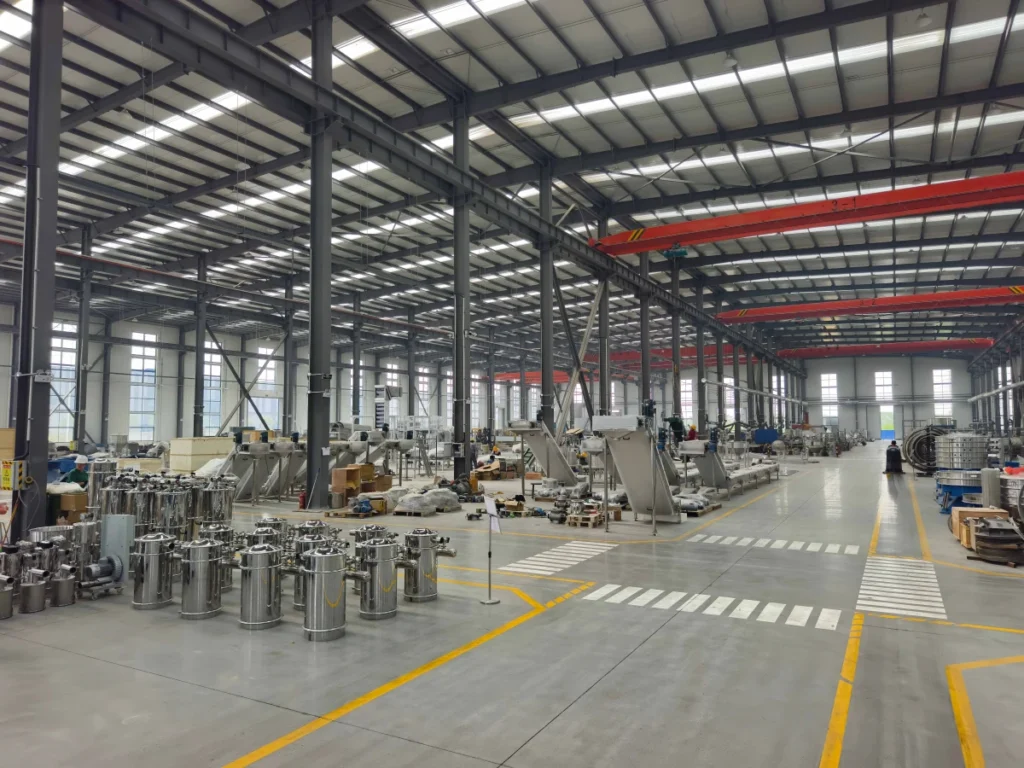
Solides capacités de fabrication
Des lignes de production avancées intégrant la découpe laser, l’usinage CNC, le soudage automatisé et un contrôle qualité rigoureux garantissent une qualité constante des produits.
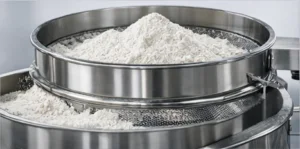
Séparation précise et stable
Une conception vibratoire optimisée assure un écoulement uniforme des matériaux, une grande précision de criblage et un fonctionnement stable à long terme.
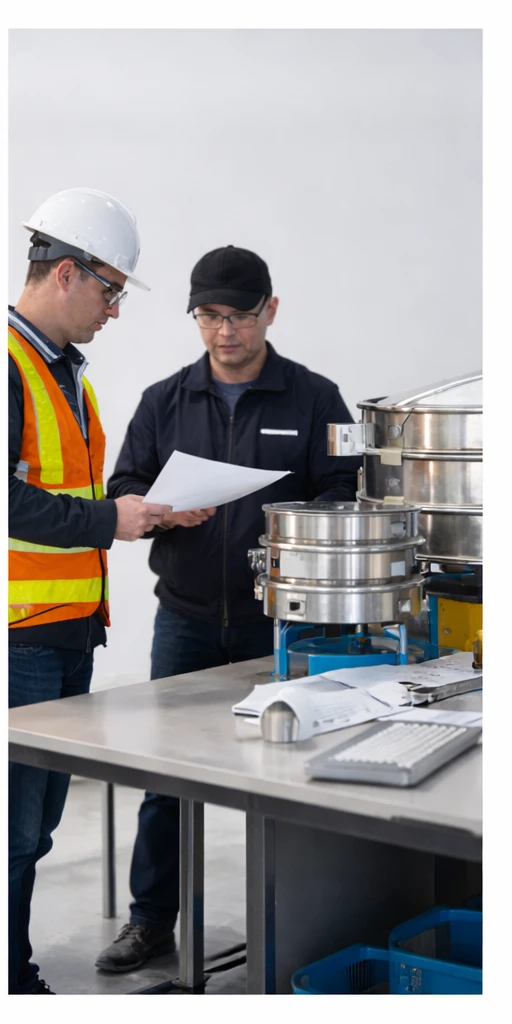
Solutions de criblage personnalisées
Yuanjing propose des configurations flexibles en matière de diamètre, de taille des mailles, de nombre d’étages et de matériaux, afin de répondre précisément aux exigences de votre procédé.
FAQ
Obtenir une solution personnalisée
Nous pouvons fournir des solutions personnalisées d'équipements de criblage et de convoyage adaptées à différents matériaux et exigences de production.
Envoyez-nous vos exigences, et notre équipe fournira la bonne solution et un devis rapide dans les 24 heures.