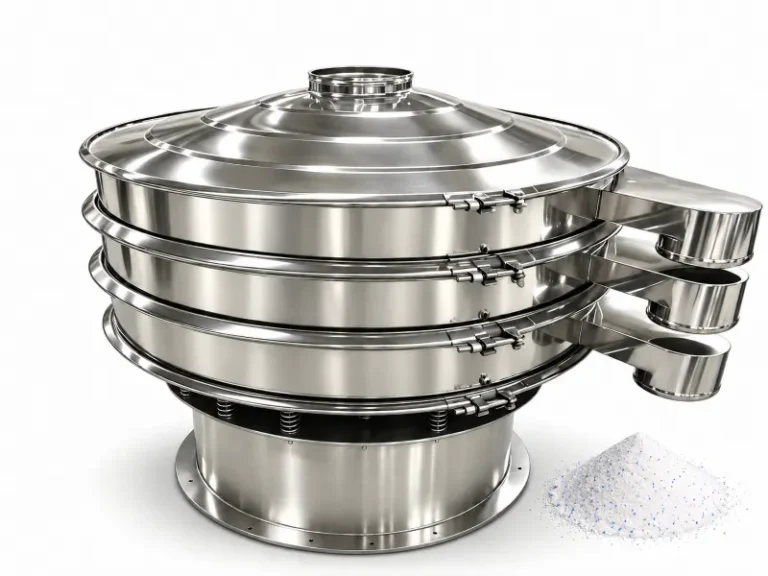
배터리 양극 및 음극 재료에 초음파 진동 스크린을 사용하는 이유
초음파 진동 스크린 배터리 양극재와 음극재에 사용됩니다. 이러한 분말은 입자가 미세하고 가벼우며 응집되기 쉬워 스크린 망이 막히지 않도록 선별하기 어렵기 때문입니다. 초음파 진동은 미세 입자가 스크린 표면에서 계속 움직이도록 돕고, 스크린 막힘을 줄이며, 선별 안정성과 입도 제어 성능을 향상합니다.
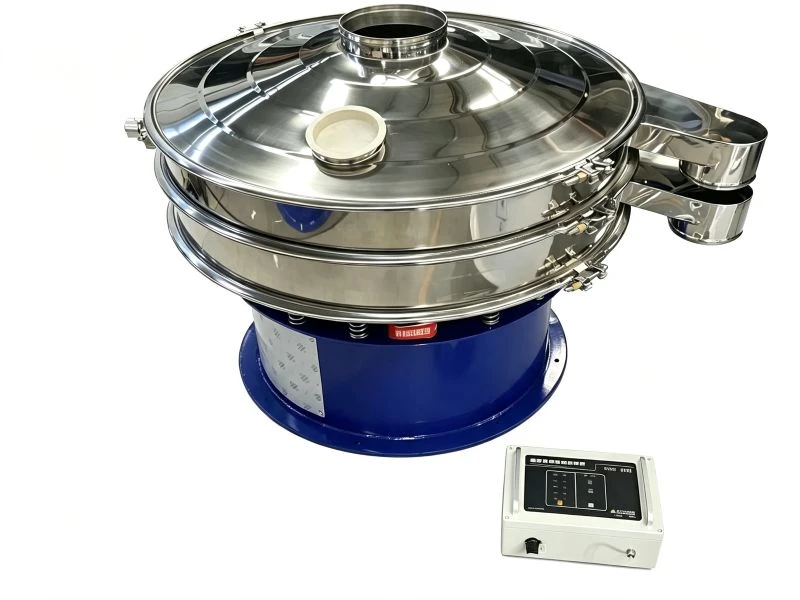
배터리 양극재와 음극재는 왜 선별하기 어려울까요?
배터리 양극재와 음극재에는 일반 진동 스크린으로 선별하기 어려운 미세 분말이 포함된 경우가 많습니다. LFP, NCM, 리튬 코발트 산화물, 흑연 분말과 같은 재료는 입자 크기가 작아 서로 뭉치거나 스크린 망에 쉽게 달라붙을 수 있습니다.
이러한 문제는 선별 효율을 떨어뜨리고 입도 제어의 안정성을 저하시킬 수 있습니다. 따라서 배터리 소재를 선별할 때는 미세하고 선별하기 어려운 분말에 맞게 설계된 선별 시스템이 필요한 경우가 많습니다.
높은 흡착성 및 응집 경향
배터리 양극재와 음극재, 특히 나노 또는 서브마이크론 크기의 분말은 표면 에너지가 높습니다. 따라서 정전기력과 반데르발스 힘으로 인해 쉽게 응집되고 스크린이나 장비 벽면에 달라붙습니다.
가볍고 부피가 큼
이러한 재료는 밀도가 낮고 유동성이 떨어져 기존 진동 스크린 위에서 “떠다니는” 경향이 있어 망을 효과적으로 통과하지 못합니다.
매우 높은 순도 요구 사항
배터리 소재의 청결도는 배터리 성능과 안전성에 직접적인 영향을 미치므로 금속 불순물이나 큰 응집물이 조금이라도 존재하면 치명적일 수 있습니다.
정전기 발생이 쉬움
건식 선별 환경에서는 분말 입자 간의 마찰로 강한 정전기가 발생하여 부착과 망 막힘이 더욱 심해집니다.

초음파 진동 스크린은 어떻게 작동하나요?
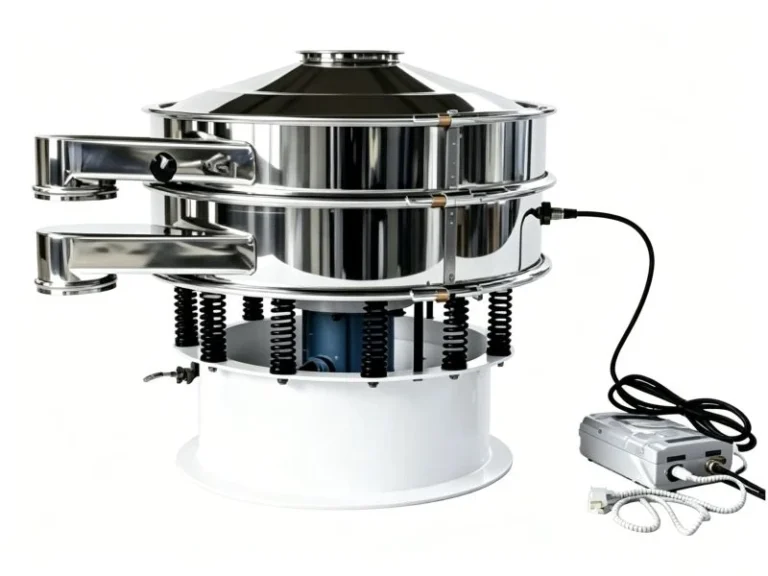
기존 진동 스크린을 기반으로 초음파 전원 공급 장치와 변환기를 추가한 장비입니다. 이 시스템은 일반 전기 에너지를 고주파(일반적으로 36kHz 또는 38kHz) 기계적 진동으로 변환하고, 초음파 공진기를 통해 이를 스크린 표면에 직접 전달하여 체망에 고주파·저진폭 초음파 진동을 발생시킵니다.
작동 과정은 다음과 같이 요약할 수 있습니다:
초음파 진동 → 입자 간 부착 감소 → 체망 구멍 막힘 감소 → 원활한 소재 통과 → 안정적인 분급
그 결과, 운전 중 체망의 유효 개구 면적을 더 넓게 유지할 수 있습니다. 이는 분급 안정성을 높이고 미세 분말의 응집과 체망 막힘으로 인한 문제를 줄이는 데 도움이 됩니다.

배터리 소재용 초음파 진동 스크린의 장점
효과적인 막힘 방지 성능으로 높아지는 분급 효율
장점:
고주파 초음파 진동은 배터리 양극재와 음극재 분말의 표면 장력을 효과적으로 깨고, 미세 분말 응집체를 분산시키며, 분말과 체망 사이의 정전기적 인력을 줄일 수 있습니다. 이를 통해 500메시 이상의 미세한 배터리 소재를 비롯해 분급하기 어려운 마이크론 단위 분말도 체망을 원활하게 통과할 수 있습니다.
비교:
기존 진동 스크린으로 배터리 양극재와 음극재를 분급하면 몇 분 또는 수십 초 만에 체망이 심하게 막힐 수 있습니다. 장비를 자주 정지하고 체망을 청소해야 하므로 분급 효율이 매우 낮아집니다. 반면, 초음파 진동 분리기 배터리 소재용 장비는 더 오랜 시간 연속 운전이 가능하며 분급 효율을 몇 배까지 높일 수 있습니다.
균일한 제품 품질을 위한 고정밀 분급
장점:
작동 중 스크린 망이 깨끗하게 유지되므로 망의 구멍이 미세 분말로 막히거나 덮일 가능성이 줄어듭니다. 이는 일정한 선별 정확도를 유지하는 데 도움이 됩니다. 재료가 동일한 선별 조건에서 망을 통과할 수 있으므로 D50과 D97을 포함한 입도 분포를 더 쉽게 제어할 수 있습니다. 또한 원료에서 큰 입자, 불순물 및 응집체를 제거하는 데도 도움이 됩니다.
비교:
만약 진동 스크린 막히면 유효 선별 면적이 줄어듭니다. 규격에 맞는 미세 분말 일부가 망을 통과하지 못해 체상물에 남는 미세 분말의 양이 늘어납니다. 동시에 일부 큰 입자는 망을 억지로 통과하면서 부서질 수 있어 선별 정확도를 유지하기가 어려워집니다.
재료의 물성을 보호하고 2차 응집 감소
장점:
초음파 진동은 수직 방향으로 진폭이 작은 진동입니다. 고강도 기계 진동처럼 재료에 강한 충격과 마찰을 가하기보다는 주로 스크린 망을 청소하는 역할을 합니다. 배터리 양극재 및 음극재 분말을 대상으로 하는 이러한 부드러운 선별 공정은 입자의 2차 파손이나 과도한 압밀 위험을 줄이는 데 도움이 됩니다. 또한 원래의 입자 형태와 재료 물성을 유지하는 데도 도움이 됩니다.
비교:
일부 고강도 선별 방식은 입자를 부수고 미세 분말을 추가로 발생시켜 배터리 소재의 원래 물성을 변화시킬 수 있습니다.
작업 환경 개선 및 노동력 절감
장점: 선별 공정이 밀폐된 시스템에서 이루어집니다. 여기에 초음파 선별의 효과적인 망 막힘 방지 성능이 더해져 배터리 분말 선별 중 분진 배출을 크게 줄일 수 있습니다. 작업자가 스크린 망을 청소하기 위해 기계를 자주 멈출 필요가 없습니다. 이는 연속 및 자동화 생산을 지원하고 수작업을 줄이며 청정 생산 요건을 충족합니다.
스크린 망의 수명 연장
장점: 스크린 막힘은 스크린 메시 손상의 주요 원인 중 하나입니다. 소재가 메시 구멍에 끼면 스크린에 가해지는 장력이 증가합니다. 지속적인 기계적 진동으로 인해 피로가 누적되어 스크린이 파손될 수 있습니다.
그 초음파 시스템 메시 막힘 문제를 근본적으로 해결하는 데 도움이 됩니다. 미세한 배터리 소재를 선별할 때 스크린 막힘을 줄여 고가의 미세 메시 스크린의 수명을 크게 연장할 수 있습니다.
배터리 분말용 초음파 진동 스크린과 기존 진동 스크린 비교
| 특성 | 기존 진동 스크린 | 초음파 진동 체 |
| 막힘 방지 성능 | 낮음; 메시가 자주 막힘 | 우수함; 막힘이 거의 없음 |
| 스크리닝 효율성 | 낮음; 잦은 청소 필요 | 높음; 연속 운전 가능 |
| 선별 정확도 | 불안정함; 메시가 막히면 정확도가 떨어짐 | 높고 안정적임 |
| 소재 보호 | May cause secondary breakage | Gentle screening helps protect particle shape |
| Suitable Particle Size | Relatively coarse, typically <300 mesh | Ultra-fine powders, can handle 500 mesh and finer |
Ultrasonic Screening for Battery Cathode Materials
Battery cathode powders are often fine and prone to agglomeration, static adhesion, and screen clogging. An 초음파 진동 체 helps fine particles pass through the mesh, reduces blockage, and keeps particle size separation more stable.
LFP and NCM/NMC Powders
Fine LFP and NCM/NMC powders can easily block fine mesh during screening. Ultrasonic vibration helps keep the mesh openings clear and improves screening stability.
LCO and LMO Powders
For LCO and LMO powders, fine particles and agglomerates can affect screening accuracy. Ultrasonic screening helps reduce powder buildup and supports more consistent particle size separation.
Ultrasonic Screening for Battery Anode Materials
Battery anode powders are often fine and lightweight, which can cause static adhesion, agglomeration, and screen clogging during screening. An 초음파 체가름 기계 helps fine particles pass through the mesh and keeps screening more stable.
Graphite Powder Screening
Natural and synthetic graphite can easily stick to fine mesh because of their small particle size and static properties. An ultrasonic screen for graphite powder helps reduce mesh clogging and improves fine powder screening.
Graphite-Based Anode Powders
Graphite anode powders require stable particle size control. Ultrasonic vibration helps separate fine particles and reduce agglomeration, making it suitable for graphite anode powder screening.

When Should You Choose an Ultrasonic Vibrating Screen for Battery Materials?
Mesh size:
Installation is recommended for 200–600 mesh (particle size ≤100 μm) and mandatory for sizes ≤50 μm.For more details on fine mesh selection, see our 200~500메쉬 분말 선별 가이드.
Moisture content:
Ultrafine powders with >3% moisture content tend to form a water film that causes clogging on the screen surface; ultrasonic technology effectively resolves this issue.
Viscosity:
Installation is strongly recommended for materials characterized by high static electricity, high specific gravity, or strong adsorption properties; otherwise, the screen surface will quickly become clogged.
For ultrafine powders finer than 200 mesh, ultrasonic rotary vibrating screens offer 10%–70% higher screening precision and 1–10 times greater throughput compared to standard vibrating screens.
관련 동영상
How to Choose an Ultrasonic Vibrating Screen for Battery Materials?
Choosing the right 초음파 진동 스크린 mainly depends on material type, particle size, mesh size, capacity, and purity requirements. The right configuration helps maintain stable screening performance and reduce mesh clogging.
- Material type: LFP, NCM, LCO, graphite, and other battery powders have different screening properties.
- Particle and mesh size: Fine powders and high-mesh screens have a higher risk of screen blinding, making ultrasonic screening more useful.
- 처리 능력: Select the screen size and configuration according to the required production capacity.
- Screening layers: Choose one or multiple layers based on the required particle size separation.
- Purity and dust control: For high-purity battery materials, consider material-contact parts, sealing, and dust collection.
결론
Ultrasonic vibrating screens provide a practical solution for fine battery cathode and anode material screening. They help reduce screen clogging, improve screening stability, and maintain consistent particle size separation for materials such as LFP, NCM, and graphite powder.
If you are facing problems with fine powder, mesh clogging, agglomeration, or unstable screening efficiency, contact us with your material type, particle size, mesh size, and required capacity. Our team can recommend a suitable ultrasonic vibrating screen for your battery material screening process.