
Circular Tumbler Sieve for High Capacity and Precision Screening
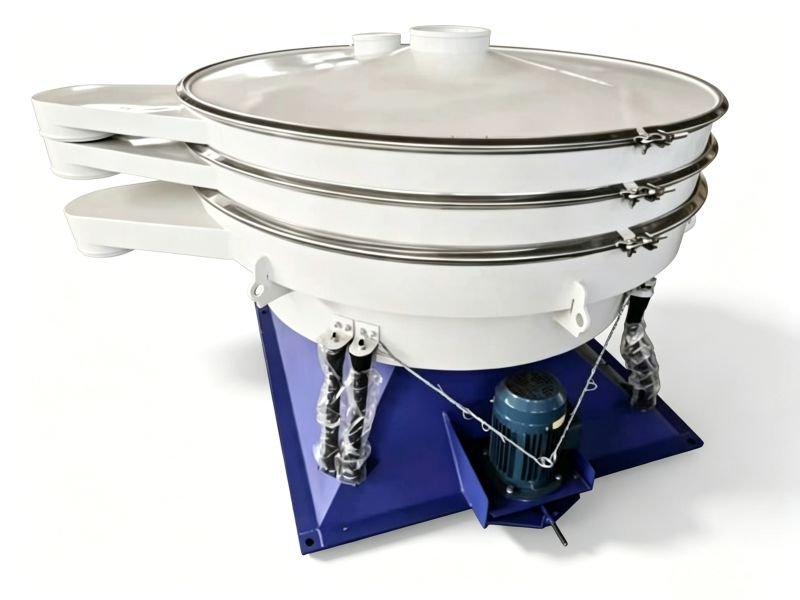
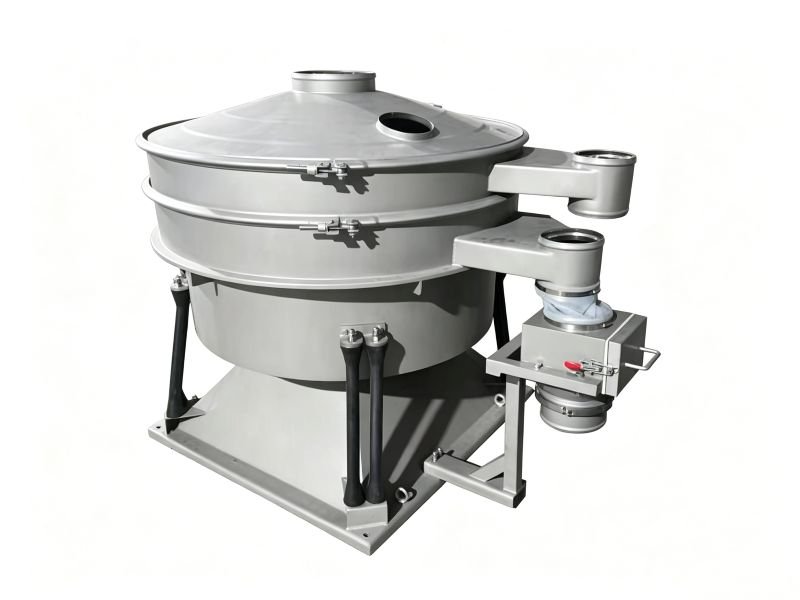
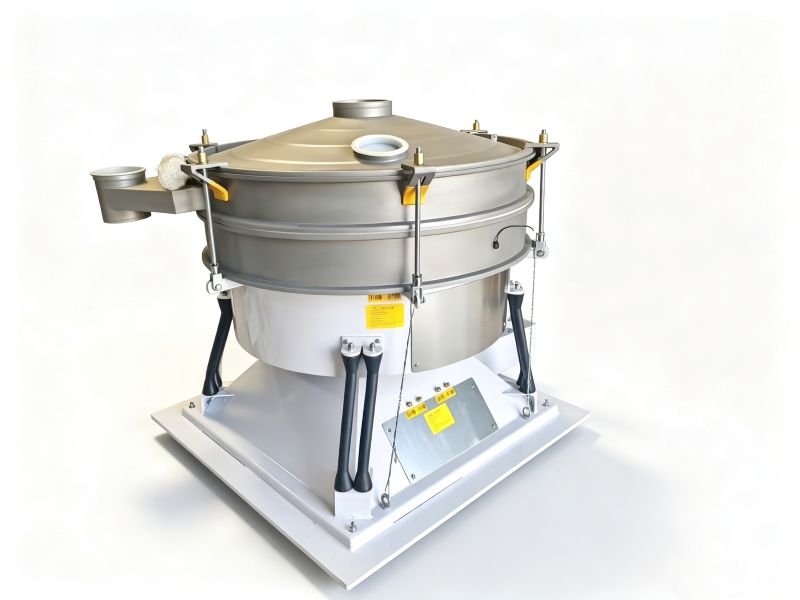
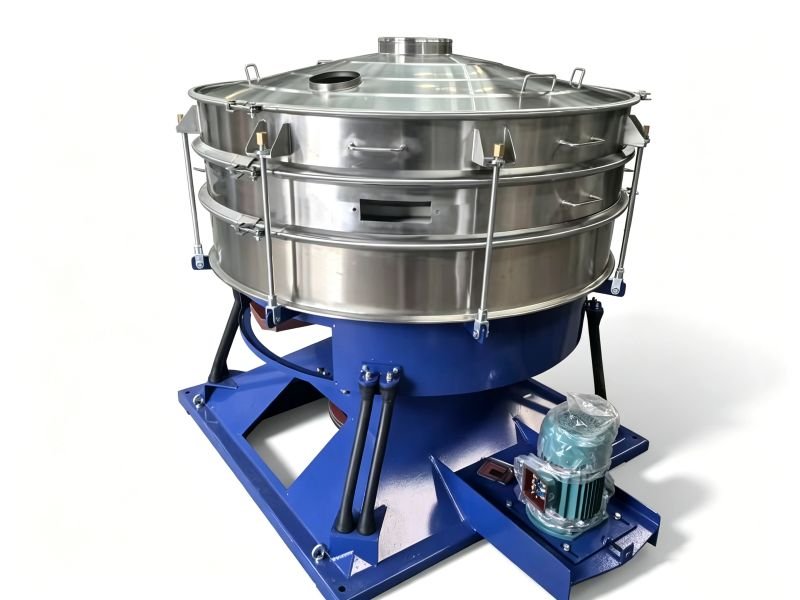
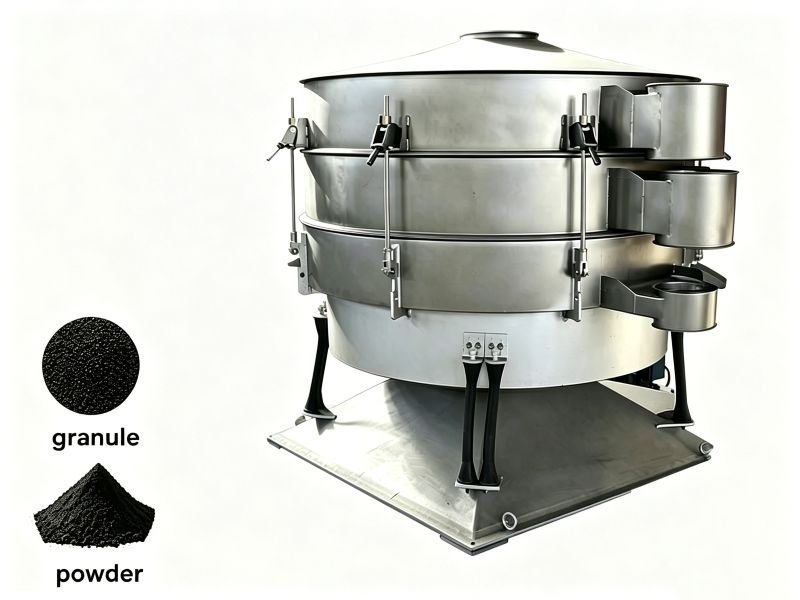
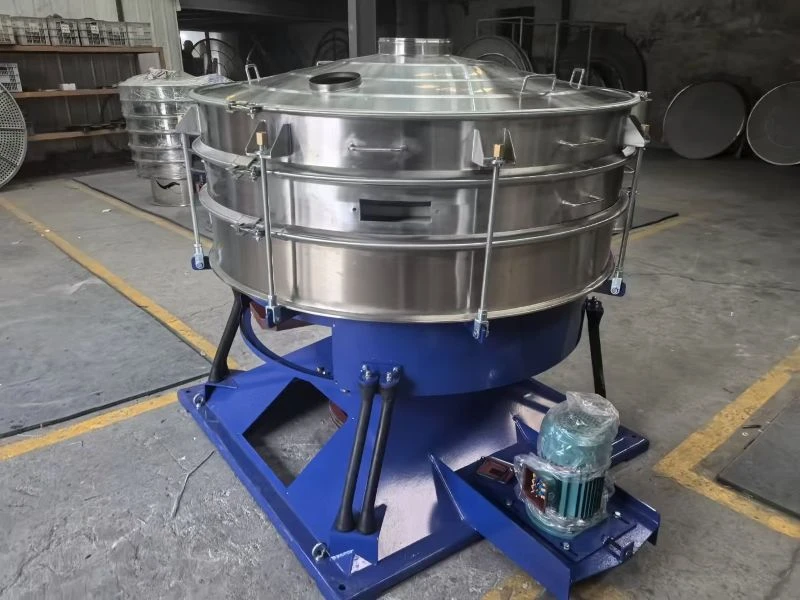
A circular tumbler sieve is designed for high-capacity and precision screening of powders, granules and bulk materials. Its gentle three-dimensional motion helps distribute material evenly across the screen surface for more consistent particle separation. With a multi-deck design, it can separate different particle sizes in one process. It is widely used for fine powder, abrasive materials, silica sand, chemical materials and other bulk solids. Custom screen sizes, mesh configurations and machine designs are available based on your material and capacity requirements.
It is especially suitable for high throughput and multi-layer sorting of fine, fragile, fragile and light products that are difficult to screen.
What Is a Circular Tumbler Sieve?
The circular tumbler sieve combines circular motion with the parabolic movement of manual screening. It is designed for separating and dedusting powders and granules. One machine can support multiple screen decks and classify up to six particle sizes at the same time, helping solve problems such as mixed particle sizes and incomplete separation.
With screening accuracy of up to 99%, it is suitable for applications with high purity requirements. Compared with conventional screening machines, a Circular Tumbler Sieve can deliver 3–5 times higher capacity and a service life up to 5–10 times longer, depending on the material and operating conditions.
How Does a Circular Tumbler Sieve Work?
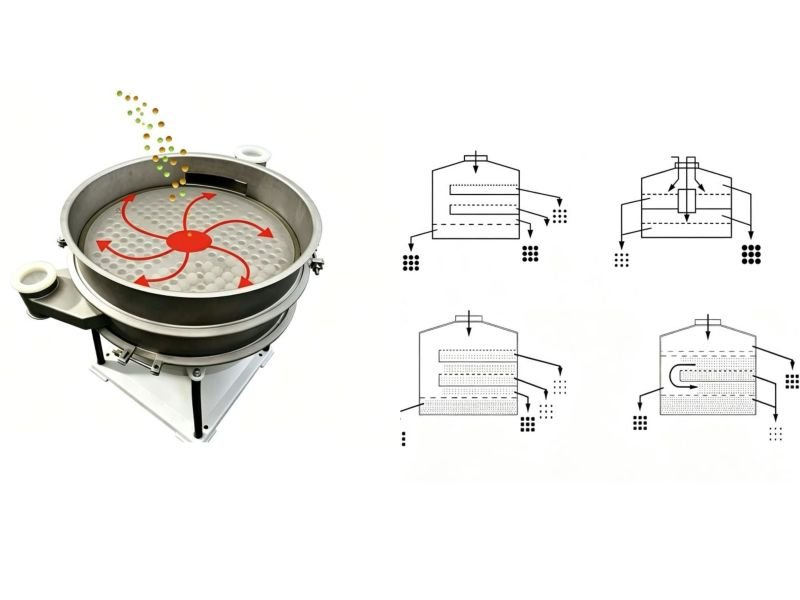
A circular tumbler sieve works in a similar way to manual screening. When the machine starts, the screening system is driven to produce a combined circular and tumbling motion. The screen box moves in a near-circular path, creating a controlled screening process.
Material is fed into the center of the screen surface and gradually moves outward in a spiral pattern. Smaller particles pass through the screen openings quickly, while particles close to the screen size remain on the screen for a longer time. As the material continues to move across the screen surface, these near-size particles have more opportunities to pass through the mesh, resulting in more complete particle separation and higher screening efficiency.
Why Choose a Circular Tumbler Sieve?
Circular tumbler sieve with high feed rates and multi-deck separation, it is widely used in the food, pharmaceutical, chemical and advanced materials industries. Depending on the machine model and material, feed rates range from 10 kg/h to 40 t/h.
High Screening Capacity
Depending on the machine model, material pass-through can reach up to 99%, with capacity of up to 40 tons/hour. This is up to 5–10 times higher than conventional vibrating screens.
High Screening Accuracy
The screening motion is similar to manual screening, keeping material moving evenly across the screen mesh. It can screen particles down to 20 μm, with effective screening time typically above 85% and screening efficiency of up to 99%.
Multi-Deck Screening
Multiple screen decks are available, with up to 5 deck layers to achieve up to 6 particle size grades in one process. This allows efficient separation of mixed materials with different particle sizes.
Gentle Material Handling
The machine uses a gentle elliptical tumbling motion. It is suitable for fragile granules, abrasive materials and other products that require careful handling during screening.
Reduced Screen Blinding
Different screen cleaning systems can be used, including bouncing balls, rotary brushes and ultrasonic screening systems, helping reduce material buildup and screen blockage.
Low Noise Operation
The moving parts swing from side to side rather than moving up and down like a conventional vibrating screen. This helps reduce operating noise to around 75 dB.
Related videos
Circular Tumbler Sieve Applications
Fine Powder Screening
Suitable for mineral powders, chemical powders, ceramic powders and additives, with fine particle separation and oversize removal.
Abrasive Material Screening
Ideal for brown fused alumina, white fused alumina, silicon carbide and other abrasive grains that require gentle handling.
Quartz and Silica Sand Screening
Used for brown fused alumina sand classification, grading and fine particle separation.
Food Ingredient Screening
Suitable for flour, sugar, starch, grains and food additives, with stainless steel options for easy cleaning.
Chemical Powder Screening
Used for chemical raw materials, resins, pigments, fertilizers and other industrial powders.
Plastic Pellet Screening
Suitable for plastic pellets and granules, helping remove oversize particles and separate different particle sizes.
Cleaning Method for Circular Tumbler Sieve
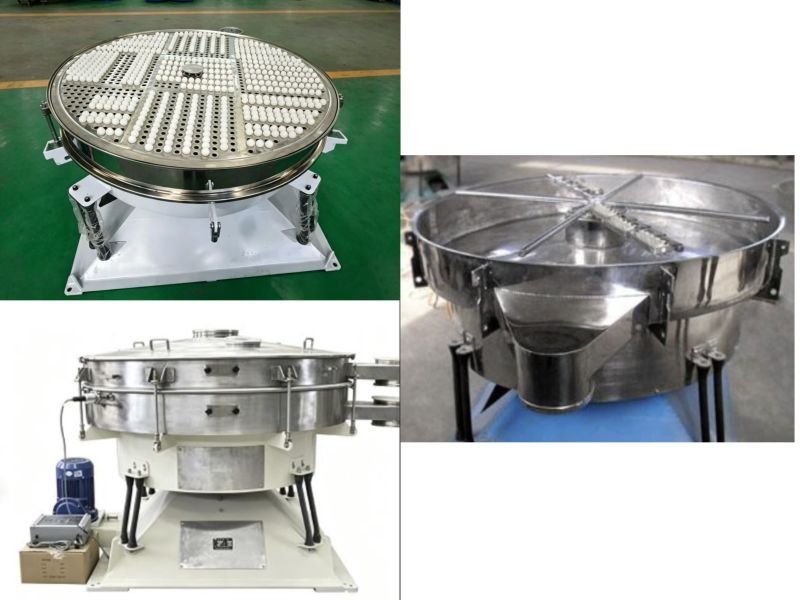
During the screening process, material clogging is a common issue; hard, brittle materials tend to break apart, clogged screens are difficult to clean, and maintaining consistent screening precision is challenging. Screening equipment must be equipped with appropriate screen-cleaning mechanisms; there are three types of cleaning devices used for circular trommel screens:
1. Bouncing Ball Cleaning:
Specially designed, durable food-grade rubber balls bounce from a perforated plate below against the underside of the screen mesh, dislodging trapped particles. This system is easy to operate and maintain, and is suitable for most granular materials.
2. Ultrasonic System:
An ultrasonic generator produces high-frequency vibrations that are transmitted to the screen mesh via a transducer. This cleans the mesh and can increase processing capacity by more than tenfold—depending on the specific product—making it ideal for materials such as metal powders, lithium battery powders, and advanced nano-scale materials.
3. Rotary Brush Cleaning:
This method is particularly gentle; a conical rotary brush positioned beneath the screen is especially well-suited for spherical, crystalline, and fragile materials. The rotary brush is driven by a gear reducer mounted on the central shaft.
Custom Circular Tumbler Sieve Solutions

The circular tumbler sieve can be customized to match different materials, capacities and screening requirements. Screen diameter, number of decks, mesh size and contact materials can be selected based on the application. Sealed and dust-control designs are also available for fine powders and enclosed production lines.
Material-Based Design:
Screen mesh and machine configuration are selected based on particle size, bulk density, moisture and material flow.
Capacity-Based Selection:
Machine size is matched to feed rate, required output and material characteristics.
Multi-Deck Screening:
Multiple decks can remove oversize particles and separate different particle sizes in one process.
Technical Specifications
| Model | YBS-1200 | YBS-1500 | YBS-1600 | YBS-1800 | YBS-2000 | YBS-2600 |
| Screening Area (m²) | 1.10 | 1.60 | 1.80 | 2.40 | 2.90 | 5.30 |
| Number of Layers (n) | 1-5 | 1-5 | 1-5 | 1-5 | 1-5 | 1-5 |
| Occupied Area (A / m²) | ≥1.57 | ≥1.70 | ≥1.80 | ≥3.20 | ≥3.24 | ≥6.76 |
| Driving Power (P / KW) | 2.2 | 3.0 | 3.0 | 4.0 | 4.0 | 7.5 |
| Cleaning Method | 1.2.3 | 1.2.3 | 1.2.3 | 1.2.3 | 1.2.3 | 1.2.3 |
| Screening Efficiency (h / %) | ≥95 | ≥95 | ≥95 | ≥95 | ≥95 | ≥95 |
| Reference Weight (WT / KG) | 485 | 780 | 890 | 1100 | 1250 | 1660 |
How to Select the Right Circular Tumbler Sieve?
The right circular tumbler sieve depends on your material, particle size, capacity and screening requirements.
Material
Powder, granules, sand, abrasives and other bulk materials may require different screen designs.
Particle Size
The feed size and required separation size determine the mesh specification.
Capacity
Choose the machine size based on your required output, from small batches to large-scale production.
Screen Decks
Select the number of decks based on the number of particle sizes you need to separate.

Circular Tumbler Sieve vs Rotary Vibrating Screen
| Feature | Circular Tumbler Screen | Rotary Vibrating Screen |
| Screening Motion | Gentle tumbling motion | Vibrating motion |
| Capacity | High capacity | Standard capacity |
| Accuracy | High precision | Good precision |
| Material Handling | Suitable for fragile and abrasive materials | Suitable for general materials |
| Best For | Fine powder, multi-deck and high-precision screening | General powder and granule screening |
Solution Proof of Circular Tumbler Sieve
Tumbler Screen For Limestone Grading
For ultrafine powder materials such as limestone powder, tumbler screens can address challenges such as screen blinding, insufficient screening precision, and unstable throughput.
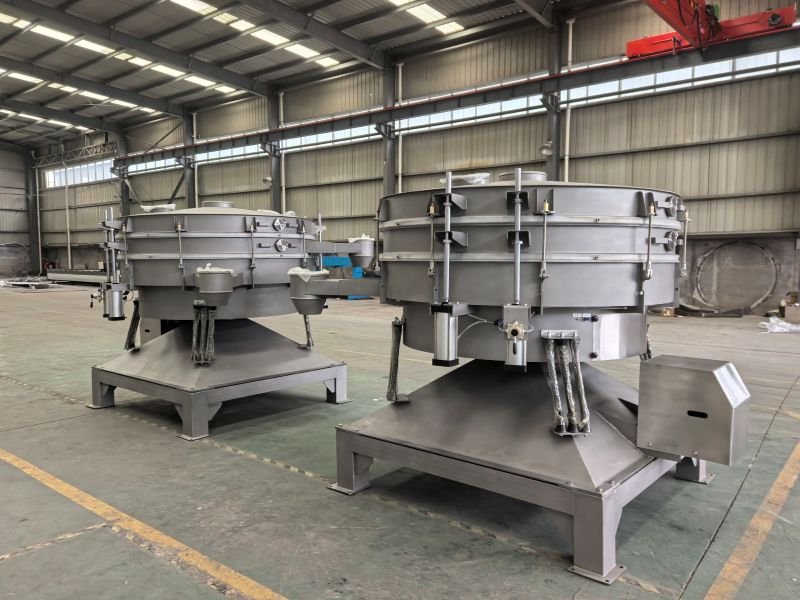
Gentle Screening Solution for Microcrystalline Cellulose
The equipment employs a gentle, low-frequency screening method, effectively reducing the generation of fines and material loss.
Related Products
Rotary Vibrating Screen
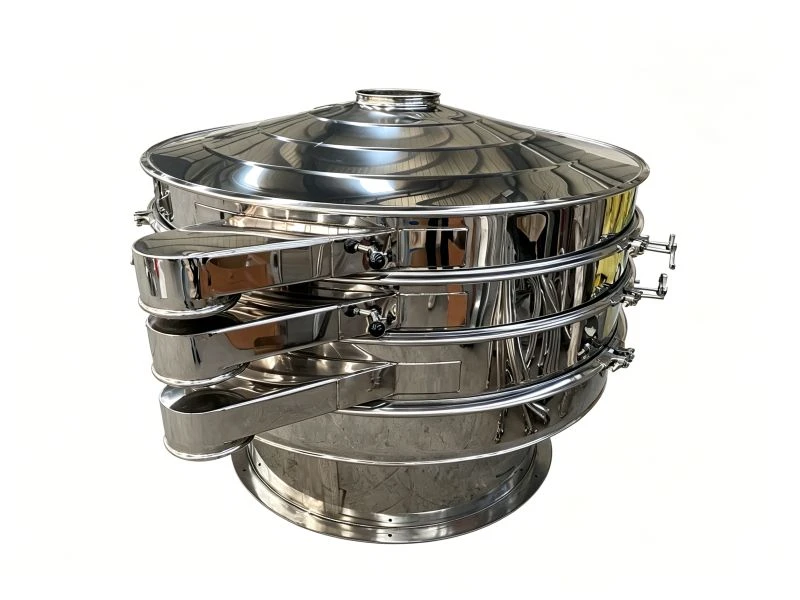
Rotary Vibrating Screen | Vibro Sifter The rotary vibrating screen is designed for efficient separation of powders, granules, and liquids. It delivers stable performance, high screening accuracy, and reliable operation in continuous production. We offer flexible configurations, including multi-deck designs, ultrasonic systems, and food-grade materials to meet different processing requirements. YuanJing provides practical screening solutions…Inline Vibratory Screen
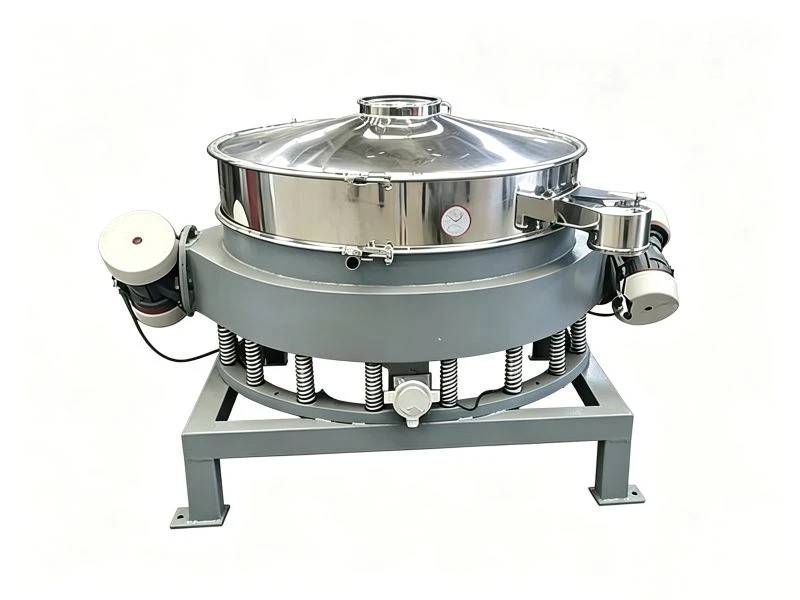
Inline Vibratory Screen for Continuous Production Lines Inline vibratory screens are built for continuous production lines, allowing powders and liquids to be screened directly in the pipeline. The compact design saves space while maintaining stable and accurate separation performance. They are widely used in food, pharmaceutical, and chemical processing. What is an inline vibratory screen?…Screw Conveyor
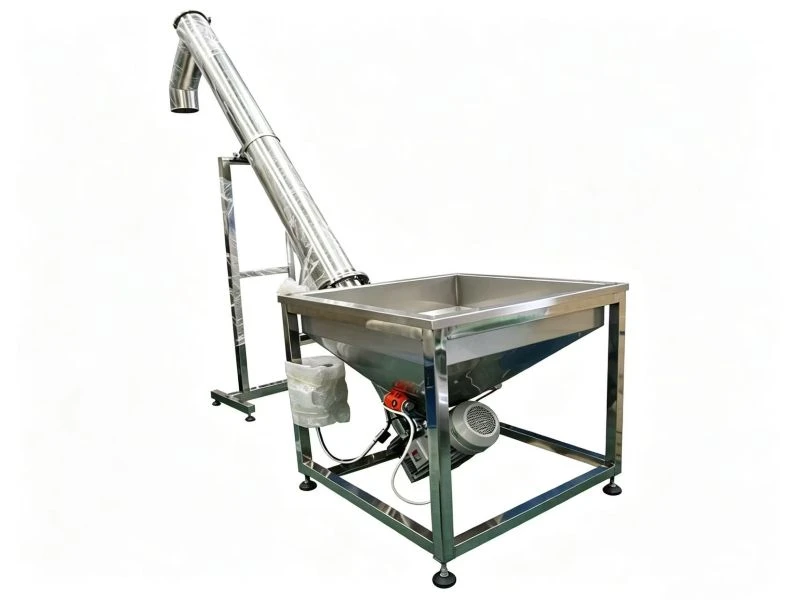
Industrial Screw Conveyor Systems for Bulk Material Handling Industrial screw conveyors are designed for continuous, efficient handling of bulk materials such as powders, granules, and semi-solids. With a compact structure and enclosed design, they ensure stable conveying performance, reduced dust emission, and low maintenance in various industrial applications. YuanJing provides customised screw conveyor solutions based…Vacuum Conveyor Feeder System
Industrial Vacuum Conveyor System Solutions for Powder & Bulk Materials Vacuum conveyor systems automatically transfer various materials into the hoppers of packaging machines, injection molding machines, and crushers. They can also feed mixed materials directly into mixers (such as V-type, 2D, and 3D mixers), significantly reducing manual labor and eliminating dust spillage during feeding. As…
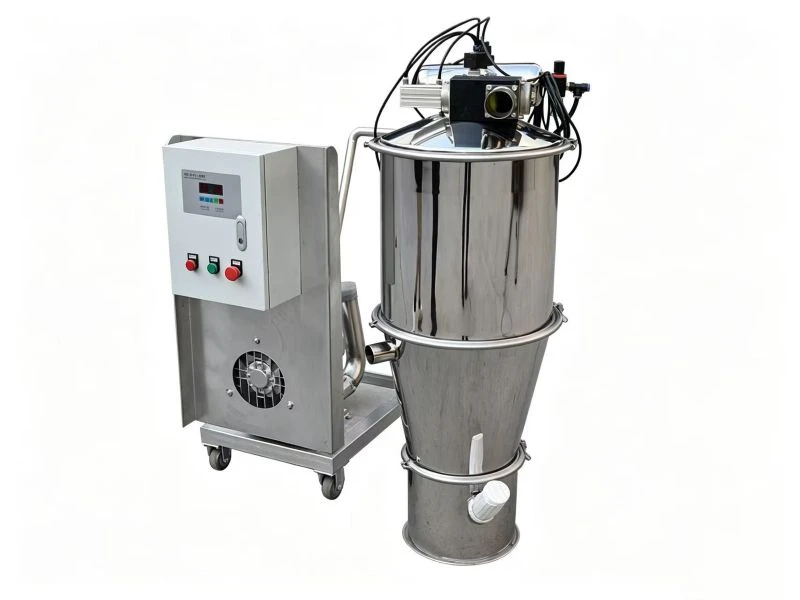
Vibrating Screen and Conveyor Machine Manufacturer & Supplier
Built for precision screening, reliable performance, and flexible industrial applications,
Yuanjing rotary vibrating screens are trusted by customers worldwide.

Global Project Experience
Yuanjing products are exported to 50+ countries and regions, serving industries including food, chemicals, pharmaceuticals, mining, and new energy.
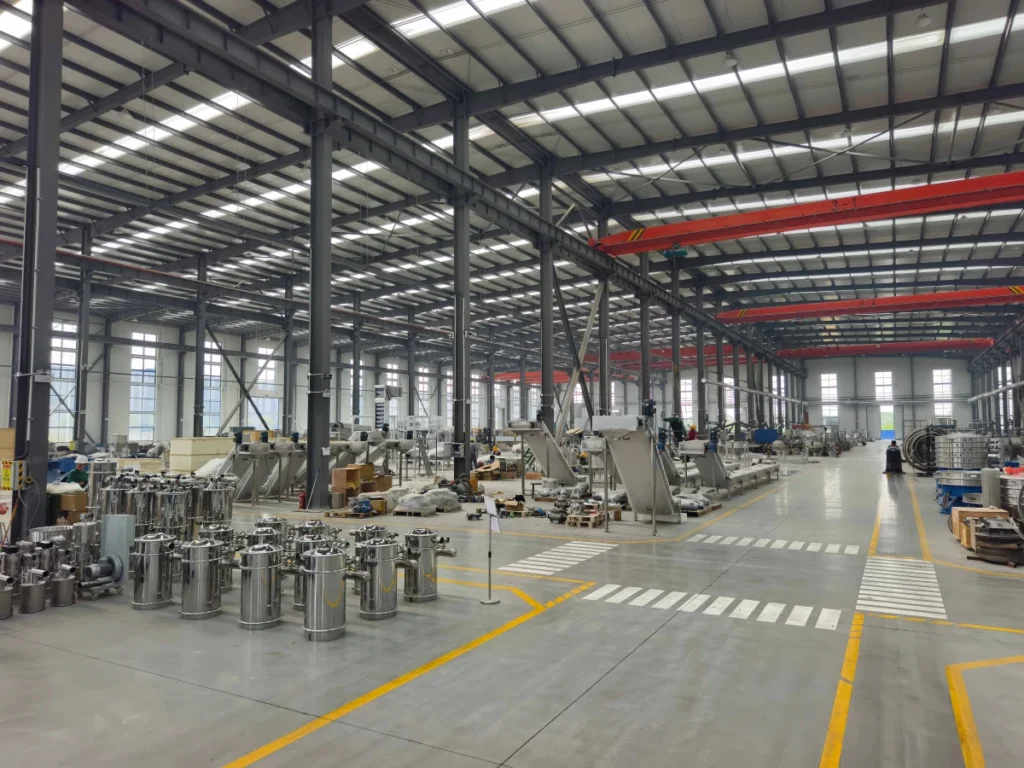
Strong Manufacturing Capability
Advanced production lines with laser cutting, CNC machining, automatic welding, and strict quality inspection ensure consistent product quality.
Accurate & Stable Separation
Optimized vibration design delivers even material flow, high screening accuracy, and stable long-term operation.
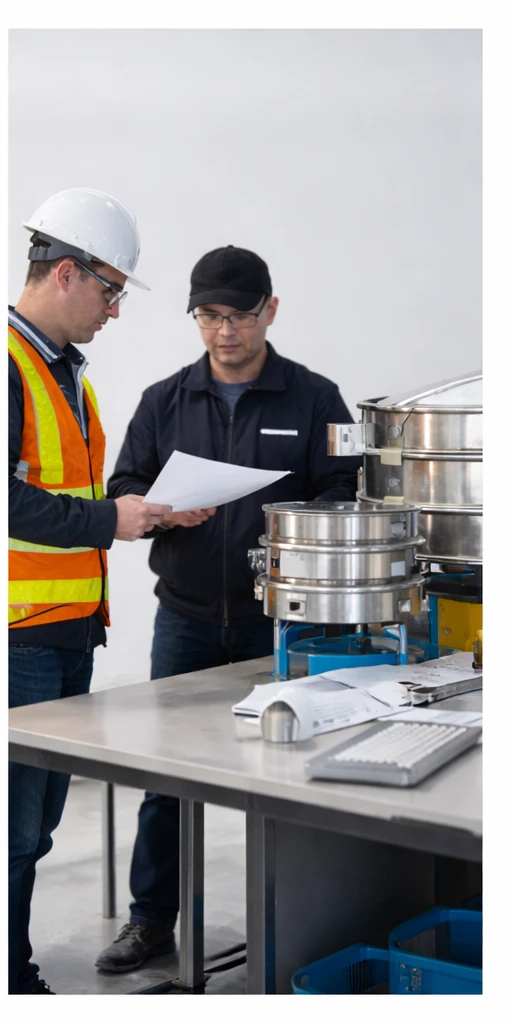
Customized Screening Solutions
Yuanjing offers flexible configurations in diameter, mesh size, deck layers, and material options to fit your exact process requirements.
FAQs
Get Custom Solution
We can provide customised screening and conveying equipment solutions tailored to different materials and production requirements.
Send us your requirements, and our team will provide the right solution and a fast quotation within 24 hours.