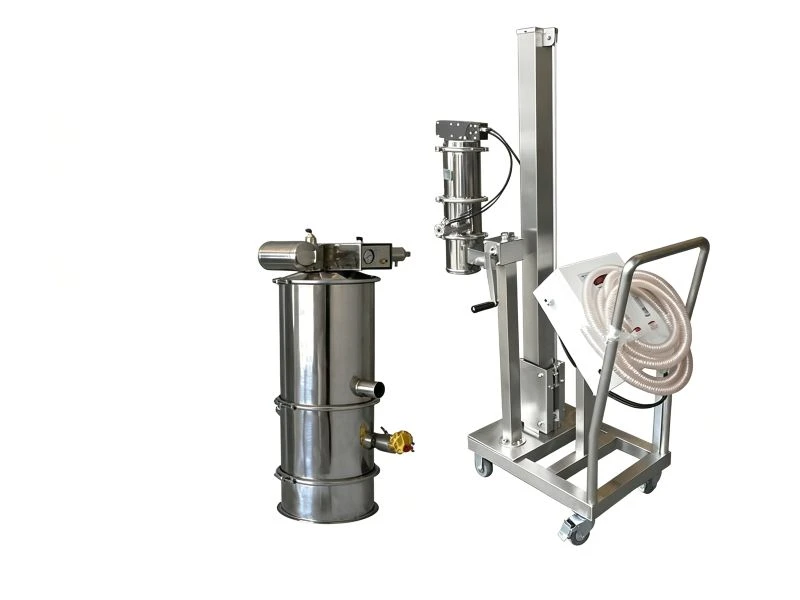
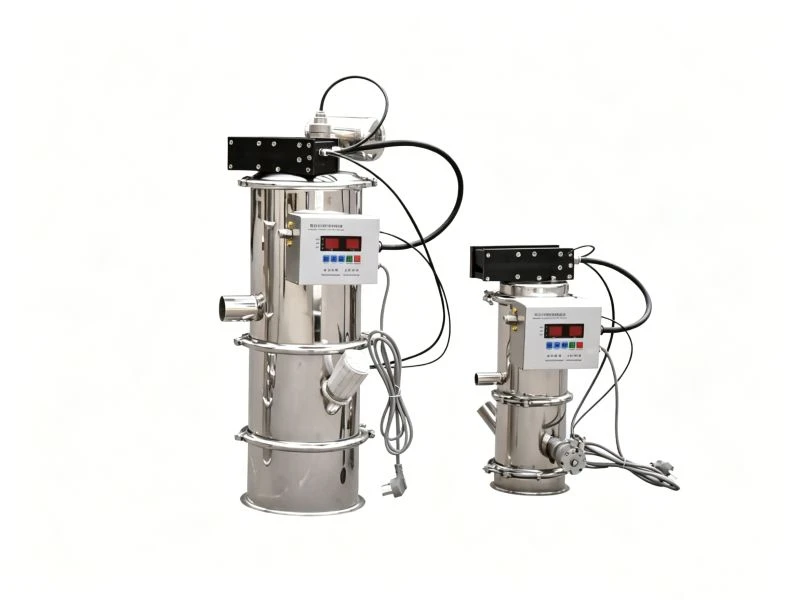
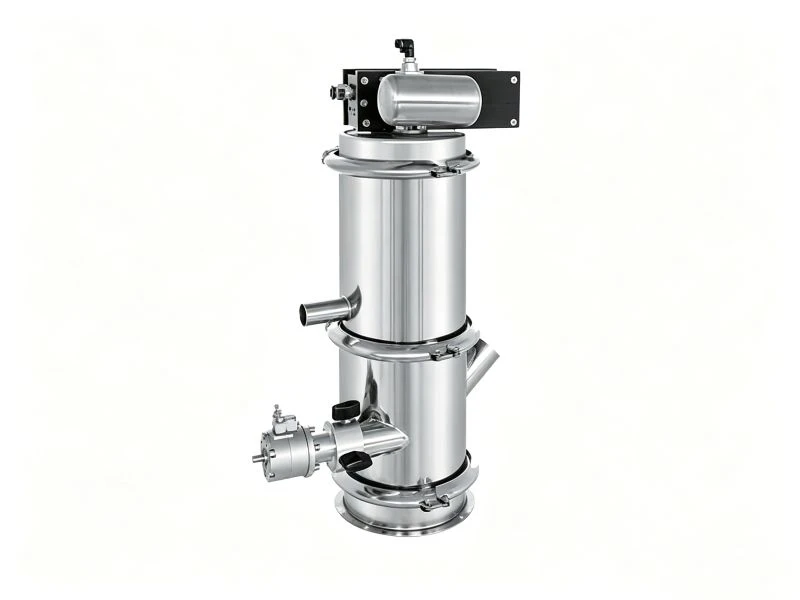
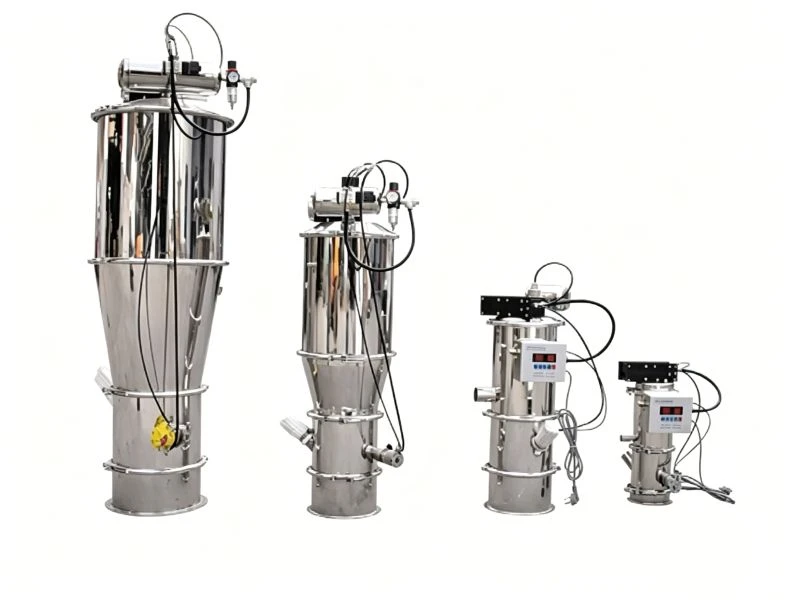
Pneumatic Vacuum Feeding Conveyor for Efficient Powder Transfer
Pneumatic vacuum feeding conveyor is designed for automatic transfer of powders, granules, and fine materials in industrial production. By using vacuum pressure generated through compressed air, it enables clean, enclosed, and efficient material conveying while reducing dust leakage and manual handling. It is widely used in pharmaceutical, food, chemical, lithium battery, and other industries where reliable powder feeding and contamination control are required.
What Is a Pneumatic Vacuum Feeding Conveyor?
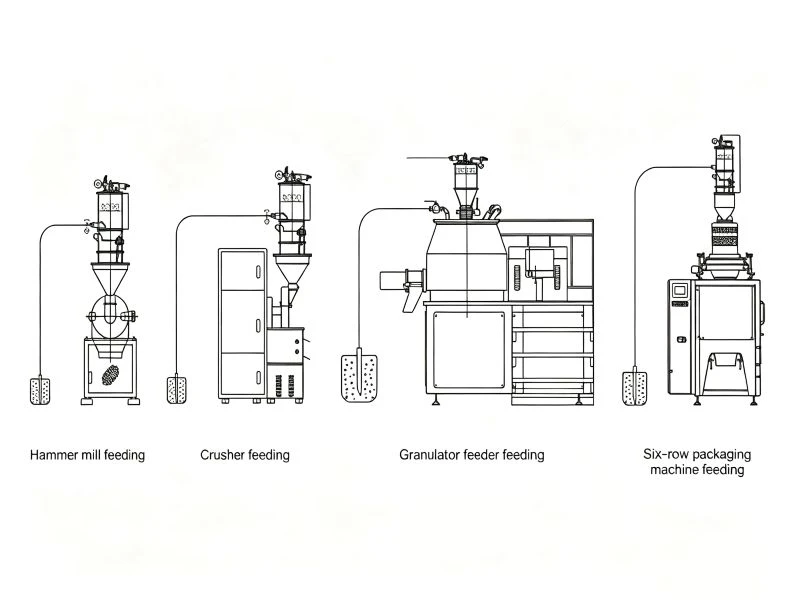
A Pneumatic Vacuum Feeding Conveyor is a dust-free, sealed pipeline conveying system that uses vacuum suction to transport powdered materials. This equipment utilizes the pressure difference between the vacuum and the surrounding environment to generate an airflow within the pipeline, which drives the movement of the powder and thereby facilitates material conveyance.
The Pneumatic Vacuum Feeding Conveyor is primarily used to convey granular and powdered materials. It can transport materials directly from containers to various pieces of equipment, such as mixers, reactors, hoppers, tablet presses, packaging bags, vibrating screens, and granulators (including both wet and dry granulators). This method not only reduces the physical strain on workers but also eliminates dust pollution.
How Does a Pneumatic Vacuum Feeding Conveyor Work?
Pneumatic Vacuum Feeding Conveyor: When the “On/Off” button is pressed, compressed air enters the vacuum pump. Driven by the air cylinder, the hopper’s outlet door closes, creating a vacuum inside the hopper. The vacuum pump generates an airflow within the vacuum. The material to be conveyed is transported through a hose to the vacuum hopper by this airflow.
After a certain period of time, the compressed air supply is shut off, and the pneumatic vacuum pump can no longer maintain the vacuum. At the same time, the discharge door of the hopper opens under the force of the pneumatic cylinder, the vacuum in the vacuum feeder dissipates, and the material automatically flows through the discharge port into the receiving and filling device. Simultaneously, compressed air in the air bladder blows back through the filter screen, automatically cleaning the filter.
After a certain period, the compressed air is restarted, the pneumatic vacuum pump creates a vacuum, the discharge door closes, and the vacuum feeder resumes feeding, continuously delivering material to the receiving equipment.
Features of Pneumatic Vacuum Feeding Conveyor
1. Safe
No electricity/mechanical energy needed; fully pneumatic control. Heat-free, explosion-proof, eliminates static electricity, zero pollution.
2. Simple
Features automatic control with adjustable material intake and discharge times (0–30 seconds); operation is simple and convenient.
3. Quiet
Vibration-free and low-noise operation.
4. Lightweight
Compact size and low weight; installation is quick and easy.
5. Clean
Dust-free operation and modular design eliminate dead zones; disassembly, cleaning, and material changes are quick and convenient.
6.Hygienic
Enclosed conveying prevents dust leakage and cross-contamination; complies with GMP standards and meets CIP requirements; sterile-grade products are available.
Technical Specifications
| Model | Conveying Capacity | Silo volume | Working Pressure | Compressed Air Consumption |
| QVC-1 | 50–300 kg/h | 1.1 L | 0.4–0.6 MPa | 180 NL/min |
| QVC-2 | 100–700 kg/h | 6.0 L | 0.4–0.6 MPa | 360 NL/min |
| QVC-3 | 300–1500 kg/h | 12.0 L | 0.4–0.6 MPa | 720 NL/min |
| QVC-4 | 600–3000 kg/h | 42.0 L | 0.4–0.6 MPa | 1440 NL/min |
Applications
Pharmaceutical Industry
API (Active Pharmaceutical Ingredients), Pharmaceutical powders, Excipients, Fine pharmaceutical ingredients
Food Industry
Flour, Starch, Milk powder, Sugar, Cocoa powder, Coffee powder, Seasonings, Food additives
Chemical Industry
Pigments, Resins, Chemical additives, Calcium carbonate (CaCO₃), Silica powder, Titanium dioxide, Plastic additives
Metal & Mineral Industry
Stainless steel powder, Aluminum powder, Copper powder, Nickel powder, Iron powder, Ceramic powder, Quartz powder, Talc powder
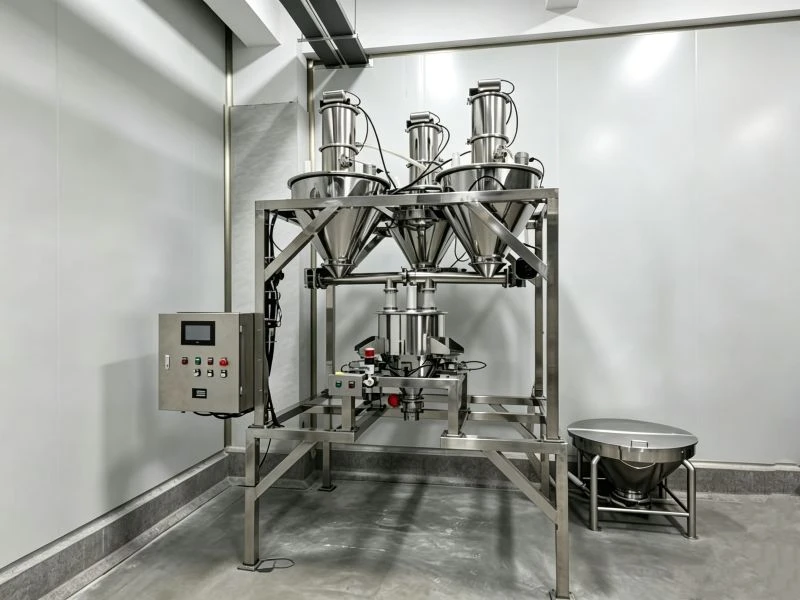
Pneumatic Vacuum Feeding Conveyor vs Screw Conveyor
| Comparison Item | Pneumatic Vacuum Feeder | Screw Conveyor |
| Conveying Principle | Intermittent conveying via negative pressure pneumatic system | Continuous pushing by mechanical spiral blades |
| Conveying Mode | Intermittent feeding with fluctuating flow rate | Continuous uniform feeding with stable and controllable flow rate |
| Pipeline Layout | Flexible hoses, bendable, cross-floor installation, flexible layout | Rigid trough, fixed route, difficult to change direction |
| Hygiene Standard | High; fully sealed negative pressure, dust-free, GMP-compliant | Average; dead corners exist, risk of contamination from mechanical wear |
| Suitable Materials | Dry ultra-fine light powders, high-purity sanitary materials | Ordinary powders, granules, coarse materials and some agglomerated materials |
| Core Advantages | Dust-free & eco-friendly, flexible feeding, explosion-proof, sanitary, minimal powder damage | Stable continuous dosing, large capacity, wide material adaptability, low basic cost |
| Main Disadvantages | Intermittent feeding, prone to clogging with wet materials, filter cartridge consumables | Vulnerable to wear and contamination; easy breakage of ultra-fine powders |
How to Choose the Right Pneumatic Vacuum Feeding Conveyor?
Selecting the right pneumatic vacuum feeding conveyor starts with understanding your material and production process. Factors such as material characteristics, required conveying capacity, transfer distance, installation layout, and hygiene standards all influence system performance. A properly matched vacuum conveying system not only improves conveying efficiency but also reduces material loss, minimizes maintenance, and ensures stable operation over the long term.
Material Characteristics
Powder or granule type, particle size, bulk density, moisture content, and flowability.
Conveying Capacity
Select the appropriate automatic powder conveying system based on the required throughput (kg/h or t/h).
Conveying Distance
Evaluate horizontal and vertical transfer distances to determine the optimal vacuum conveyor system configuration.
Application Requirements
Match the equipment to your industry, such as vacuum conveyor for pharmaceutical powder, food powder vacuum conveyor, or lithium battery powder conveying system.
Material Compatibility
Choose suitable contact materials, such as SS304 or SS316L, to meet product quality and corrosion resistance requirements.
Hygiene & Automation
For clean production environments, select a dust-free pneumatic vacuum conveyor with easy cleaning, automatic control, and enclosed conveying design.
Our Cases
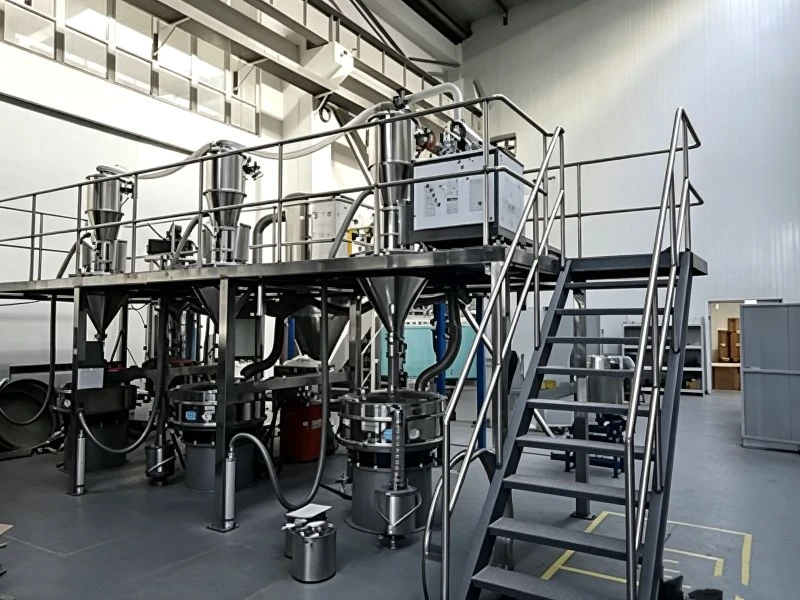
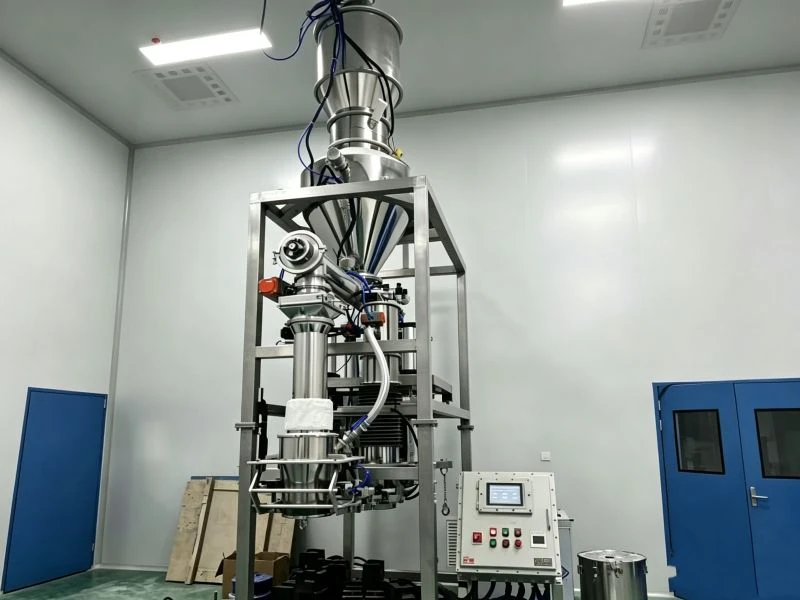
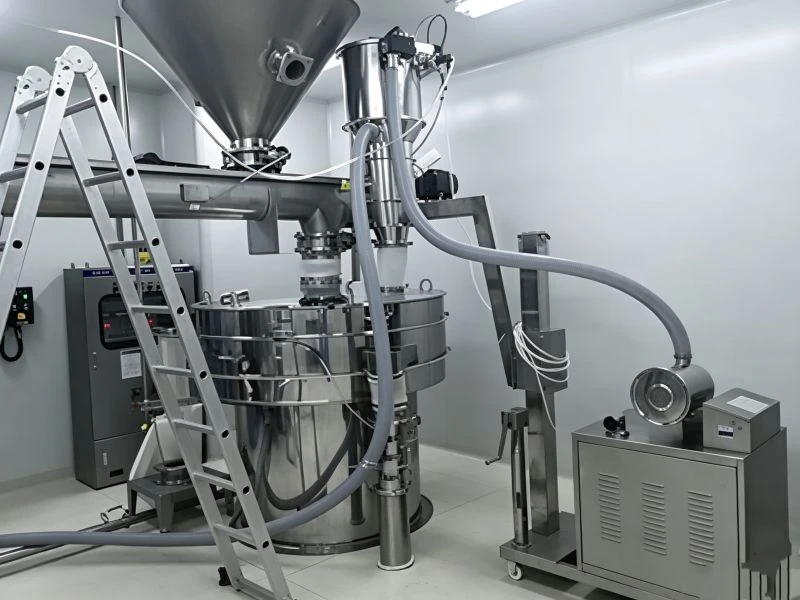
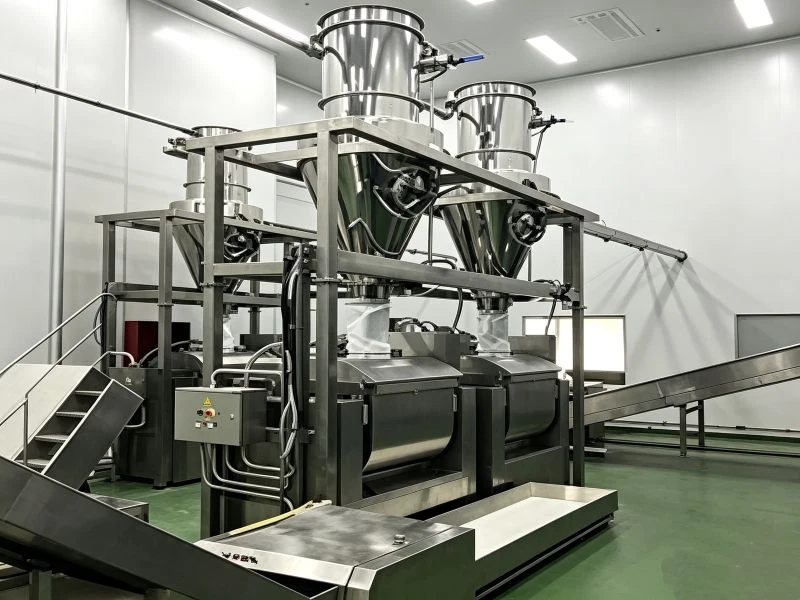
Why Choose Our Pneumatic Vacuum Feeding Conveyor?
We can provide customized vacuum powder conveying systems based on your material characteristics, production capacity, and plant layout, ensuring stable performance, low maintenance, and efficient powder handling for long-term operation.
Custom Vacuum Conveying Solutions
Tailored pneumatic vacuum conveying systems for powders, granules, and bulk materials with different conveying distances and capacities.
Extensive Industry Experience
Proven solutions for pharmaceutical powder conveying, food powder vacuum conveying, chemical powder transfer, and lithium battery powder conveying systems.
Strict Quality Manufacturing
Food-grade SS304/SS316L construction, precision fabrication, and rigorous quality inspection for reliable operation.
Complete Technical Support
Professional assistance with equipment selection, system design, installation guidance, and after-sales service.
Integrated Powder Handling Solutions
Compatible with mixers, vibrating screen machines, dust free dumping station,storage silos, packaging machines, and other automatic powder handling equipment.
Global OEM & Custom Manufacturing
Support for customized designs, OEM production, and complete vacuum conveying solutions for customers worldwide.
Related Products
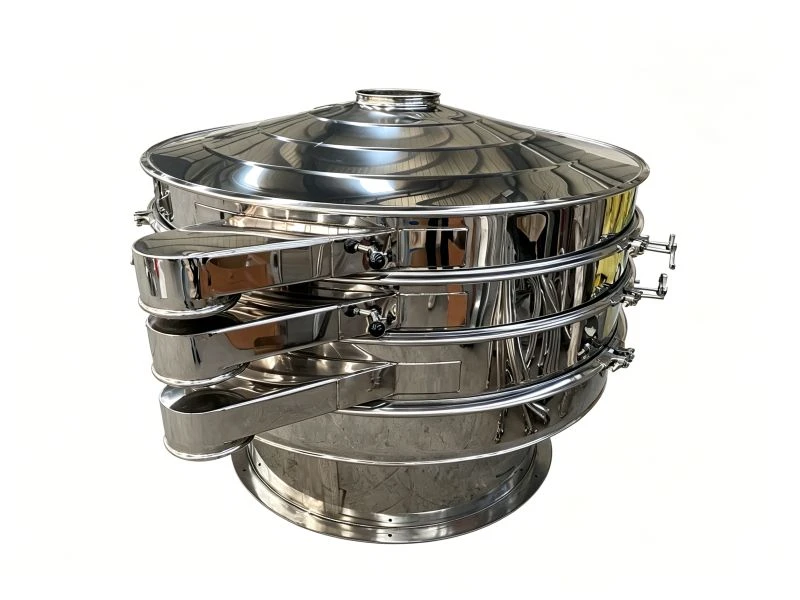
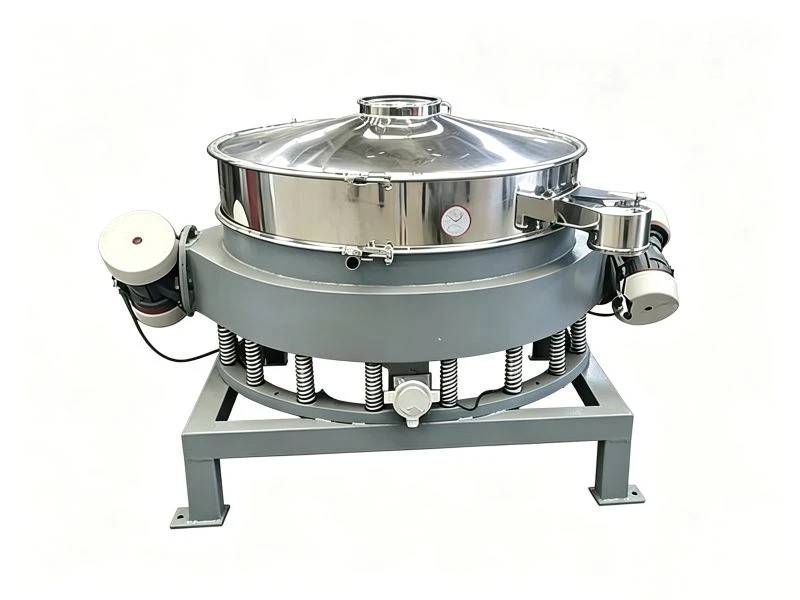
Rotary Vibrating Screen
Rotary Vibrating Screen | Vibro Sifter The rotary vibrating screen is designed for efficient separation of powders, granules, and liquids. It delivers stable performance, high screening accuracy, and reliable operation in continuous production. We offer flexible configurations, including multi-deck designs, ultrasonic systems, and food-grade materials to meet different processing requirements. YuanJing provides practical screening solutions…Inline Vibratory Screen
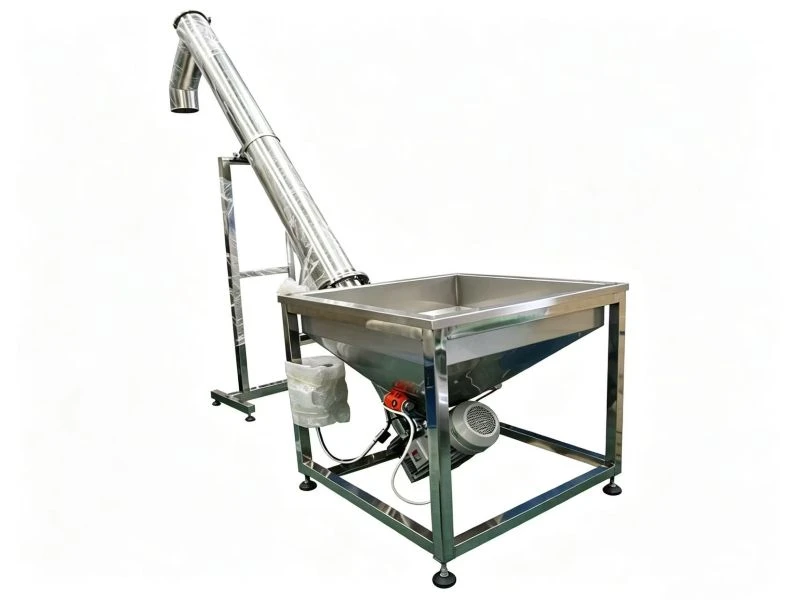
Inline Vibratory Screen for Continuous Production Lines Inline vibratory screens are built for continuous production lines, allowing powders and liquids to be screened directly in the pipeline. The compact design saves space while maintaining stable and accurate separation performance. They are widely used in food, pharmaceutical, and chemical processing. What is an inline vibratory screen?…Screw Conveyor
Industrial Screw Conveyor Systems for Bulk Material Handling Industrial screw conveyors are designed for continuous, efficient handling of bulk materials such as powders, granules, and semi-solids. With a compact structure and enclosed design, they ensure stable conveying performance, reduced dust emission, and low maintenance in various industrial applications. YuanJing provides customised screw conveyor solutions based…Vacuum Conveyor Feeder System
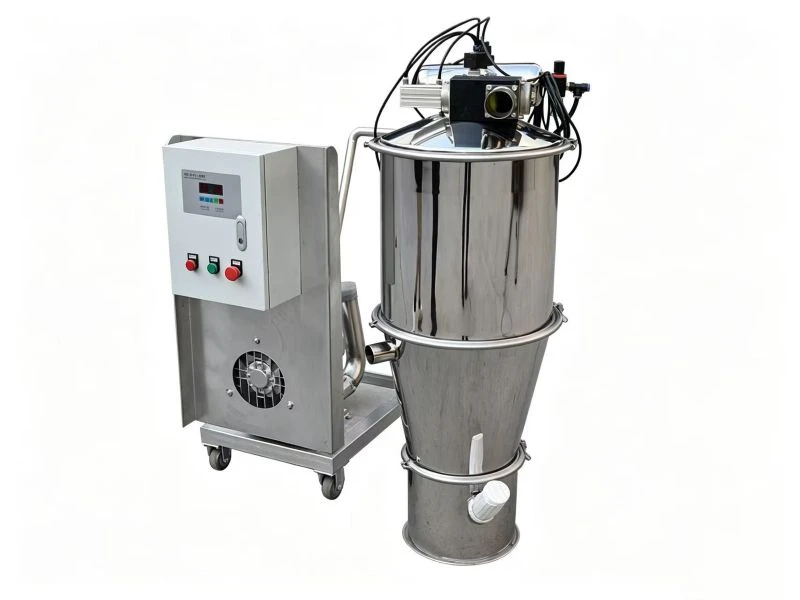
Industrial Vacuum Conveyor System Solutions for Powder & Bulk Materials Vacuum conveyor systems automatically transfer various materials into the hoppers of packaging machines, injection molding machines, and crushers. They can also feed mixed materials directly into mixers (such as V-type, 2D, and 3D mixers), significantly reducing manual labor and eliminating dust spillage during feeding. As…
Vibrating Screen and Conveyor Machine Manufacturer & Supplier
Built for precision screening, reliable performance, and flexible industrial applications,
Yuanjing rotary vibrating screens are trusted by customers worldwide.

Global Project Experience
Yuanjing products are exported to 50+ countries and regions, serving industries including food, chemicals, pharmaceuticals, mining, and new energy.
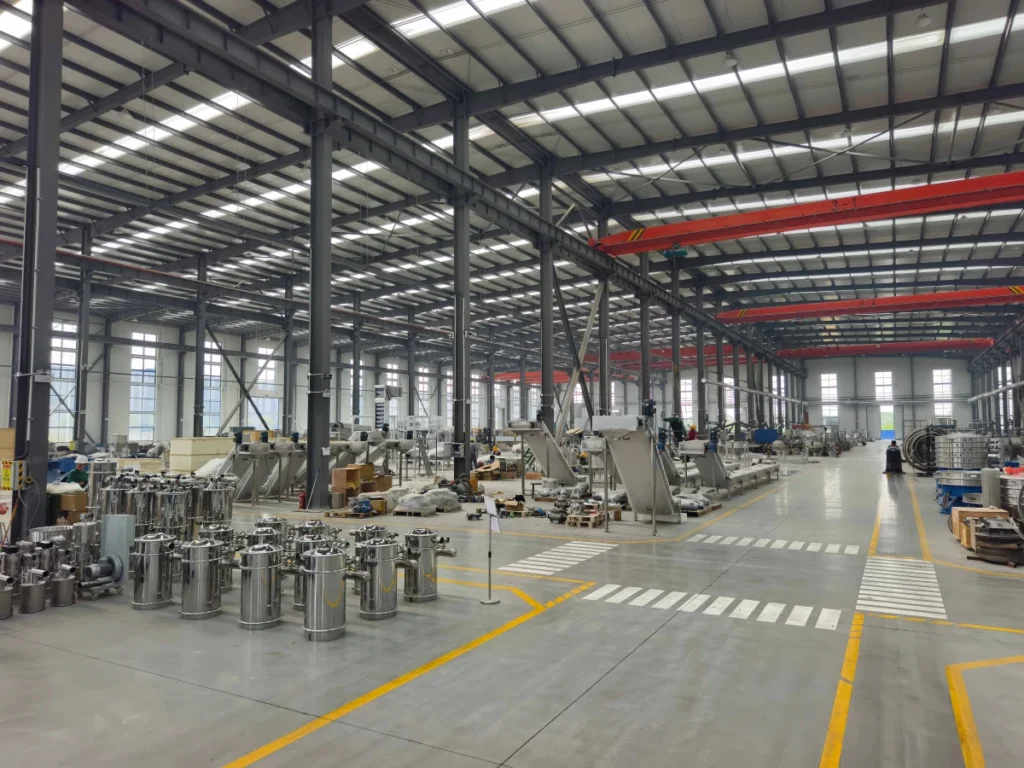
Strong Manufacturing Capability
Advanced production lines with laser cutting, CNC machining, automatic welding, and strict quality inspection ensure consistent product quality.
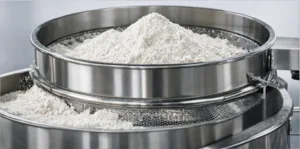
Accurate & Stable Separation
Optimized vibration design delivers even material flow, high screening accuracy, and stable long-term operation.
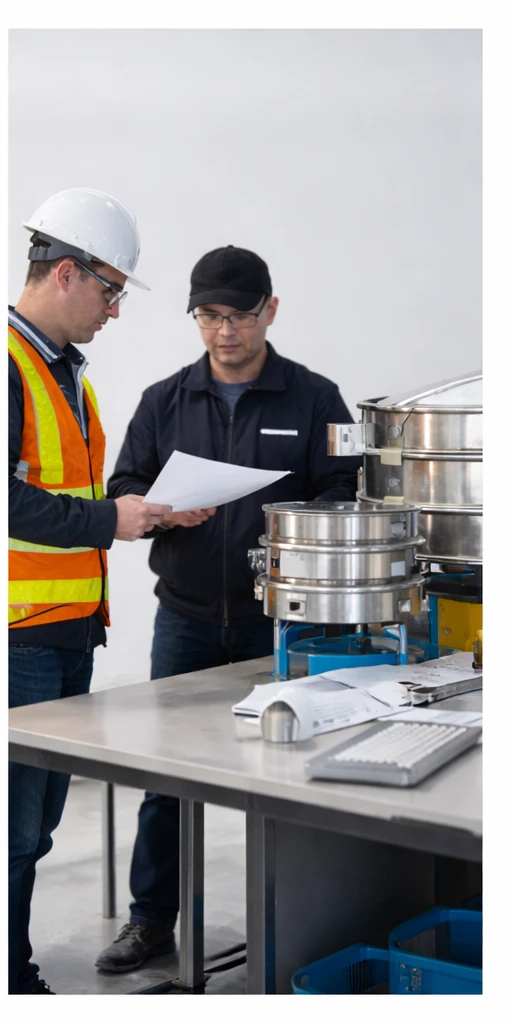
Customized Screening Solutions
Yuanjing offers flexible configurations in diameter, mesh size, deck layers, and material options to fit your exact process requirements.
FAQs
Get Custom Solution
We can provide customised screening and conveying equipment solutions tailored to different materials and production requirements.
Send us your requirements, and our team will provide the right solution and a fast quotation within 24 hours.