Flour Screening and Vacuum Conveying System for a Flour Plant
Project Overview
A flour processing customer contacted us because they had too much dust during manual bag feeding. They also needed to remove lumps and large impurities from the flour before it entered the next production process.
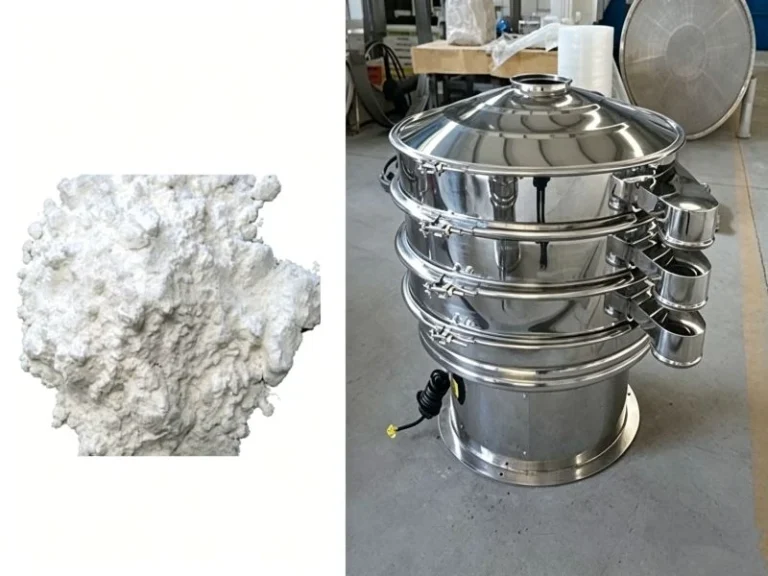
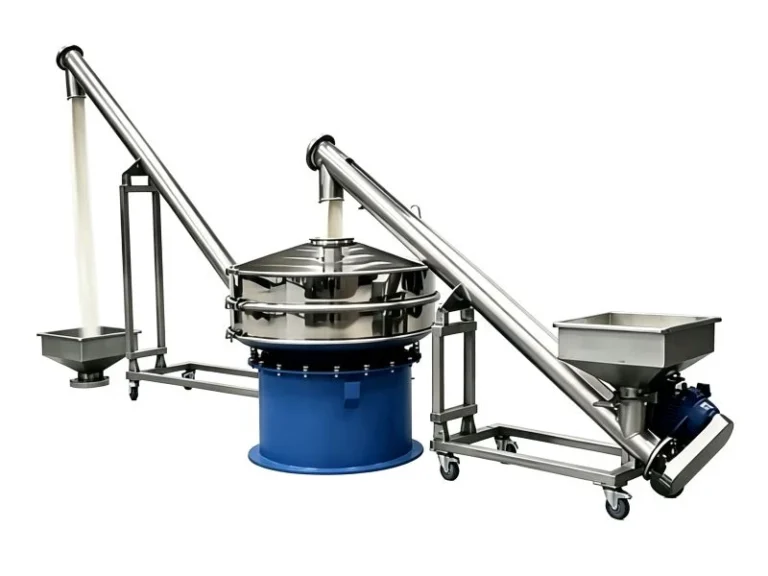
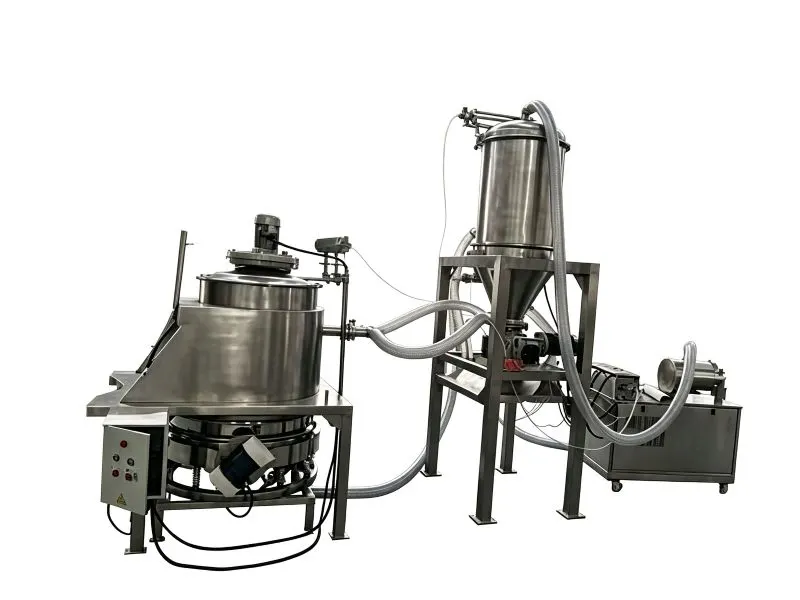
After discussing the complete process with the customer, we designed a flour screening and vacuum conveying system consisting of a dust-free feeding station, a 1000 mm inline vibratory screen, and a ZKS vacuum conveyor.
The complete process is:
Manual Feeding → Dust Collection → 40 Mesh Screening → Vacuum Conveying → Next Process
The required handling capacity is about 1000 kg/h.
Customer Requirements
At first, the customer mainly wanted to reduce flour dust during manual bag feeding.
After further discussion, we confirmed two more requirements:
- The flour needed 40 mesh screening to remove lumps and large impurities before entering the next process.
- After screening, the flour needed to be conveyed about 3 meters horizontally and 5 meters vertically to the next machine.
The customer also wanted to keep the conveying process closed to reduce dust and avoid manual material transfer.
Based on these requirements, we recommended a complete feeding, screening, and vacuum conveying solution instead of using only one machine.
Our Solution
1. Dust-Free Feeding Station
The dust-free feeding station is installed at the beginning of the system.
The operator opens the flour bags and feeds the material directly into the station. Dust generated during feeding is collected by the dust collection system, helping reduce dust around the feeding area.
After feeding, the flour moves directly into the inline vibratory screen below.
2. 1000 mm Inline Vibratory Screen with 40 Mesh
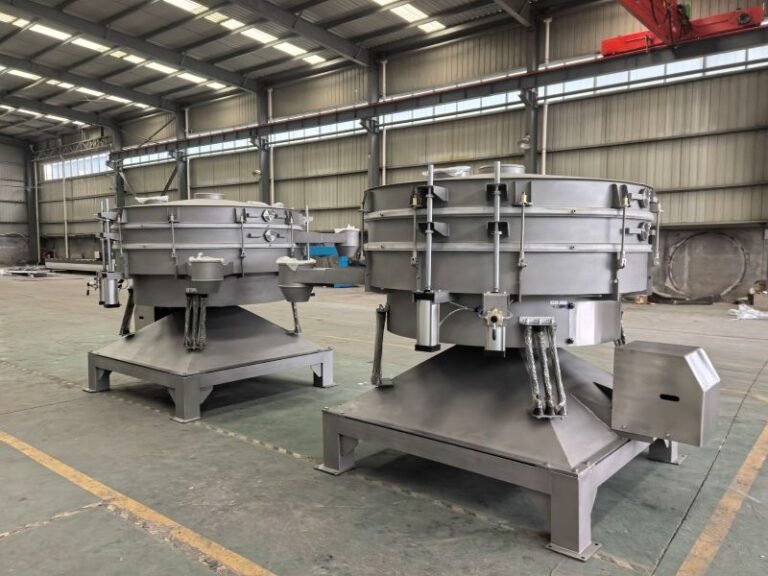
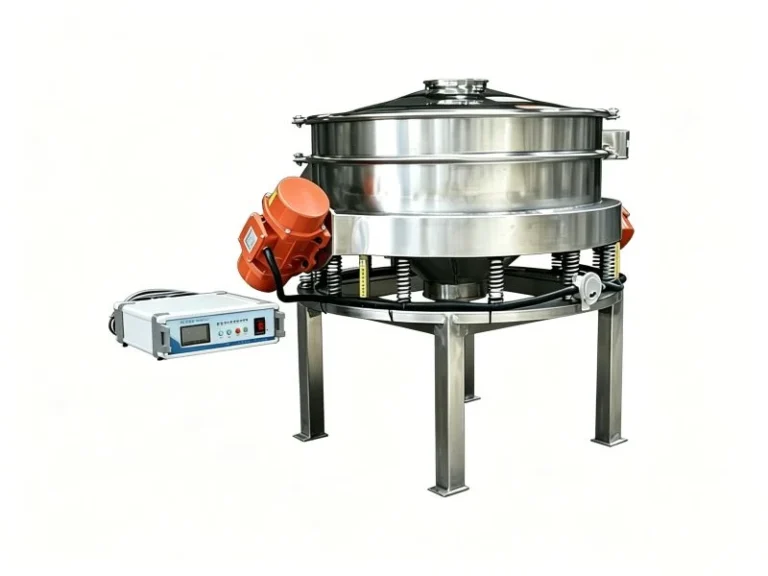
Based on the required capacity of 1000 kg/h and the 40 mesh screening requirement, we recommended a 1000 mm inline vibratory screen.
The screen removes flour lumps and other large impurities before the material enters the next process.
Its straight-through design allows the screened flour to discharge directly from the bottom. This also makes it easy to connect the screen with the vacuum conveying system.
3. ZKS Vacuum Conveyor
The customer needed to convey the screened flour about 3 meters horizontally and 5 meters vertically.
For this working condition, we recommended a ZKS vacuum conveyor.
The suction pipe is connected directly to the bottom outlet of the inline vibratory screen. After passing through the 40 mesh screen, the flour enters the closed vacuum conveying pipe and is transferred to the next machine.
There is no need to collect the screened flour in a container and feed it again by hand.
Related videos
Equipment Parameters
| Item | Specification |
|---|---|
| Material | Flour |
| Handling Capacity | About 1000 kg/h |
| System | Dust-Free Feeding Station + Inline Vibratory Screen + ZKS Vacuum Conveyor |
| Screen Diameter | 1000 mm |
| Screen Mesh | 40 mesh |
| Screening Purpose | Remove lumps and large impurities |
| Horizontal Conveying Distance | About 3 m |
| Vertical Conveying Height | About 5 m |
| Conveying Method | Closed vacuum conveying |
| Suction Point | Bottom outlet of the inline vibratory screen |
Main Features
Less dust during feeding: The dust-free feeding station collects dust generated when operators open and empty flour bags.
40 mesh safety screening: The 1000 mm inline vibratory screen removes lumps and large impurities before the flour enters the next process.
No second manual transfer: The vacuum conveyor is connected directly to the bottom of the screen, so screened flour does not need to be collected and fed again.
Closed conveying: Flour is transferred through a closed vacuum pipe for a horizontal distance of about 3 meters and a vertical height of about 5 meters.
Compact system: Feeding, screening, and conveying are connected in one process, making the system easier to add to an existing flour production line.
Planning a similar installation for your powder? Our powder conveying and sieving system design guide explains how to assess equipment connections, feed stability, and dust control for your production requirements.
Customer Feedback
After the system was put into use, the customer told us that the feeding process became simpler and more organized.
After manual feeding, the flour passes directly through the 40 mesh screen and is then transferred to the next machine by the ZKS vacuum conveyor.
The customer was especially satisfied that there was no need to manually collect and feed the flour again after screening. The combined feeding, screening, and conveying process reduced manual handling and helped control dust during flour processing.
Need a Flour Screening and Vacuum Conveying System?
Every flour processing line has different requirements for capacity, mesh size, conveying distance, and installation height.
If you need to reduce dust during feeding, remove impurities from flour, or transfer screened flour in a closed system, contact our team.
Tell us your material, required capacity, mesh size, conveying distance, and conveying height. Our team can recommend a suitable dust-free feeding, screening, and vacuum conveying solution for your production line.