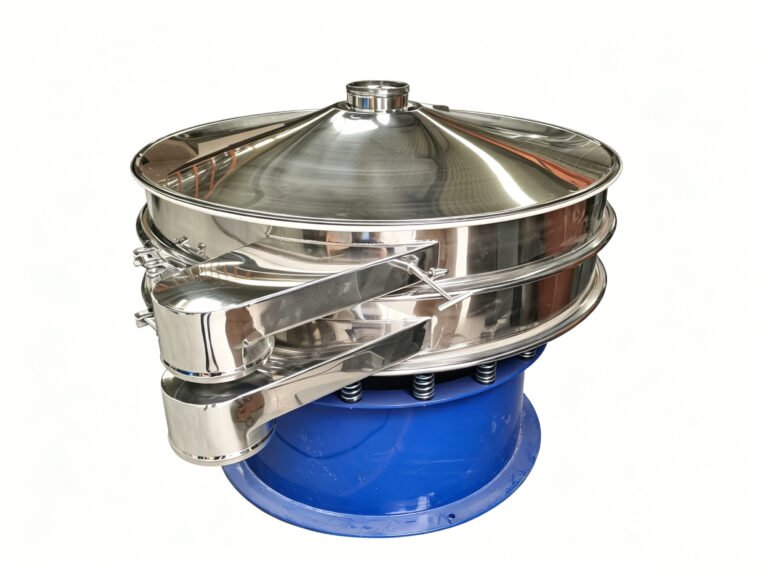
How to Choose the Right Inline Vibratory Screen for Your Production Line
Choosing the right inline vibratory screen depends mainly on the material, required mesh size, screening capacity, flowability, and how the machine will connect with the production line. Screen diameter, motor configuration, machine material, and inlet/outlet design should then be selected according to these operating requirements.
This guide explains the main factors to consider when selecting an inline vibratory screen for continuous powder or granule screening.
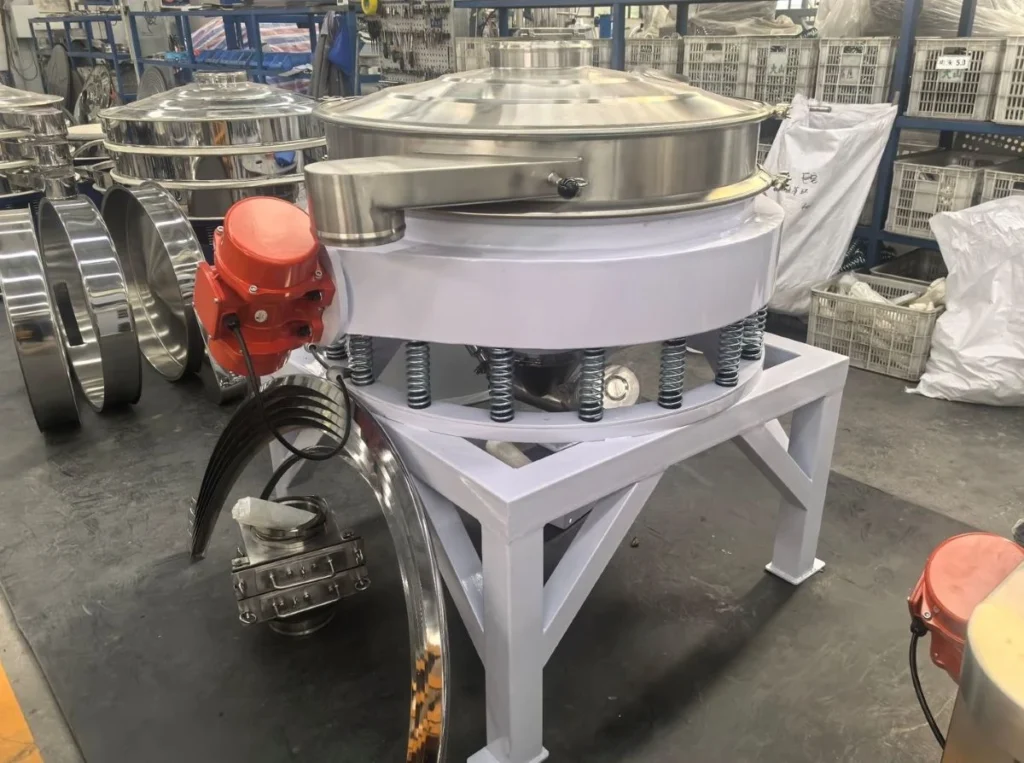
What Is an Inline Vibratory Screen?
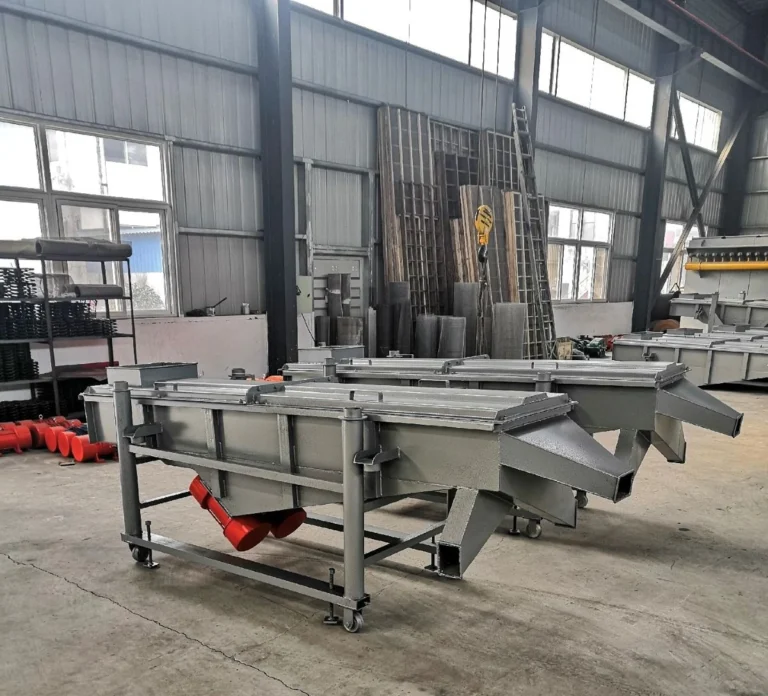
An inline vibratory screen is a continuous screening device designed to be directly integrated into a production line. It uses vibration to move material across the screen surface while separating particles by size or removing oversized impurities.
Unlike screening equipment used as a separate processing step, an inline vibratory screen allows material to pass continuously from upstream equipment through the screening unit and into the next production stage. This makes it suitable for powders, granules, and other dry bulk materials that require continuous screening.
When selecting an inline vibratory screen, the material characteristics, required mesh size, screening capacity, and production line layout should all be considered to ensure stable operation and proper system integration.
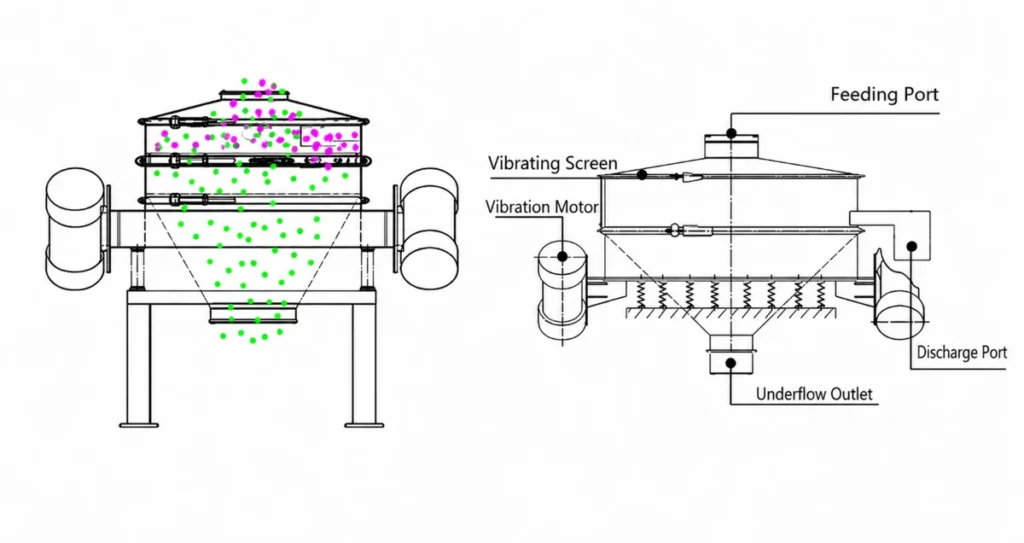
Inline Vibratory Screen Working Principle
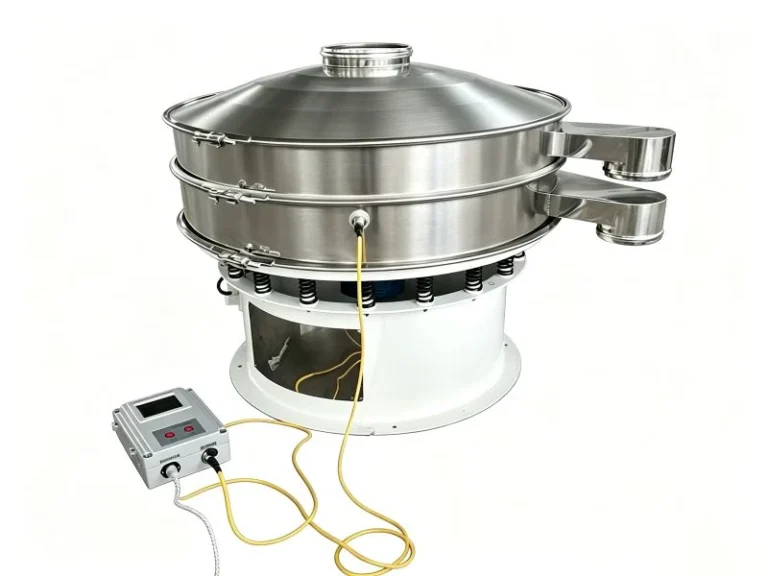
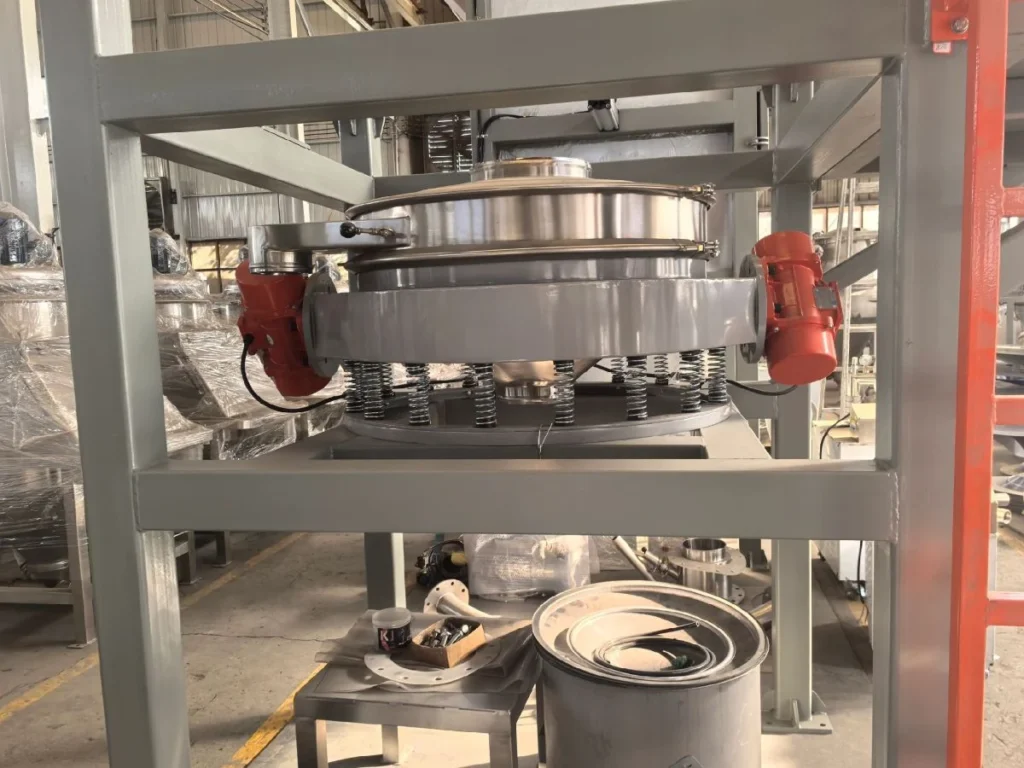
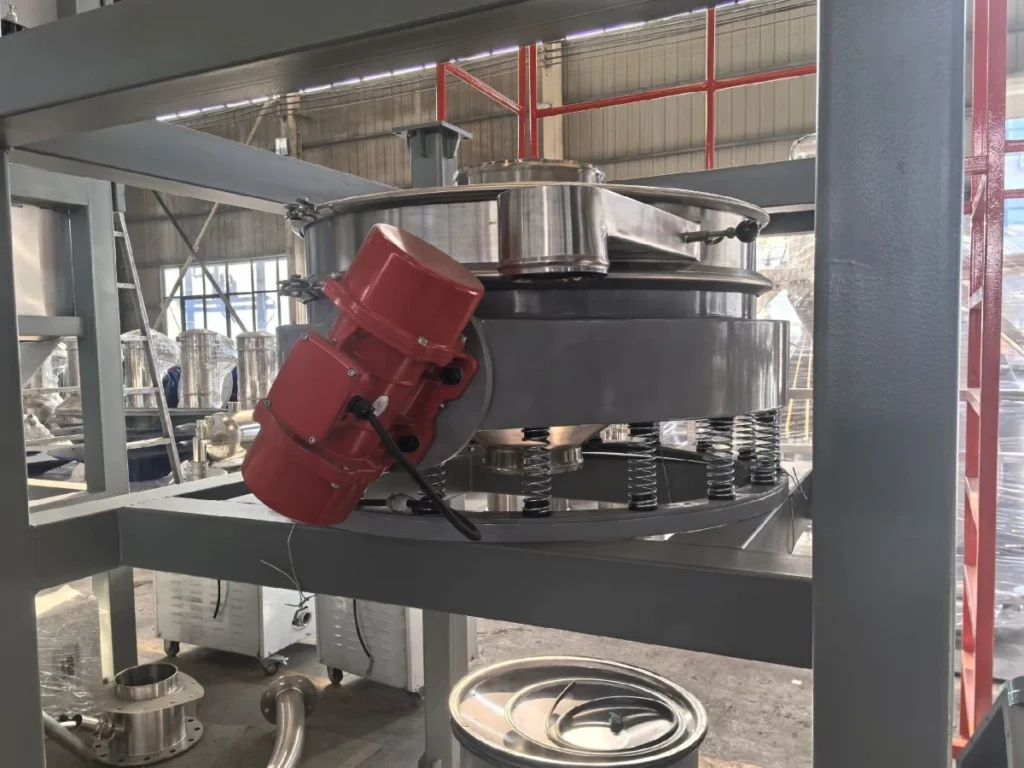
An inline vibratory screen uses one or more vibration motors to generate excitation force and create a controlled vibration of the screen body. As material enters the machine, the vibration distributes and moves it across the screen surface.
Particles smaller than the screen openings pass through the mesh and are discharged through the screened-material outlet. Oversized particles remain above the mesh and continue moving toward a separate discharge outlet. This allows screening and material conveying to take place continuously without interrupting the production flow.
Screening performance depends on several factors, including particle size distribution, material flowability, moisture content, mesh size, feed rate, and vibration characteristics. The machine configuration should therefore be selected according to the actual material and production requirements rather than screen size alone.
5 Factors to Consider When Choosing an Inline Vibratory Screen
The selection of an inline vibrating sieve must take into account the stability of the production line; it is not determined by equipment specifications alone, but rather by material characteristics and process requirements. Therefore, the selection process must evaluate four key aspects—material, capacity, precision, and system integration—to ensure that the screening machine can be seamlessly integrated into the production process for long-term stability, rather than operating as a standalone unit.
1. Material Characteristics
The characteristics of the material directly affect screening performance and equipment configuration. Before selecting an inline vibratory screen, consider the particle size, bulk density, flowability, moisture content, stickiness, and abrasiveness of the material.
Free-flowing powders and granules are generally easier to screen, while fine, lightweight, damp, or sticky materials may move more slowly across the screen surface and can increase the risk of mesh blinding. Materials with a higher bulk density may also require different screen sizes or vibration settings to maintain stable throughput.
For abrasive materials, the screen mesh and contact parts should be selected with wear resistance in mind. For food, pharmaceutical, or chemical applications, the material of construction, such as SS304 or SS316L, should also meet the relevant production and hygiene requirements.
In the battery powder screening process, the surfaces where the equipment comes into contact with the material are a critical factor; this can be improved by applying a Teflon coating to the contact surfaces.
2. Required Mesh Size
The required mesh size should be selected according to the target particle size, screening purpose, and acceptable amount of oversized material, rather than simply choosing the finest available screen.
For example, coarse screening may be used to remove large impurities before the material enters the next production stage, while finer mesh sizes are required when tighter particle-size control is needed. As the mesh becomes finer, however, the open area decreases and screening becomes more difficult, which can reduce throughput.
For fine powder applications, mesh size should also be evaluated together with material flowability and the risk of screen blinding. Materials that easily agglomerate or block fine mesh may require an additional screen-cleaning or anti-blinding solution to maintain consistent screening performance.
3. Required Screening Capacity
The required capacity is another key factor when selecting an inline vibratory screen. Capacity is not determined by screen diameter alone. It is also affected by the material properties, mesh size, bulk density, feed rate, screen open area, and screening difficulty.
A larger screen can provide more effective screening area, but the final machine size should be based on actual operating conditions. For this reason, it is better to provide the required throughput in kg/h or t/h, together with the material and mesh size, before selecting the screen diameter and configuration.
For a more detailed explanation of the factors affecting throughput, see Inline Vibratory Screen Capacity: What Determines Screening Output?
4. Material Flowability and Screen Blinding
Material flowability has a direct impact on how efficiently powder moves across and passes through the screen mesh. Free-flowing materials generally spread more evenly across the screening surface, while fine, sticky, damp, or electrostatic powders may accumulate on the mesh and gradually block the openings.
Screen blinding reduces the effective screening area and can lead to lower capacity, unstable screening performance, and more frequent cleaning. Therefore, materials that are difficult to screen should be evaluated for agglomeration, moisture, static electricity, and particle shape before the machine configuration is determined.
Depending on the material and mesh size, suitable anti-blinding measures can be considered. For very fine powders, an ultrasonic screening system may also be used when conventional vibration alone cannot keep the mesh openings clear.
5. Production Line Integration
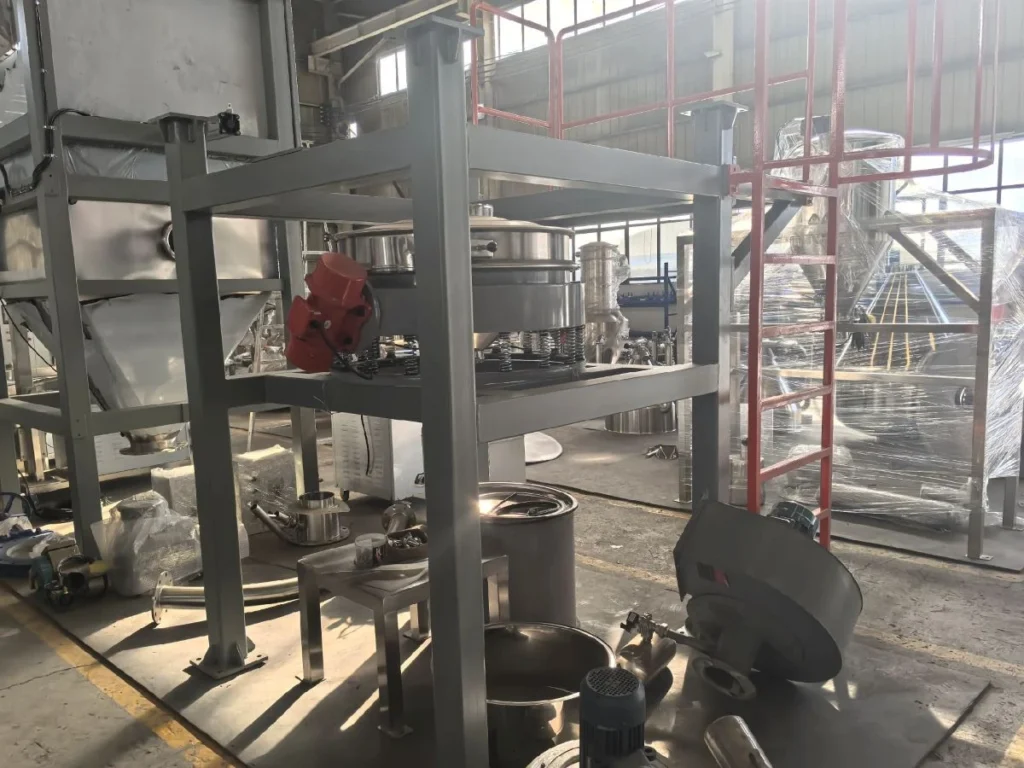
An inline vibratory screen should be selected as part of the complete production line rather than as an isolated machine. The equipment must match both the upstream feeding system and the downstream process to maintain continuous material flow.
Before confirming the configuration, check the available installation height, feeding method, inlet and outlet dimensions, connection type, upstream and downstream equipment, power supply, and required operating mode. These factors determine how easily the screen can be installed without major modifications to the existing line.
For continuous production, the inlet and outlet arrangement should also allow material to pass through the screen smoothly without unnecessary retention or interruption. Providing a production line layout or installation dimensions before equipment selection can help determine the appropriate machine size and connection design.
How to Select the Right Inline Vibratory Screen Configuration
Selecting the right inline vibratory screen configuration requires matching the machine to the actual material and production conditions. Instead of choosing a screen based only on diameter or motor power, several operating parameters should be considered together.
The table below summarizes the key information required before determining the screen size, mesh, motor configuration, material of construction, and inlet/outlet design.
| Selection Factor | What to Confirm | How It Affects Configuration |
|---|---|---|
| Material | Powder or granule | Determines the basic screening structure and suitable configuration |
| Particle Size | Particle size distribution | Helps determine the appropriate mesh and screening method |
| Required Mesh Size | Target separation size | Finer mesh generally increases screening difficulty and risk of blinding |
| Required Capacity | kg/h or t/h | Affects the required screening area and screen diameter |
| Bulk Density | kg/m³ | Influences material loading, screen sizing, and vibration requirements |
| Flowability | Free-flowing, cohesive, or difficult to flow | Affects material movement and vibration requirements |
| Moisture / Stickiness | Dry, damp, or sticky | Determines whether additional anti-blinding measures may be required |
| Contact Material | Product and process requirements | Determines carbon steel, SS304, SS316L, or other contact materials |
| Feeding Method | Hopper, conveyor, screw feeder, vacuum system, etc. | Affects inlet size and connection design |
| Installation Space | Available height and footprint | Determines machine dimensions and installation arrangement |
| Production Line Connection | Upstream and downstream equipment | Determines inlet/outlet position, size, and connection method |
No single parameter should be used to select an inline vibratory screen. For example, two applications requiring the same mesh size may need different screen diameters or vibration configurations if their capacity, bulk density, or material flowability is different.
For more accurate selection, provide the material name, particle size, required mesh size, capacity, bulk density, and production line conditions before confirming the final machine configuration.
How to Choose the Inline Vibratory Screen Size and Configuration
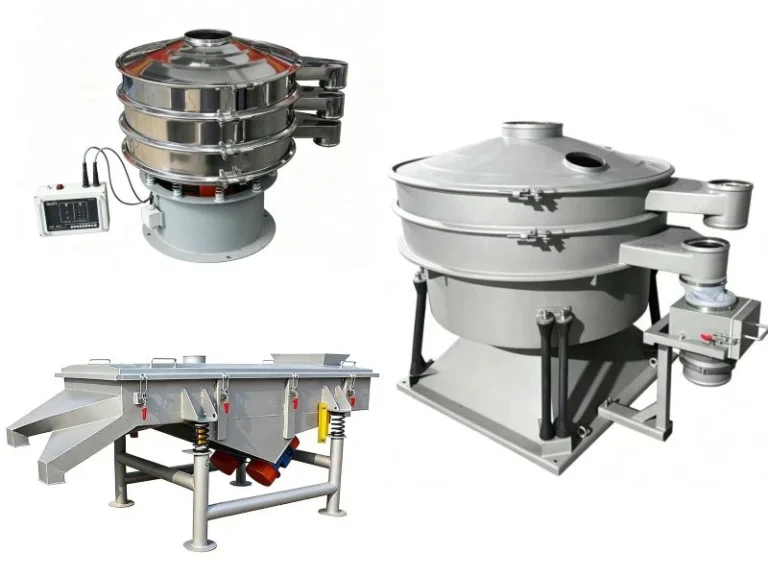
The right inline vibratory screen size and configuration depends on the required capacity, mesh size, material characteristics, and production line layout. Screen diameter, number of layers, and motor configuration should be selected according to the actual screening requirements.
Screen Diameter
Screen diameter mainly affects the available screening area and capacity. A larger screen provides more screening area, but the final size should also consider mesh size, bulk density, material flowability, and available installation space.
For a specific throughput requirement, screen size should be confirmed based on actual material data rather than diameter alone.
Single-Layer or Multi-Layer
A single-layer screen is commonly used for safety screening and removing oversized particles or impurities.
A multi-layer screen is suitable when the material needs to be separated into different particle-size ranges. The number of layers should be determined by the required number of separations.
Single-Motor or Dual-Motor
Motor configuration affects vibration and material movement. A single-motor design can meet many standard screening requirements, while a dual-motor design provides a different vibration arrangement for specific operating conditions.
The choice depends on the material, screening purpose, capacity, and installation requirements.
For more details, see single-motor vs dual-motor inline vibratory screen.
Cost & Performance
When selecting a vibrating sieve, it is essential to balance cost and performance. Focusing too much on price while neglecting the equipment’s long-term operational efficiency, maintenance costs, and energy consumption may lead to increased hidden costs, thereby impacting the overall profitability of the production line. Therefore, when making a purchasing decision, one must not only consider the equipment’s price but also evaluate its performance, reliability, maintenance requirements, and energy consumption to ensure optimal screening results while maximizing the production line’s cost-effectiveness.
Initial Investment Costs
While purchasing lower-priced equipment may save money in the short term, its performance and long-term maintenance costs may end up being higher.
Operational Efficiency
High-performance equipment typically offers greater screening precision and a longer service life. Although the initial investment is higher, it significantly enhances the production line’s stability and capacity.
Energy Consumption
Energy-efficient equipment reduces electricity consumption during prolonged operation, thereby lowering overall operating costs.
Maintenance Costs
Cheaper equipment may require more maintenance or more frequent replacement of parts, potentially leading to a higher total cost of ownership in the long run.
Production Line Compatibility
Whether the equipment can integrate seamlessly with the existing production line affects its long-term efficiency and stability, reducing the costs of future modifications or adjustments.
Equipment Reliability
High-quality equipment is generally more reliable, reducing downtime and production interruptions caused by malfunctions, which helps improve production efficiency and minimize unnecessary losses.
Conclusion
Selecting the right inline vibrating screen is crucial for improving production line efficiency, reducing operating costs, and ensuring product quality. When making this decision, it is essential to comprehensively consider factors such as material characteristics, screening accuracy, equipment capacity, maintenance costs, and compatibility with existing production lines. Choosing high-efficiency equipment with low maintenance costs can deliver greater long-term returns for your business.
If you have any questions or require further guidance on equipment selection, please feel free to contact us at any time. Our professional team will provide customized solutions based on your specific needs and assist you in selecting the most suitable online vibrating screen.