Standard vs. Ultrasonic Sieve Shaker: Applications and Selection Guide
Fine powder can cling to sieve mesh, collect around the openings or form agglomerates that resist separation. Operators then have to stop the test, clean the sieve and start again. Besides taking time, these interruptions make it harder to keep test conditions consistent.
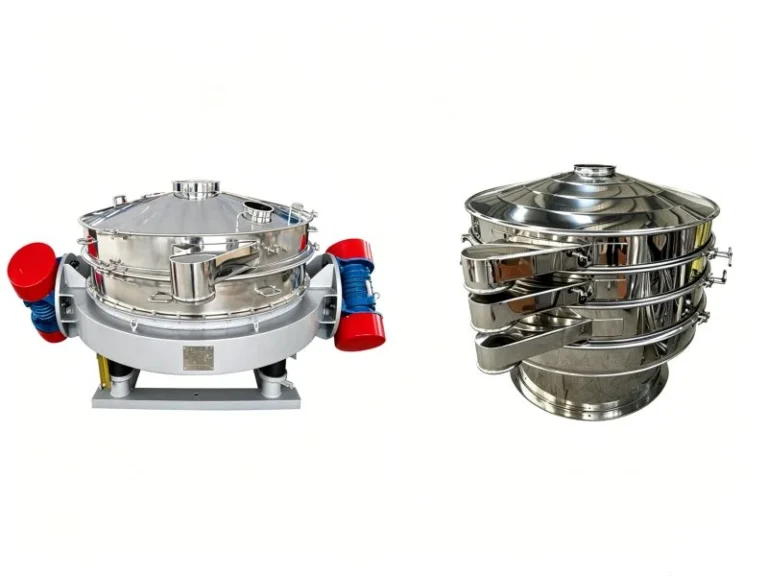
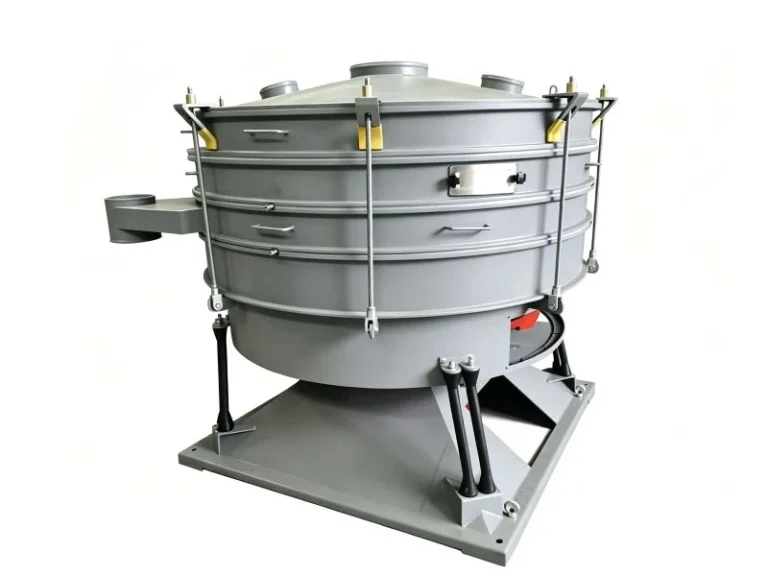
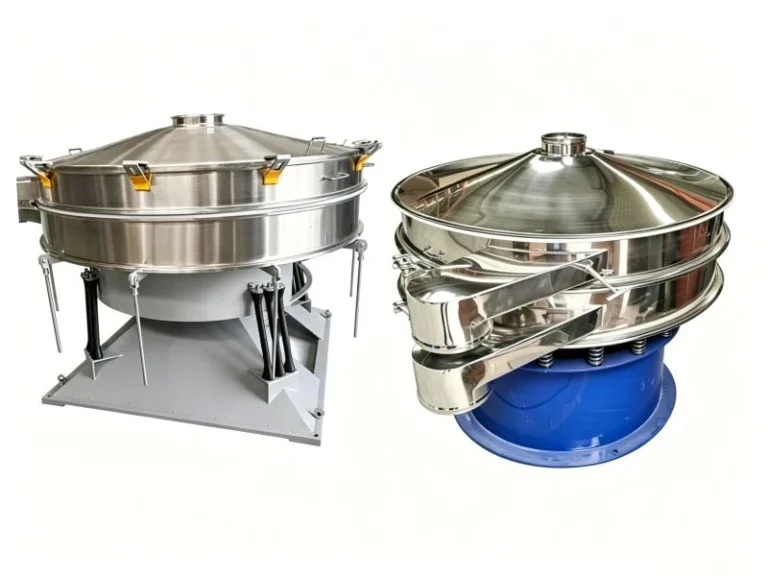
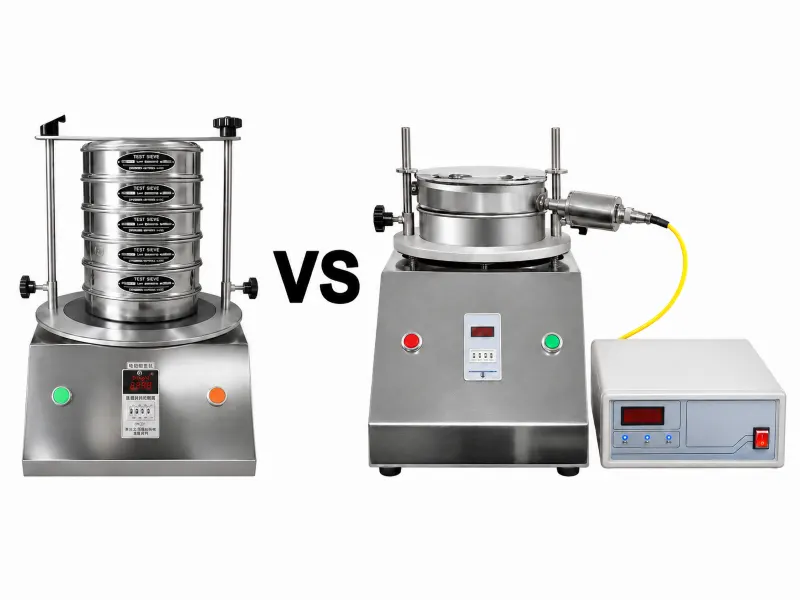
A standard laboratory sieve shaker separates particles through mechanical motion. An ultrasonic sieve shaker adds high-frequency vibration to the mesh, helping loosen attached powder and reduce blocked openings.
For coarse, free-flowing material, a conventional shaker is often enough. Ultrasound becomes useful when adhesion, agglomeration or mesh blinding interferes with the test. The choice also depends on the method, aperture size, sample quantity and contact materials—not just the mesh count.
What Is a Standard Laboratory Sieve Shaker?
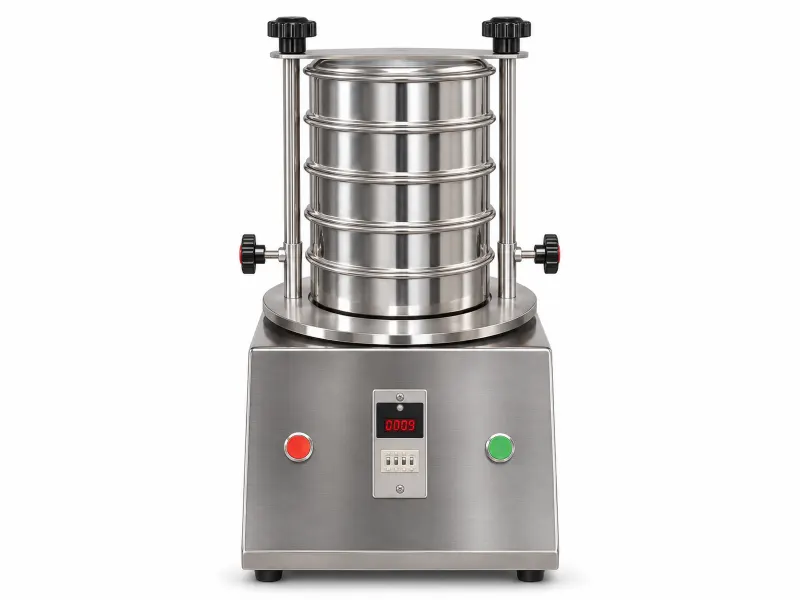
A standard laboratory sieve shaker moves a stack of test sieves. Particles that can pass through an aperture fall to the next sieve; larger particles remain above it. The material retained on each sieve is weighed to determine the size fractions under the chosen test conditions.
Three terms are worth distinguishing:
- Test sieve: the frame and screening medium with specified apertures.
- Sieve shaker: the machine that moves the sieves.
- Sieve analysis: the procedure used to separate and measure the fractions.
Conventional mechanical shakers are relatively straightforward to operate and generally cost less than systems fitted with ultrasonic assistance. They suit many routine tests on granular materials and free-flowing powders.
Review the available laboratory sieve shaker configurations, then confirm the sieve diameter, number of layers and whether your sample needs ultrasonic assistance.
Juices, slurries and other liquid-containing samples need a different check: does the machine support wet sieving, with suitable seals and drainage accessories? A dry-sieving setup should not be assumed suitable. The sample, equipment and test method must all permit wet sieving before it is used.
What Is an Ultrasonic Sieve Shaker?
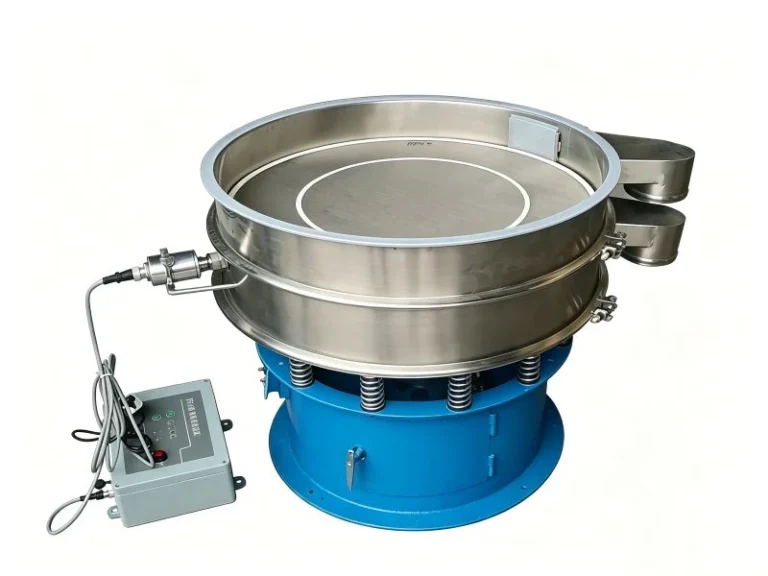
An ultrasonic sieve shaker combines mechanical movement with an ultrasonic generator and components that transmit high-frequency vibration to the sieve mesh.
The mechanical movement distributes the sample. The ultrasonic vibration helps loosen particles attached to the mesh or lodged near its openings. It can also disperse some soft agglomerates.
A system operating at 36 kHz produces approximately 36,000 vibration cycles per second. Frequency, power and transmission arrangements vary with the equipment configuration.
The aim is to keep more sieve openings available while the powder is being separated. Ultrasound does not guarantee complete separation of every material, nor does it remove the need to control sample loading and test conditions.
Sampling, mesh condition, operating time and equipment settings still affect the quality and repeatability of the analysis.
Standard vs. Ultrasonic Sieve Shaker: Key Differences
| Selection factor | Standard mechanical sieve shaker | Ultrasonic sieve shaker |
|---|---|---|
| Main configuration | Mechanical shaker with compatible test sieves | Mechanical shaker with an ultrasonic generator and transmission components |
| Sieving action | Mechanical motion, with movement depending on the machine | Mechanical motion plus high-frequency mesh vibration |
| Typical materials | Coarse particles, free-flowing powders and routine quality-control samples | Fine powders prone to adhesion, agglomeration or mesh blinding |
| Mesh blockage | Fine particles may lodge in openings or coat the mesh | Ultrasonic assistance can reduce blockage and adhesion |
| Particle size suitability | Depends on aperture size, material properties and the test method | Can assist fine-powder separation; suitability still needs checking |
| Repeatability | Consistent results are possible with a suitable material and method | May improve consistency when blockage causes incomplete sieving |
| Main applications | Routine sieve analysis, production quality control and fractionation | Difficult fine-powder testing, research and classification |
| Cost and maintenance | Generally simpler equipment with fewer components to maintain | Additional components require inspection and correct connection |
200 mesh is not a fixed dividing line between the two machines. Finer sieves deserve closer attention to blinding, but powder flow, adhesion and agglomeration can matter just as much.
Treat a claim such as “up to 1,200 mesh” as a configuration detail to verify, not a promise for every powder. Check the actual aperture, screening medium and sample-test results.
In test records, specify the aperture in micrometers or millimeters and identify the applicable sieve standard. Our explanation of mesh count vs micron size shows why a mesh number alone does not fully specify the opening.

When Should You Choose a Standard Sieve Shaker?
Routine Production Quality Control
A mechanical shaker can handle many daily sampling and product-release checks, including:
- Construction materials: cement, sand, aggregates and slag.
- Agricultural products: wheat and corn.
- Industrial granules: plastic pellets, rubber granules and fertilizer particles.
Aggregate sieve analysis measures the proportion in each size fraction. Plastic pellet testing may instead focus on oversized pieces, broken particles and size consistency.
If the material flows freely and the mesh stays reasonably clear, mechanical sieving is a sensible starting point. Finer materials, such as cement powders, need closer attention to the specified method and their behavior during the test.
Geology, Mining and Metallurgy Laboratories
Ores, coal powders, soils, mineral sands and metal particles may all require particle size testing.
A conventional laboratory sieve shaker can perform routine fractionation when samples are relatively coarse, sufficiently dry and not strongly agglomerated. Clay-rich soil, damp coal powder and fine metal powder need more care.
Dry mineral sand and damp mineral fines may come from the same operation, yet behave quite differently on a sieve. Check the sample rather than choosing equipment by industry alone.
Third-Party Testing Laboratories
For aggregates, construction materials, grain and other tested products, the applicable method or customer specification should determine the equipment and operating conditions.
If the procedure specifies mechanical sieving, follow those conditions. Adding ultrasound to shorten the test can change the method and should be checked before use.
A result’s acceptability depends on method compliance, equipment condition, quality control and any applicable accreditation requirements. The word “standard” in a product name does not establish compliance.
Food Ingredients and General Chemical Powders
Mechanical sieving is also suitable for many food and chemical powders that flow well and resist moisture uptake or agglomeration. Examples include:
- Flour and white sugar.
- Seasoning granules and spice particles.
- General-purpose pigments and conventional chemical powders.
Flour or pigment can still blind a sieve if it is sufficiently fine, damp or adhesive. A material name alone will not tell you how it behaves.
Conventional shakers are also used in mineral processing, plastics, fertilizer, salt and sugar production, and university laboratories.
When Is an Ultrasonic Sieve Shaker Worth Considering?
Battery Materials and Advanced Ceramic Powders
An ultrasonic sieve shaker may help with lithium battery cathode and anode powders, graphene-containing powders, silica flour and ultrafine ceramic powders when adhesion or agglomeration repeatedly blocks the mesh.
The first question is what the test needs to measure. Removing coarse agglomerates is different from measuring primary particle size. Sieving graphene-containing or nanoscale material does not automatically provide the latter.
Where the task is fractionation or oversized-particle removal, sample testing can show whether ultrasonic assistance keeps enough of the mesh open to achieve the required separation.
For production-stage handling of cathode powders, graphite and related materials, see our battery material screening solutions. Production throughput needs a separate assessment from laboratory sieve analysis.
Pharmaceutical and Herbal Powder Testing
An ultrasonic sieve shaker for pharmaceutical powders can be evaluated for active pharmaceutical ingredients, micronized herbal powders and plant extracts.
These powders may cling to the mesh or form agglomerates, making the sieving endpoint difficult to reproduce. Ultrasound may help when those effects interfere with the procedure.
High-frequency, low-amplitude vibration can reduce reliance on more forceful mechanical cleaning. Fragile particles, coated powders and temperature-sensitive materials still need checks for changes during testing.
Stainless steel contact parts support cleaning, but they do not prevent cross-contamination on their own. Equipment design, cleaning procedures and verification remain part of the job.
Fine Chemicals, Powder Coatings and Abrasives
Ultrafine pigments, powder coatings, diamond micropowders and resin powders can be difficult to separate because of static adhesion or agglomeration.
An ultrasonic sieve shaker can help reduce mesh blockage in these applications. The operating conditions still need to be established for the particular material.
For instance, if a pigment coats the mesh, check the sample load, moisture condition and shaker settings before assuming the equipment needs more ultrasonic power.
Milk Powder, Protein Powder and Food Additives
An ultrasonic sieve shaker for fine powder testing may also suit milk powder, protein powder, ultrafine fruit and vegetable powders, and powdered food additives.
Watch for moisture uptake, clumping and adhesion. Ultrasonic assistance may reduce mesh buildup, but some product can remain on the sieve or other contact surfaces. Check sample recovery and clean between ingredients.
These are application examples, not measured results for a particular customer or powder. A trial with the actual material is still needed.
If fine pepper powder repeatedly blocks the mesh, see when to consider ultrasonic assistance for ground pepper and what to check before choosing a sieve shaker.
What Can Ultrasonic Assistance Improve?
Mesh Blinding and Powder Buildup
High-frequency vibration can loosen particles around sieve openings and reduce an adhering powder layer.
An ultrasonic sieve shaker may therefore need fewer stops for manual cleaning when processing a suitable fine powder. Highly sticky or damp samples may still require different conditioning or a different test method.
Particle Passage Through the Sieve
Blocked mesh leaves fewer openings available for separation. A thick powder bed also limits how often particles reach an aperture.
Ultrasonic assistance can help keep the powder mobile and the mesh accessible. To find out whether that improves repeatability, run repeated tests on representative samples rather than inferring performance from the machine type.
Handling of Sensitive Samples
Low-amplitude vibration provides a way to assist separation without relying only on stronger mechanical movement.
That does not mean zero damage. For brittle, coated or otherwise sensitive particles, evaluate power, exposure time and the condition of the material after testing.
Manual Cleaning Requirements
If the mesh blocks less often, operators may need to brush or handle it less frequently. This can reduce damage from unsuitable cleaning practices.
Sieve life still depends on material abrasion, mesh tension, assembly and operating conditions. Ultrasound alone does not determine how long a sieve lasts.
How to Choose Test Sieve Diameter, Frame Material and Mesh Type
A suitable shaker can still give poor results with the wrong sieves. Frame size, screening medium and contact materials need to match both the sample and the test.
Choose Sieve Diameter According to Sample Requirements
| Sieve diameter | Typical application | What to check |
|---|---|---|
| 100 mm | Small quantities of valuable powders and limited-sample testing | The smaller test portion must still represent the material |
| 200 mm | Many routine laboratory powder tests | Confirm the working area, loading, clamps and ultrasonic compatibility |
A 200 mm test sieve is a common choice, but not the only one. Compare diameter, depth and aperture alongside the sample quantity and the machine’s supported configurations.
Diameter alone does not determine sample loading. Different bulk densities, particle sizes and agglomeration tendencies can require different loads in the same frame.
Smaller sieves can conserve valuable material. Larger sample portions may need more screening area, subject to the machine and method requirements.
Select Frame Material for the Sample
| Frame material | Main characteristics | Potential applications | Limitations to check |
|---|---|---|---|
| 304 stainless steel | Good strength and cleanability for many routine conditions | General chemical powders, metallurgical materials, abrasives and ordinary food powders | Compatibility with chloride-containing or other corrosive media; sensitivity to metal contamination |
| 316L stainless steel | Better corrosion resistance than 304 in some environments | Pharmaceutical powders, selected corrosive materials and demanding food applications | Does not guarantee compatibility with every chemical, sterility or zero material release |
| Brass | Electrically conductive | Selected static-sensitive powders where copper-alloy contact is acceptable | Acidic or damp conditions; sensitivity to copper or zinc contamination |
| Nylon or plastic | Can reduce certain types of metal-contact contamination | Metal-sensitive powders, biological materials and selected specialty chemicals | Temperature, solvent, wear and static behavior; compatibility with the ultrasonic system |
Check the mesh, seals and other contact parts too. Replacing a metal frame with plastic will not eliminate metal contact if the powder still passes over metal mesh.
Likewise, a conductive brass frame does not replace a complete assessment of static control.
Match the Screening Medium to the Particle Size
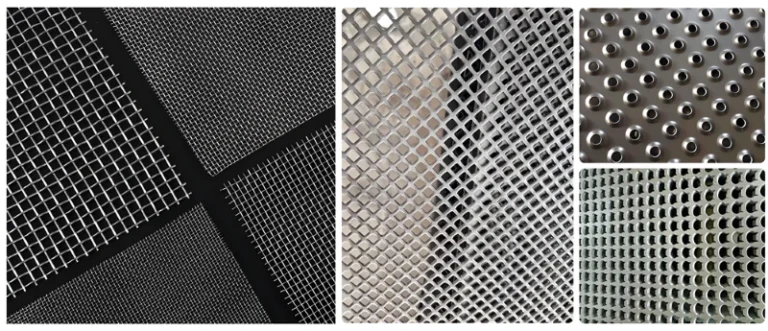
Woven wire mesh
Woven wire test sieves cover a broad range of granular materials and powders. Specify the aperture size, wire diameter and applicable specification rather than choosing by a broad mesh-count claim.
For fine-powder sieve analysis, the stated mesh count does not establish how well a material will separate.
Perforated plate
Perforated plate sieves are commonly used for larger particles. Material above approximately 3 mm is one example, although 3 mm is not a universal minimum aperture for this construction.
Ultrafine powders generally require a more appropriate fine-aperture medium. Aperture size, hole shape and screening medium can affect the result, so use the construction required by the test method.

How to Select the Right Laboratory Sieve Shaker
Before requesting a configuration, use the lab sieve shaker selection guide to review sample requirements, sieve compatibility and the specifications to confirm with your supplier.
Start With the Test Objective
Is the task product-release testing, research, fractionation, oversized-particle removal or analysis under a specified method?
Before choosing an ultrasonic sieve shaker, confirm whether ultrasonic assistance suits that objective. A method intended to assess agglomerates is different from one intended to disperse them before classification.
Check How the Powder Behaves
Examine the sample and, where possible, its performance in an existing test:
- Is it coarse or fine?
- Does it flow freely?
- Does it absorb moisture or form clumps?
- Does it adhere to the sieve?
- Does the mesh repeatedly block during mechanical sieving?
For coarse, free-flowing samples and a limited budget, begin with a conventional mechanical shaker. An ultrasonic sieve shaker deserves closer consideration when adhesion, agglomeration or blocked apertures prevent the required separation.
Specify the Sieves and Contact Parts
Choose the frame diameter around a representative sample quantity and the screening area needed. Select apertures for the target fractions and contact materials for compatibility.
Valuable powders require a balance between conserving material and obtaining a representative test portion. Food, pharmaceutical and high-purity powders also need defined cleaning and contamination controls.
Compare Results Using a Representative Sample
Record:
- Sieving time.
- Mesh blockage.
- Mass retained on each sieve.
- Sample recovery.
- Repeatability between tests.
Keep test conditions controlled and document any changes in settings or preparation.
Sample results tell you more than a maximum mesh claim.
A laboratory handling both coarse granules and difficult fine powders may need a conventional shaker alongside an ultrasonic sieve shaker. Whether two machines are justified depends on workload, methods and budget.
Operating Tips for Fine-Powder Sieve Analysis
Switch on Ultrasound When the Test Needs It
Free-flowing coarse particles may not benefit from ultrasonic assistance. Use it to address an identified separation problem rather than as a default setting for every sample.
Keep the Sample Load Under Control
A thick powder bed restricts movement and access to the apertures.
If separation slows, inspect the load and bed condition first. Higher ultrasonic power cannot compensate for an unsuitable sample load.
Check All Contact Materials
Frames, mesh and seals should suit the sample’s chemical properties, temperature and contamination sensitivity.
Before changing samples, inspect for residue—especially with food, pharmaceutical and high-purity powders.
Keep Conditions Consistent Between Tests
Control sampling, sample mass, operating time, mechanical settings and ultrasonic settings.
The same machine can give different results if the test portion or operating conditions change substantially.
If the same mesh blinds on repeated runs, use portions from one batch to compare fine powder sieving with and without ultrasound. Record the retained mass and photograph the mesh before cleaning.
Inspect and Clean the Mesh Carefully
Before use, check for damage, looseness and blocked apertures.
After testing, use a cleaning method suitable for the sieve. Do not force particles through the mesh or knock the sieve in a way that could distort openings or damage fine wire cloth.
Record Recovery and Retained Fractions
Account for material on each sieve, residue on contact surfaces and transfer losses. This is particularly useful for valuable powders or samples that adhere strongly.
An ultrasonic sieve shaker does not remove the need for complete test records. Recorded settings and mass recovery help explain differences between runs.
Conclusion: Choose According to the Material and the Test
A standard mechanical shaker is often enough for coarse particles, free-flowing powders and routine quality control. Consider an ultrasonic sieve shaker when adhesion, agglomeration or repeated mesh blockage prevents satisfactory separation.
The sieve diameter, apertures, contact materials and operating method must also fit the sample. If those are wrong, adding ultrasound will not solve the whole problem.
To discuss a suitable configuration, contact Yuanjing for a quotation. Send the material name, target aperture, sample quantity and any blockage or adhesion problems.
For an order enquiry, include the required sieve sizes, equipment quantity, power supply and delivery destination so we can confirm the configuration, pricing and lead time.
FAQ
Can an Ultrasonic Sieve Shaker Replace a Standard Mechanical Shaker?
Not for every task. Mechanical shakers remain suitable for many routine tests. Ultrasound is more relevant when adhesion, agglomeration or mesh blinding interferes with separation.
If you follow a specified test method, check whether ultrasonic assistance is permitted before changing the procedure.
Do Powders Finer Than 200 Mesh Always Need Ultrasound?
No. Fine apertures are more susceptible to some blockage problems, but mesh count is only one consideration.
Look at powder flow, agglomeration and actual separation performance before deciding.
Is Mechanical Sieving Always Inaccurate for Fine Powders?
No. It can provide useful results when the powder passes through the apertures adequately and the sampling and test method are appropriate.
The concern is incomplete separation caused by adhesion, agglomeration or blockage.
Can Ultrasonic Sieving Change the Sample?
It can disperse some agglomerates and therefore affect the measured distribution.
Fragile or coated particles should also be checked for changes under the selected operating conditions. Do not assume zero damage for every material.
Does a Stainless Steel Sieve Frame Prevent Cross-Contamination?
No. Stainless steel can be cleaned effectively, but contamination control also depends on the equipment design, mesh, seals, cleaning procedure and verification.
Should I Choose 100 mm or 200 mm Test Sieves?
A 100 mm sieve may suit small quantities of valuable material. A 200 mm sieve is common for routine laboratory testing.
Base the choice on a representative sample quantity, loading, screening area and machine compatibility.
What Information Is Needed for an Ultrasonic Sieve Shaker Quotation?
Provide the material name, target apertures, sample quantity per test, moisture or adhesion characteristics, and any current blockage problems.
Include the required contact materials, test method, power supply, equipment quantity and delivery destination. Existing test records or representative sample information will help assess the proposed configuration.