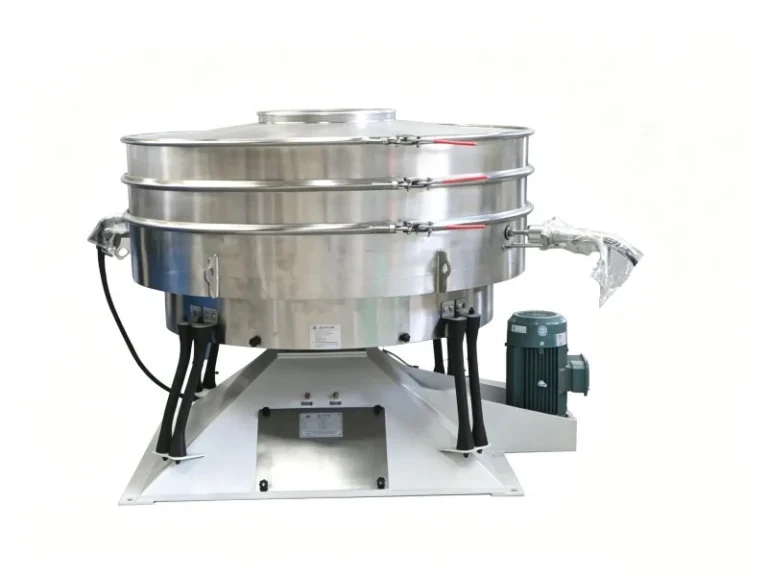
Inline Vibratory Screen: Working Principle, Applications and Benefits
In the modern powder processing industry, traditional screening methods often suffer from issues such as low efficiency, a large footprint, and difficulties in maintaining continuous production. To enhance production efficiency and ensure material uniformity, an increasing number of factories are adopting inline vibratory screens; these units enable continuous, high-precision material classification while saving both labor and space. This article provides a detailed overview of the working principles, key applications, and core advantages of inline vibratory screens, alongside practical guidance on selection, installation, and maintenance, helping enterprises achieve efficient and reliable production in their screening operations.
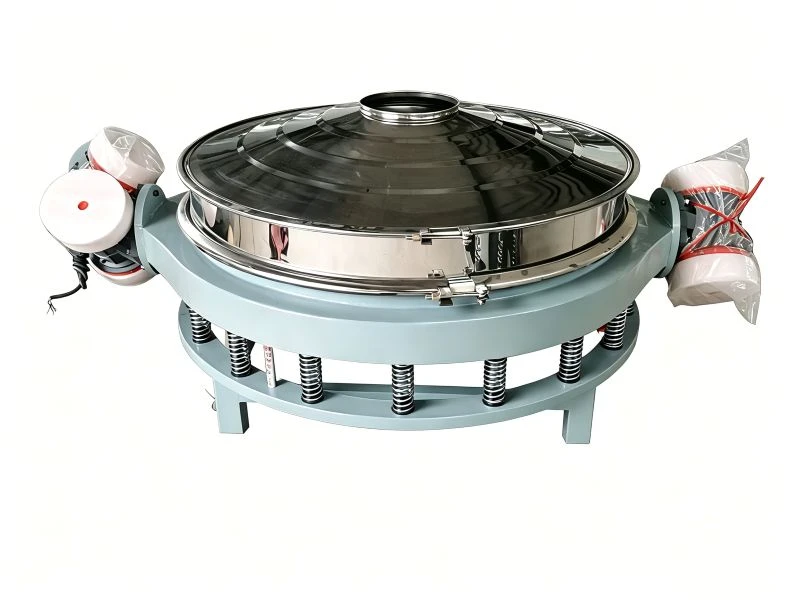
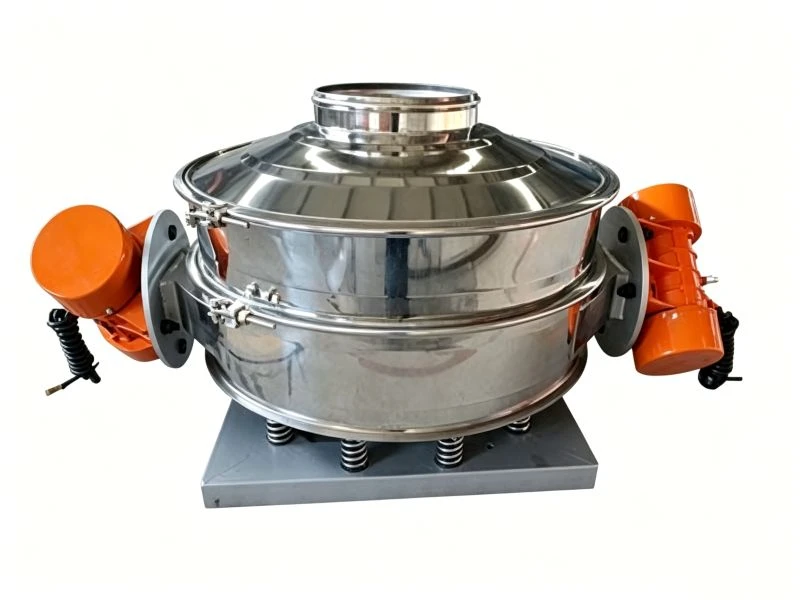
What Is an Inline Vibratory Screen?
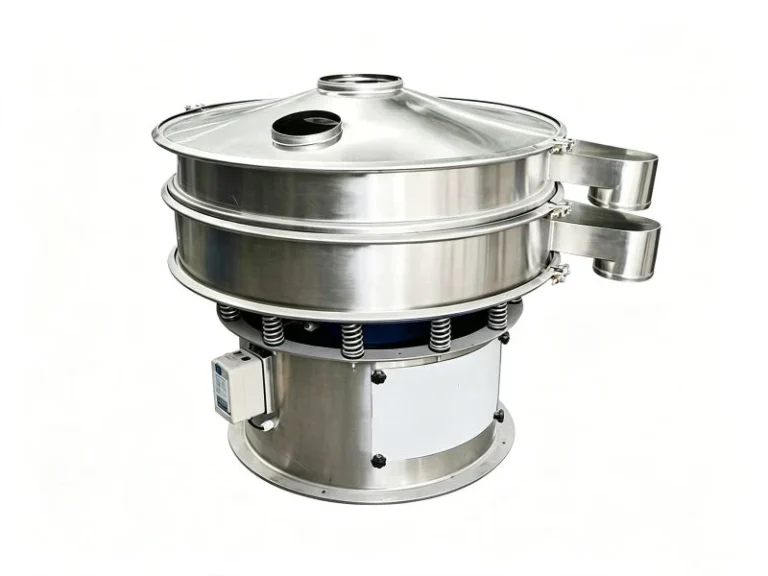
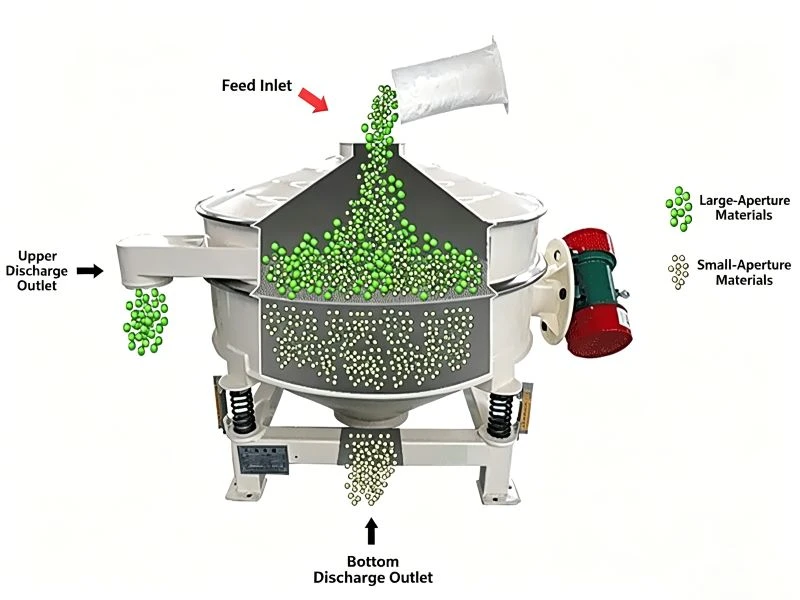
The inline vibrating screen is driven by one or two horizontal vibration motors. These motors utilize two sets of eccentric weights (unbalanced weights) located at the upper and lower ends of the shaft to convert the motor’s rotational motion into a combination of horizontal, vertical, inclined, and centrifugal forces. This resultant force is transmitted to the screen surface to achieve the screening objective. Adjusting the phase angle and weight of the upper and lower eccentric weights allows for the modification of the exciting force magnitude and the material’s movement trajectory.
Working Principle
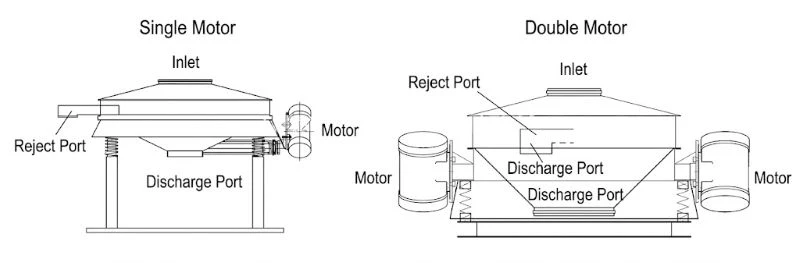
The inline vibratory screen is driven by one or two horizontal vibration motors. These motors utilize two sets of eccentric weights (unbalanced weights) located at the upper and lower ends of the shaft to convert the motor’s rotational motion into a combination of horizontal, vertical, inclined, and centrifugal forces. This resultant force is transmitted to the screen surface to achieve the screening objective. Adjusting the phase angle and weight of the upper and lower eccentric weights allows for the modification of the exciting force magnitude and the material’s movement trajectory.
Inline Vibratory Screen Types
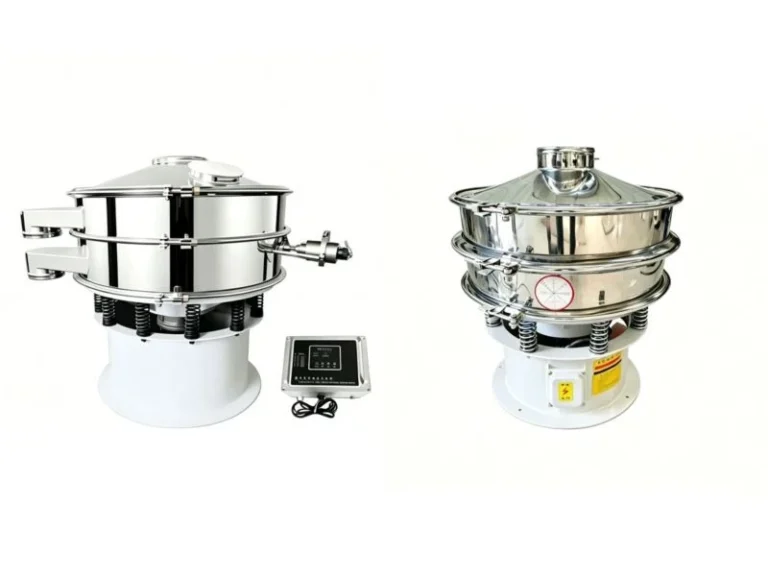
Single-motor inline vibratory screen
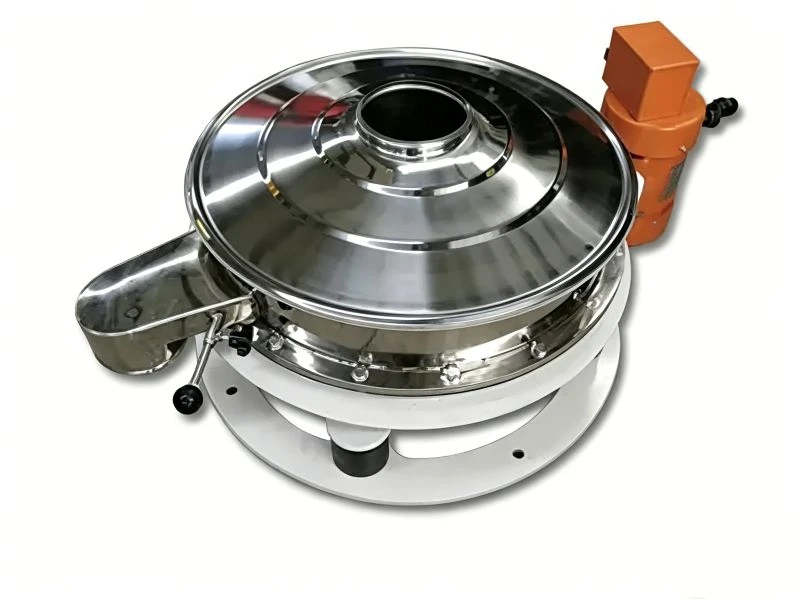
The single-motor design lacks an automatic discharge function; when encountering materials that do not pass through the mesh quickly, the system discharges them via the over-screen discharge outlet following the established operating trajectory, thereby completing the screening process.
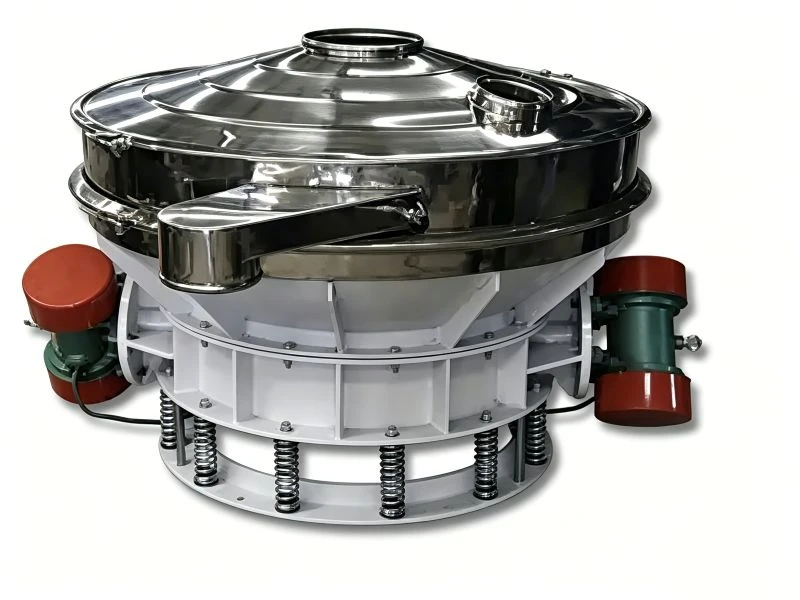
Dual-motor inline vibratory screen
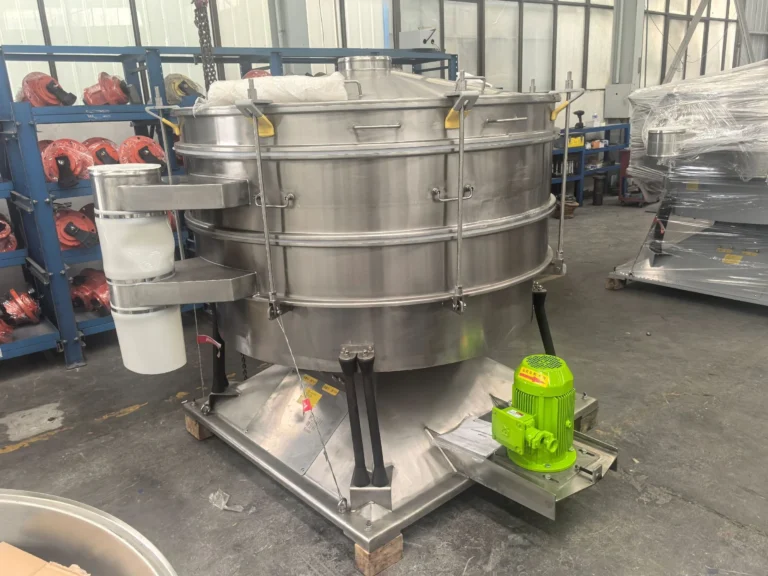
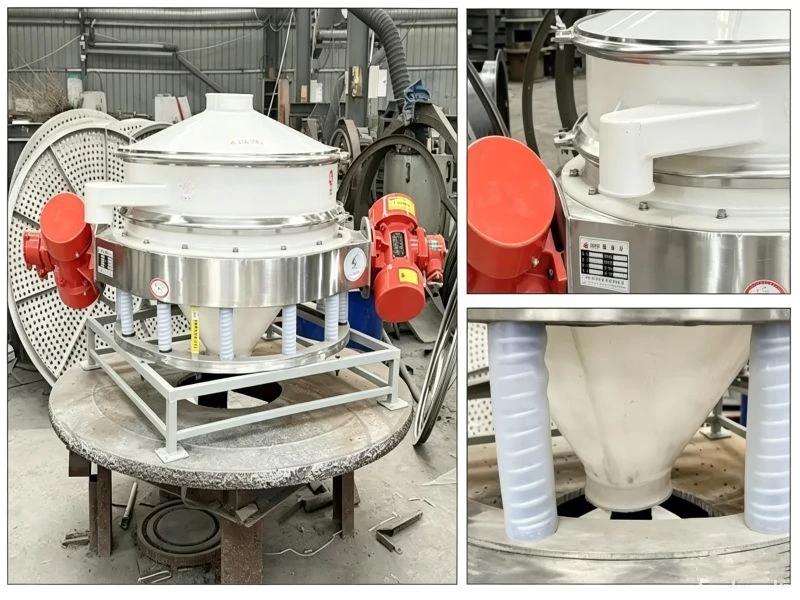
The dual-motor design of the inline vibratory screen enables three-dimensional motion across the screening surface, thereby enhancing screening efficiency. Thanks to the straight-discharge configuration at the base, screened material flows out more smoothly; consequently, for coarse screening applications, it offers higher throughput than standard circular screens of the same diameter. It performs exceptionally well in areas such as raw material screening, in-process screening, pre-packaging screening, and dust removal.
Ultrasonic inline vibratory screen
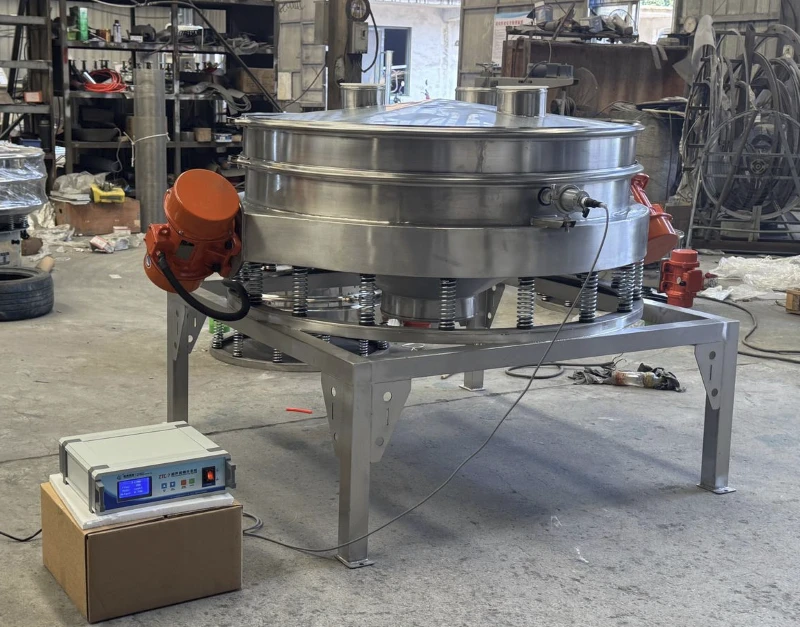
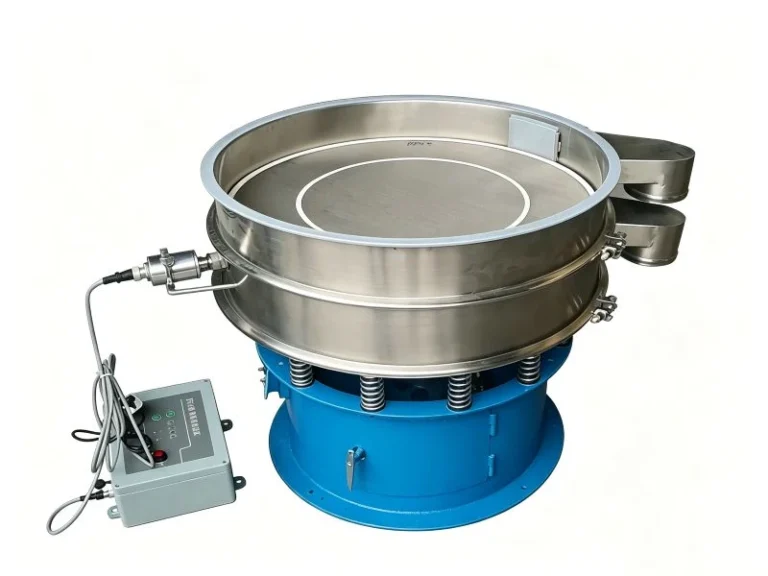
The ultrasonic industrial vibratory screen incorporates an ultrasonic vibration system into the design of a traditional inline sifter. By subjecting ultra-fine powders to intense ultrasonic acceleration, the material on the screen surface is maintained in a state of constant suspension; this effectively inhibits factors that cause screen blinding—such as adhesion, friction, compaction, and wedging—thereby overcoming screening challenges associated with materials that are highly adhesive, prone to agglomeration, highly electrostatic, ultra-fine, high-density, or low-density, ultimately enhancing the screening performance for ultra-fine powders.
Benefits of Using an Inline Vibratory Screen
The core value of the inline vibratory screen lies in its ability to deliver an efficient and stable continuous screening process.
1. Screening precision
Achieves more stable particle size classification.
2. Production efficiency
Supports continuous feeding and discharging, effectively increasing production line throughput.
3. Material handling
Enables uninterrupted flow, reducing material blockages and stagnation.
4. Operating costs
Lowers manual labor requirements and overall operating costs.
5. Equipment layout
Features a compact structure with a small footprint.
6. System integration
Can be easily integrated into existing production lines.such as dust free dumping station.
Inline Vibratory Screen Applications
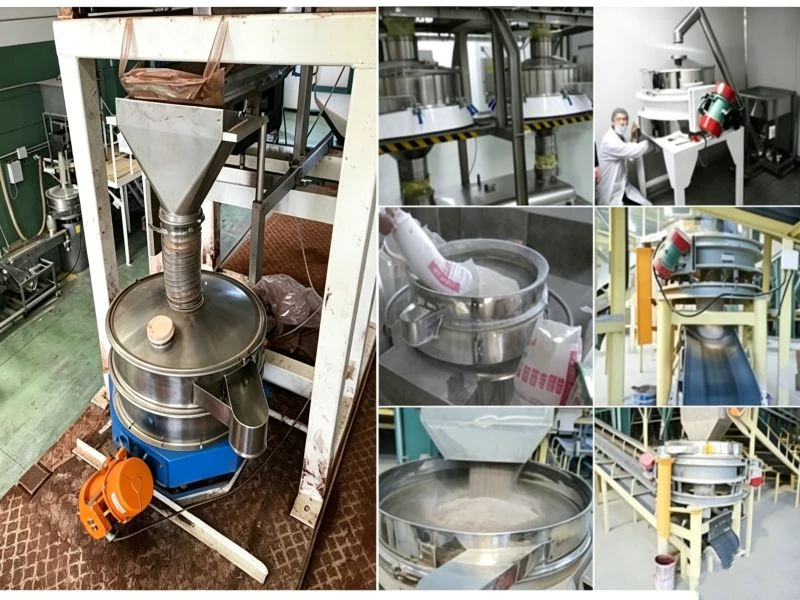
This powder sieving machines are widely used across various industries, making them particularly suitable for production lines requiring efficient, continuous screening. These industries—ranging from food processing (flour, powdered sugar, and spices) and the chemical sector (pigments and resin powders) to pharmaceutical manufacturing (active pharmaceutical ingredients and excipients), and even the processing of battery materials and metal powders—can derive significant benefits from their use.
Food
Impurity removal and grading for flour(flour sifter), starch, milk powder, and seasonings.For flour production lines, mesh size, feed rate and screen diameter should be selected according to the actual material and required capacity. Read our guide to flour screening with an inline vibratory screen for more details.
For example, a 1000 mm inline vibratory screen with 40 mesh was used in a flour screening application with a handling capacity of 1000 kg/h.
Pharmaceuticals
Impurity removal and particle size control for APIs and Traditional Chinese Medicine (TCM) powders.
Personal Care / Metals
High-volume impurity removal for laundry detergent, metal powders, and ceramic powders.
Chemicals
Screening of resins, dyes, calcium carbonate, and battery materials.
How to Choose the Right Inline Vibratory Screen
Yuanjings inline sieve machines are available in carbon steel and stainless steel, with a mesh range of approximately 10 to 200 mesh, capable of meeting the screening requirements for most materials. Models range from 600 mm to 1,500 mm in diameter to accommodate various throughput needs, and custom models can also be manufactured based on specific capacity requirements.
Material Flowability
If the material consists of dry, free-flowing powder or granules without agglomeration, the required excitation force is relatively low; a single-motor inline vibratory screen is a suitable choice. However, if the material tends to clump (e.g., due to moisture) or has poor flowability, strong vibration is needed to break up clumps and improve flow; in this case, a dual-motor inline vibratory screen is recommended.
Material Composition
For standard, dry, and non-corrosive materials—such as sand, gravel, coal, or ore—a carbon steel inline vibratory screen is a viable option. Carbon steel offers high hardness and excellent impact and wear resistance, all at a lower cost than stainless steel. Note, however, that carbon steel is unsuitable for screening moist materials or for prolonged use in humid environments, as it is prone to rusting, which shortens its service life. For moist, corrosive, or chemically active materials, or applications requiring high hygiene standards, stainless steel is recommended; it is easy to clean, highly corrosion-resistant, and rust-resistant.
Throughput Requirements
Yuanjing manufactures a comprehensive range of inline vibratory screens with diameters from 600mm to 1500mm, capable of meeting most throughput requirements. A 600mm diameter model can process approximately 5–15 tons of material per hour, while a 1500mm model can handle around 100 tons per hour. Generally, given similar configurations, a larger diameter results in higher processing capacity but also requires a larger footprint.
Video
Customization Options
The inline vibratory screen can be customized to meet specific screening requirements, ensuring better adaptation to the operating environment and enhanced production efficiency.
For instance, when screening fine powders—where issues like mesh blinding (clogging) and excessive dust generation often occur—an ultrasonic mesh cleaning system and an explosion-proof motor can be installed to ensure stable operation.
If the equipment needs to be used at multiple locations, the inline screen can be fitted with lockable swivel casters for easy mobility between workstations.
For prolonged screening of hard materials such as ore particles or quartz sand, wear-resistant liners can be added to extend the service life of the unit.
Conclusion
Inline vibratory screens offer distinct advantages in continuous production, high-precision screening, and high-capacity processing, making them particularly well-suited for industries such as food, chemicals, pharmaceuticals, and powder processing. They not only effectively enhance screening efficiency and product quality but also save on labor and floor space, serving as an ideal screening solution for modern industrial production lines. For enterprises looking to select equipment, upgrade systems, or optimize production processes, inline vibratory screens provide a reliable, high-performance choice that ensures superior overall production efficiency and product consistency.
If you are seeking a screening solution tailored to your specific materials and production line, please share your material characteristics and capacity requirements; our engineering team is ready to provide customized equipment recommendations and technical support.