Inline Vibratory Screen vs Rotary Vibrating Screen: Key Differences
Choosing the right screening machine depends on your material, production capacity, screening requirements, and production line layout.
Inline vibratory screens are designed for continuous, direct-flow screening, while rotary vibrating screens are more flexible for multi-size separation and batch screening.
Although both machines use vibration to separate materials by particle size, their feeding methods, material flow, residence time, and typical applications are different.
This guide compares inline vibratory screens and rotary vibrating screens to help you choose the right screening solution for your production line.
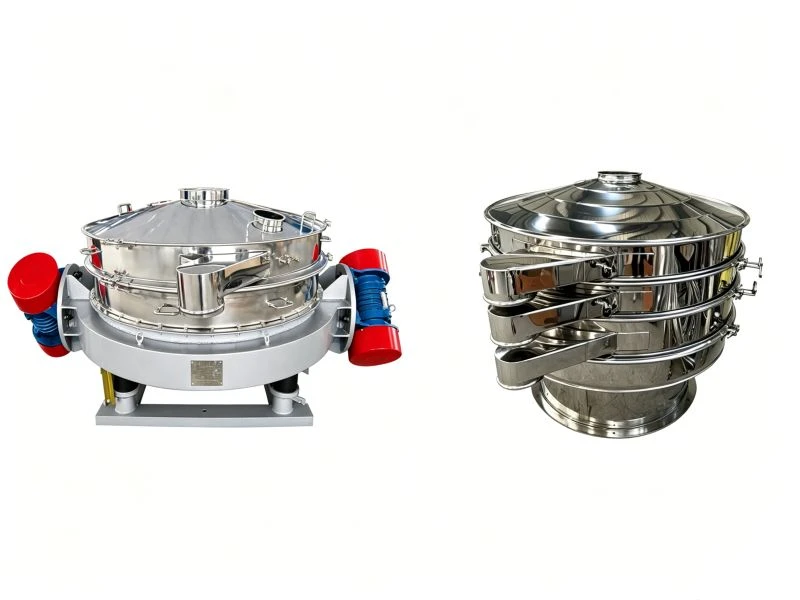
Inline Vibratory Screen vs Rotary Vibrating Screen: Comparison
| Comparison | Inline Vibratory Screen | Rotary Vibrating Screen |
|---|---|---|
| Material Flow | Direct vertical flow | Circular/spiral movement |
| Residence Time | Short | Longer |
| Throughput | Higher for suitable bulk screening | Lower but more controlled |
| Screening Accuracy | Medium | Higher |
| Fine Powder | Coarse to medium-fine powder | Better for fine powder |
| Multi-Size Separation | Limited | Better |
| Production Line Integration | Excellent | Flexible |
| Cleaning | Simple structure, easy access | Easy screen replacement |
| Best For | High-capacity scalping / impurity removal | Fine classification / grading |
What Is an Inline Vibratory Screen?
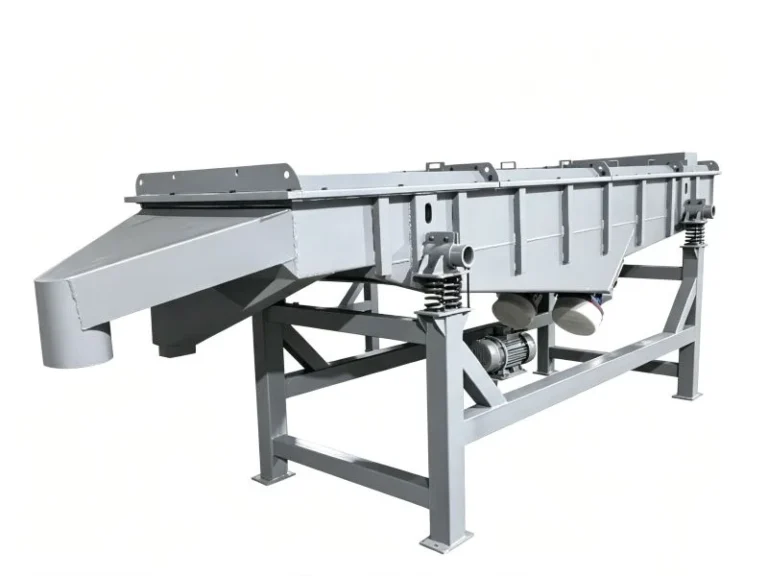
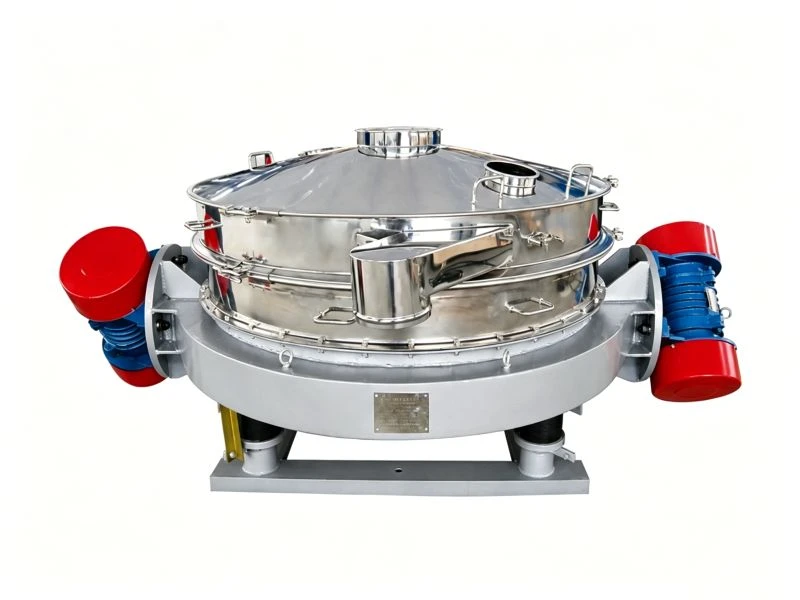
An inline vibratory screen is a direct-discharge screening machine designed for continuous material flow. Its inlet and outlet are aligned vertically, allowing material to pass through the screening chamber with a short residence time.
What Is a Rotary Vibrating Screen?
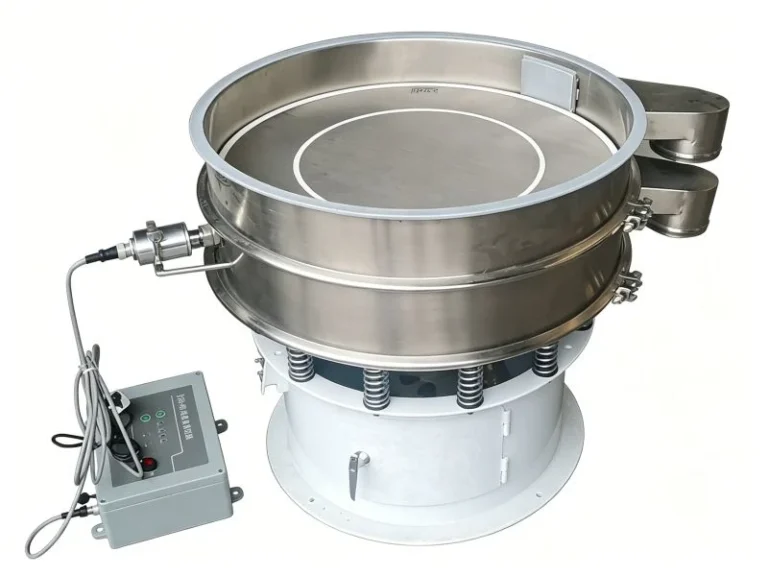
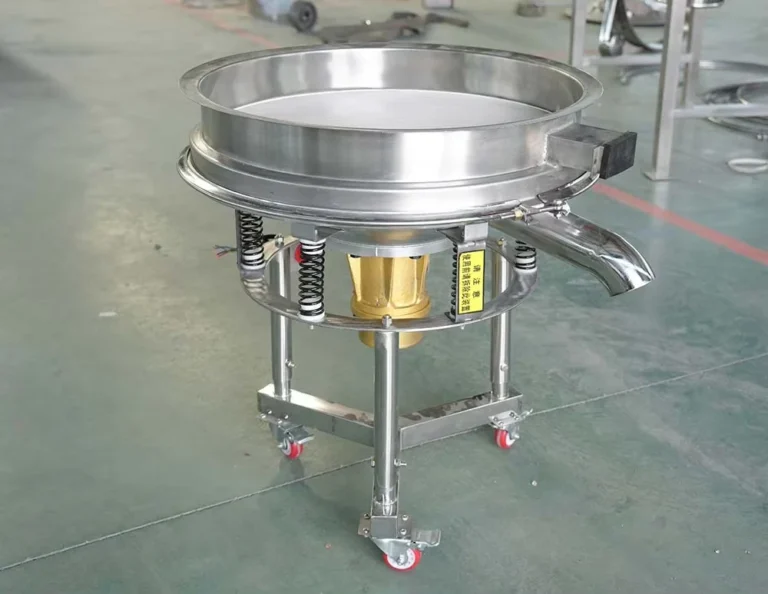
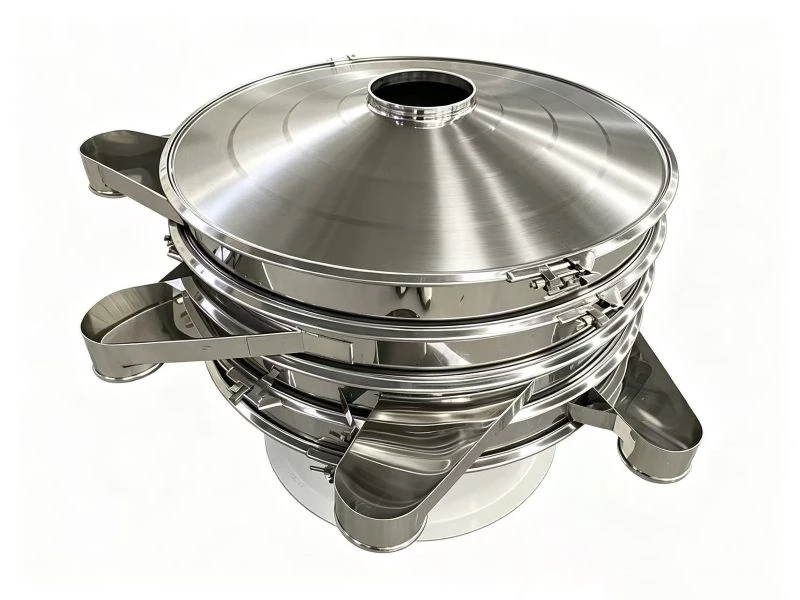
The rotary vibrating screen is a type of circular vibrating screen designed for high-precision fine powder screening(ultrasonic vibrating screen). It features low noise and high efficiency, allows for rapid screen changes within 3–5 minutes, and utilizes a fully enclosed structure; it is suitable for the screening and filtration of granular, powdery, and liquid materials.
How Do Inline and Rotary Vibrating Screens Work Differently?
A dual-motor direct-discharge sieve utilizes two vibrating motors to generate a complex gyratory vibration on the screening surface, causing material to follow a vortex-like trajectory and automatically discharge forward. The magnitude of the exciting force can be adjusted by changing the weight of the eccentric blocks to suit the screening of different materials; in contrast, a single-motor unit produces only vertical vibration and cannot discharge material automatically—this is the fundamental difference between the two.
The rotary vibrating screen is driven by a vertical motor. Eccentric weights on the motor convert rotary motion into 3D movement (horizontal, vertical and inclined) and transfer it to the screen. Adjusting the weights’ phase changes material trajectories on the screen. Fine particles pass through the mesh, while coarse materials bounce and exit from the discharge port to complete screening.
Structure Differences
The inline vibro sifter features a 304 or 316 stainless steel, fully enclosed design. Spring damping reduces noise and vibration, while single- or dual-motor operation supports flexible screening. Single- or multi-layer screens with bouncing balls help prevent clogging, and the straight-through design minimizes material retention.
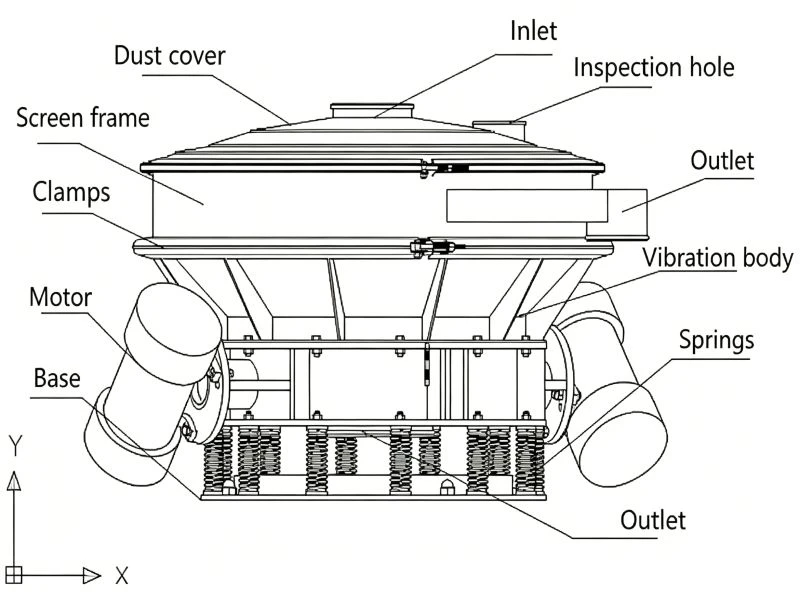
The rotary vibrating screen features a compact structure with a motor, screen frame, mesh, base, and vibration springs. The motor generates vibration, while the mesh separates materials and the springs reduce vibration and provide stable operation.
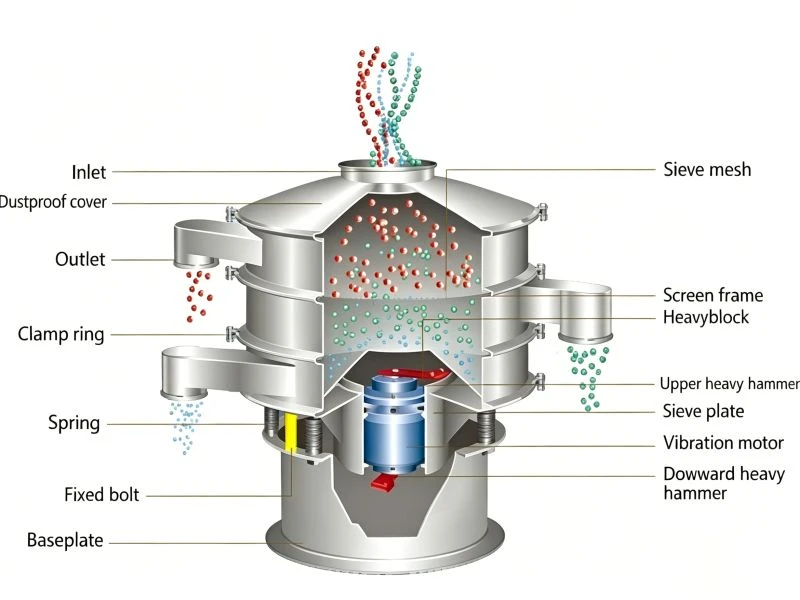
Screening Performance Comparison
The inline vibrating screen features a compact, mobile design, low energy consumption, and low noise levels; it is tightly sealed to prevent leakage and dust emissions. It is easy to disassemble and clean, complies with food-grade GMP standards, supports 24-hour automated continuous production, and inline screen can also be integrated into the production line.
The rotary vibrating screen is highly portable, features an adjustable discharge direction, and is suitable for a wide range of materials. It offers high screening and filtration precision while preventing clogging and dust emissions. Screen changes take only 3–5 minutes, maintenance is simple, and the unit supports multi-layer configurations.
Applications: When to Use Each Vibrating Screen
Best Applications for Inline Vibratory Screens
The inline vibrating screen is better suited for screening coarse particles and powdered materials. Featuring larger mesh apertures and high material throughput, it can provide significantly higher throughput than rotary vibrating screens in suitable applications.
Inline vibratory screens are commonly used for high-volume screening of powders and granules in food processing-especially flour sifting, fertilizer, chemical, plastic, ceramic, and metal powder applications.
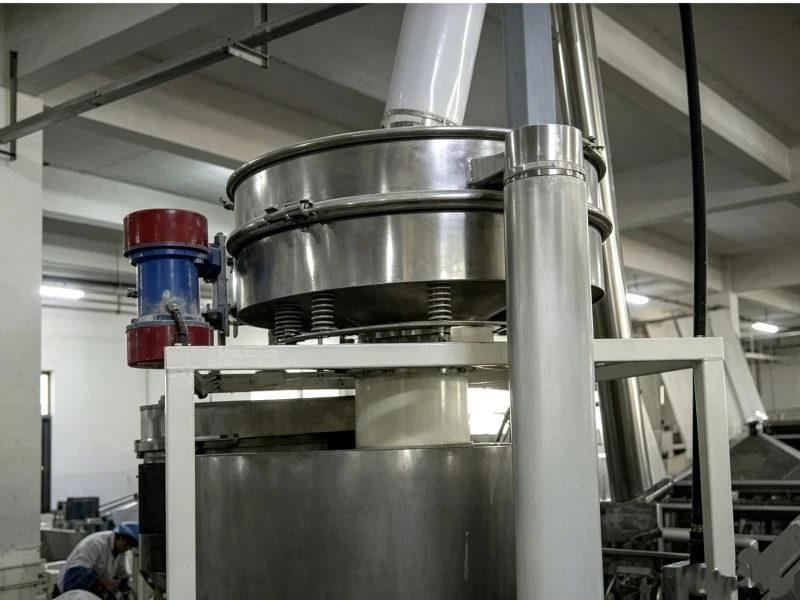
Best Applications for Rotary Vibrating Screens
The rotary vibrating screen excels particularly in the screening of ultrafine powders, slurries, and high-precision applications. It maintains excellent screening efficiency and accuracy even with powders and slurries finer than 300 mesh.
Widely used in industries such as chemicals, food processing, pharmaceuticals, and new energy materials, this equipment is ideal for the precise classification and impurity removal of fine-particle, high-value, and difficult-to-screen materials.
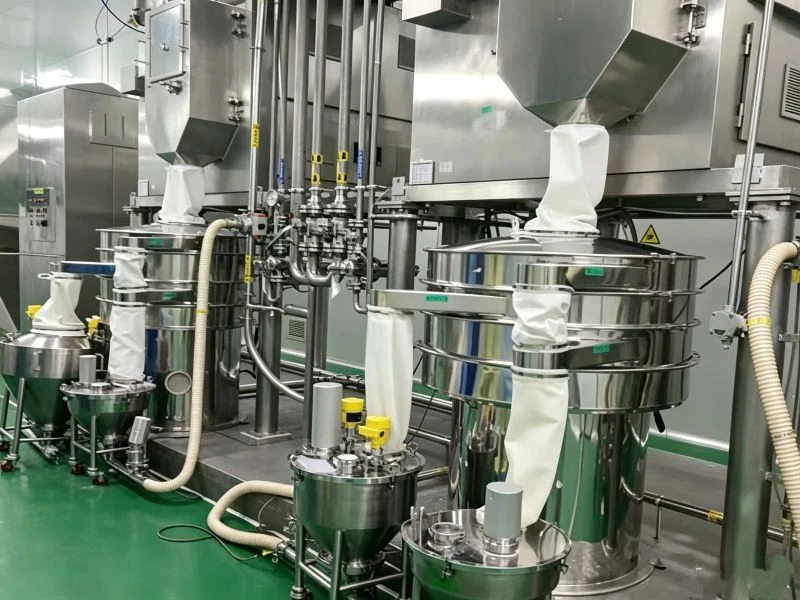
Cleaning and Maintenance
Cleaning and maintenance are important for food, pharmaceutical, chemical, and other industries with strict hygiene requirements.
An inline vibratory screen can be designed with a simple screening chamber and accessible components, making routine cleaning and maintenance easier.
Its direct-flow structure also helps reduce areas where material can accumulate.
Rotary vibrating screens can also be disassembled for cleaning and mesh replacement. Different screen decks can be configured according to the screening requirements.
For applications that require frequent product changes, the ease of screen replacement and cleaning should be considered when selecting the machine.
Cost and Configuration Considerations
The cost of an inline vibratory screen or rotary vibrating screen depends on the machine size, construction material, number of screen decks, motor configuration, and customization requirements. Stainless steel construction, larger diameters, and special designs for food, pharmaceutical, or chemical applications can increase the overall cost.
Price should not be the main factor when choosing between the two machines. An inline vibratory screen is generally better for high-capacity, continuous screening, while a rotary vibrating screen is more suitable for fine classification and multi-size separation. The right choice should be based on your material, mesh size, required capacity, and screening accuracy.
Inline Vibratory Screen or Rotary Vibrating Screen: Which One Should You Choose?
There is no single screening machine that is suitable for every application.
Choose an inline vibratory screen if your production process requires:
- Continuous material flow
- Direct connection between feeding and discharge
- Short material residence time
- High-throughput screening(Actual throughput varies with material properties, mesh size, screen diameter, and feed rate. See what affects inline vibratory screen capacity for a detailed explanation.)
- Integration with an automated production line
- A compact and efficient material transfer layout
Choose a rotary vibrating screen if your application requires:
- Flexible screening configurations
- Multi-size particle separation
- Different mesh sizes
- Screening of different materials
- More flexible batch or continuous processing
In simple terms, inline vibratory screens are a strong choice for continuous, direct-flow production lines, while rotary vibrating screens are better suited to flexible screening and multi-size separation.
Conclusion
In short, inline vibratory screens are better for high-throughput, direct-flow screening, while rotary vibrating screens are better for fine classification and flexible multi-size separation.
If you are unsure which screening machine fits your material, send us your material type, particle size, required capacity, and mesh size. We can recommend a suitable screening configuration.