Cocoa Powder Sieving: How to Handle Lumps and Maintain Stable Throughput
Cocoa powder sieving removes oversized material before mixing or packaging, but lumps and mesh buildup can slow production. Start by checking whether the retained material consists of loose agglomerates, hard lumps or foreign matter. This determines whether gentle deagglomeration is appropriate or the material needs separate handling. Choose the screen opening to match the product specification and what must be retained. Then check feeding consistency, mesh condition and discharge flow. Measure accepted powder output throughout a production run, including cleaning stops, to confirm the throughput your line can maintain.

Why Does Cocoa Powder Form Lumps and Become Difficult to Sieve?
Cocoa powder can form lumps as it absorbs moisture or becomes compacted during storage and transport. Its residual cocoa butter and fine particles can also contribute to adhesion. During cocoa powder sieving, these agglomerates may remain above the mesh, while powder buildup restricts the openings and gradually reduces throughput.
Moisture Exposure Encourages Caking
Moisture can increase adhesion between cocoa powder particles, allowing them to form larger clumps. Open bags, poorly sealed packaging and condensation are conditions worth checking. The extent of caking depends on the powder, exposure time and storage conditions; a single humidity threshold does not apply to every cocoa powder.
Fat Content and Temperature Affect Mesh Adhesion
Cocoa powder retains cocoa butter after pressing. Depending on fat content and product temperature, the powder may leave a sticky coating on the screen rather than move freely through it. Fine particles can accumulate on this coating, reducing the open screening area. When screening performance varies between batches, compare their fat content and temperature at the sieve inlet.
Storage and Transport Can Compact the Powder
Pressure from stacked bags and prolonged storage can compact cocoa powder, while damaged packaging allows moisture to enter. Check the material when opening bags and before feeding the sieve. Loose agglomerates may separate with gentle handling, but hard lumps need further assessment. Inspect retained material before deciding whether it can be reprocessed; appearance alone does not establish that it is suitable for reuse.

How Should You Handle Lumps During Cocoa Powder Sieving?
Handling lumps during cocoa powder sieving starts with checking the retained material and defining the screening requirement. Loose agglomerates may respond to gentle separation, while hard lumps need separate assessment. The screen opening should allow acceptable powder to pass while retaining unwanted oversize.
Define What Must Pass and What Must Be Retained
Before mixing or packaging, the aim is often to remove unwanted lumps and oversized foreign material from otherwise acceptable powder. Producing a specified particle size fraction requires a different approach. Define the acceptable product and reject criteria first. Our guide to safety screening vs particle classification explains this distinction.
Use Gentle Deagglomeration Where Appropriate
Loose agglomerates in powder that meets quality requirements may separate during screening or a suitable upstream deagglomeration step. Check whether this releases usable powder without damaging the screen or compromising the product.
Hard lumps, damp material and suspected contamination require separate assessment. Do not force them through the mesh. A vibrating sieve separates material by size; it does not replace a mill or make deteriorated powder suitable for use.
Select the Screen Opening to Match the Product Specification
Choose the aperture from the acceptable powder size and the material that must be retained. Specify the opening in microns or millimeters; if using a mesh number, confirm the corresponding aperture and wire diameter.
There is no single mesh size suitable for every cocoa powder application. Test the selected opening with representative material, checking both accepted powder and rejects. Enlarging the aperture may increase output, but it can also allow unwanted oversize into the product.
How Can You Maintain Stable Cocoa Powder Sieving Throughput?
Stable throughput depends on keeping the screen openings clear, feeding powder evenly and allowing screened material to discharge freely. Check these conditions over a full production run rather than judging capacity from the first few minutes.
Match the Screen and Vibration Settings to the Powder
Use the aperture confirmed for your product specification. A finer screen can retain more acceptable powder and increase the cleaning load, so check both product quality and output before changing it.
Product-contact parts, seals and cleaning devices should suit the food application and cleaning procedure. Stainless steel construction alone does not prevent adhesion; surface finish, joints and access for cleaning also matter.
Set vibration within the equipment manufacturer’s operating limits and confirm powder movement through trials. Avoid applying one amplitude or frequency to every cocoa powder. Excessive movement or long material residence may indicate that the settings, feed rate or screen configuration need adjustment.
Choose a Suitable Mesh-Cleaning System
Compatible cleaning balls beneath the screen can help dislodge trapped particles. Check them for wear, hardening and missing parts, and replace them according to their condition and the manufacturer’s guidance.
For persistent adhesion, compare conventional cleaning with ultrasonic assistance using the same powder and aperture. Select the system from observed blinding and sustained output, rather than a fixed mesh count or daily tonnage. Our guide to fine powder screen blinding explains the common causes and available approaches.
Keep Feeding and Discharge Consistent
Avoid dumping large batches onto the mesh. Use controlled feeding and check that powder spreads across the screening area without excessive accumulation. If a conveyor releases material in batches, assess whether buffering or metered feeding is needed.
Check the outlet and downstream connection for buildup or bridging. A clear screen will not maintain output if the accepted powder cannot leave the machine.
Monitor Powder Condition and Clean at Suitable Intervals
Keep bags sealed and storage conditions suitable for the cocoa powder. Check moisture against the product specification using an appropriate measurement method. A hand squeeze may reveal caking, but it cannot establish moisture content.
Inspect for residue and establish cleaning intervals from actual buildup and hygiene requirements. Stop and isolate the machine before opening it. Use the approved cleaning procedure and tools compatible with the mesh; after wet cleaning, confirm that the equipment is dry before restarting.
Measure Sustained Output
Record accepted powder output at regular intervals, together with rejected material and cleaning stops. Effective throughput is the mass of accepted product divided by the full observation time, including cleaning downtime. This shows the output the line can maintain in practice.
Routine Checks for Cocoa Powder Sieving
| Inspection Item | Target Condition | Inspection Method |
|---|---|---|
| Screen aperture | Matches the validated product specification | Check the screen label and aperture documentation |
| Mesh-cleaning system | Cleaning balls intact; ultrasonic system operating as specified, where fitted | Isolate the machine for physical inspection; follow the supplier’s functional checks |
| Feed and discharge | No feed surges, excessive accumulation or outlet bridging | Measure flow over timed intervals and inspect accessible transfer points safely |
| Powder moisture | Within the cocoa powder specification | Use an appropriate moisture test; do not rely on touch alone |
| Cleaning | No unacceptable residue before restart | Inspect the mesh, seals and product-contact surfaces using the approved procedure |
| Vibration settings | Within equipment limits and validated for the powder | Use the manufacturer’s specified measurement method |
Which Screening Setup Fits Your Cocoa Powder Process?
Choose a cocoa powder screening setup based on the separation required, powder flow and available installation space. Confirm its performance with your material, checking output, retained powder and cleaning needs.
Inline or Rotary Vibratory Sifter
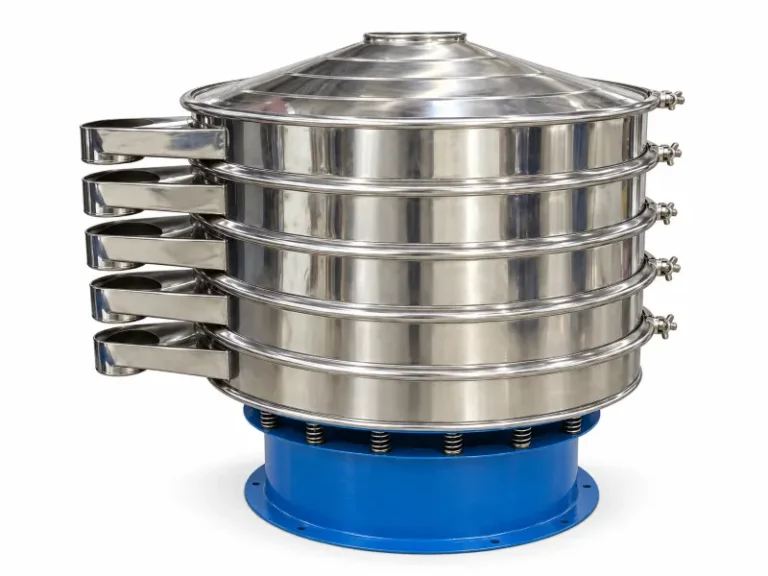
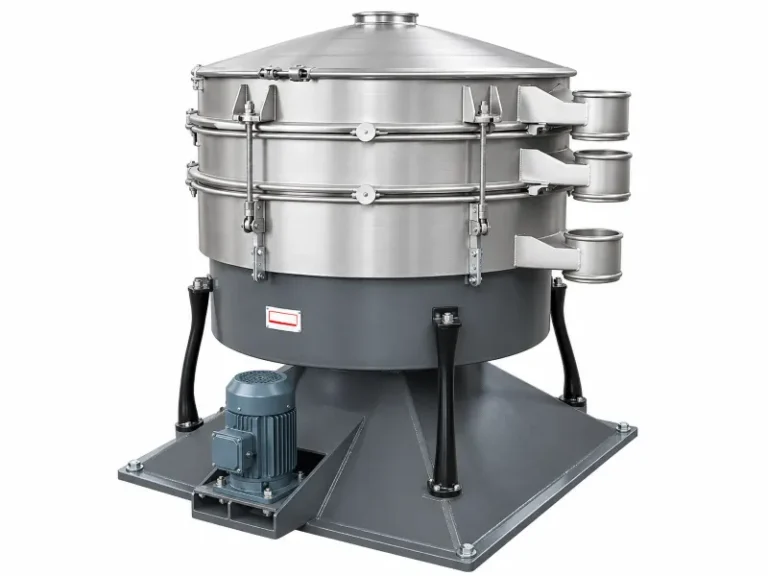
An inline vibratory screen is an option for continuous check screening where a direct discharge layout suits the line. A rotary vibrating screen can handle general screening or size separation. Test either configuration at the required aperture and feed rate to check for buildup and usable powder lost in the rejects.
Ultrasonic Assistance for Persistent Blinding
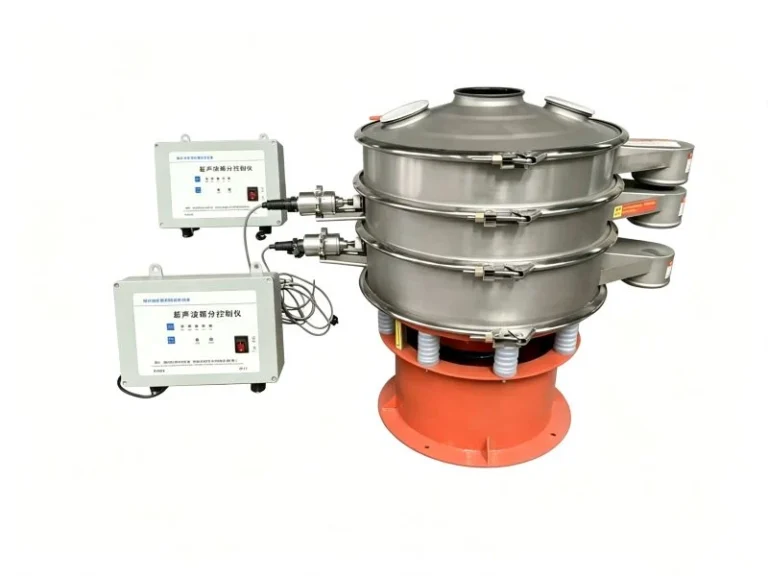
Consider an ultrasonic sieving machine when powder repeatedly adheres to the mesh despite suitable feeding and screen selection. Compare output and cleaning frequency using the same cocoa powder and aperture. Ultrasound is not necessary for every application.
Cleaning Access and Material Trials
Check that product-contact surfaces, seals and screens are accessible for cleaning. During trials, record the powder batch, fat content, temperature, aperture and feed rate. Measure accepted output and inspect retained material throughout the run to confirm that performance remains stable.
Conclusion
Stable cocoa powder sieving depends on handling lumps correctly, selecting a suitable screen opening and maintaining steady material flow. Confirm the setup with your powder under actual production conditions.
Need help choosing a sifter? Send Yuanjing your cocoa powder details, required mesh size, target capacity and installation layout. Our team can help assess your process and recommend a suitable screening configuration.
FAQ
What Mesh Size Should I Use for Cocoa Powder Sieving?
Choose the screen opening according to the acceptable powder size and the material you need to remove. Check screening before mixing or packaging may require a different aperture from particle size classification. Confirm the opening in microns and test it with your cocoa powder before finalizing the mesh.
Can a Vibrating Sieve Break Up Cocoa Powder Lumps?
Loose agglomerates may separate during screening, but hard or compacted lumps may need a separate deagglomeration step. Inspect the retained material before reprocessing it. Forcing lumps through the mesh can damage the screen or allow unwanted material into the accepted powder.
Why Does My Cocoa Powder Sieve Keep Clogging?
Check for damp or compacted powder, sticky deposits on the mesh and excessive feeding. Fat content and product temperature can affect adhesion, while worn cleaning balls may leave trapped particles in the openings. Inspect the screen and retained material to identify the cause before changing settings.
Do I Need an Ultrasonic Sieve for Cocoa Powder?
Consider ultrasonic assistance when persistent mesh blinding causes output to fall or requires frequent cleaning. First check the aperture, feed rate and powder condition. A comparison trial using the same material and screen opening will show whether ultrasound offers a useful improvement.
How Much Cocoa Powder Can a Sifter Process per Hour?
Actual capacity depends on the powder, screen opening, screening area and feeding conditions. Ask for a trial at your required feed rate and measure accepted output throughout the run. Include cleaning downtime and inspect the rejects; a short peak-output reading does not establish sustained capacity.
What Information Do I Need to Provide for a Cocoa Powder Sifter Quote?
Send your cocoa powder specification, fat and moisture content if known, required screen opening, target capacity and screening purpose. Include installation dimensions, feeding arrangements and cleaning requirements. A representative sample and photos of the lumps or screen buildup can help narrow down the configuration.