Cocoa Powder Sieving: A Dutch Case Study
Cocoa powder sieving at a processing plant in the Netherlands was interrupted by screen cleaning three or four times a day. Each stop took 15–20 minutes, costing the plant roughly an hour of production time daily.
The plant produced approximately eight tonnes of cocoa powder per day. Its screening equipment used a 40-mesh screen with silicone bouncing balls, but frequent cleaning had become part of the daily routine. Screen mesh also needed replacing every 7–10 days.
After discussing the operating conditions and maintenance history with the customer, we identified three areas that needed attention: vibration amplitude, the condition of the bouncing balls and uneven feeding.
The changes allowed the customer to keep the same machine and 40-mesh specification. Cleaning was reduced to once a day, after production, while the mesh replacement interval increased to 25–30 days.

Project Overview
The project focused on improving the operation of an existing vibrating sieving machine used for cocoa powder screening.
| Project Detail | Customer’s Application |
|---|---|
| Location | Netherlands |
| Material | Cocoa powder |
| Plant production | Approximately 8 tonnes per day |
| Screen specification | 40 mesh |
| Screen-cleaning arrangement | Silicone bouncing balls |
| Original feeding method | Manual loading by shovel |
| Main problems | Frequent cleaning stops and short mesh replacement intervals |
The daily production figure refers to the plant’s output, rather than the rated capacity of the individual sieve.
What the Customer Needed
The customer wanted to reduce interruptions without changing the required screen specification.
Each cleaning stop interrupted feeding and required an operator to clean the screen before production could resume. Repeating this several times a day made the screening stage difficult to manage. Replacing the mesh every 7–10 days added further maintenance work.
The priorities were to keep the 40-mesh screen, reduce cleaning during production and extend the time between mesh replacements. We therefore started by reviewing how the existing equipment was being operated and maintained.
What We Found During the Discussions
The initial concern was frequent screen cleaning. To understand why it kept recurring, we worked through the machine settings, cleaning components and feeding method with the customer.
Low Vibration Amplitude
The operating amplitude was 2.8 mm, below the recommended setting for this particular application. Material was remaining on the screen longer than intended.
Cleaning the mesh restored operation temporarily, but it did not address the underlying movement of material across the screen. The vibration setting needed to be reviewed alongside the cleaning system.
Hardened Bouncing Balls
When we asked about the bouncing balls, the customer confirmed that they had been in service for five months without replacement.
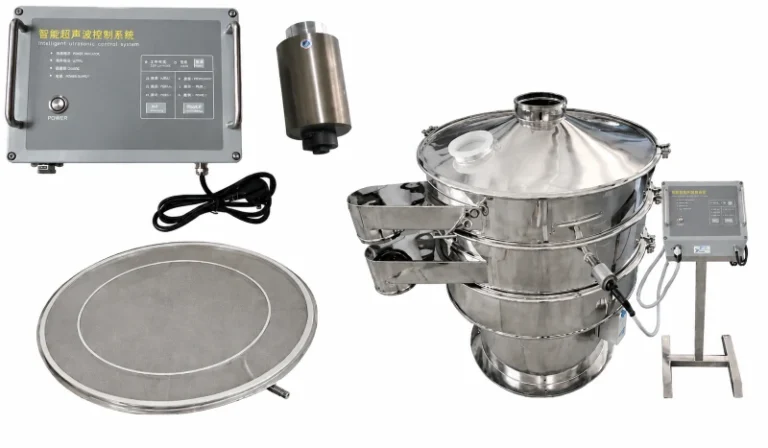
The silicone balls had hardened and were no longer striking the underside of the mesh effectively. Although the machine still had a ball-cleaning system, the condition of its components was limiting its performance.
This became an important part of the diagnosis. Attention had been focused on cleaning the screen, while the parts intended to help keep it clear were overdue for replacement.
Uneven Manual Feeding
We also discussed how powder entered the machine. Operators were loading it manually with a shovel, so both the amount added and the interval between additions varied.
The screen was receiving an uneven load. Adjusting the vibration and replacing the balls would address two problems, but feeding also needed to become more consistent.
These findings shaped a three-part plan. For a broader look at similar operating issues, see our guide to screen clogging causes and prevention.

The Changes Made
Adjusting the Vibration Setting
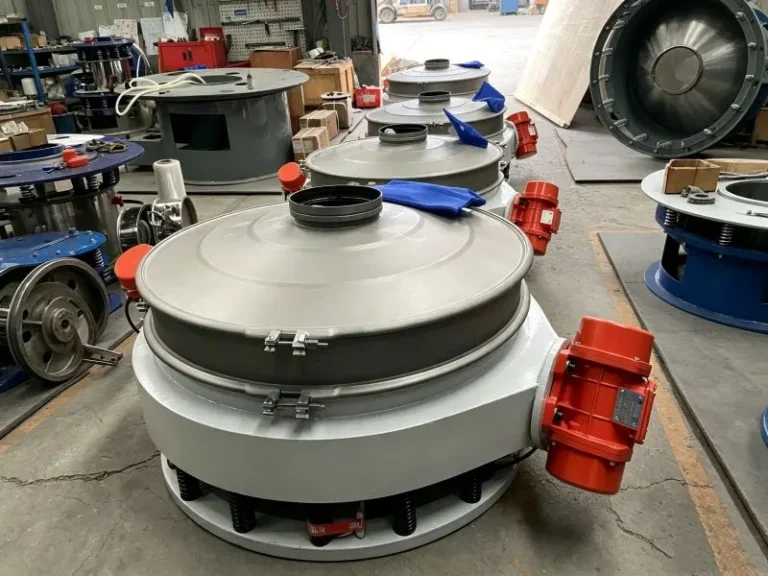
The eccentric weights were adjusted to increase the amplitude from 2.8 mm to 4.0 mm.
The purpose was to improve material movement under the customer’s operating conditions. The 4.0 mm setting applies to this installation; adjustments on other machines should follow the manufacturer’s permitted range and application requirements.
Replacing the Bouncing Balls
All hardened silicone balls were replaced.
The customer also introduced a three-month replacement schedule, giving the maintenance team a defined interval to work to. Checks for hardening, wear and reduced cleaning action remained part of routine maintenance.
Adding a Vibratory Feed Hopper
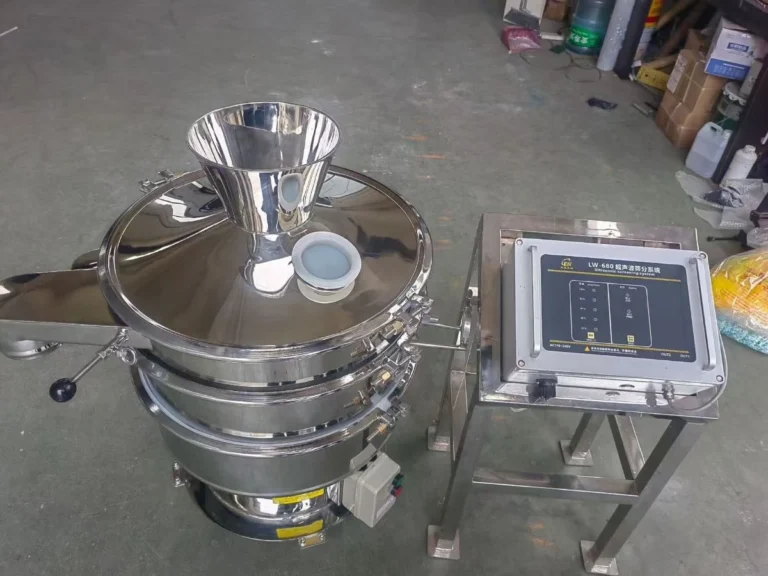
A vibratory feed hopper was installed to provide a steadier supply of cocoa powder to the screen.
This addressed the fluctuations associated with manual shovel feeding and gave the sieve a more consistent load during operation.
Equipment Settings and Features
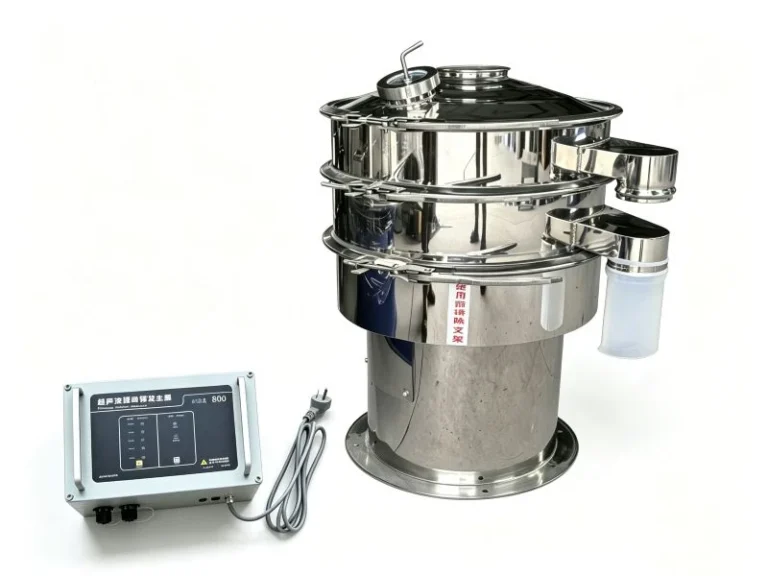
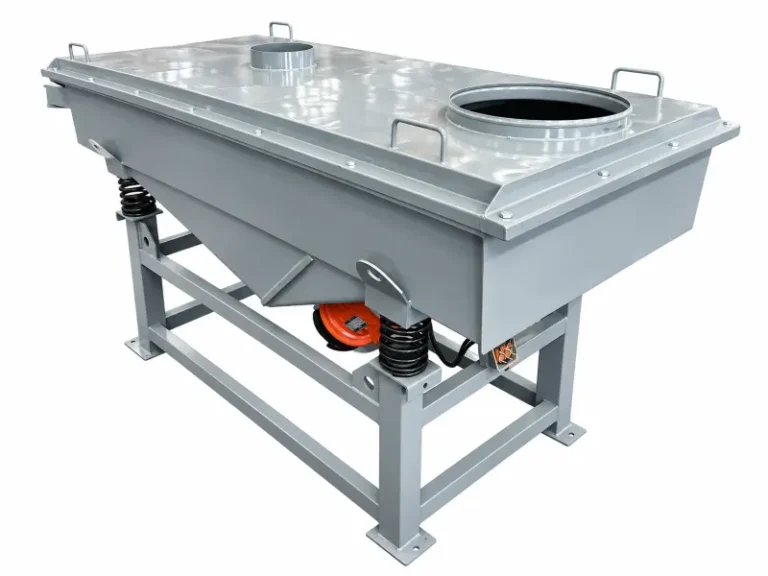
The existing screening machine remained in service. The work involved adjusting its vibration setting, renewing the cleaning components and adding controlled feeding.
| Item | Before | After |
|---|---|---|
| Screening machine | Existing unit | Same unit retained |
| Screen specification | 40 mesh | 40 mesh |
| Vibration amplitude | 2.8 mm | 4.0 mm |
| Silicone bouncing balls | Hardened after five months of use | All replaced |
| Ball replacement schedule | No replacement during the previous five months | Every three months |
| Feeding | Manual shovel loading | Vibratory feed hopper |
| Feed consistency | Variable | Steadier feed |
The configuration allowed several practical changes without replacing the main machine. The adjustable eccentric weights provided a way to tune the vibration, the replaceable bouncing balls restored the cleaning action, and the added hopper improved feed consistency.
Keeping the original 40-mesh specification was also important: the customer did not move to a coarser screen to reduce cleaning interruptions.
Customer Feedback and Results
Following the changes, the customer reported that screen cleaning could be left until the end of production. The previous routine of stopping three or four times during the day was no longer needed.
The mesh replacement interval also increased from 7–10 days to 25–30 days.
| Operating Measure | Before | After |
|---|---|---|
| Cleaning frequency | 3–4 times per day | Once per day |
| Cleaning schedule | Interruptions during production | After production |
| Mesh replacement interval | 7–10 days | 25–30 days |
| Screen specification | 40 mesh | 40 mesh |
| Screening machine | Original machine | Same machine |
For the customer, the clearest improvement was a more predictable working day. Operators no longer had to interrupt production repeatedly to clean the screen, and mesh replacement became less frequent.
These were the reported results of the combined changes. The case does not isolate the contribution of each adjustment, but it shows why machine settings, cleaning components and feeding conditions were all worth checking.
Discuss Your Cocoa Powder Sieving Application
If frequent cleaning is interrupting your cocoa powder sieving process, contact our team.
Send us your screen mesh size, required throughput, feeding method and a short video of the machine in operation. Details of cleaning frequency and recent maintenance will also help us understand the problem and discuss suitable adjustments for your production line.