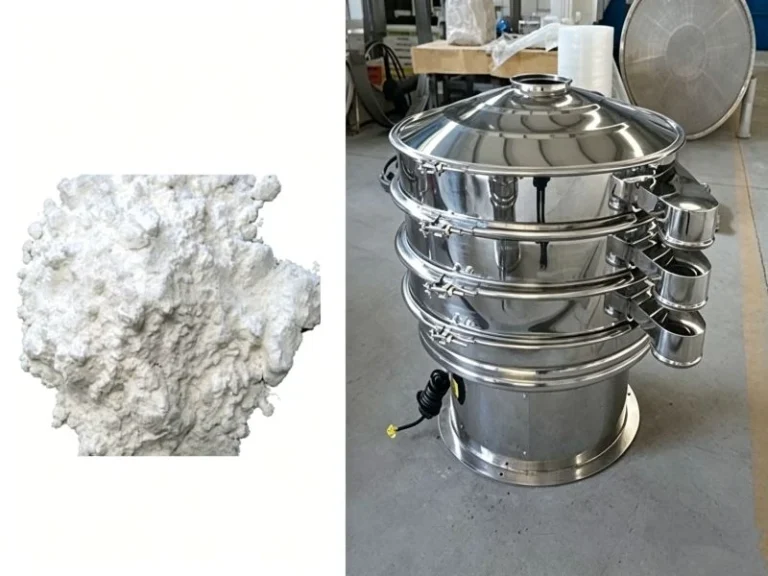
Milk Powder Screening System with Dust-Free Feeding Before Filling
A customer approached us with a milk powder screening requirement: remove oversized impurities before filling, handle a small amount of light lumping, and keep dust under control during feeding. The required throughput was 1,200–1,400 kg/h, using a screen with 1.5 mm openings.
The connection to the filling machine was equally important. The customer needed the screen’s bottom outlet positioned just 100 mm above the floor to connect to the filling machine hopper.
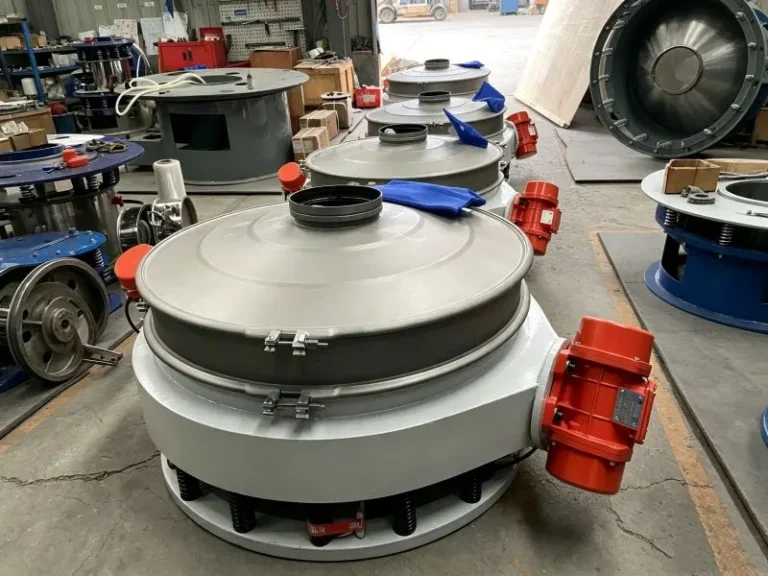
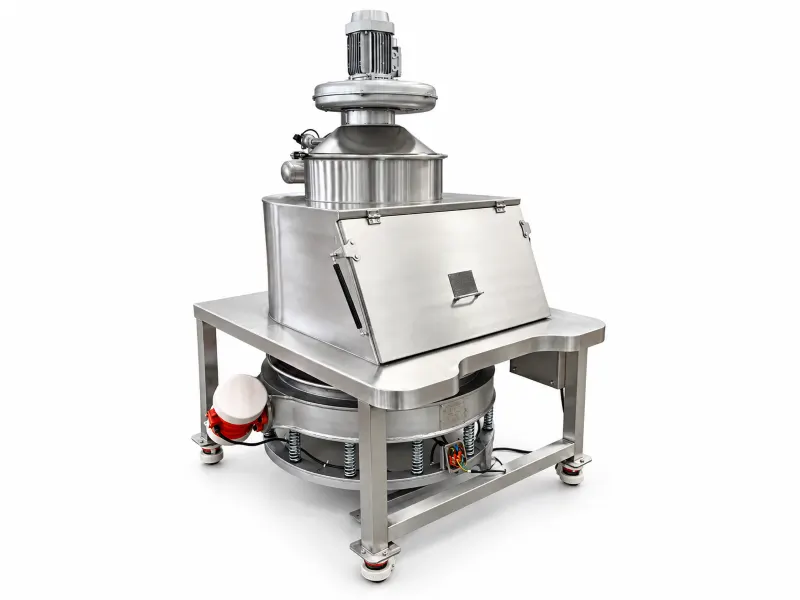
Based on these requirements, we recommended a dust-free feeding station paired with a 1000 mm inline vibratory screen, fitted with bouncing balls for mesh cleaning and a custom bottom discharge arrangement.
Project Overview
This milk powder screening system was specified for the stage immediately before filling. The powder contained a small quantity of light lumps, and the customer wanted a screening step to retain oversized material before it reached the filling machine.
The proposed process was straightforward:
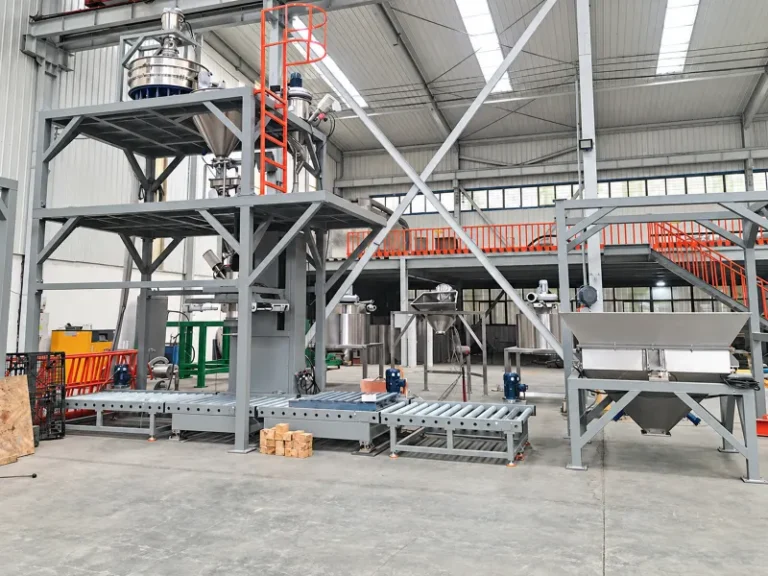
Dust-free feeding station → 1.5 mm screening → Filling machine hopper
Stainless steel construction was required for the equipment. For the feeding station, the specification was an all-304 stainless steel structure with a polished finish.
The main task was to match the feeding and screening equipment to both the material requirements and the available connection space.
Customer Requirements: What We Needed to Clarify
Screening Purpose and Powder Condition
The discussion began with the milk powder itself. The customer described slight lumping in a small portion of the material and specified a 1.5 mm screen opening.
This established the purpose of the machine: check screening before filling, with oversized impurities and lumps that could not pass through the mesh retained for separate handling.
The screen was not being selected to grind hard lumps. Its role was size-based separation, so contaminants small enough to pass through the openings would not necessarily be removed.
Throughput Before Filling
The customer’s required processing rate was 1,200–1,400 kg/h. This became the target for equipment selection.
We recommended a 1000 mm screen diameter for the proposed arrangement. Actual throughput would need to be checked with the customer’s powder, since feed consistency, powder condition and the amount of retained material can affect screening capacity.
Dust Control at the Feeding Point
The customer also needed dust-free feeding. Selecting a stainless steel milk powder sifter alone would not address dust released while material was being loaded.
We therefore included a feeding station as part of the system, bringing dust collection into the feeding stage rather than treating it as a separate requirement.
Connection to the Filling Machine Hopper
One of the most specific points in the discussion was the discharge height. The customer requested a bottom outlet 100 mm above floor level to make the connection to the filling machine hopper easier.
That dimension became a key part of the custom design. The outlet position needed to suit the receiving hopper, with the final connection details checked against the installation drawing.
Our Solution
304 Stainless Steel Dust-Free Feeding Station
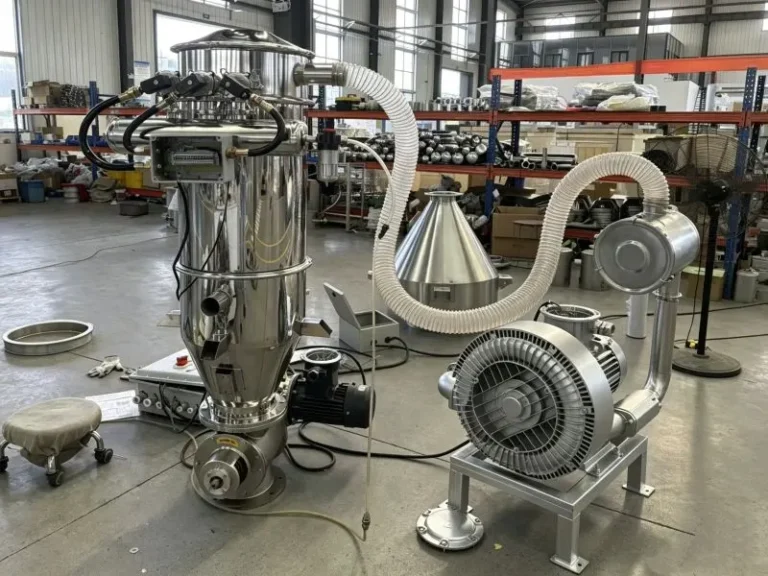
At the feeding point, we recommended a dust-free bag dump station to receive the milk powder and help capture airborne dust during loading.
For this project, the station was specified in 304 stainless steel with a polished finish. This met the customer’s material and surface-finish requirements while providing surfaces suitable for routine cleaning and inspection.
During a product changeover, these bag dump station cleaning checks cover easy-to-miss spots beneath the safety grate, inside gasket grooves, and just above the hopper outlet.
The feeding station would supply the screen below, keeping feeding and sieving within the same equipment arrangement.
1000 mm Inline Vibratory Screen with 1.5 mm Openings
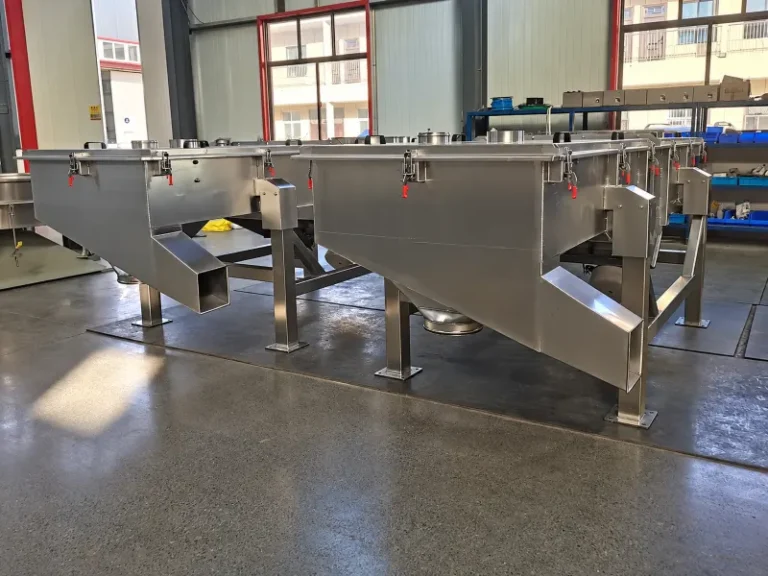
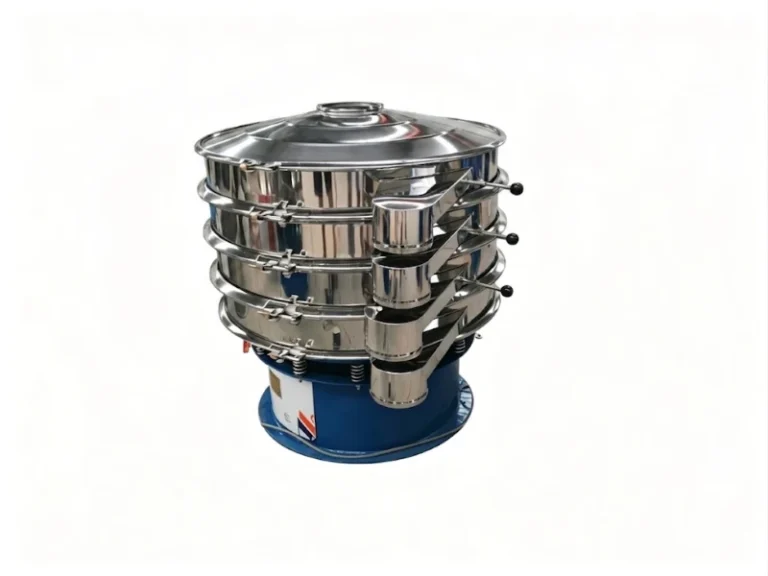
For the screening stage, we recommended a 1000 mm inline vibratory screen with a 1.5 mm aperture.
The bottom-discharge layout suited the planned transfer into the filling machine hopper. Powder passing through the mesh would leave through the lower outlet, while material retained by the screen would be handled separately.
The 1.5 mm opening was the customer’s specification for this application. It should not be treated as a standard mesh size for every milk powder product. Different powder formulations and acceptable agglomerate sizes may require a different aperture.
For other applications, our guide to milk powder sifter selection covers the relationship between mesh size, hygiene requirements and processing capacity.
Bouncing-Ball Mesh Cleaning
The screen was specified with bouncing balls beneath the mesh to help keep the openings clear during operation.
As the machine vibrates, the balls tap the underside of the screen. This provides mechanical assistance with mesh cleaning where powder or particles begin to obstruct the openings.
The bouncing balls support screening; they do not turn the machine into a lump breaker. Screen condition and cleaning frequency would still need to be checked during use.
Custom Bottom Outlet: 100 mm Above the Floor
The proposed screen included a custom bottom outlet positioned 100 mm above floor level, as requested by the customer.
This was a practical detail with a direct effect on installation. A screen with the right diameter and mesh would still need a suitable outlet position to connect to the filling machine hopper.
Before fabrication, the drawing would need to confirm the height reference, outlet dimensions, hopper interface and access for removing and cleaning the connection.
Equipment Parameters
| Item | Project Specification |
|---|---|
| Material | Milk powder |
| Powder condition | Small amount of light lumping |
| Application | Screening before filling |
| Screening purpose | Retain oversized impurities and lumps that cannot pass through the mesh |
| Required throughput | 1,200–1,400 kg/h |
| Recommended system | Dust-free feeding station + inline vibratory screen |
| Screen diameter | 1000 mm |
| Screen aperture | 1.5 mm |
| Mesh-cleaning method | Bouncing balls |
| Screen construction | Stainless steel; grade to be confirmed in the technical specification |
| Feeding station construction | All-304 stainless steel |
| Feeding station finish | Polished |
| Custom discharge requirement | Bottom outlet 100 mm above floor level |
| Downstream equipment | Filling machine hopper |
The throughput shown is the customer’s requirement, not a verified production result.
Features That Matter in This Application
Feeding and Screening in One Arrangement
The proposed system addresses two needs at the same point in the process: controlling dust during feeding and screening the powder before filling.
This makes the connection between the feeding station, screen and receiving hopper part of the equipment selection from the outset.
A Defined Screening Duty
The 1.5 mm aperture gives the project a clear separation requirement. The focus is on removing material retained by that opening, with suitable powder passing onward to the filling stage.
This also gives the customer a practical basis for checking the screened powder and rejected material during commissioning.
Mechanical Assistance with Mesh Cleaning
Bouncing balls provide a simple mesh-cleaning method for the specified screen. Their purpose is to help maintain open screening area during operation, alongside routine inspection and cleaning.
Polished 304 Stainless Steel Feeding Station
The feeding station’s material and finish were specified directly from the customer’s requirements. Cleaning access around joints, seals and connections would also need attention when confirming the final assembly.
Discharge Position Matched to the Receiving Hopper
The 100 mm outlet height was the most distinctive customization in this project. It brought the filling machine connection into the screen design, rather than leaving it to be resolved after delivery.
Customer Feedback During Equipment Selection
The customer’s input made clear that screening performance was only part of the requirement. The equipment also needed to support cleaner feeding and connect conveniently to the filling machine hopper.
The specific request for a bottom outlet 100 mm above the floor helped define the proposed layout. Along with the 1.5 mm screen opening and polished 304 stainless steel feeding station, it gave us concrete details on which to base the recommendation.
This case records the requirements and recommended configuration. Post-installation feedback and measured production results are not yet available.
The operating review would focus on actual throughput, dust control during feeding, mesh condition and the practicality of the connection to the filling machine.
Discuss Your Milk Powder Screening Application
If you need milk powder sieving before packaging or filling, share your required capacity, screen aperture, powder condition and receiving-hopper dimensions with us.
Photos or a layout drawing are especially useful when outlet height or installation space is limited. Contact our team to discuss a milk powder screening system with dust-free feeding and a discharge arrangement suited to your production line.