Vibro Sifter for Milk Powder: Hygiene, Mesh Size and Capacity Selection
A vibro sifter for milk powder removes oversized particles, unwanted agglomerates and foreign material retained by the screen. It can be installed after drying and cooling, during ingredient preparation, or before packaging.
Selecting the right machine requires three decisions: hygienic construction suited to the cleaning procedure, a mesh aperture matched to the screening purpose, and sufficient capacity under actual production conditions. This guide explains how to assess each requirement.
1. What Makes Milk Powder Screening Challenging?
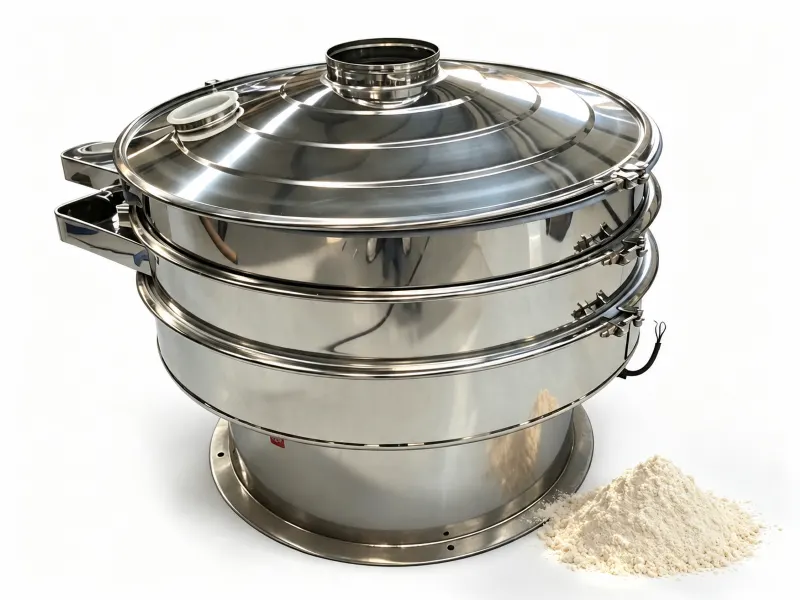
Milk powder can absorb moisture, form agglomerates and accumulate on the screen. Its screening behavior varies with formulation, fat content, particle size distribution and whether it has been intentionally agglomerated.
Moisture, Agglomeration and Screen Blinding
Powder adhesion and particles lodged in mesh openings reduce the available screening area, causing throughput to fall. Before choosing a larger machine, check powder condition, feeding consistency and screen-cleaning requirements.
Our guide to fine powder screen blinding explains the common causes and possible solutions.
Dust Control and Powder Retention
An enclosed screening chamber and suitable seals help reduce powder escape. Feeding and discharge connections also need effective sealing.
Inside the machine, powder can collect around joints, seals and outlets. These areas should be accessible for cleaning and inspection.
Unwanted Lumps vs. Intended Agglomerates
Not every large particle should be rejected. Instant milk powder may contain deliberately formed agglomerates that belong to the finished product.
For example, a screen used to remove hard lumps before packaging should allow acceptable agglomerates to pass. An unnecessarily fine mesh could reject usable powder and change the product’s particle size distribution.
2. What Hygienic Features Should a Milk Powder Vibro Sifter Have?
A hygienic vibro sifter combines suitable product-contact materials, cleanable surfaces and accessible components. Stainless steel construction alone does not establish the hygienic suitability of the complete machine.
304 or 316L Stainless Steel
304 and 316L stainless steel are available for product-contact components. The appropriate grade depends on the product, cleaning chemicals and operating conditions.
Confirm the materials used for the screen mesh, frame, inlet, outlet and other contact parts—not just the external body.
Smooth Surfaces and Accessible Components
Inspect welds, frame joints, outlets and seal grooves for areas where powder may accumulate. Removable screens and accessible connections simplify inspection and cleaning.
| Component | What to Confirm |
|---|---|
| Product-contact metal | Specified stainless steel grade and supporting documentation |
| Surfaces and joints | Agreed finish and access for removing retained powder |
| Screen assembly | Convenient removal, inspection and replacement |
| Seals | Food-contact suitability and cleaning compatibility |
| Inlet and outlets | Sealed connections and access for cleaning |
Seals and Cleaning Procedures
If silicone seals are specified, confirm their suitability for the intended food-contact use and cleaning conditions.
Agree on a dry- or wet-cleaning procedure before selecting the equipment. Where wet cleaning is used, include suitable drying and checks before powder production resumes. Installation space should also allow operators to dismantle and inspect the machine.
3. How Do You Choose the Right Mesh Size for Milk Powder?
There is no universal milk powder sieve mesh size. Start by defining whether the task is check screening, removing unwanted lumps or separating specified particle-size fractions.
Match the Aperture to the Screening Purpose
| Screening Task | Main Selection Requirement |
|---|---|
| Check screening before packaging | Pass acceptable powder while retaining targeted oversized material |
| Removing unwanted agglomerates | Assess lump size, frequency and acceptable product loss |
| Particle-size classification | Define the required upper and lower size limits |
| Screening instant milk powder | Preserve acceptable product agglomerates |
A single deck provides one separation cut. Multiple decks may be appropriate when several particle-size fractions are required.
Specify Microns Alongside Mesh Number
Mesh numbers should be accompanied by the aperture and applicable specification. Selected ASTM E11 sieve designations illustrate the differences:
| Sieve Designation | Nominal Aperture |
|---|---|
| No. 80 | 180 μm |
| No. 120 | 125 μm |
| No. 400 | 38 μm |
These are aperture references, not universal recommendations for milk powder. An “80–400 mesh” range covers substantially different separation sizes. Confirm the actual production screen aperture, wire diameter and open area with the supplier.
Balance Separation and Product Recovery
Finer mesh is not automatically better. It may retain more oversized material, but it can also reduce throughput and reject acceptable powder.
During a trial, inspect both the passed powder and the retained fraction. Select an aperture that meets the separation requirement while maintaining acceptable product recovery and stable operation.

4. How Do You Size a Vibro Sifter for Milk Powder?
Milk powder screening capacity depends on mesh aperture, effective screening area and powder characteristics. Select a machine for the intended operating conditions rather than relying only on its maximum catalogue rating.
Match Throughput to the Production Process
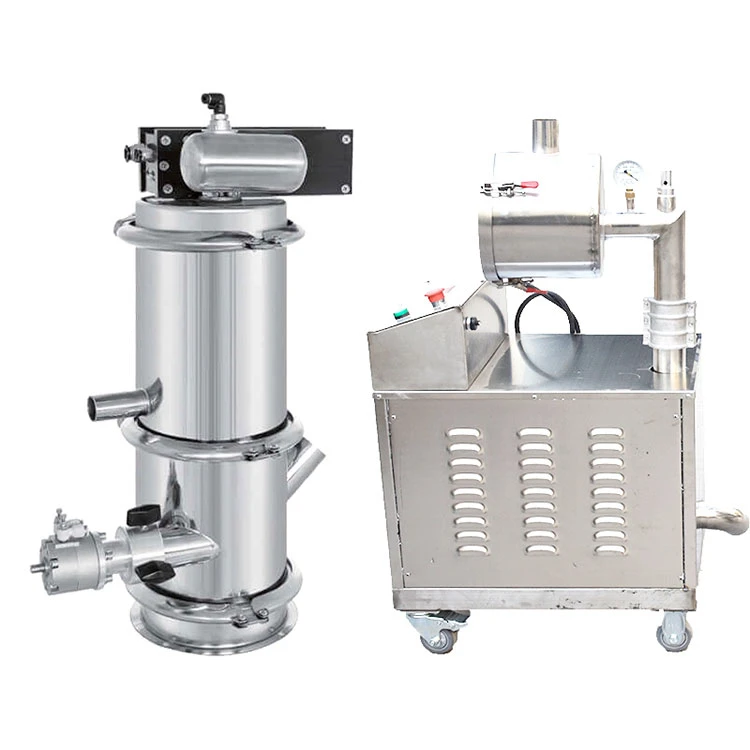
Confirm the required throughput in kg/h and whether screening will be continuous or batch-based. Before packaging, the sifter should accommodate incoming powder and maintain a steady supply to downstream equipment.
Consider peak feeding periods, cleaning and changeovers. A machine that handles the average feed rate may still become a bottleneck during sudden feed surges.
Check What Affects Actual Output
| Factor | Effect on Capacity |
|---|---|
| Screen aperture | Finer openings generally make powder passage more difficult |
| Effective screening area | More available area can support higher throughput |
| Powder flowability | Cohesive powder may need additional screening assistance |
| Moisture and agglomeration | Buildup and unwanted lumps can interrupt powder passage |
| Feeding consistency | Uneven feeding can overload the screen surface |
| Screen blinding | Blocked apertures reduce available screening area |
Screen diameter and aperture should be selected together. Increasing machine size alone may not resolve persistent blinding.
Milk Powder Screening Application Example
Yuanjing’s ultrasonic sieving machine product page lists this application:
| Item | Published Application Data |
|---|---|
| Material | Milk powder |
| Model | YJ-800-1S |
| Screen specification | 120 mesh |
| Listed throughput | 600 kg/h |
| Application objective | Addressing powder clogging |
This is a reference configuration, not a guaranteed capacity for every milk powder. Actual output depends on the formulation, powder condition, feeding method and separation requirements.
Before confirming a model, test a representative sample at the required aperture. Record sustained throughput, retained material, acceptable product recovery and any powder buildup during the intended operating period.
5. Which Vibro Sifter Configuration Fits Your Milk Powder Process?
Choose the configuration according to the separation task, powder behavior and installation requirements.
Standard Rotary Vibrating Screen
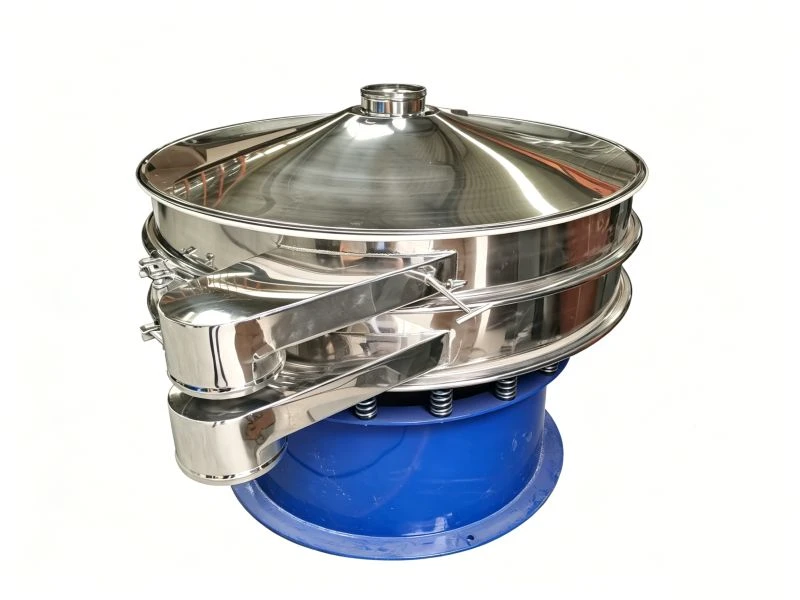
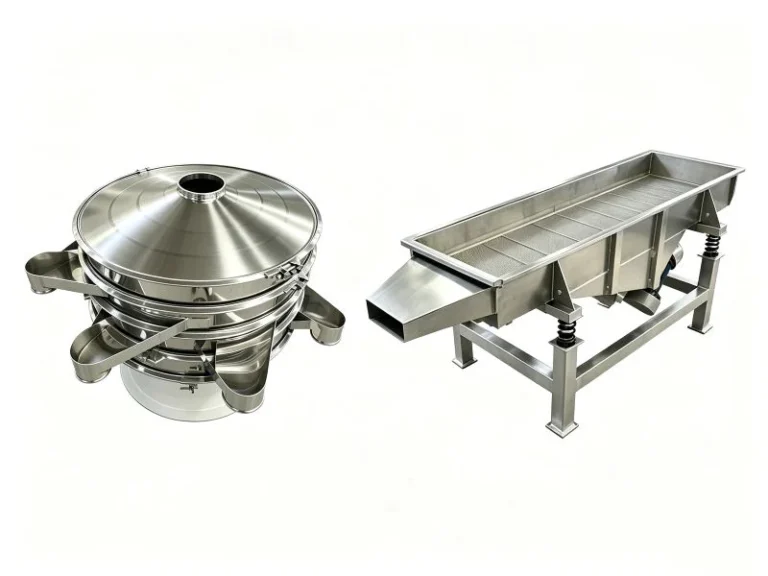
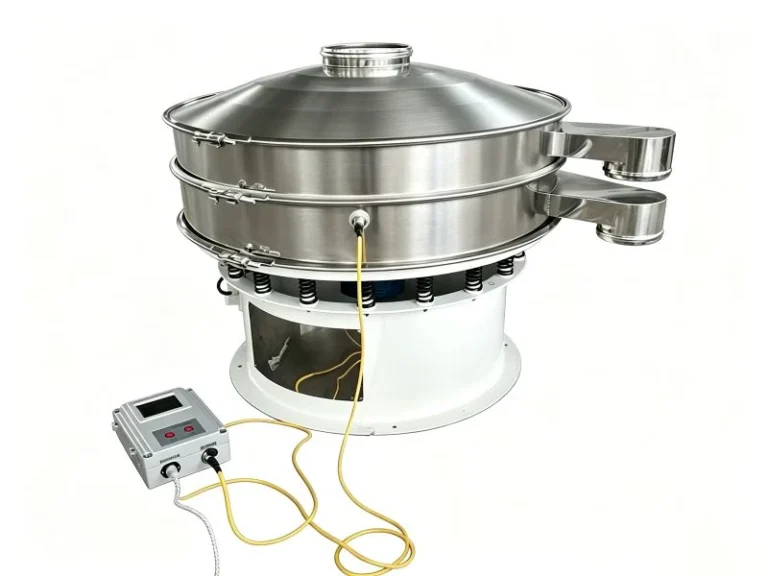
A rotary vibrating screen uses motor-driven, three-dimensional vibration to distribute powder across the screen and promote passage through its openings.
This configuration can be evaluated for routine milk powder check screening or classification when the material passes through the selected mesh consistently. Use a single deck for one separation cut and multiple decks when several particle-size fractions are needed.
Ultrasonic Screening for Persistent Blinding
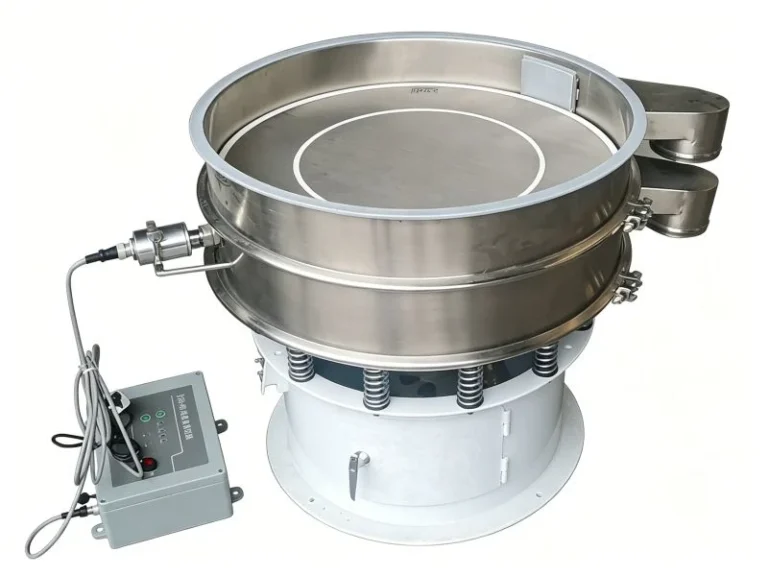
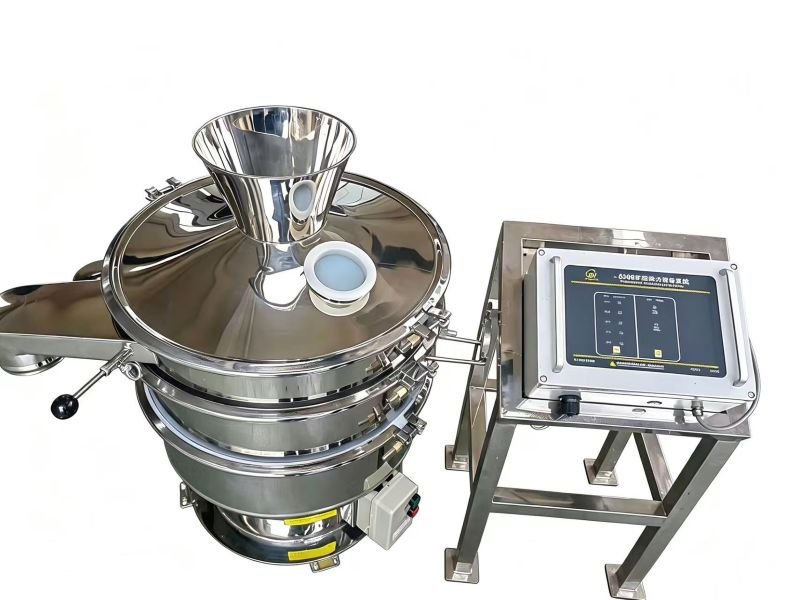
An ultrasonic sieving machine adds high-frequency vibration at the mesh to help reduce blinding and maintain powder passage.
Consider ultrasonic assistance when trials show persistent adhesion or blocked apertures. It is not automatically required for every fine powder or infant formula application, and it does not replace control of moisture and feeding conditions.
Prepare the Information Needed for Selection
Check installation height, connection positions and access for cleaning. To specify a suitable milk powder sifting machine, provide:
- Milk powder type and whether it is intentionally agglomerated.
- Screening purpose and acceptable particle-size limits.
- Required aperture or existing screen specification.
- Average and peak throughput in kg/h.
- Available moisture, bulk density and flowability information.
- Product-contact material, seal and cleaning requirements.
- Installation dimensions and feeding/discharge connections.
Share these details with Yuanjing to discuss a suitable vibro sifter machine and material-testing requirements. The final selection should match hygiene, separation quality and sustained production capacity.