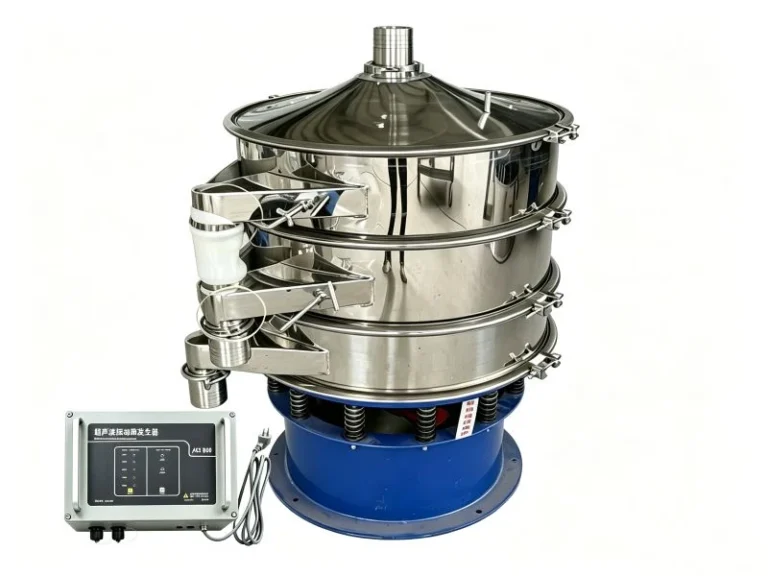
Tea Screening: How to Separate Fines and Grade Leaves with Minimal Breakage
Tea screening removes unwanted fines and separates dried leaves into size fractions for packing or further processing. The challenge is to achieve the required separation without creating more broken leaves. Suitable screen openings, steady feeding and gentle screen motion help control this, while lower drop heights limit damage during transfer. For tea leaf grading, choose openings based on leaf shape and finished-product requirements, then test representative samples to check fines removal, leaf integrity and throughput.

What Should Tea Screening Separate?
Before selecting a screen, define which tea fractions to retain, collect separately or reject.
- Leaf size fractions: Separate coarser leaves, smaller leaves and broken tea according to the finished-product specification. Size grading alone does not determine flavour, aroma or overall quality.
- Unwanted fines: Remove excess dust and small fragments while retaining usable tea. Broken tea may still suit tea bags or other products.
- Oversized impurities: Remove stems and foreign material where their size allows separation from the tea. Screening alone cannot remove every contaminant; air separation, destoning or sorting may be needed for light particles, stones or discoloured leaves.
How to Choose Screen Openings for Tea Leaf Grading
Choose screen openings according to the material you need to remove and the tea leaves you want to retain. The following ranges come from Yuanjing’s practical screening experience and provide starting points for trials. Final selection depends on leaf shape, material condition and finished-product requirements.
Select Mesh Size for the Screening Task
| Screening task | Reference mesh range | Purpose |
|---|---|---|
| Preliminary screening | 8–20 mesh | Separate oversized material while allowing suitable leaves to pass |
| Coarse size separation | 24–30 mesh | Separate coarser tea fractions during refining |
| Finer size separation | 36–60 mesh | Make finer size cuts where appropriate for the tea being processed |
| Fine-particle separation | 60–100 mesh | Separate small particles or remove fine dust, depending on the selected opening |
These ranges apply to different screening duties; they are not a fixed sequence for every tea. Confirm the actual aperture and which fraction should pass through or remain on each screen.
For preliminary screening, trials may start with 8–12 mesh for coarser leaves and 14–20 mesh for smaller material. Finer screens require closer checks for blocked openings and usable tea entering the wrong outlet.
Check Leaf Shape and Actual Aperture
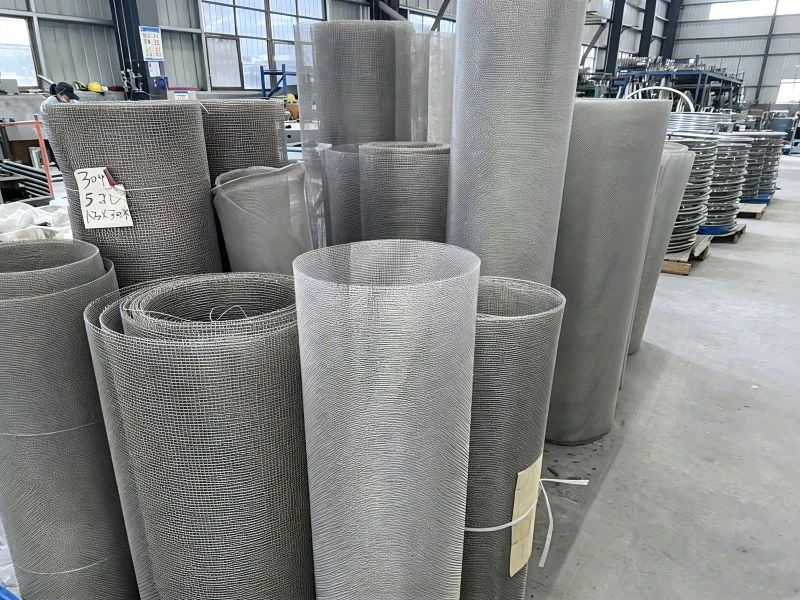
Long, curled and flat leaves pass through openings differently. Tea leaf grading therefore requires more than choosing a mesh number. Record the actual aperture in millimetres or microns, together with the opening shape and wire diameter.
For fines removal, the retained leaves form the main product and smaller particles pass through. An 80–100 mesh screen may remove very fine dust, but larger unwanted fragments can remain with the leaves. Check both fractions against your product specification.
Match Screen Decks to the Required Fractions
A single deck may be sufficient when the only task is removing fines. To separate oversize, a target tea fraction and fines, a typical arrangement uses two decks:
- The upper screen retains oversized material.
- The lower screen retains the target tea fraction.
- Fines pass through the lower screen to a separate outlet.
Confirm the openings using representative tea samples. Our guide to multi-deck sifter configuration explains how separation points relate to screen decks and outlets.
How to Reduce Tea Leaf Breakage During Screening
Reducing tea leaf breakage requires gentle handling from feeding to discharge. Check how leaves enter, move across and leave the screen, as well as the machine’s operating settings.
Feed Steadily and Spread Leaves Evenly
Use a continuous, controlled feed instead of dumping large batches onto the screen. Keep the material bed shallow and evenly distributed to limit buildup and give smaller particles access to the openings.
Reduce Drops and Collisions
Minimize drop heights at the inlet, outlets and transfer points. Arrange chutes and collection containers to reduce impacts against hard surfaces, and prevent leaves from accumulating at restricted discharge openings.
Maintain Screen Condition and Tension
Inspect the mesh for damage, uneven tension and trapped leaves. Follow the manufacturer’s tensioning procedure, and isolate the machine before inspection or adjustment.
Use Gentle Motion and Limit Repeat Screening
Use enough movement to achieve separation without excessive bouncing or prolonged circulation. Adjust the machine according to its operating instructions, then check both separation quality and newly generated fines. Avoid repeated passes when the product already meets specification.
Which Tea Screening Machine Fits Your Process?
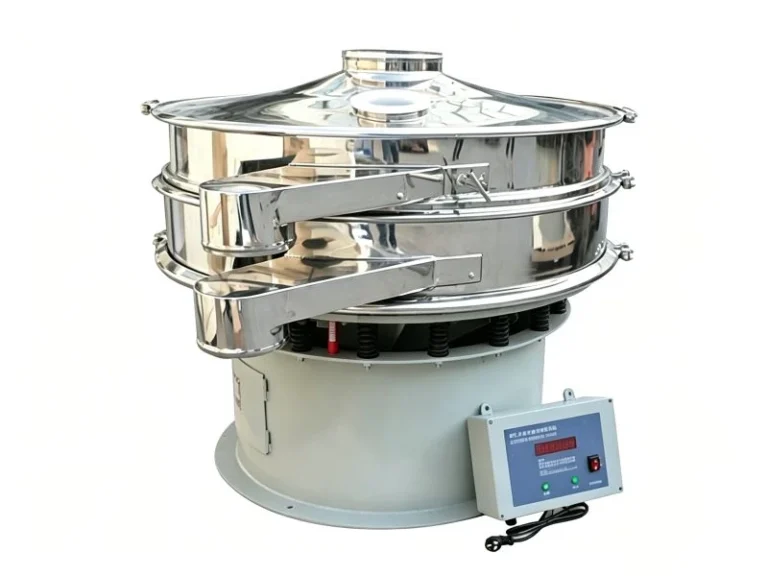
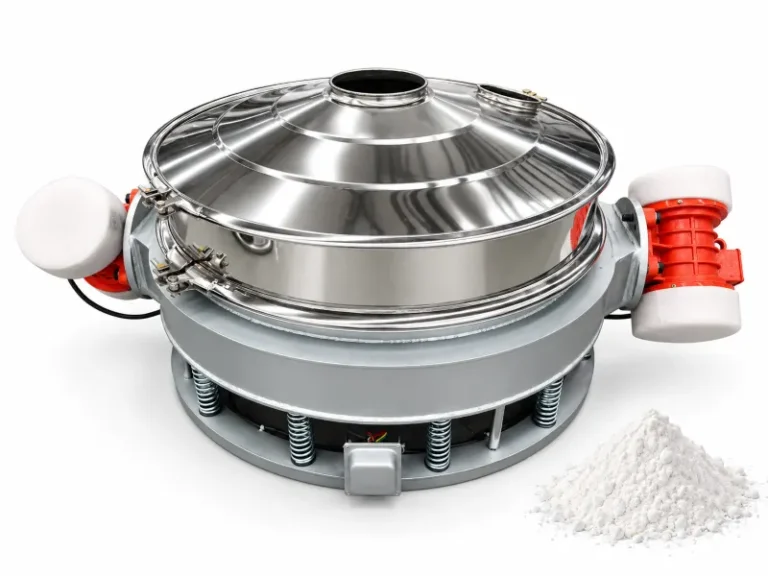
Choose a tea screening machine based on leaf condition, required size fractions and production flow. Compare how each machine handles your tea at the required output, including fines removal and additional breakage.
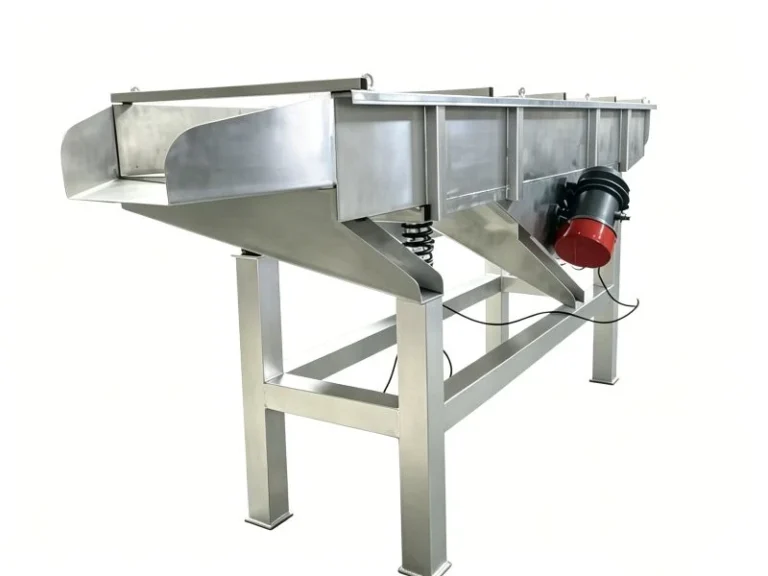
Linear Vibrating Screen for Continuous Tea Grading
A linear vibrating screen moves material along a rectangular screening surface toward separate outlets. It is an option for continuous tea grading where steady feeding and direct discharge are priorities.
For broken tea or granular tea ingredients, test whether the machine maintains the required size separation at your production rate. For delicate whole leaves, check bouncing, transfer impacts and newly generated fines before confirming the settings.
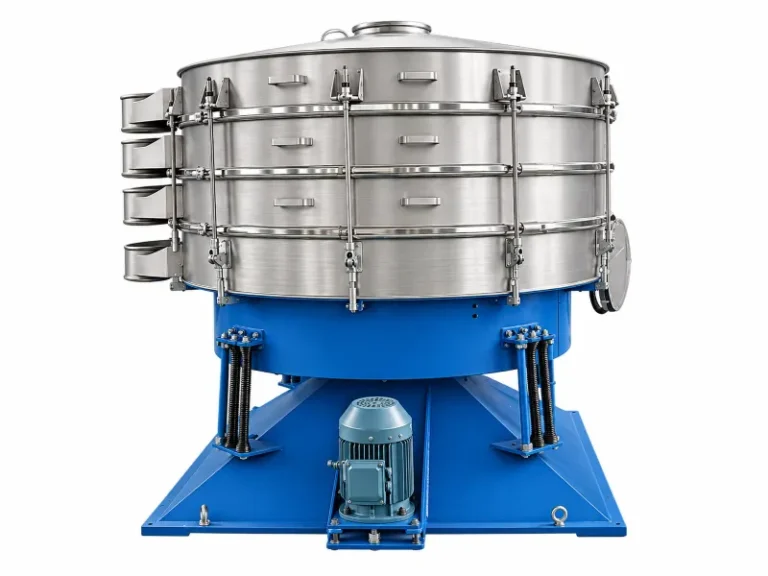
Tumbler Sieve for Fragile Leaves
A tumbler sieve machine uses gentle tumbling motion and is worth evaluating when leaf appearance and integrity are priorities. Check that the movement separates unwanted fines without prolonged circulation or excessive rubbing.
Multi-Deck Configuration for Several Size Fractions
Both linear and tumbler screens can use multiple decks. Choose the number of decks according to the separation points and outlets required. A two-deck arrangement can collect oversize, a target tea fraction and fines.
A multi-deck tumbler screen is one option when several fractions and gentle handling are needed together. Inspect material from every outlet during testing.
Capacity and Cleaning Between Batches
Compare machines at the feed rate that consistently meets your product specification. Check access for removing trapped leaves, inspecting contact surfaces and changing screens. Easy cleaning is especially useful when switching between tea varieties or flavoured blends.
Related videos
How to Verify Fines Removal and Leaf Integrity in a Trial
A tea screening trial should confirm that the machine removes unwanted fines, preserves usable leaves and maintains the required output. Use representative tea samples and agree on product specifications before testing.
Record Conditions and Collect All Fractions
Record the tea condition, screen openings, feed rate and machine settings. Collect and weigh material from every outlet, accounting for extracted dust and material left inside the machine.
Check Fines, Recovery and Leaf Breakage
Measure residual fines in the finished tea and how much usable material reaches the correct outlet. Compare representative feed and output samples using the same sampling method, alongside the weights of all collected fractions, to assess additional breakage.
Fines collected during screening include those already present in the feed, so their weight alone does not indicate machine-induced damage.
Confirm Stable Throughput
Run the machine long enough to check for buildup, blocked openings and changes in separation quality. Assess throughput while the tea meets specification. Our guide to industrial sieving trials explains the wider testing procedure.
Need help selecting a tea screening machine? Contact us with tea photos, target throughput, required size fractions, screen openings if known, and acceptable fines content. We can review your requirements and discuss sample testing.
Conclusion
Effective tea screening removes unwanted fines and produces consistent size fractions while limiting leaf damage. Screen openings, feeding conditions and machine settings should suit the tea being processed, with sample trials confirming separation quality and stable output.
Looking for a tea screening machine for loose-leaf tea or tea bag ingredients? Contact Yuanjing with your tea type, target capacity and grading requirements. Include photos or available screen specifications so we can discuss a suitable configuration and sample testing.
FAQ
What Mesh Size Should I Use for Tea Leaf Screening?
Choose the mesh size according to leaf shape and the fraction you want to separate. Based on Yuanjing’s screening experience, 8–20 mesh can be a starting range for preliminary screening, while 24–60 mesh may suit finer size separation. These are trial references, not universal settings. Confirm the actual aperture and inspect both retained and passing material.
How Do I Remove Tea Dust Before Packaging?
Use a screen that allows unwanted dust to pass while retaining the saleable tea. Feed steadily and check the finished product for residual fines. A 60–100 mesh screen may suit some fine-dust separation tasks, but larger unwanted fragments may require a coarser opening. Select the cut point from your packaging specification.
Is a Linear Vibrating Screen or a Tumbler Sieve Better for Tea?
A linear vibrating screen is worth evaluating for continuous tea grading with steady feed and direct discharge. A tumbler sieve is an option when fragile leaves require gentler handling. Compare both using representative tea samples, checking residual fines, usable product recovery, leaf breakage and sustained throughput. Tea shape and condition matter more than machine type alone.
Can One Machine Separate Tea into Several Size Grades?
Yes. A multi-deck tea screening machine can collect several size fractions through separate outlets. For example, a two-deck arrangement can separate oversize, a target tea fraction and fines. The openings should match the required products, and each outlet should be checked during trials.
Should All Broken Tea Be Removed from Tea Bag Ingredients?
No. Broken tea may be part of the intended tea bag blend. The task is to retain the specified size range while removing excessive dust and oversized material. Agree on the ingredient specification with the packer, then check screened tea on the actual filling and packaging line.
How Can I Tell Whether Screening Is Creating More Broken Leaves?
Compare representative samples taken before and after screening, using the same assessment method. Collect all output fractions and account for dust and retained material. The fines outlet contains particles already present in the feed, so its weight alone does not measure new breakage. Our guide to industrial sieving trials explains the collection and evaluation process.