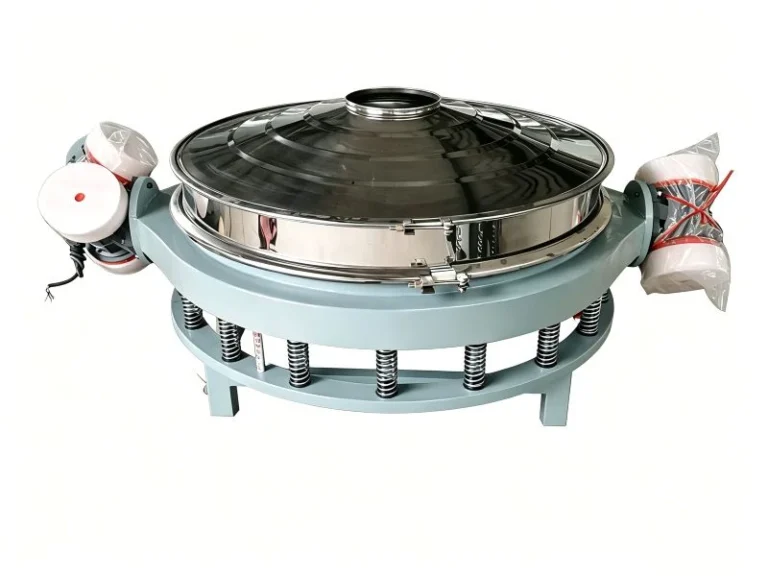
Choosing a Spice Linear Vibrating Screen: Materials & Anti-Clogging
Chili powder can cling to the mesh. Ground Sichuan pepper can leave oily deposits. When a line switches from one seasoning blend to another, powder left inside the machine can carry flavor into the next batch.
These problems matter as much as the capacity shown in a quotation. When choosing a spice linear vibrating screen, check the product-contact materials, mesh-cleaning arrangement, screen openings and deck count. Then establish whether the machine can maintain the output you need with your actual spice.

What Is a Spice Linear Vibrating Screen?
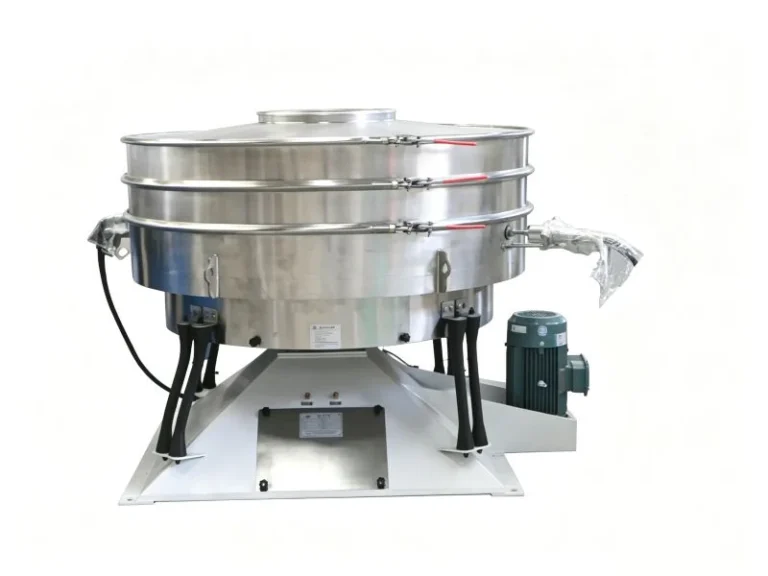
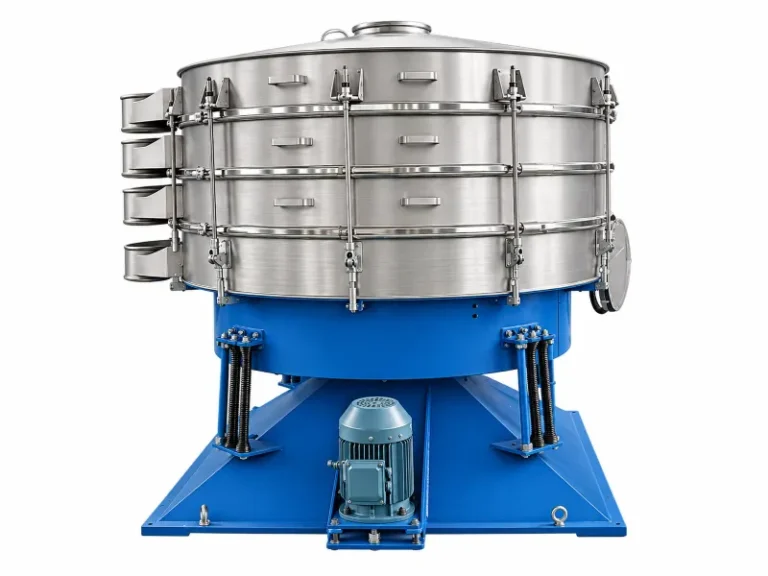
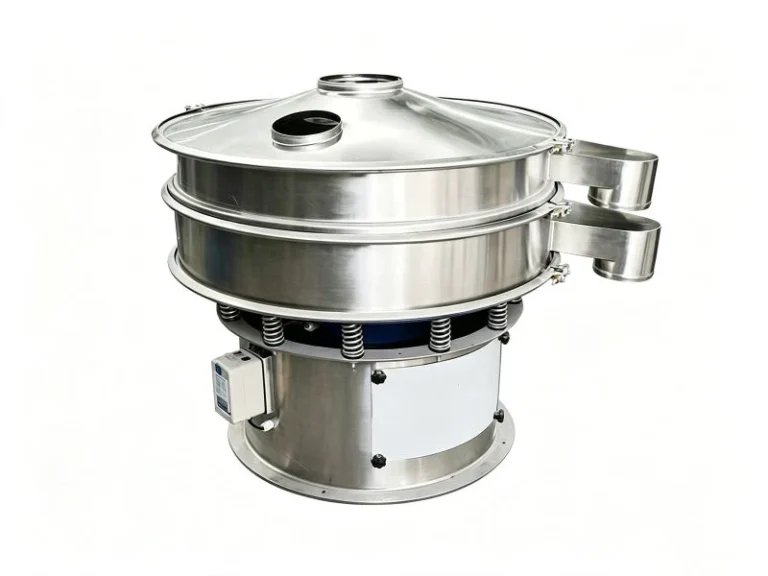
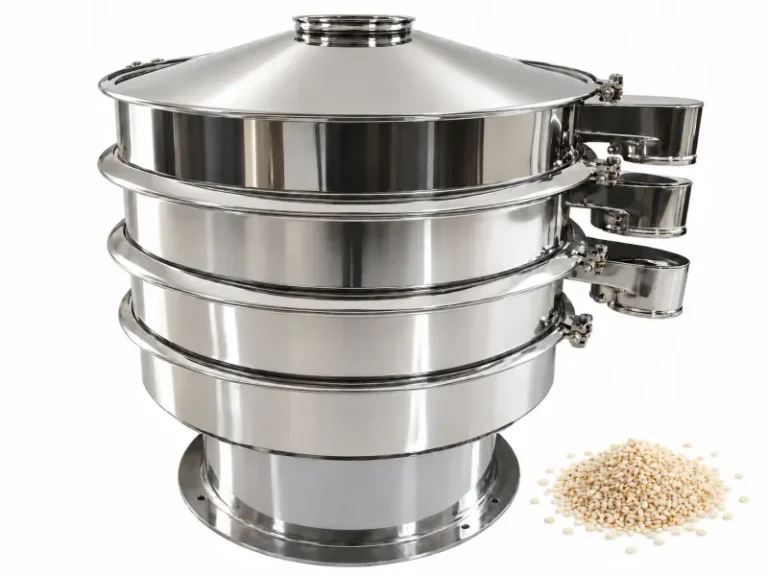
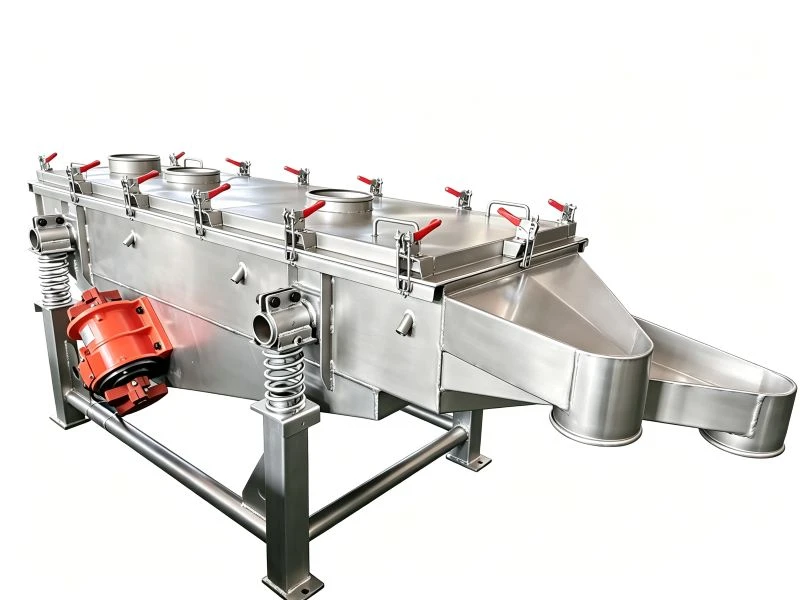
The machine separates spice seeds, crushed materials and suitable powders by size. Vibration moves the feed along the screen. Particles small enough to pass through the openings leave through the undersize outlet; retained material continues to a separate discharge.
Spices may contain oils, absorb moisture or form lumps. The machine therefore needs suitable contact materials and access for cleaning. An enclosure helps contain dust, but residue still needs to be removed from frames, seals and outlets between batches.
Whole seeds and dried pieces generally behave differently from fine powders that stick to the mesh. For fine or sticky spice powders, a trial is needed to check passage through the screen and buildup during operation.
Our linear vibrating sieve page provides equipment and configuration details.
How to Choose the Right Screen for Your Spices
Step 1: Check Materials and Cleaning Access
Specify the Grade of Each Product-Contact Part
For a spice linear vibrating screen, the material specification should cover the screen box, mesh, frame, inlet and outlets. Stainless steel 304 is a common choice. Consider 316L where the product, cleaning chemicals or operating environment require greater corrosion resistance.
The decision depends on oil content, moisture and cleaning procedures—not simply whether the machine will be exported. “Stainless steel” is also too broad a description to establish hygienic performance.
Carbon steel contact surfaces can introduce a risk of rust contamination. Coated carbon steel may be suitable for non-contact bases and supports, provided the coating and surrounding structure do not compromise the product.
Seals and cleaning balls need attention too. Their materials must suit the intended food-contact and cleaning conditions.
Look Inside the Machine
Internal surfaces should be smooth and accessible, with finished welds and few places for powder to collect. A mirror finish may be appropriate for some cleaning requirements, but it should be specified for a reason rather than treated as a guarantee of hygiene.
Powder left inside can enter the next batch. If it becomes damp, it may also deteriorate. This is a particular concern when the same machine handles chili powder, ground Sichuan pepper and five-spice blends.
Before buying, check:
- How the screen frames are removed.
- Whether operators can reach beneath the mesh and into seal grooves and outlets.
- Whether residue is visible during inspection.
- How much disassembly a product changeover requires.
A machine that looks easy to clean from the outside may be awkward to clean around the frame and discharge points.
Step 2: Choose Cleaning Equipment for the Actual Cause of Blockage
Before specifying anti-clogging equipment for a spice linear vibrating screen, find out what is blocking the mesh.
Particles can lodge in the openings. Fine powder may adhere to the wires, while moisture or oils can contribute to deposits and agglomeration. As the openings become restricted, throughput falls and usable powder may leave with the oversize.
Bouncing-Ball Cleaning
Bouncing balls sit beneath the screen and strike the mesh during operation, helping dislodge trapped particles.
They are a common option where mechanical cleaning suits the material. Ball material and arrangement matter, as does their interaction with the mesh. Ask how the balls are inspected and replaced, and check their performance during the trial. Having them listed in the quotation is only part of the answer.
Ultrasonic Assistance for Persistent Fine-Powder Blinding
If fine powder continues to adhere after conventional cleaning has been assessed, ultrasonic assistance may be worth testing. It applies high-frequency vibration to the mesh to help reduce certain forms of adhesion and blinding.
It will not make every spice flow freely. Damp lumps, oily deposits and severe caking still require attention to the material and upstream handling.
The manufacturer must confirm whether the ultrasonic system is compatible with the selected linear screen. In some applications, it is useful to compare the proposed machine with an ultrasonic vibrating sieve, using the same material and target aperture.
Check the Feed Before Adding More Cleaning Equipment
Too much material arriving at once can create a deep bed on the screen. Acceptable fines may then leave with the oversize before they have a chance to reach an opening.
Check the feed rate and how evenly the material spreads across the mesh. Cleaning equipment cannot compensate for an overloaded screen.
Step 3: Set the Screen Openings and Deck Count
The openings and deck count of a spice linear vibrating screen depend on what each outlet needs to collect.
For removing larger lumps or screen-retained foreign material before the next process, one deck may be enough. It also leaves fewer components to clean during a changeover.
A conventional two-deck arrangement can produce three size fractions: coarse, medium and fine. Add further decks only when the process needs more separation points. Each extra deck adds another surface where material can remain.
Before ordering, establish:
- What should pass through the mesh.
- What should be retained or removed.
- Whether you need one finished grade or several size fractions.
- The actual opening in microns or millimeters.
Mesh count is a useful reference, but the opening also depends on wire diameter and screen specifications. Our guide to mesh count vs. micron size explains the difference.
With seasoning blends, examine the retained material. A coarse ingredient that belongs in the recipe should not be rejected simply because it remains on the screen.
Step 4: Check Capacity with Your Own Spice
Start sizing a spice linear vibrating screen with the required hourly throughput, then assess it against the aperture, material condition and machine configuration.
Width and length determine the available screen area. They do not, by themselves, tell you how much spice the machine will process. Whole cumin seeds, crushed chili and finely ground chili powder can give very different results on the same equipment.
Provide bulk density, target aperture, moisture condition and required throughput. Also make clear whether your figure means feed entering the machine or acceptable finished product leaving it.
The feeding method and bed depth should be agreed before purchase. If the bed is too deep, usable fines can travel into the oversize discharge, reducing recovery.
Where possible, run representative material continuously and check:
- Whether the machine maintains the required throughput.
- Whether the screened product meets the particle-size specification.
- How much acceptable fine powder leaves with the oversize.
- Whether blinding or deposits develop as the run continues.
- How long cleaning and screen replacement take.
Allow for feed fluctuations using the trial results. A nominal catalog capacity is not enough to establish sustained output with a particular spice.
Selection Reference for Common Spices
The table below gives starting points for material and mesh-cleaning selection. Final choices depend on the actual fineness, moisture condition and throughput requirement.
| Spice Type | Material Characteristics and Screening Concerns | Mesh-Cleaning Options to Evaluate | Suggested Product-Contact Construction |
|---|---|---|---|
| Chili powder and paprika powder | Fine powder may develop static adhesion, agglomeration and mesh blinding. Check coarse-particle removal and fine-powder passage. | Evaluate bouncing-ball cleaning where appropriate. Compare ultrasonic assistance if fine powder continues to adhere. | Consider 304 stainless steel, with removable screen frames and accessible outlets. |
| Ground Sichuan pepper | Oils may contribute to screen deposits or caking. Watch for buildup during continuous operation. | Evaluate bouncing-ball cleaning. Persistent oily deposits also call for a check of material condition and trial performance. | Consider 304 stainless steel. Inspect internal walls, welds and seal grooves for residue. |
| Star anise powder and cinnamon powder | Coarse and fine grades behave differently. Fibrous particles may affect passage through the mesh. | Evaluate bouncing-ball cleaning for coarse grades. Test other arrangements for fine powder or persistent blinding. | Consider 304 stainless steel, with mesh and frames that are easy to inspect and replace. |
| Five-spice blends and curry powder | Particle size, oil content and moisture sensitivity vary with the recipe. Residue can carry flavor between batches. | Evaluate bouncing-ball or ultrasonic-assisted screening according to the formulation and observed adhesion. | Consider 304 stainless steel, smooth internal surfaces and finished welds, with few places for powder to collect. |
| Whole cumin seeds | Typical duties include grading and separating larger debris and smaller particles. Seed shape affects separation. | Decide whether bouncing balls are needed by checking for particles lodged in the openings. | Consider 304 stainless steel contact parts and a frame that allows convenient screen changes. |
| Crushed chili | Irregular pieces, skin fragments and seeds may overlap in size. | Evaluate mechanical cleaning according to the aperture and observed plugging. | Consider 304 stainless steel. Check feed distribution and access to the discharge outlets. |
These material suggestions apply to product-contact parts. Cleaning chemicals, operating conditions and customer specifications may change the choice. Ultrasonic compatibility must be confirmed for the selected machine; another screen type may need to be tested.
For export orders or demanding hygiene specifications, agree on material documentation, seals, surface finish and cleaning acceptance criteria. Neither export use nor a higher hygiene requirement automatically calls for 316L or ultrasonic cleaning.
When screening ground paprika, distinguish coarse particles from fine powder that has formed lumps. The two may need different handling. See paprika powder sieving after grinding.
Selection Example: Two-Deck Screening of Whole Cumin Seeds
An Indian spice processor needed to screen dry whole cumin seeds at 600 kg/h using 3 mm and 1 mm openings. The customer also wanted convenient access for inspection and screen replacement.
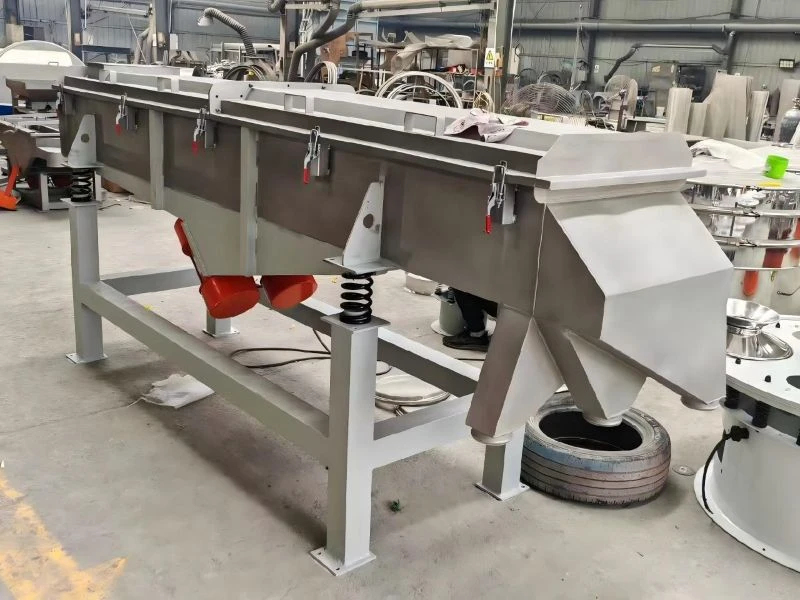
After reviewing the material, screening requirements and workshop layout, the project specified a YJZ-820-2 two-deck linear screen. Product-contact parts were stainless steel; the remaining supporting structure was carbon steel. A quick-release frame provided access to the screens.
Those specifications apply to this whole-cumin application. They should not be used to predict the capacity for fine chili powder or ground Sichuan pepper.
The cumin seed screening case study includes the full configuration.

What to Confirm Before Ordering
A quotation for a spice linear vibrating screen should describe both the machine being supplied and the conditions behind its stated performance.
Material Specifications
“Stainless steel machine” leaves too much open to interpretation. Identify the grade and the components it covers, along with the required material documentation.
Where necessary, agree on a verification method before delivery. Check that a lower price does not involve substituting materials for the grade you requested.
What the Mesh-Cleaning System Includes
Confirm the proposed cleaning method, whether it is included in the price, and how its components are inspected, cleaned and replaced.
An unsuitable arrangement can mean frequent stops and additional labor. Resolve these details before the machine arrives.
Access to Residue Traps
Pay attention to welds, frame edges, seal grooves and outlets. Ask for photographs or a video showing disassembly and access to these areas. Exterior machine photographs will not tell you much about the cleaning work involved.
The Basis of the Capacity Figure
The quoted capacity should identify the material, aperture and operating conditions. A short run on a clean screen can miss the gradual blinding that occurs during production.
Agree on throughput, finished-product requirements and acceptance methods before purchase.
Discuss Your Spice Screening Requirements
If you are considering a spice linear vibrating screen, contact Yuanjing Machinery with your spice type, required hourly throughput, target aperture and current screening problem.
For a line that handles several spices, include the product changeover and cleaning requirements as well. These details help us assess the configuration and identify what needs to be checked in a trial.
FAQ
Can a Spice Linear Vibrating Screen Handle Fine Chili Powder?
It may be suitable, depending on the aperture, flowability, moisture condition and adhesion. Use representative material to test sustained throughput. If fine powder keeps adhering to the mesh, compare ultrasonic assistance or another machine type.
Should I Choose 304 or 316L Stainless Steel?
304 is a common choice. Consider 316L where the product, cleaning chemicals, environment or customer specification requires greater corrosion resistance. Export use alone does not determine the grade.
How Do I Choose Between Bouncing Balls and Ultrasonic Cleaning?
Check what is causing the blockage. Bouncing balls may dislodge trapped particles; ultrasonic assistance may help with persistent fine-powder adhesion. Test the result and confirm compatibility with the proposed machine.
How Many Decks Are Needed for Coarse, Medium and Fine Fractions?
A conventional two-deck arrangement can produce three size streams. The final configuration also depends on the specified size ranges, acceptable carryover and cleaning requirements.
What Information Should I Provide for a Quotation?
Send the spice name and physical form, target aperture or finished-product specification, hourly throughput, bulk density and any moisture or adhesion concerns. Include the required fractions, power supply and available installation space. If you are investigating an existing problem, photographs of the powder and screen retentions are useful.