Industrial Flour Sieve Types: Which Screening Machine Is Best for Flour Processing?
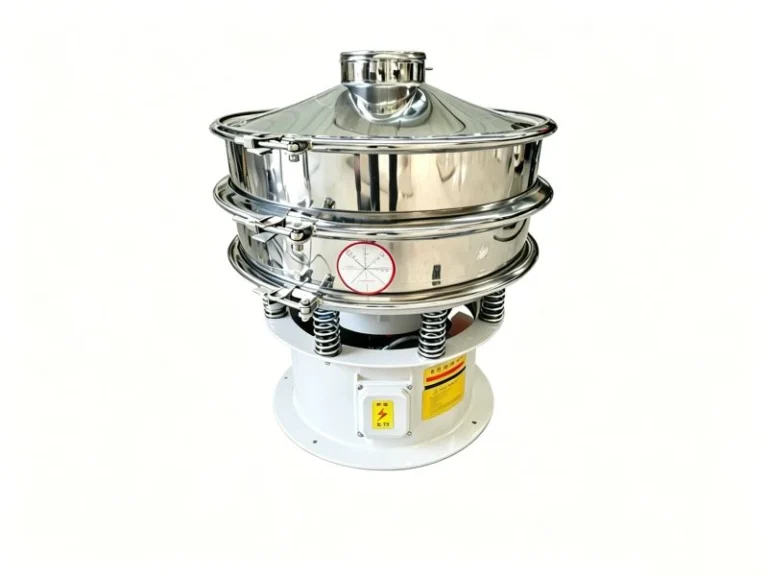
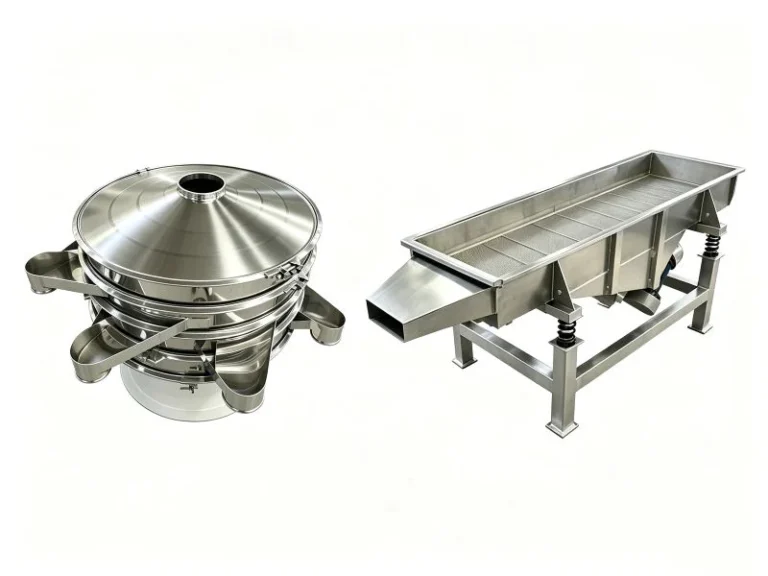
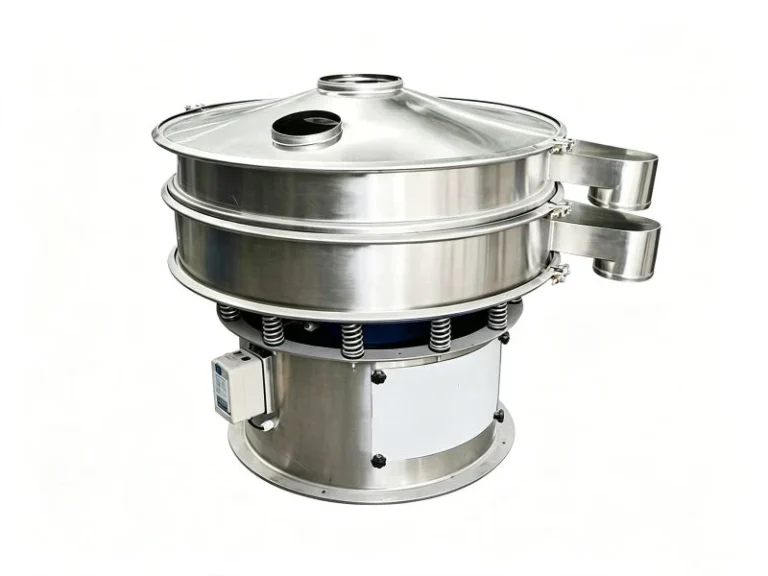
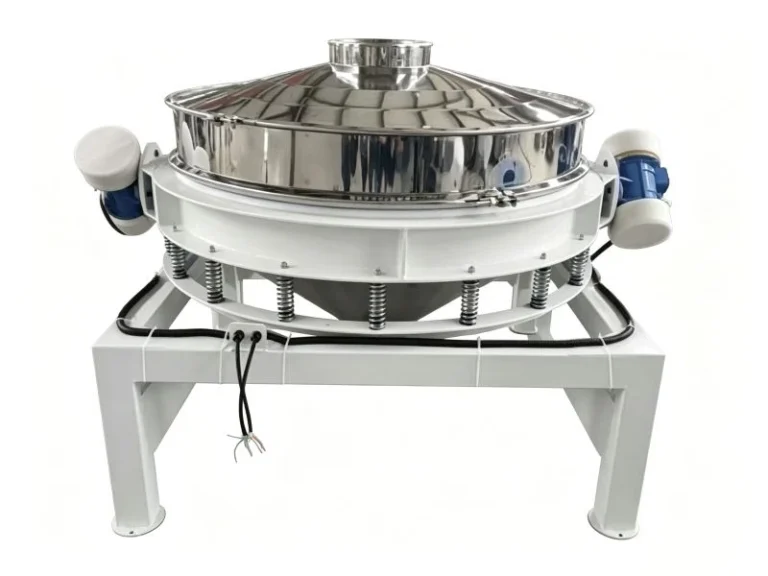
Industrial flour sieves are used in food factories and flour production lines for fine and safe screening and inspection of flour, improving the quality of materials before packaging. Different screening equipment is selected for different application scenarios and requirements. The most common types are inline vibratory screens and rotary vibratory screens. Inline vibratory screens for flour have a compact structure and are easy to operate, making them an ideal choice for continuous flour screening. In contrast, vibrating screens for flour provide precise separation and high capacity for demanding flour processing production lines.
Why Is an Industrial Flour Sieve Important in Flour Processing?
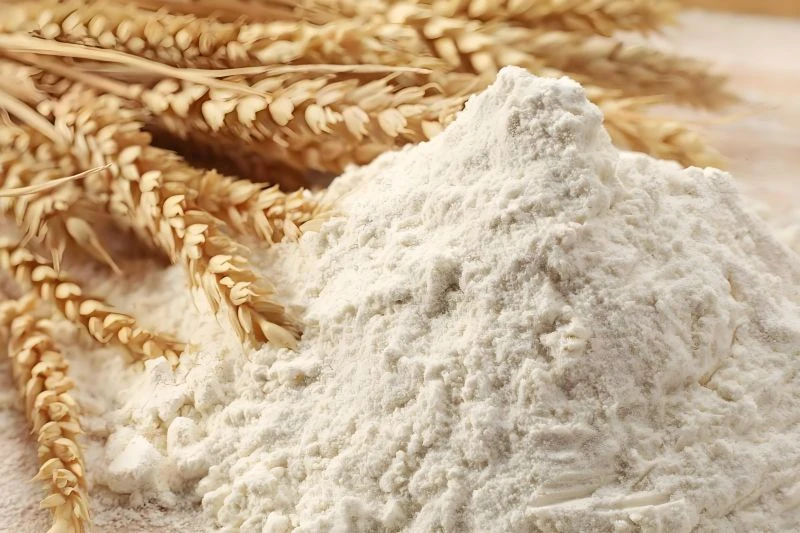
In flour production, screening is an essential step to control particle size, remove impurities, and improve final product consistency. An industrial flour sieve helps separate fine flour from oversized particles and ensure consistency of finished powder products.
Improve Flour Quality and Particle Size Control
A suitable industrial flour sieve provides accurate separation based on different mesh sizes. It helps maintain uniform flour fineness, which is important for baking, food manufacturing, and other flour-based applications.
Remove Lumps and Unwanted Particles
During handling and storage, flour may form small lumps or contain unwanted materials. A stainless steel flour sifter machine helps remove these particles while supporting cleaner and more hygienic production.
Improve Screening Efficiency
For large-scale flour processing, a high-capacity industrial flour sieve provides continuous operation, reduces manual work, and helps maintain consistent output quality.
Types of Industrial Flour Sieve Machines
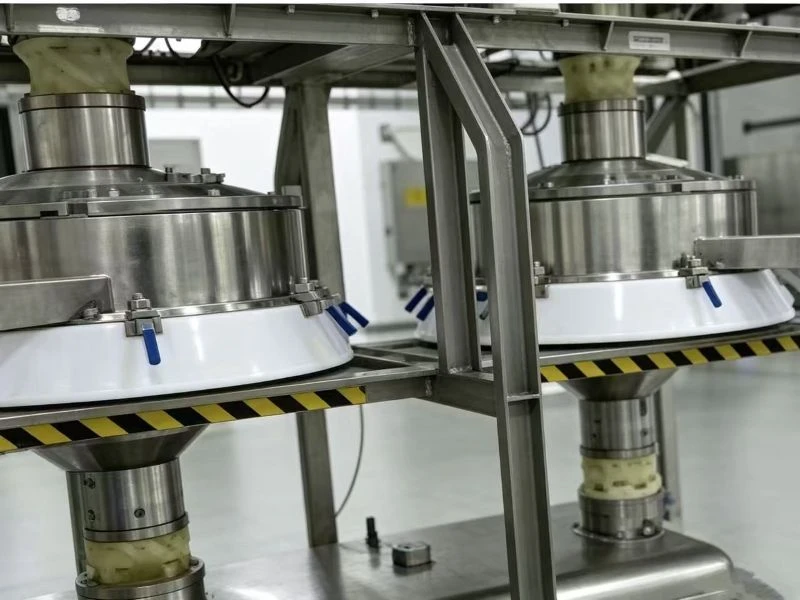
Flour Inline Vibratory Screen
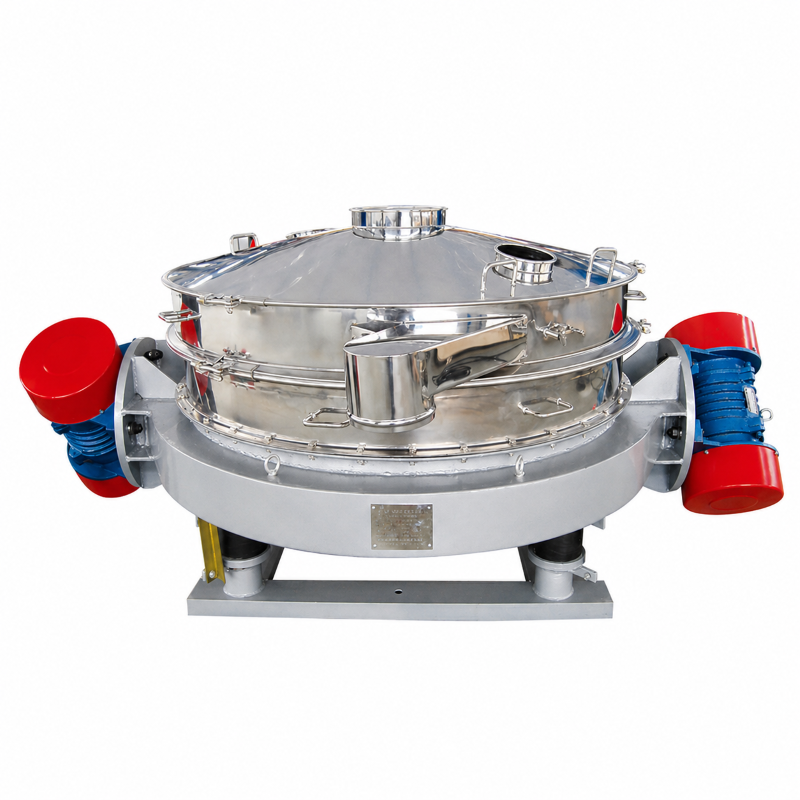
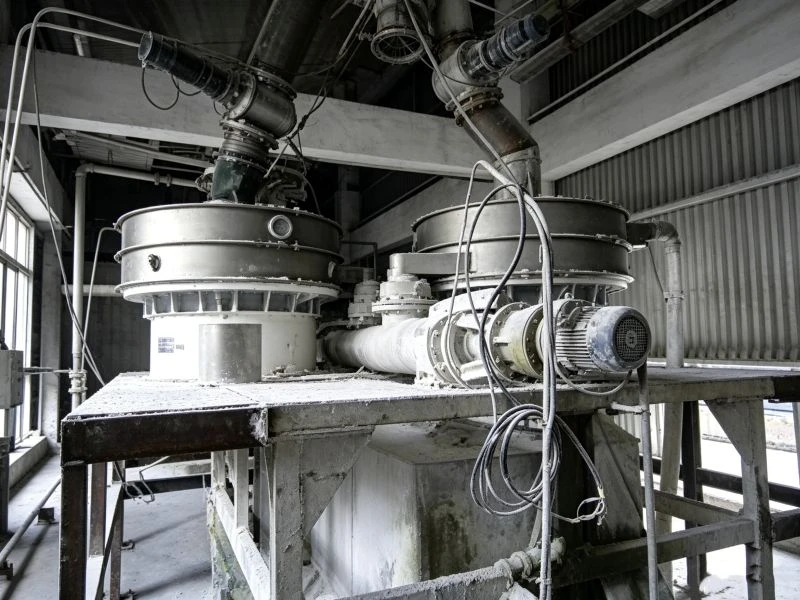
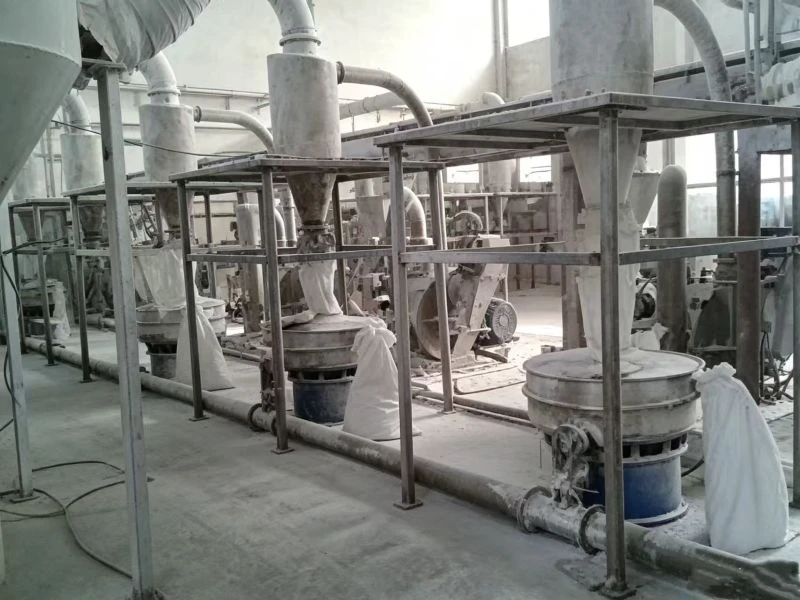
Primarily used for removing lumps, foreign objects, and contaminants from flour, typically with an impurity content of around 5%, this screen is ideal for large-scale powder screening. The advantages of using this type of screen are: because the inline vibratory screen has inlet and outlet in the same vertical direction, it employs a direct discharge method. The sieved flour passes directly through the screen and exits through the outlet below, resulting in fast screening and rapid discharge. Therefore, it is suitable for high-volume, coarse material screening, with a capacity of up to 30 tons per hour.For continuous flour screening, read our guide to selecting an inline flour screening machine based on mesh size, required capacity and production-line configuration.
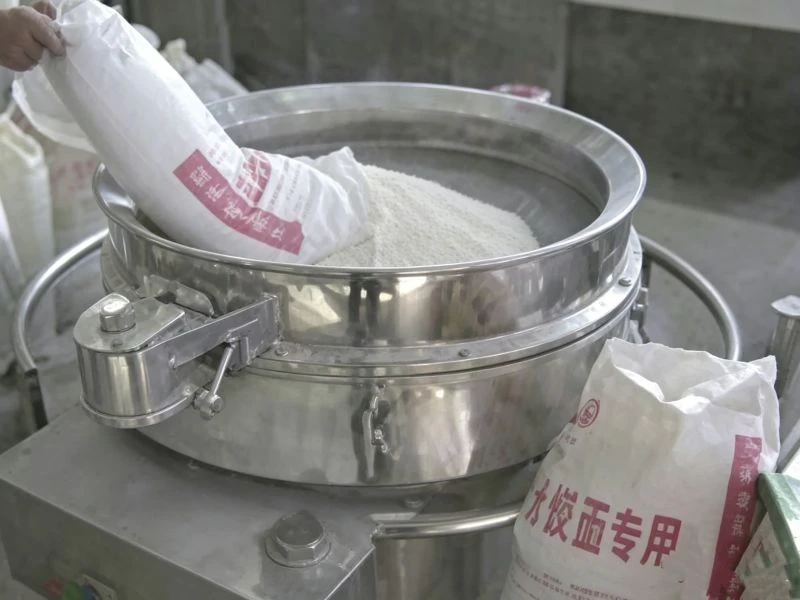
Flour Rotary Vibrating Screen
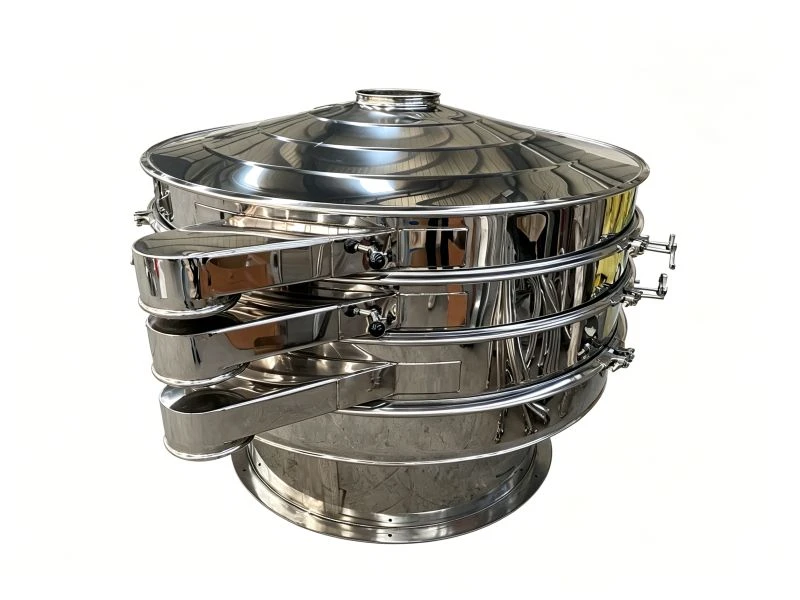
This screen removes lumps, threads, and other impurities from powder, meeting basic food safety requirements. It also grades flour to different fineness levels by increasing the number of screen layers. The advantages of this type of screen are that it simultaneously removes impurities and grades the flour. Secondly, although its output is not high (100-3300 kg/hour), it offers high sieving accuracy, generally capable of sieving powdery materials up to 500 mesh.
Flour Inline Vibratory Screen vs Flour Rotary Vibrating Screen: Which One Is Better For Vibrating Flour Sieve?
Flour Inline Vibratory Screen
1. High Capacity
Direct-flow feeding with no backlog; output significantly higher than vibrating screens of the same specifications, suitable for large-scale continuous production.
2. Suitable for Production Lines
Low-profile design allows direct connection to powder pipelines, eliminating the need for intermediate hoppers.
3. Easy Maintenance
Single-layer screen and snap-fit structure allow for quick screen replacement and cleaning, resulting in a low failure rate.
4. Stable Continuous Coarse Screening
Vertical high-frequency vibration breaks up agglomerates, quickly discharging coarse impurities and preventing material accumulation during long-term operation.
5.Energy-Saving and Space-Saving
Small footprint and low-energy vibrating motor meet the environmental protection requirements of modern enterprises.
Flour Rotary Vibrating Screen
1. High Sieving Precision
Three-dimensional vibration effectively removes insect eggs, bran flakes, and other fine impurities. Suitable for high-mesh fine flour, it can perform multi-level grading, producing various grades of flour in one machine.
2. Anti-clogging and Stable Sieving
The spiral dispersion of materials prevents clumping. Combined with a screen cleaning device, even slightly damp flour is less likely to clog the screen, resulting in low frequency of cleaning shutdowns during continuous sieving.
3. Sealed, Dust-Free, and Low-Loss
The fully sealed structure eliminates dust, minimizing flour loss. Mirror polishing eliminates dead corners, meeting food production hygiene standards.
4. Flexible Adaptability
Adjustable vibration amplitude and speed adaptable to high-gluten, low-gluten, and mixed grain flours, accommodating various needs such as dispersing, impurity removal, and fine filtration.
5. Better Finished Product Appearance
Thorough impurity separation removes even deeply embedded fine foreign objects, making it ideal for refining and improving the quality of finished flour.
Both the Inline Vibratory Screen and the Rotary Vibrating Screen have their own advantages and applications in flour impurity removal. When making a selection, it is necessary to consider specific production requirements, material characteristics, and screening performance requirements comprehensively. If throughput is a priority, choose the Inline Vibratory Screen; if product fineness is a priority, choose the Rotary Vibrating Screen.
Related Videos
What Mesh Size Is Used for Flour Screening?
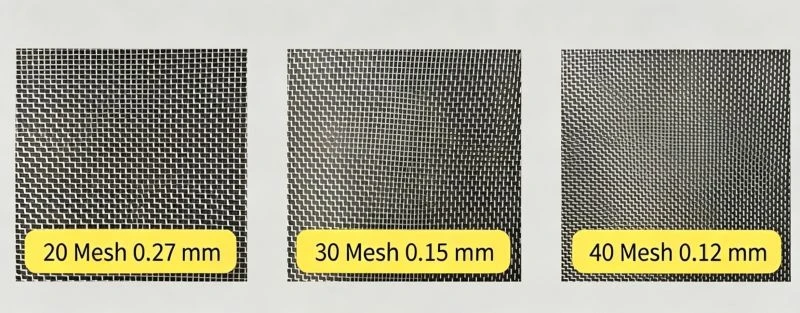
Flour screening mesh is selected according to flour type and final product requirements rather than a fixed standard. In typical industrial applications, 20 to 140 mesh is commonly used.
Coarse sieve (removes bran, lumps, and coarse/medium flour)
20–40 mesh separates large pieces of bran and lumps of flour after milling; used as the initial sieve after a roller mill.
Whole wheat/mixed grain flour
40–60 mesh retains fine bran particles that meet whole grain standards; finer meshes will filter out nutrient-rich bran, affecting product texture.
Medium sieve (separates all-purpose flour and general-purpose flour)
40–80 mesh is the standard mesh for common wheat flour and household general-purpose flour; separates fine all-purpose flour from small bran particles, and is the most commonly used mesh in small and medium-sized flour mills.
Extra-fine flour (refined flour for pastries, dumplings, and bread)
100–140 mesh is ultra-fine refined flour, suitable for baking, cakes, and high-gluten specialty flours; requires the use of a mesh cleaning ball or ultrasonic system to prevent clogging.
How to Choose the Right Industrial Flour Sieve?
The selection of a industrial flour sieve primarily depends on the equipment’s production capacity, the type of flour, hygiene requirements, and operating and maintenance costs.
Consider Production Capacity
The first step is to confirm the required flour sieve capacity based on hourly output and production line layout. For continuous processing, an industrial flour screening system should Match other equipment in the production line
Select the Correct Mesh Size
Mesh selection depends on final flour fineness and application requirements. Different flour sieve mesh sizes directly affect particle distribution and product consistency, so it should be defined according to the end-use of the flour.
Food-Grade and Hygienic Requirements
For food production, equipment must meet sanitary standards. A stainless steel flour sieve is commonly used to ensure corrosion resistance and compliance with food processing requirements.
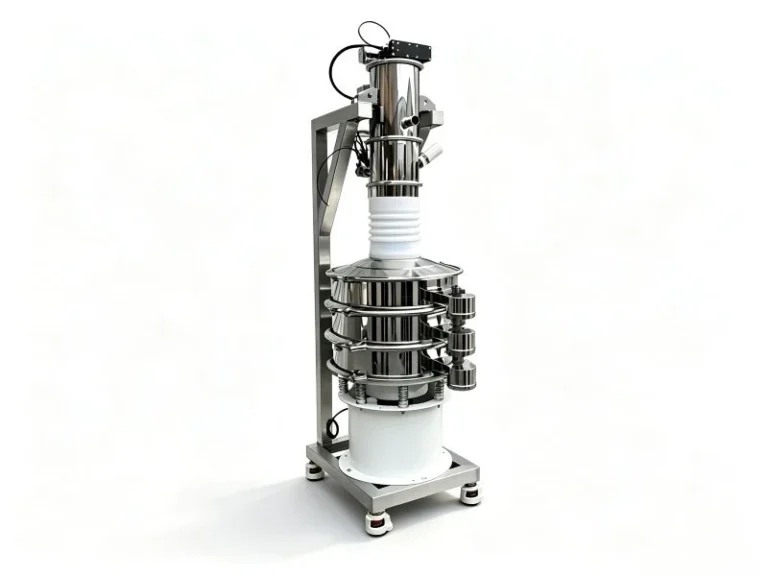
In one flour processing project, we combined a dust-free feeding station, inline vibratory screen, and vacuum conveyor into a complete flour screening and conveying system.
Operation and maintenance costs
The screening equipment parts are durable, reducing the frequency of parts replacement, minimizing downtime losses, and saving on later maintenance costs.