Applications of Ultrasonic Vibrating Sieve in Fine Powder Screening
In industries where precision is of the utmost importance, ultrasonic vibrating screen technology offers a groundbreaking solution. This article will explore the applications of ultrasonic vibrating screens in the field of fine screening:
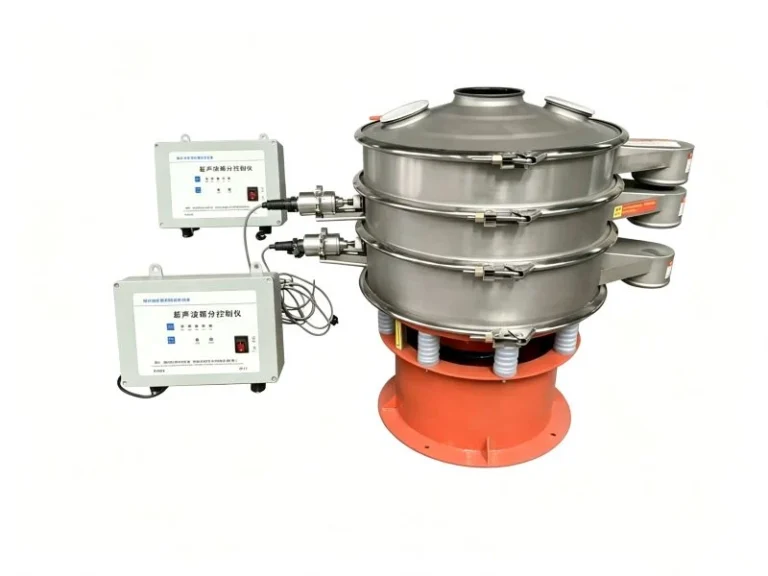
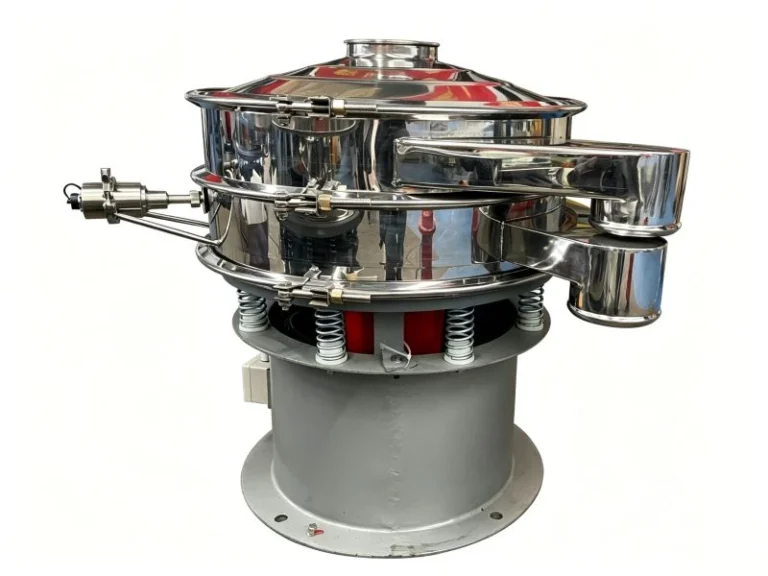
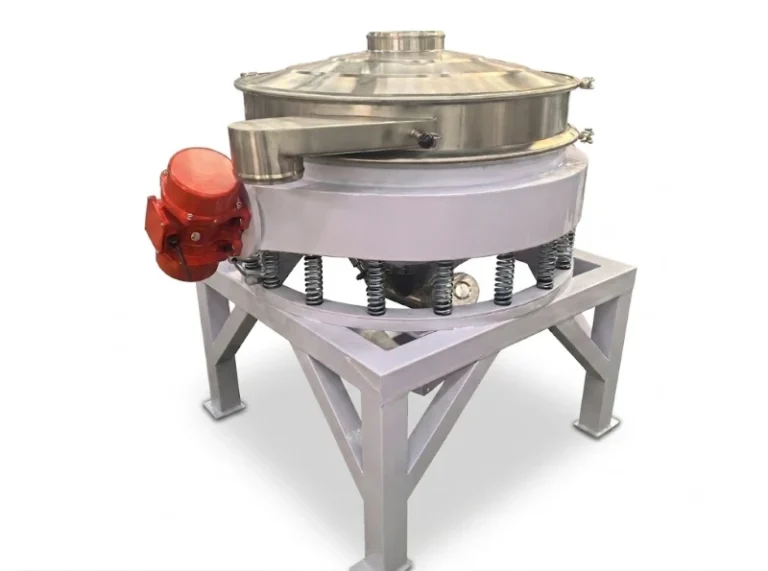
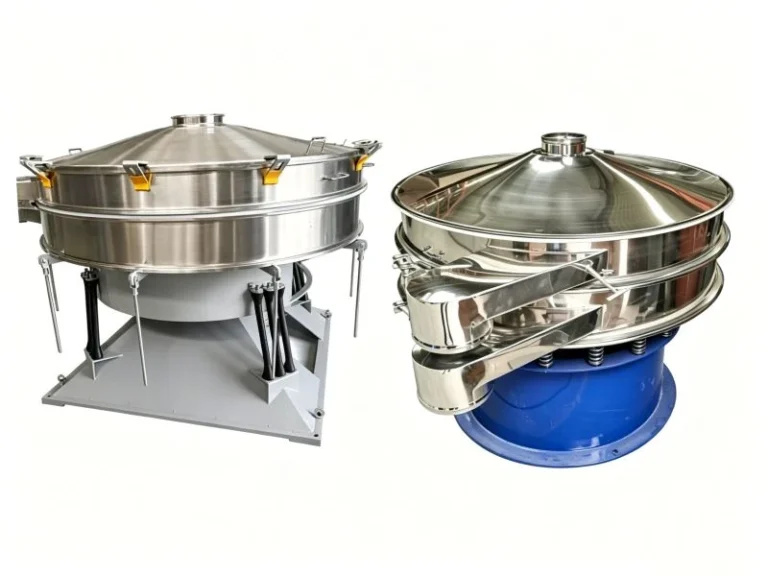
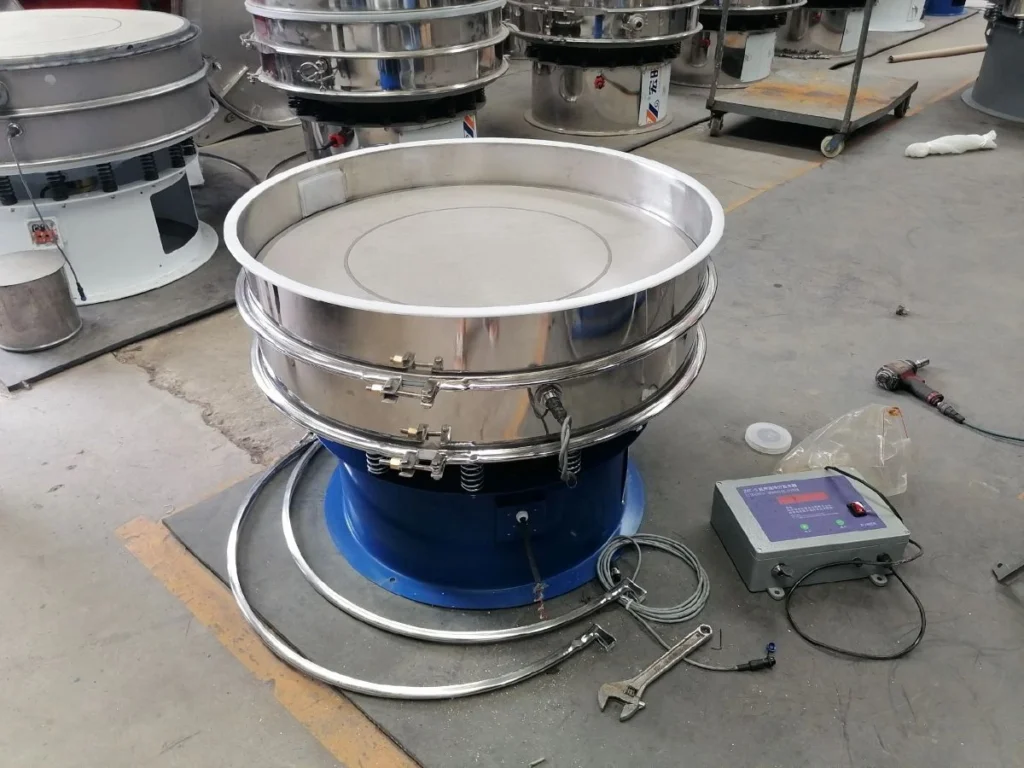
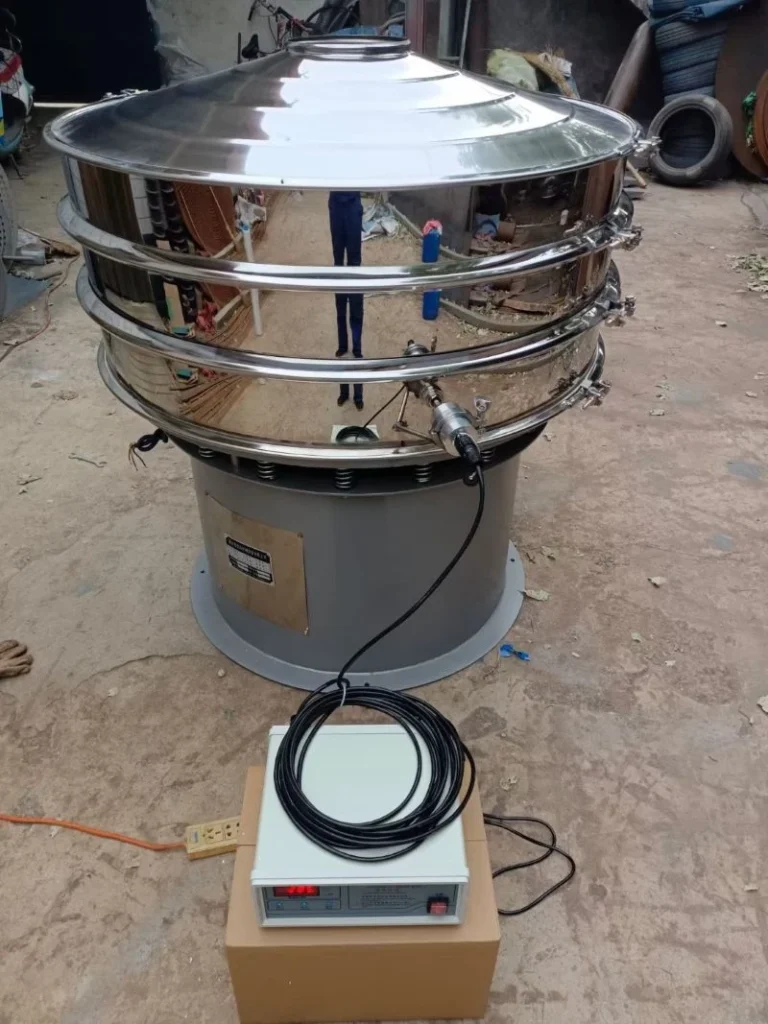
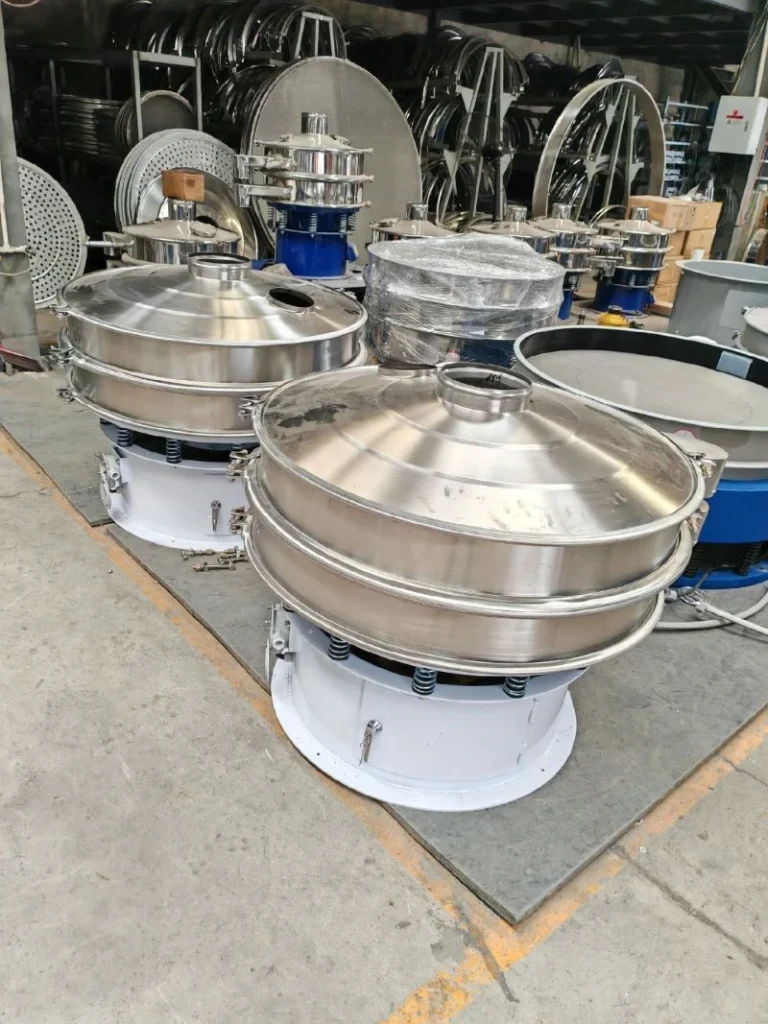
An ultrasonic vibrating sieve is a screening device that superimposes high-frequency ultrasonic energy onto a traditional vibrating screen. It is primarily used to address problems such as screen clogging and reduced efficiency when screening fine and ultrafine powders. In the chemical, food, pharmaceutical, and new materials industries, this equipment is commonly used to improve screening stability and throughput. It is suitable for applications requiring high precision and continuous production.
How Ultrasonic Vibrating Sieve Works
Basic vibration
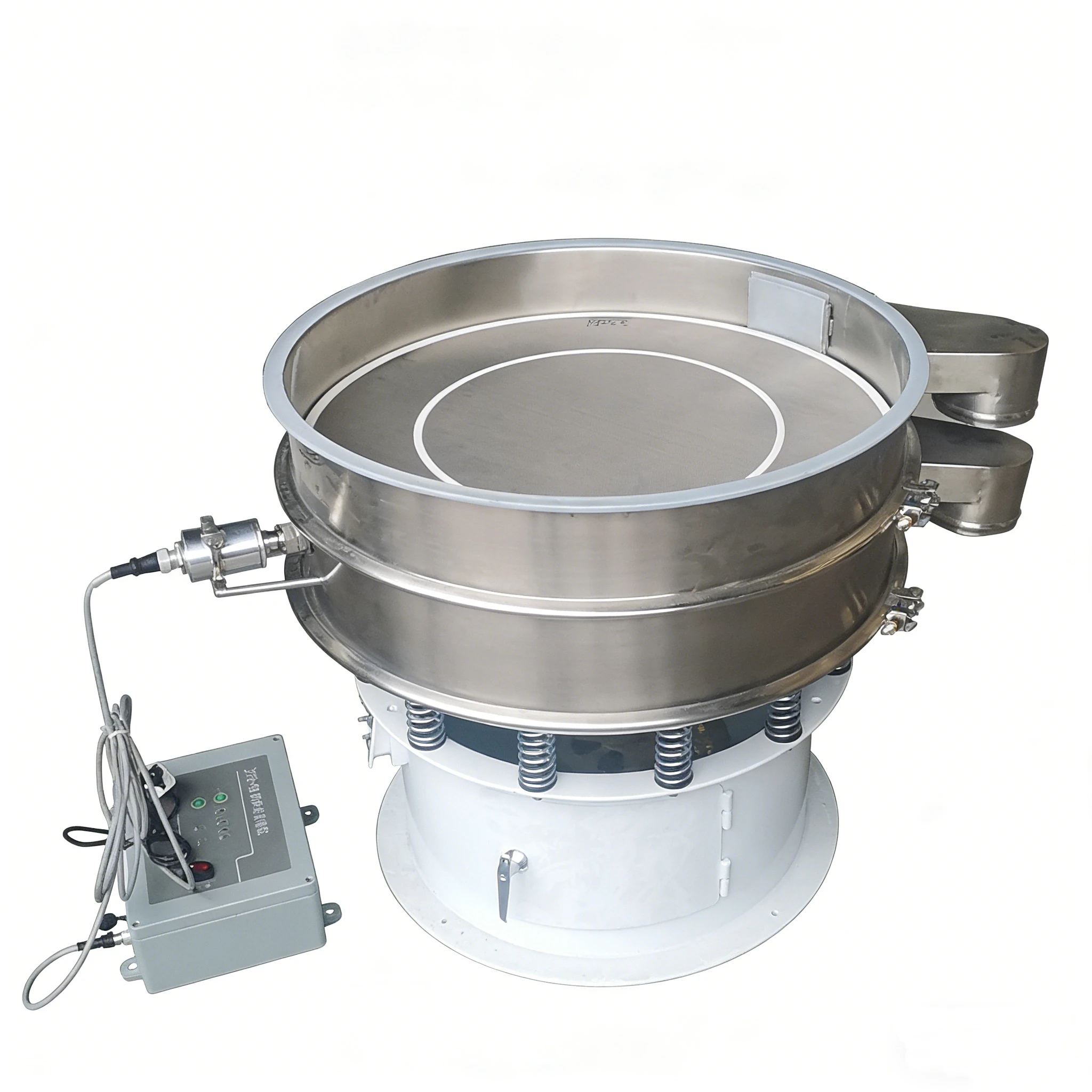
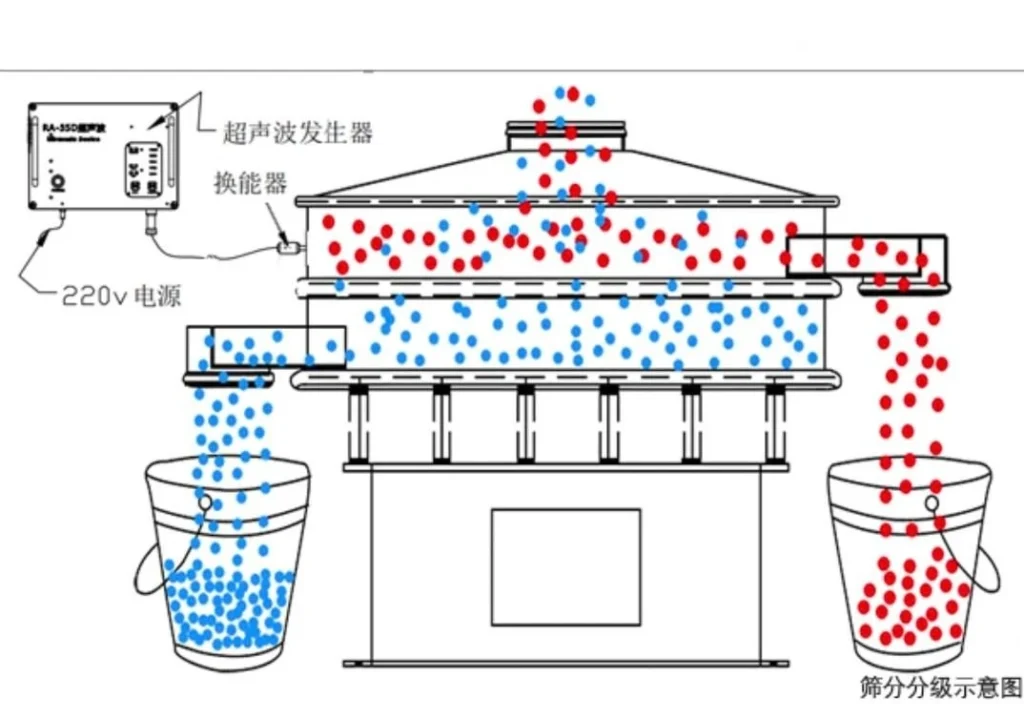
The eccentric block driven by the vibration motor generates conventional circular/linear vibration, which makes the material evenly dispersed on the screen surface.
Ultrasonic vibration
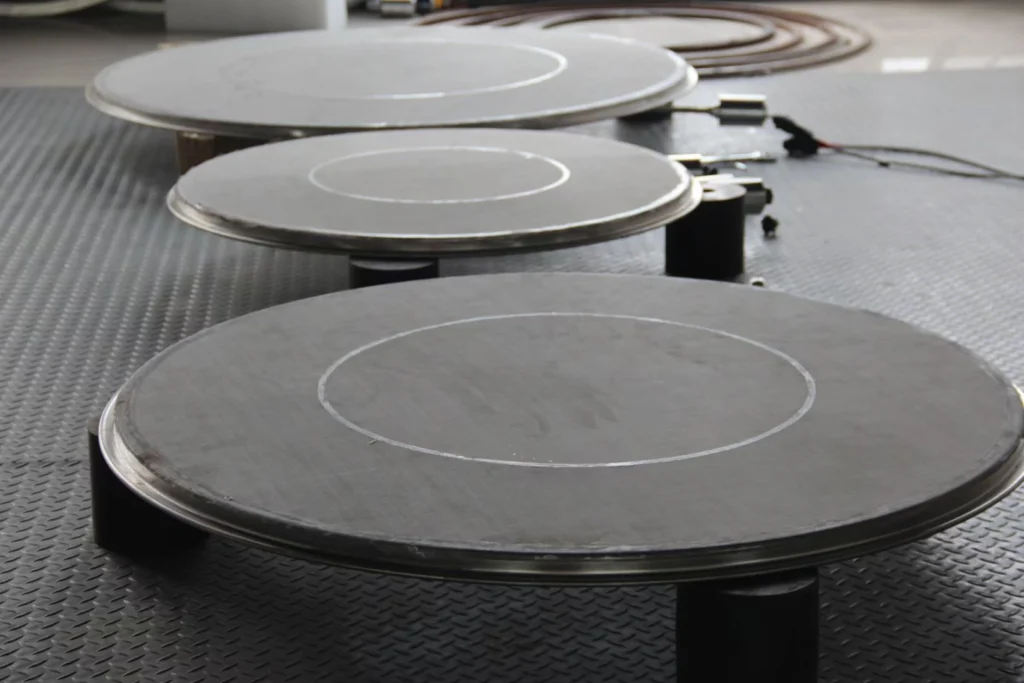
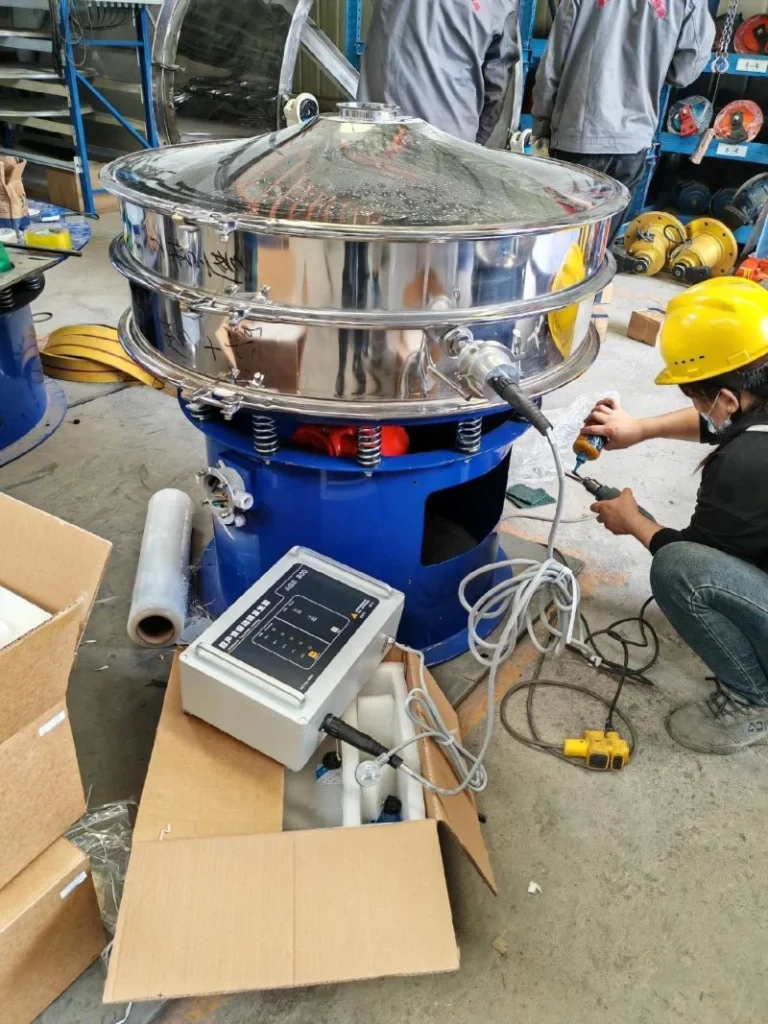
Electrical energy is converted into high-frequency vibration (usually 20-40KHz) by an ultrasonic generator, and then transmitted to the screen through a transducer, causing the screen to generate micron-level high-frequency vibration.
Blockage-Prevention Screening Logic
With a high-frequency vibration rate of up to 36,000 cycles per second, this system rapidly breaks up material clumps while keeping particles at the screen openings in a “suspended” state. This prevents fine powders from becoming trapped in the screen openings due to static electricity or adhesion, ensuring efficient material passage through the screen.
Why is fine powder sieving so difficult in industrial production?
Micron-scale particles tend to exhibit strong cohesion, static electricity, and agglomeration, which often result in poor flowability and unstable screening performance. As a result, mesh clogging and reduced throughput are common issues in traditional sieving systems.
Screen Clogging Caused by Fine Particles
Due to their small particle size and large specific surface area, fine powders can easily become trapped in the mesh openings or accumulate on the screen surface, causing blockage and restricting material flow.If mesh blockage occurs repeatedly, learn more about the causes of fine powder screen blinding and how to prevent it.
Static Electricity and Particle Adhesion
Fine powders are prone to generating static electricity, causing particles to adhere to each other or to the screen mesh. This can lead to agglomeration and reduced screening efficiency.
Low Throughput and Unstable Output
Fine powders generally have poor flowability and slow screening rates. In addition, screening performance is easily affected by moisture content and particle size distribution, resulting in low throughput and unstable output.
To overcome these limitations, ultrasonic vibrating sieve technology has emerged as an effective solution for high-precision fine powder screening.
Ultrasonic Vibrating Sieve Advantages in Fine Powder Screening
In fine powder screening applications, materials with small particle sizes and large specific surface areas are prone to agglomeration, adhesion, and screen clogging, which directly affect screening efficiency and stability. Ultrasonic vibrating screens introduce high-frequency vibrations to the screen surface, effectively improving material dispersion and making the fine powder screening process more controllable. They are suitable for production scenarios that demand both precision and high throughput.
1. High screening efficiency allows for a reduction in the number of equipment units required for the same throughput, thereby improving overall capacity utilization.
2. Effectively reduces the frequency of screen clogging and cleaning, minimizes fine powder adhesion, and increases the pass rate, ensuring continuous and stable operation.
3. Suppresses particle agglomeration and improves material dispersion, making the screening process smoother and more controllable.
4. Maintains stable precision even under high-mesh screening conditions, ensuring consistent product quality.
5. Reduces the risk of secondary contamination caused by material exposure to the external environment, enhancing the cleanliness of the production process.
6. Offers excellent adaptability to ultra-light powders and materials prone to static electricity, resolving challenges associated with traditional screening methods. resource reuse.
Applications in Different Fine Powder Materials
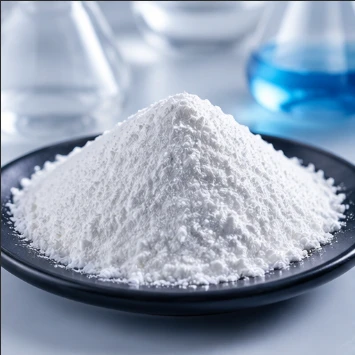
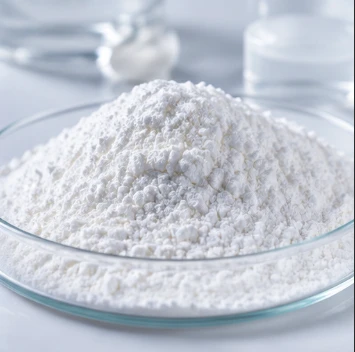
During the screening of various fine powders, significant differences in material properties—such as particle size distribution, flowability, moisture content, and electrostatic properties—can all affect screening performance. Ultrasonic vibrating screens improve the movement of particles on the screen surface, ensuring stable screening performance under a wide range of complex operating conditions. They are suitable for fine powder classification and impurity removal across multiple industries.
Chemical Powders
Suitable for the fine classification of materials prone to agglomeration, such as resin powders and catalysts.
Food Powders
Can be used for screening materials such as starch and powdered sugar, reducing the impact of caking on throughput.
Pharmaceutical Powders
Meets screening requirements for applications with high demands on particle size uniformity and impurity control.
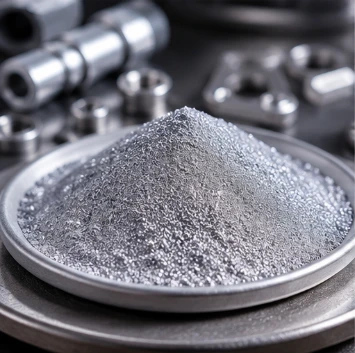
Metal Powders
In the screening of ultrafine metal powders, it helps reduce interference caused by static electricity and agglomeration.
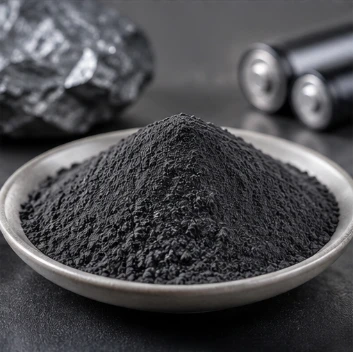
New Materials Powders
Suitable for applications requiring high screening precision, such as graphite and lithium-ion battery materials.
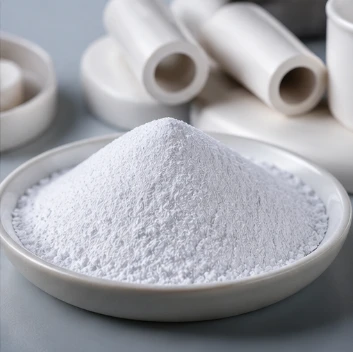
Ceramic Powders
Suitable for the high-precision screening of alumina, silica, and other fine ceramic materials, improving particle size consistency and reducing oversized impurities.

How to Choose the Right Ultrasonic Vibrating Sieve
During the selection process, the suitability of an ultrasonic vibratory separator directly affects screening efficiency, stability, and operating costs. When purchasing, it is important to evaluate the following factors to avoid reduced efficiency caused by mismatched specifications.
Material Properties
Determine whether an ultrasonic system is required and its power configuration based on particle size range, viscosity, moisture content, and electrostatic properties.
Screening Precision
Select the appropriate mesh size and screening structure based on target particle size requirements.
Throughput Requirements
Determine the equipment diameter, number of layers, and power configuration based on production line capacity.
Equipment Materials
Select the appropriate stainless steel grade and surface treatment method based on industry standards (e.g., food, pharmaceutical).
On-site Conditions
Consider the actual operating environment, including spatial layout, power supply conditions, and explosion-proof or sealing requirements.
Maintenance and Costs
Evaluate the replacement cycles of wear parts, energy consumption levels, and overall operating costs.
The following are reference data on the application of ultrasonic vibrating screens in various industries (compiled based on common operating conditions), provided for comparison purposes:
| Industry / Material | Mesh Size | Capacity (kg/h) | Pass Rate (Before) | Pass Rate (After) | Blinding Reduction | Notes |
| Chemical (Resin Powder) | 200 mesh | 300–500 | 70%–80% | 90%–95% | Significant | Agglomeration reduced |
| Food (Starch) | 120 mesh | 500–800 | 75%–85% | 92%–97% | Nearly eliminated | Slight moisture |
| Pharmaceutical (Herbal Powder) | 300 mesh | 100–200 | 65%–75% | 88%–93% | Significant | High precision required |
| Metal (Nickel Powder) | 325 mesh | 80–150 | 60%–70% | 85%–90% | Reduced | Static tendency |
| New Materials (Graphite) | 400 mesh | 50–120 | 55%–65% | 80%–88% | Reduced | Ultra-fine powder |
Conclusion
In the field of fine powder screening, ultrasonic vibrating screens are primarily used to address issues such as screen clogging, agglomeration, and inconsistent throughput—problems that are difficult to resolve in traditional screening processes. By incorporating high-frequency vibration, these screens deliver more stable performance during high-mesh screening and under complex powder processing conditions. They are ideal for industries with strict requirements for particle size distribution, product quality, and continuous production. If you are looking to optimize your screening process or are facing challenges with difficult-to-screen powders, please contact us immediately. Our team is ready to help you find the most efficient and cost-effective screening solution.