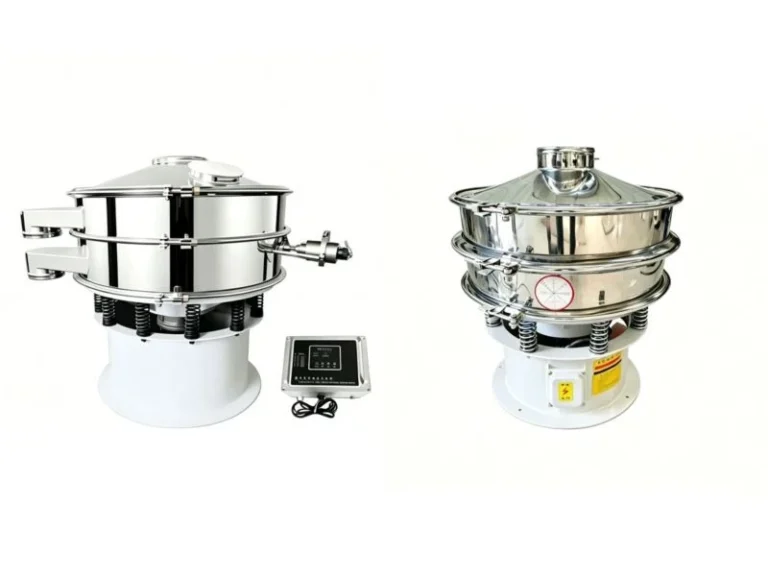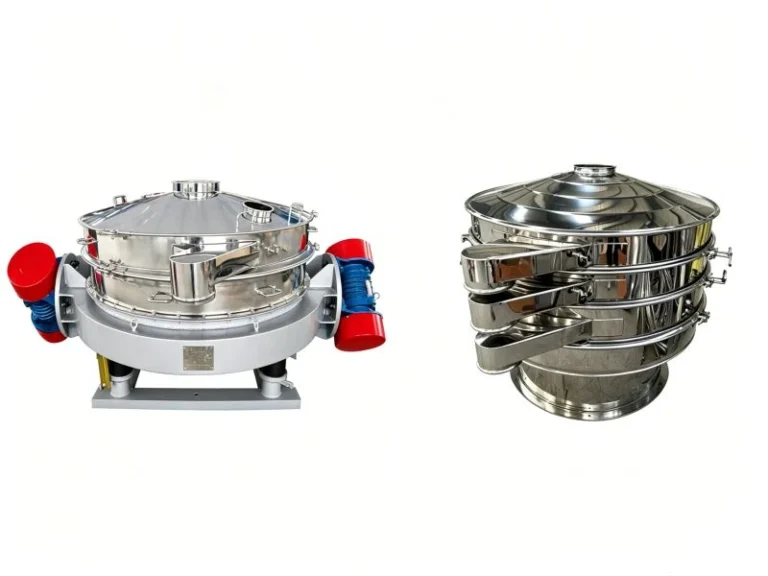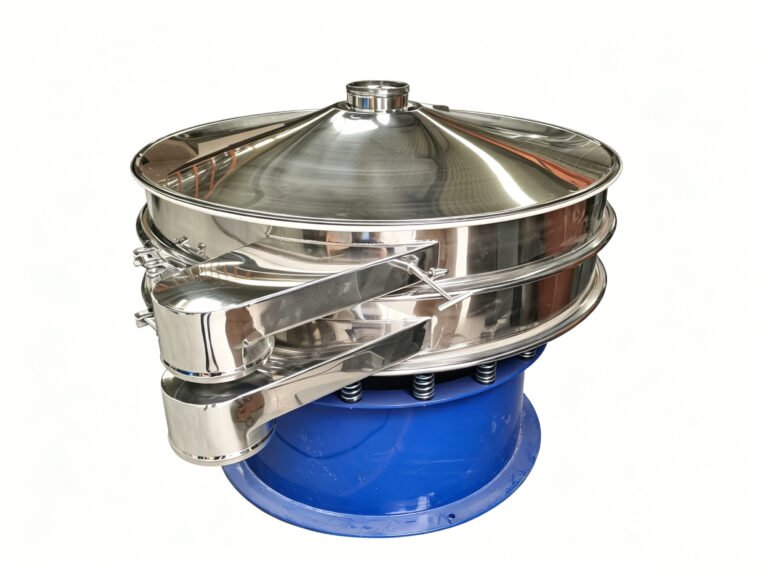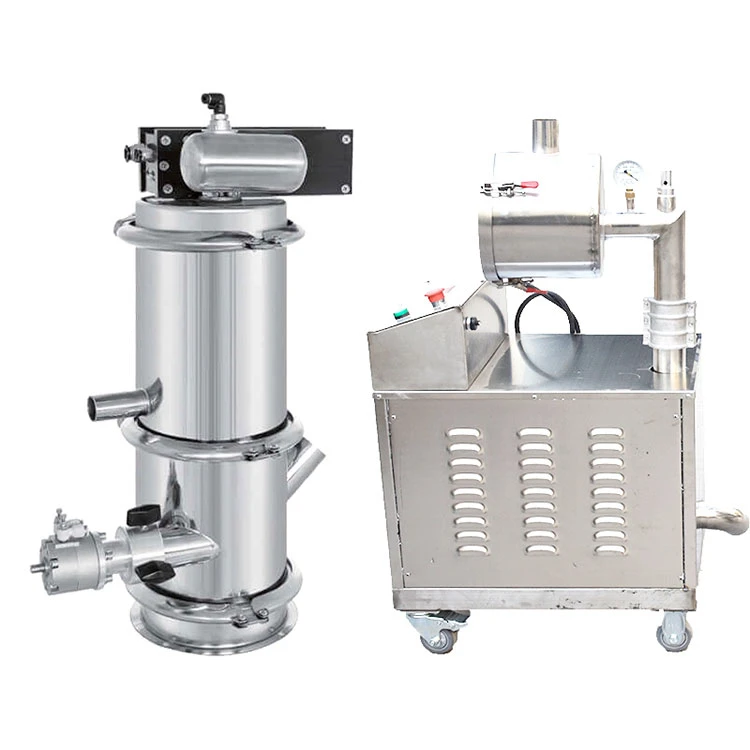
Vibro Sifter for Salt Classifying
Introduction
Salt processing requires accurate classification to ensure consistent particle size and product quality. A vibro sifter for salt classifying is commonly used in salt production lines to separate different salt grades with high accuracy. Compared with traditional screening methods, a modern salt screening machine provides higher accuracy, better capacity, and easier operation. It is suitable for applications such as sea salt processing, food grade salt production, and industrial salt classification. With stainless steel construction and flexible mesh options, a vibro sifter helps manufacturers achieve clean, uniform, and high-quality salt products while improving overall production efficiency.

Why Use a Vibro Sifter for Salt Classification?
A industrial vibro sifter for salt classifying improves salt grading accuracy, production efficiency, and product consistency. It is commonly used in sea salt processing, food grade salt production, and industrial salt classification to separate different salt particle sizes.
Improve Salt Grading Accuracy
A salt screening machine uses vibration and different mesh sizes to separate fine salt, coarse salt, and other grades. It helps achieve uniform particle size and improves salt quality.
Increase Processing Efficiency
A high capacity salt screening machine supports continuous operation and large-volume production. Multi-deck designs allow multiple salt grades to be screened at the same time, improving production efficiency.
Ensure Clean and Reliable Screening
A stainless steel vibro sifter for salt provides corrosion resistance and easy cleaning. It is suitable for food grade salt applications where hygiene and product purity are important.
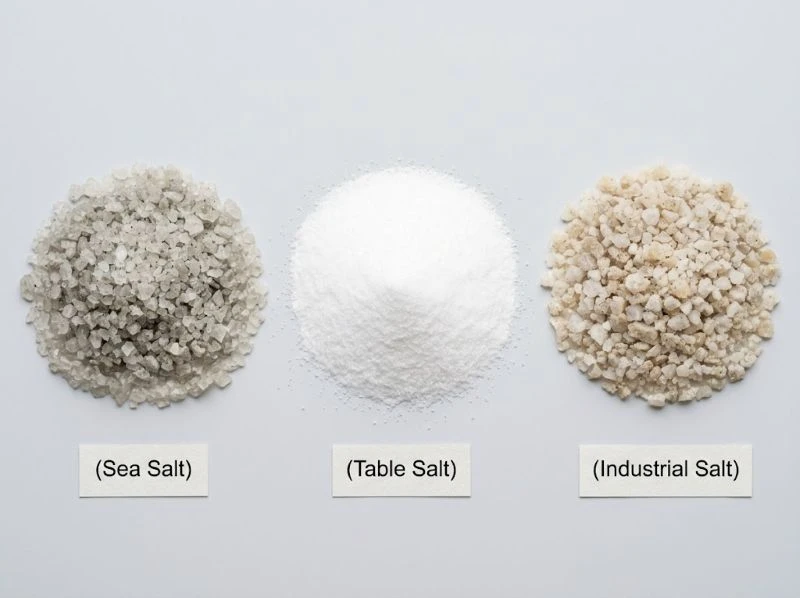
What type of Vibro Sifter is used for salt classification?
Impurity Removal
Impurity removal for salt typically takes place at the vibrating screen located after the drying bed; the equipment used is generally a linear vibrating screen.
Grading
A vibro sifter for salt classifying is selected based on salt type, particle size, and production requirements. Different screening structures can be used for salt impurity removal and grading processes.
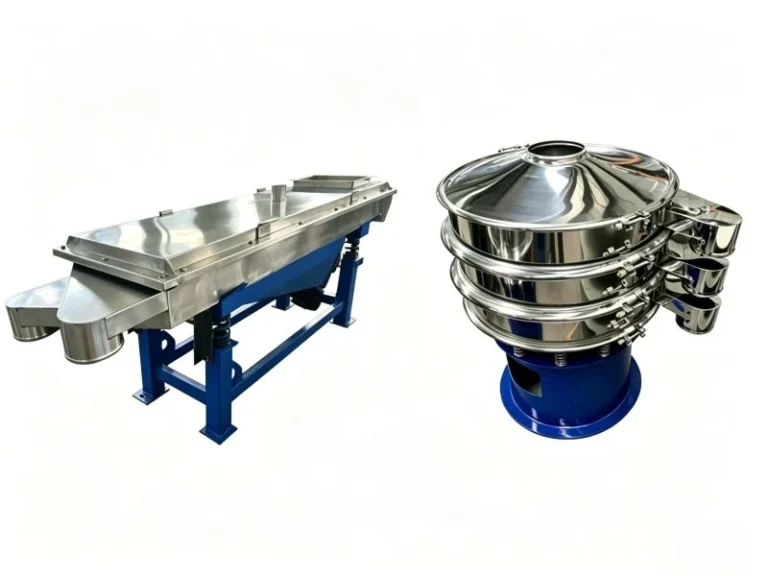
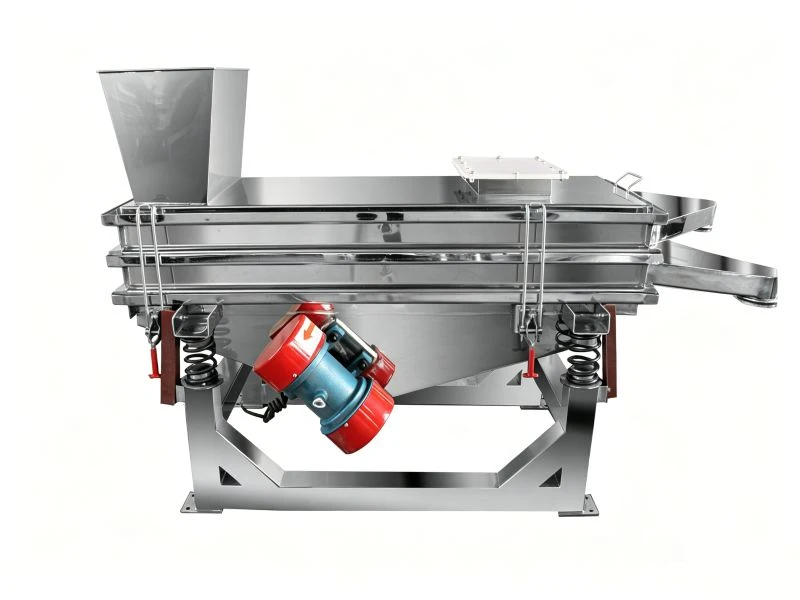
Linear Vibrating Screen for Salt Classification
Material is fed evenly into the screen’s inlet from a feeder. A vibro sifter for salt classifying with multi-layer screens can separate different salt grades, oversized particles, and undersized rejects through separate outlets, enabling automated operation within production lines.
Features of the Linear Vibrating Screen for Salt Screening
1. Low noise and easy maintenance.
2. Well-designed structure; sturdy and durable.
3. Excellent dewatering performance; safe and reliable.
4. High processing capacity and screening efficiency.
5. Lightweight and easy to disassemble; convenient maintenance; no risk of sudden spring breakage.
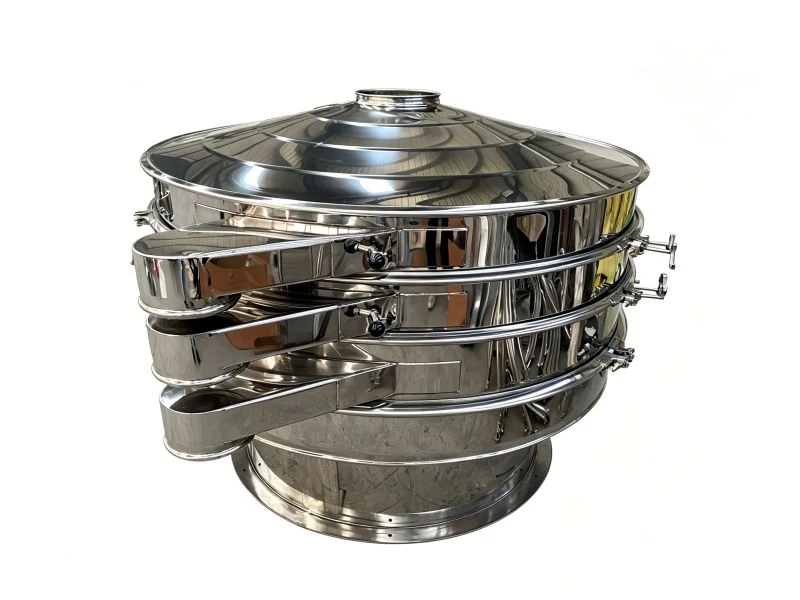
Rotary Vibrating Screen for Salt Classification
The 3D rotary vibrating screen utilizes a vertical motor as its vibration source. Eccentric weights mounted on both the upper and lower ends of the motor convert its rotary motion into a three-dimensional movement—comprising horizontal, vertical, and inclined components—which is then transmitted to the screen surface. This causes the material to move across the screen in an expanding involute pattern. By adjusting the phase angle of the upper and lower weights, the material’s movement trajectory on the screen surface can be altered, enabling effective material screening.
Features of the Rotary Vibrating Screen for Salt Classification
1. Compact size, lightweight, and easy to move.
2. High screening precision and efficiency.
3. No screen clogging; no dust emission.
4. Durable screen; quick and easy screen replacement (takes only 3–5 minutes).
5. Simple operation, easy cleaning, and low maintenance.
How to Choose the Right Vibro Sifter for Salt Classifying?
Choosing the right vibro sifter for salt classifying depends on salt particle size, production capacity, and processing requirements. A suitable salt screening machine can improve screening efficiency and ensure stable product quality.
Select the Right Screen Mesh Size
Different salt products require different mesh sizes, such as 20 mesh, 40 mesh, 60 mesh, and 100 mesh. Choosing the correct salt screening mesh size helps separate fine salt and coarse salt more accurately.
Match the Capacity with Your Production Needs
The machine capacity should match your salt production line. For small scale salt processing, a compact vibro sifter is suitable. For industrial salt production, a high capacity salt screening machine can provide continuous and stable operation.
Choose Food Grade Stainless Steel Design
For food salt applications, a stainless steel salt sifter with easy cleaning and corrosion resistance is a better choice. A sanitary vibro sifter helps maintain product purity and meets food processing requirements.
Applications of Vibro Sifter in Salt Processing Industry
A vibro sifter for salt classifying is widely used in different salt processing applications. It helps separate salt particles by size, improve product quality, and meet the needs of food and industrial production.
Sea Salt Classification
A sea salt screening machine is used to separate coarse sea salt and fine sea salt into different grades. It helps salt producers achieve uniform particle size for premium salt production.
Food Grade Salt Screening
A food grade salt sifter is suitable for table salt, cooking salt, and iodized salt production. The stainless steel design ensures clean screening and helps maintain salt purity during processing.
Industrial Salt Classification
An industrial salt screening equipment is used for applications such as chemical industry salt, water treatment salt, and deicing salt. It provides stable screening performance for large-scale salt processing.
Case Study: Vibro Sifter Used for Salt Classification
| Salt Type | Screening Mesh Size | Capacity | Screening Machine Type | Equipment Model |
| Coarse Salt | 4/10 mesh | 4 t/h | Linear Vibrating Screen | YJZ-1020-2S |
| Sea Salt | 10/20/30 mesh | 4 t/h | Linear Vibrating Screen | YJZ-1025-3S |
| Table Salt | 40/60 mesh | 2000 kg/h | Rotary Vibrating Screen | YJ-1200-2S |
| Fine Salt | 60/100 mesh | 1200 kg/h | Rotary Vibrating Screen | YJ-1500-2S |
| Salt Powder | 100/200 mesh | 500 kg/h | Ultrasonic Vibrating Screen | YJ-1000-2S |
| Industrial Salt | 10/30/40 mesh | 6 t/h | Linear Vibrating Screen | YJZ-1225-3S |
| Deicing Salt | 5/20 mesh | 10 t/h | Linear Vibrating Screen | YJZ-1530-2S |
| Iodized Salt | 40/80 mesh | 1000 kg/h | Rotary Vibrating Screen | YJ-1500-2S |
Maintenance Tips for Salt Vibro Sifter
Regular maintenance helps keep the vibro sifter for salt classifying running smoothly and improves screening performance. Proper care can reduce downtime and extend the service life of the salt screening machine.
Clean the Screen Mesh Regularly
Salt particles can block the mesh during long-time operation. Cleaning the screen regularly helps maintain stable screening capacity and accurate salt grading.
Check the Vibration Motor
Inspect the vibration motor, bolts, and connection parts regularly. A stable vibration force ensures better performance of the industrial salt screening equipment.
Inspect Sealing Parts
Check sealing rings and contact parts to prevent salt leakage and contamination. For stainless steel vibro sifters for salt, regular inspection helps maintain clean and safe operation, especially in food grade salt production.
Conclusion
A vibro sifter for salt classifying helps salt manufacturers separate different salt sizes and improve product consistency. It is widely used for sea salt, food grade salt, and industrial salt screening.
Choosing the right salt screening machine based on salt type, mesh size, and production capacity can improve screening results and reduce production issues. A stainless steel vibro sifter provides clean operation, easy maintenance, and reliable performance for salt processing lines.
With proper equipment selection and regular maintenance, a vibro sifter for salt classifying and high capacity salt screening machine can support stable production and meet different salt classification requirements.
If you are looking for a suitable vibro sifter for salt classification, please contact us with your salt type, required mesh size, and capacity. Our team can help recommend the right screening solution for your production line.