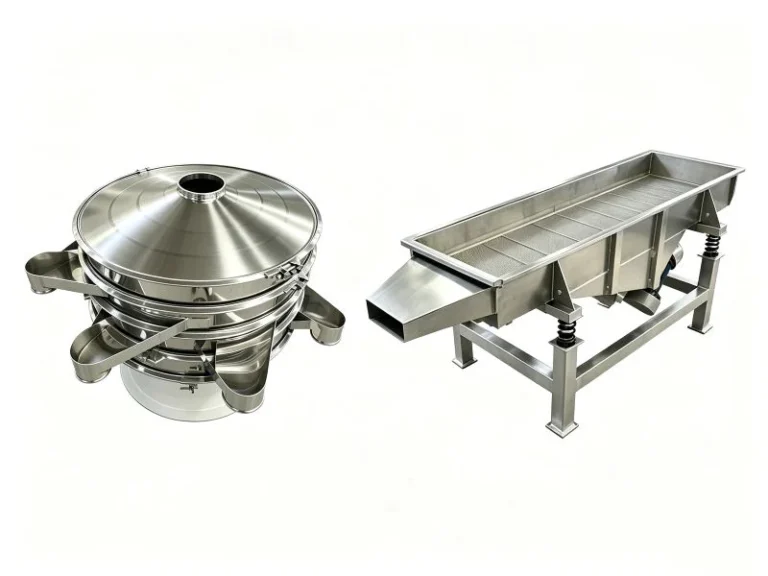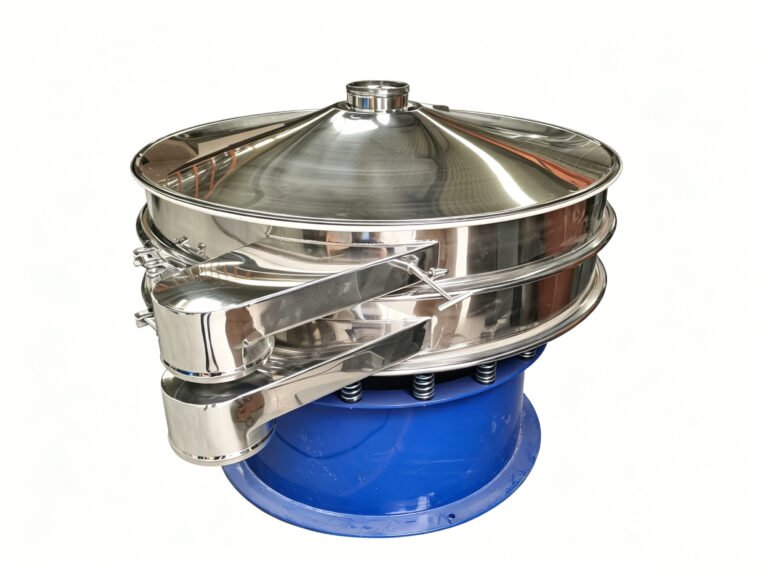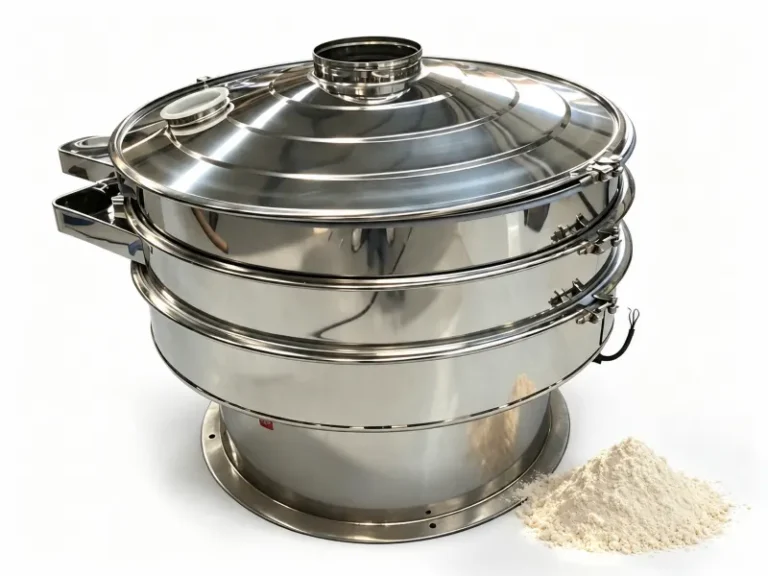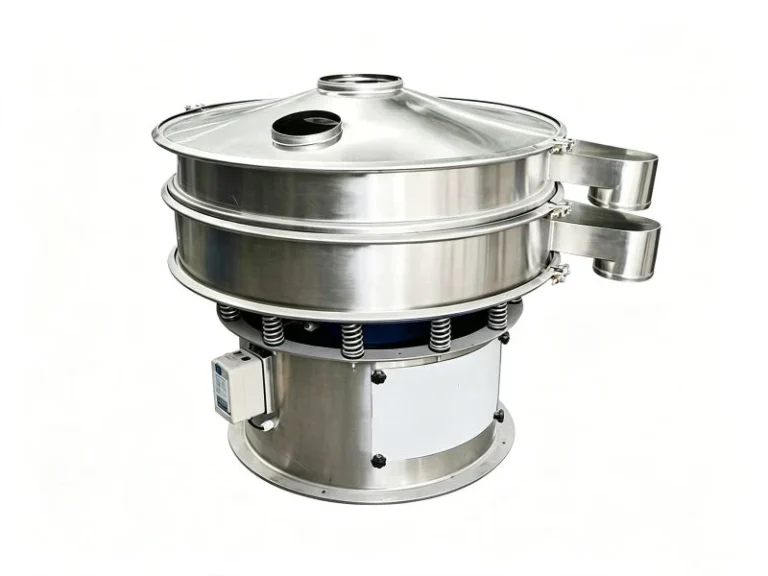
When Do You Need an Ultrasonic Vibrating Screen for Fine Powder?
Introduction
Fine powder can be difficult to screen, especially when using fine mesh. Problems such as mesh blinding, static buildup, low throughput, and frequent screen cleaning can affect fine powder screening performance.
But does this mean you need an ultrasonic vibrating screen for fine powder? Not always. The right choice depends on the material, mesh size, screening performance, and production requirements.
This guide explains when a conventional vibrating screen is enough and when ultrasonic sieving may be a better choice for fine powder screening.
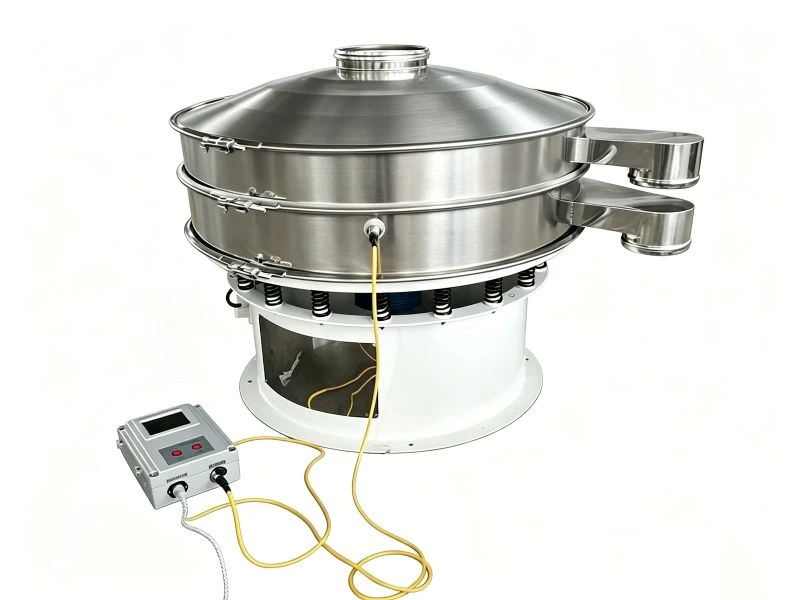
Fine Powder Does Not Always Require Ultrasonic Sieving
A conventional vibrating screen can handle many fine powder screening applications when the material flows freely and the screen mesh stays clear.
If the required throughput is achieved and the screen does not blind or require frequent cleaning, an ultrasonic vibrating screen may not be necessary.
Ultrasonic screening becomes more useful when fine powder causes repeated mesh blinding, static buildup, low throughput, or other fine powder screening problems.
Signs That Your Powder May Need Ultrasonic Sieving
Ultrasonic-assisted technology may be required for fine powder screening when conventional vibrating screens fail to maintain stable performance.
Fine Mesh Screening
When using fine-mesh screens, especially 200 mesh or finer, it often becomes more difficult for powder to pass through the mesh. If throughput drops as the mesh count increases, introducing an ultrasonic screening system can help improve particle passage.
Mesh Blinding
Fine particles tend to clog mesh openings. An ultrasonic mesh-cleaning system helps keep the material moving on the screen and can increase the screening pass rate.
Static-Induced Adhesion
Dry fine powders easily generate static electricity and adhere to the screen mesh. This not only reduces fine powder screening efficiency but also causes more material to accumulate on the screen.
Installing an ultrasonic vibrating screen is strongly recommended for materials with high static, high specific gravity, or strong adsorption properties to prevent immediate mesh blinding.
Sticky or Agglomerating Powders
Sticky or easily agglomerating fine powders can reduce screening rates and clog the mesh. Ultrafine powders with a moisture content exceeding 3% tend to form a water film that gums up the screen surface; ultrasonic screening can help address this issue.
Low Screening Throughput
For ultrafine powders finer than 200 mesh, ultrasonic vibrating screens offer 10%–70% higher screening precision and 1–10 times greater throughput compared to standard vibrating screens.
Frequent Screen Cleaning
If operators frequently need to stop the machine to clean or replace clogged screens, introducing ultrasonic-assisted technology enables automatic mesh cleaning and reduces the need for frequent shutdowns.
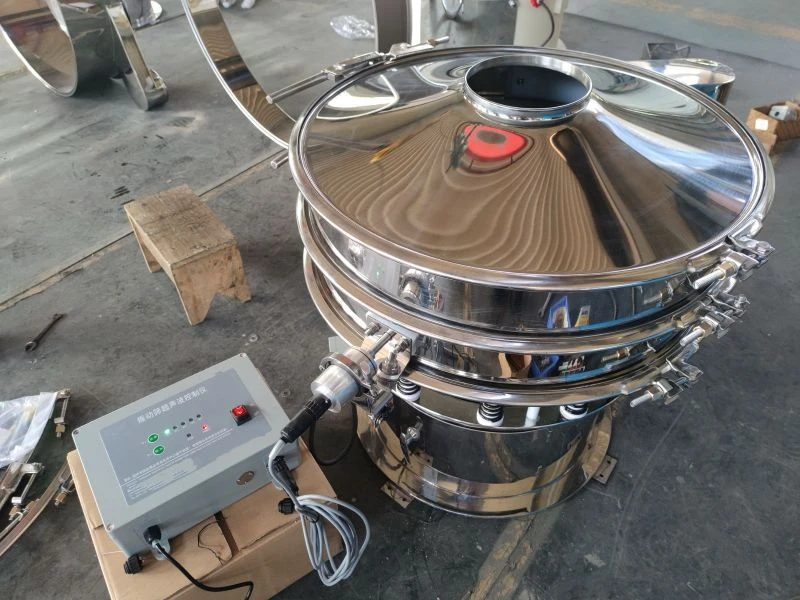

Does Mesh Size Determine Whether You Need Ultrasonic Sieving?
Mesh size is an important factor in fine powder screening, but it does not determine whether ultrasonic sieving is required.
At around 100–200 mesh, many free-flowing powders can still be screened effectively with a conventional vibrating screen. If the material passes through the mesh well and the screen does not blind, ultrasonic screening may not be necessary.
At around 300 mesh and finer, screening can become more difficult. For a mesh-by-mesh comparison, see our guide to 200, 300, 400 and 500 mesh powder screening.Fine particles may have a higher tendency to stick to the mesh, block the openings, or reduce screening throughput. In these cases, ultrasonic vibration may help maintain better material passage.
At 500 mesh or finer, the screening process is usually more sensitive to material properties and operating conditions. Ultrasonic sieving can be considered when fine powder causes frequent mesh blinding, static buildup, low throughput, or repeated screen cleaning.
The key point is that mesh size should be considered together with powder characteristics and production requirements. A 300-mesh powder that flows freely may screen well on a conventional machine, while a coarser powder with high static or strong mesh blinding may need additional screening assistance.
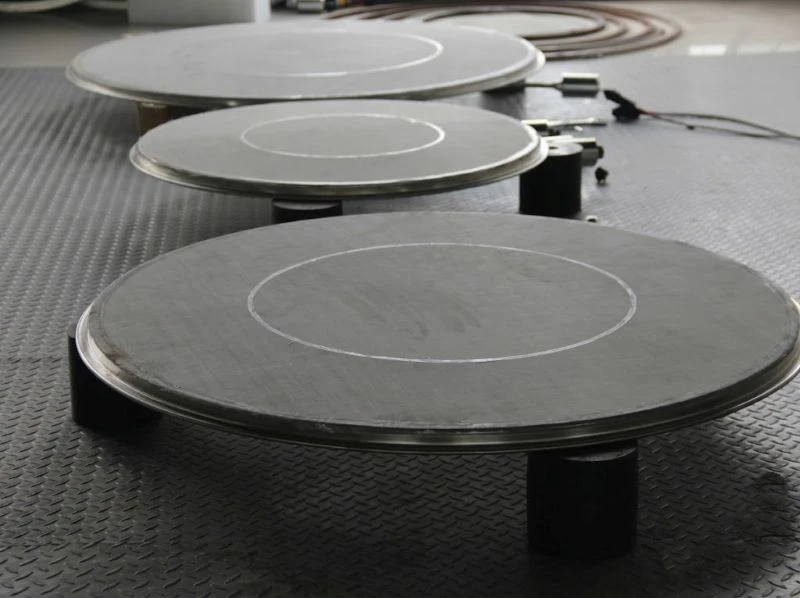

When Is a Conventional Vibrating Screen Enough?
A conventional vibrating screen is often enough when the powder flows well and the screening process remains stable.
It is suitable when:
- The required mesh size can be used without frequent mesh blinding.
- Fine powder passes through the screen at the required rate.
- Static buildup does not cause serious material sticking.
- The required screening accuracy and throughput can be achieved.
- The screen does not need frequent cleaning during production.
For instance, many free-flowing powders—such as spherical nickel, alloy, and other metal powders—can be screened at 100–200 mesh without ultrasonic assistance, provided the required production rate and screening quality are met. In such cases, installing an ultrasonic system may not necessarily yield significant benefits.
Ultrasonic screening should be considered when these conditions are no longer met, especially when finer mesh, mesh blinding, static buildup, or low throughput becomes a regular production problem.
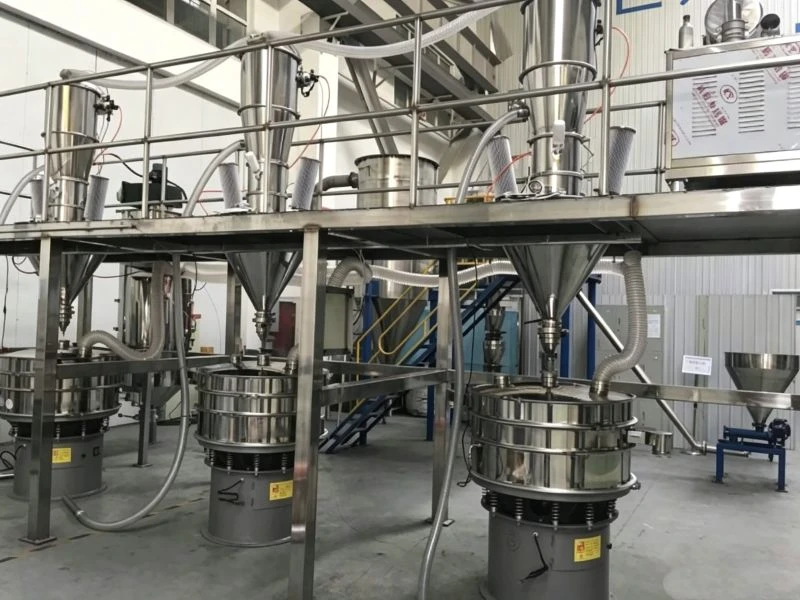

When Is an Ultrasonic Vibrating Screen a Better Choice?
An ultrasonic vibrating sieve is a better choice when fine powder is difficult to screen with a conventional vibrating screen.
It is worth considering when:
- Fine particle size and high static electricity: Powders with a particle size of ≤50μm exhibit strong adsorption; particles tend to clump together, making screening difficult.
- Prone to agglomeration: As material vibrates on the screen surface, dispersed particles re-aggregate—a phenomenon known as “secondary agglomeration”—trapping acceptable fine powder inside and preventing it from passing through.
- Mesh clogging: Particles become lodged in the apertures, or agglomerated fines block the mesh openings. Increasing the amplitude on traditional vibrating screens often packs the powder even tighter, necessitating machine shutdowns for manual mesh cleaning.
- Material damage: Ultrasonic screening systems utilize high-frequency, low-amplitude vibration that minimizes damage to materials, especially crystals and fibers, thereby preserving their original properties.
- High precision requirements: Screening accuracy exceeds 95%, making it suitable for ultra-fine powders ranging from 200 to 2000 mesh, such as electronic-grade powders and pharmaceutical raw materials.
However, ultrasonic vibration is not a solution for every fine powder screening problem. If poor screening is mainly caused by high moisture, large agglomerates, or unsuitable feeding conditions, these problems should be addressed first.
Ultrasonic vs Conventional: A Simple Decision Guide
| Your Situation | Recommended Direction |
|---|---|
| Free-flowing powder with stable screening | Conventional vibrating screen |
| Fine powder with occasional mesh blockage | Check material and operating conditions |
| Frequent mesh blinding | Consider ultrasonic vibrating screen |
| Static powder sticking to the mesh | Consider ultrasonic screening |
| Throughput drops with finer mesh | Evaluate ultrasonic screening |
| Severe moisture or large agglomerates | Address material condition first |
If the conventional vibrating screen can meet your required capacity and screening result, ultrasonic may not be necessary. If fine powder causes repeated mesh blinding, static buildup, or low throughput, ultrasonic screening is worth considering.
Not Sure Whether You Need Ultrasonic Sieving?
Send us your material type, particle size, required mesh size, capacity, and current fine powder screening problems. If you are experiencing mesh blinding, static buildup, low throughput, or frequent screen cleaning, let us know.
Our team can review your screening requirements and help you determine whether a conventional vibrating screen or an ultrasonic vibrating screen is more suitable for your application.
FAQ
1. Do I need an ultrasonic vibrating screen for fine powder?
Not always. A conventional vibrating screen may be enough if the powder flows well and does not cause mesh blinding or low throughput. Ultrasonic screening is more suitable for difficult fine powder applications.
2. What mesh size requires an ultrasonic vibrating screen?
There is no fixed mesh size. Many free-flowing powders can be screened at 100–200 mesh with a conventional screen. At 300 mesh and finer, ultrasonic screening may be considered if mesh blinding or low throughput occurs.
3. Can ultrasonic screening prevent mesh blinding?
Ultrasonic vibration can help reduce mesh blinding by improving fine particle movement through the screen mesh, especially with dry fine powders.
4. Is an ultrasonic vibrating screen suitable for static powder?
Yes, it can be suitable for dry fine powders that tend to stick to the mesh because of static electricity. Material and mesh conditions should also be considered.
5. Can ultrasonic screening increase fine powder screening capacity?
It can improve throughput when fine particles have difficulty passing through the mesh or frequent mesh blockage limits production. Actual capacity depends on the material, mesh size, and feed rate.
6. When should I choose ultrasonic sieving over a conventional screen?
Consider ultrasonic sieving when fine powder causes frequent mesh blinding, static buildup, low throughput, or repeated screen cleaning. If a conventional screen already meets your requirements, ultrasonic may not be necessary.