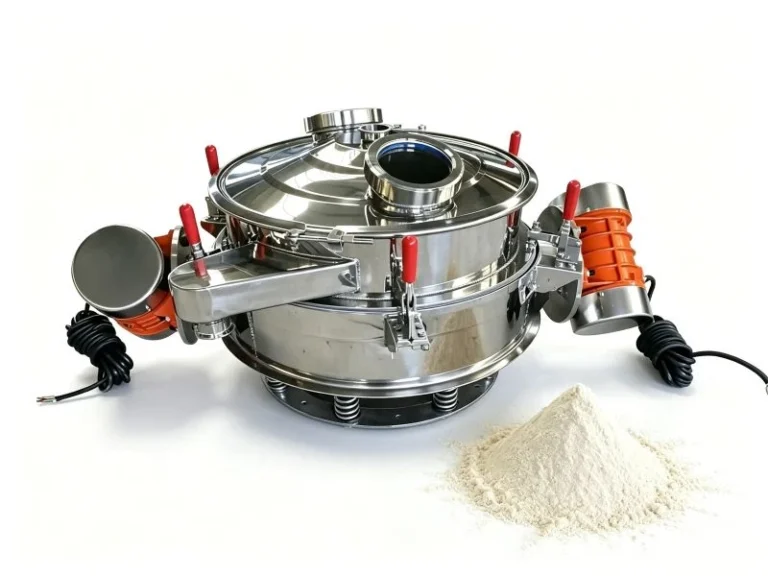
Ultrasonic Screen Machine for Graphite Powder: A Solution for High-Efficiency Fine Powder Screening
Introduction
Graphite powder is a material used for battery anodes; it appears as a dark gray, opaque solid composed of fine, metallic-lustered flakes. It is soft, feels greasy to the touch, and possesses excellent electrical conductivity. Graphite powder has a specific gravity of 1.9–2.3 and a melting point exceeding 3,000°C in the absence of oxygen, making it one of the most heat-resistant minerals.
Graphite powder is widely used in battery materials, carbon products, and advanced industrial applications. Due to its fine particle size, high adhesion, and electrostatic properties, traditional vibrating screens often experience mesh clogging, low screening efficiency, material accumulation, and unstable fine powder separation.
An ultrasonic screen machine for graphite powder uses high-frequency ultrasonic vibration technology to prevent screen blockage, improve fine powder separation efficiency, and ensure consistent particle size control for efficient graphite powder processing.
Why Is Graphite Powder Difficult to Screen?
Graphite powder is a fine and sticky material that requires high-precision screening equipment.
Fine Particle Size Reduces Screening Efficiency
Micron-sized graphite powder is difficult to pass through screen mesh, resulting in low throughput and uneven particle distribution.
Adhesion Causes Screen Mesh Blocking
Graphite particles easily stick to the mesh surface, reducing screening performance and increasing cleaning frequency.
Strict Particle Size Control for Battery Materials
Battery-grade graphite powder requires accurate particle separation and consistent particle size distribution, making ultrasonic screening an ideal solution.
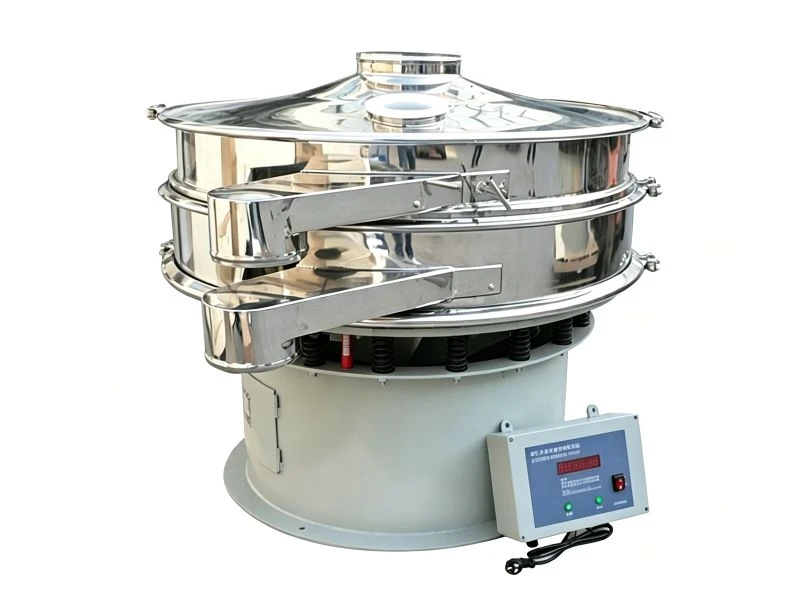
How Does an Ultrasonic Screen Machine Improve Graphite Powder Screening?
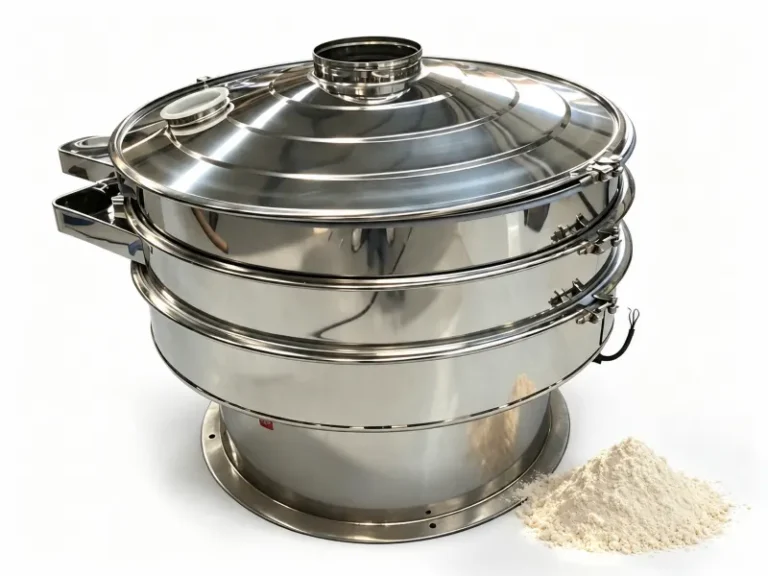
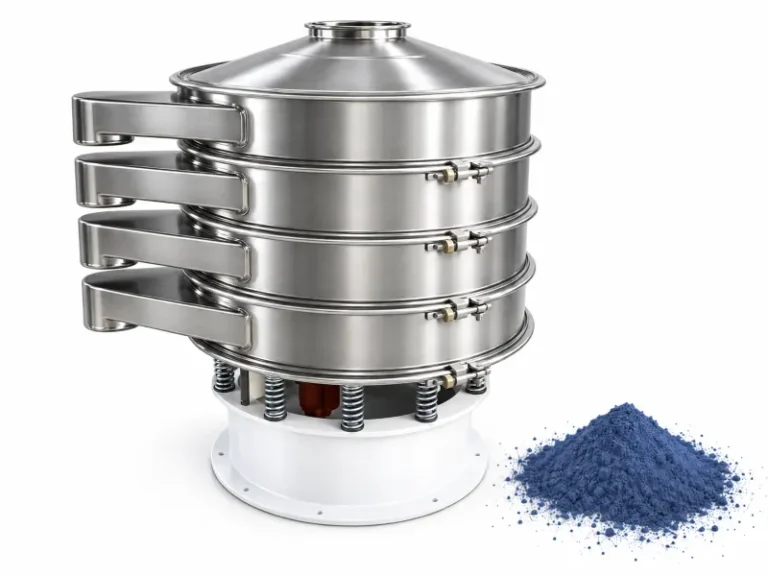
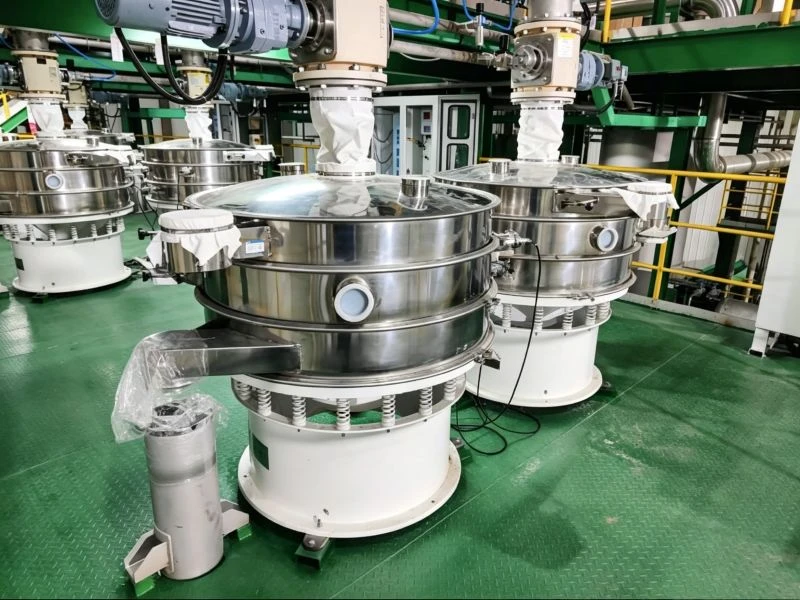
The ultrasonic vibrating screen specifically designed for graphite powder is an upgraded version of the three-dimensional rotary vibrating screen, featuring an added ultrasonic device. It converts 220V, 50Hz or 110V, 60Hz electrical energy into 18KHz high-frequency electrical energy, which is then fed into an ultrasonic transducer and converted into 18KHz mechanical vibrations, enabling the vibrating screen to achieve highly efficient screening and screen cleaning.
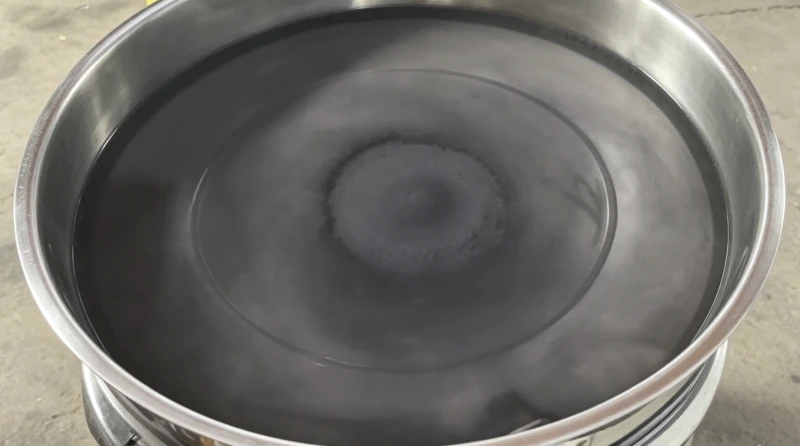
A low-amplitude, high-frequency ultrasonic vibration wave (mechanical wave) is applied to the screen mesh. The graphite powder is subjected to significant ultrasonic acceleration, keeping it in a constant state of suspension on the screen surface. This suppresses factors that cause screen clogging—such as adhesion, friction, settling, and wedging—thereby resolving the screening challenges posed by graphite powder’s high viscosity and strong adsorption properties. Consequently, the ultrasonic vibrating screen is particularly well-suited for users handling graphite powder.
Related video
Benefits of Ultrasonic Screen Machine for Graphite Powder
1. Can be used in single- or multi-layer configurations; a single smart ultrasonic generator set can operate two transducers simultaneously
2. Achieves high-precision, high-mesh screening while effectively controlling particle size distribution
3. Unique screen design with an automatic cleaning function; when screening at >500 mesh, there is no mesh clogging, no decline in screening efficiency, and high signal uniformity
4. Longer screen service life
5. Solves screening challenges associated with highly adhesive, easily agglomerating, highly electrostatic, ultra-fine, high-density, and low-specific-gravity materials without altering the properties of graphite powder
6. The frequency band output by the CNC power supply is transmitted to the screen surface via the transducers at 360,000 times per minute
7. Easy to use, simple to maintain, and capable of continuous operation
8. Compared to conventional vibrating screens, screening accuracy can be improved by 1–70%, screening efficiency by 1–100%, and output can be increased by 1–15 times
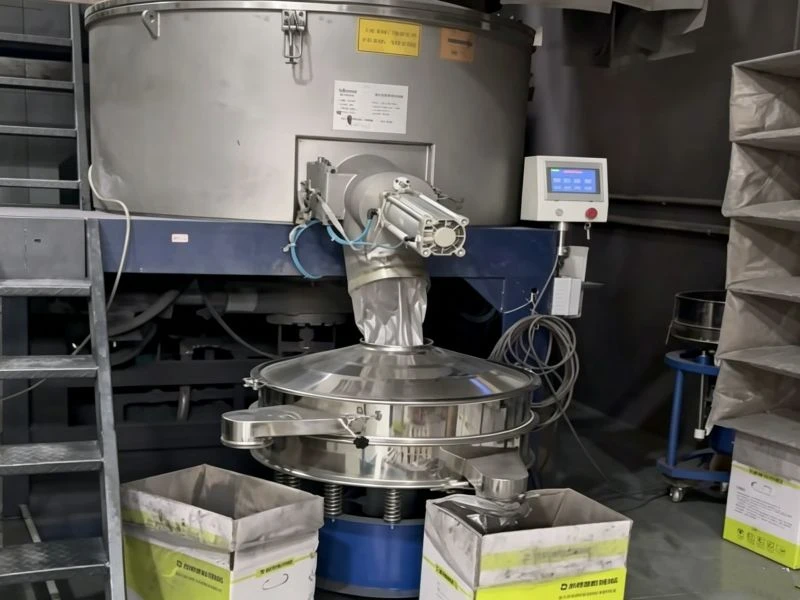
Applications of Ultrasonic Screening Machine in Graphite Powder Industry
Ultrasonic screen machines are widely used in graphite powder processing to improve fine powder separation, prevent screen blockage, and maintain consistent particle size for different industrial applications.
Lithium-Ion Battery Anode Materials
Used for screening natural graphite, synthetic graphite, and battery-grade graphite powder with strict particle size requirements to ensure stable battery material performance.
Advanced Carbon Materials
Suitable for processing graphene materials, conductive graphite powder, and carbon additives, providing high-precision separation for fine carbon powders.
Chemical and Industrial Powder Processing
Applied in lubricants, coatings, and composite materials where uniform particle distribution and efficient powder classification are required.
Ultrasonic Screen Machine vs Traditional Vibrating Screen for Graphite Powder
| Comparison Item | Ultrasonic Screen Machine | Traditional Vibrating Screen |
| Screening Principle | Adds 33–40 kHz high-frequency ultrasonic vibration on the basis of normal vibration, creating micro-vibrations on the screen mesh to reduce powder blocking and adhesion. | Uses low-frequency mechanical vibration to separate materials through vibration force and gravity. |
| Suitable Graphite Powder Particle Size | More suitable for 200–600 mesh ultrafine graphite powder screening applications. | Suitable for 20–100 mesh coarse and medium graphite powder. Screen clogging may occur when processing finer powders above 100 mesh. |
| Screening Accuracy | Provides high-precision screening. The fine powder passing rate can typically increase by 30%–80% depending on material characteristics. | Fine powder screening may suffer from screen blockage and material leakage, resulting in reduced accuracy. |
| Screening Efficiency | Significantly improves efficiency for ultrafine graphite powder. Under the same screen area, capacity can increase by approximately 2–10 times depending on material conditions. | Stable performance for conventional powders, but efficiency decreases when handling high-fineness graphite powder. |
| Processing Capacity | Depending on equipment model, industrial machines commonly handle around 100–5000 kg/h. | Capacity ranges from tens of kg/h to several tons per hour, but decreases significantly in fine powder applications. |
| Anti-Clogging Performance | Ultrasonic vibration effectively reduces screen blockage caused by static adhesion, powder agglomeration, and particle bridging of graphite powder. | Graphite powder is prone to blocking screen openings and usually requires frequent cleaning or downtime. |
| Screen Mesh Service Life | Reduced clogging and less manual cleaning help extend screen mesh service life and improve continuous operation stability. | Frequent cleaning and mechanical impact may accelerate screen mesh wear. |
| Typical Applications | Widely used for lithium-ion battery anode materials, conductive graphite, high-purity graphite, and graphene raw materials. | Commonly used for graphite ore powder, general industrial graphite, and coarse graphite processing. |
How to Choose the Right Ultrasonic Screen Machine for Graphite Powder?
Choosing the right ultrasonic screen machine for graphite powder requires considering particle size, processing capacity, and ultrasonic system configuration to ensure stable screening performance and production efficiency.
Select the Machine According to Graphite Powder Particle Size
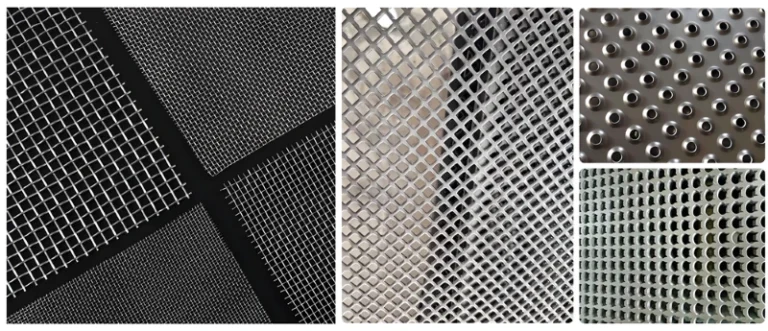
The screen mesh size should match the graphite powder particle distribution. Fine graphite powder and battery-grade materials usually require high-precision screening to achieve consistent particle size control.
Match the Screening Capacity with Production Requirements
The equipment capacity should be selected based on actual output requirements, including processing volume, feeding rate, and continuous operation time.
Choose the Suitable Ultrasonic System Configuration
The ultrasonic power system should match the screen diameter and application requirements. Proper ultrasonic frequency and power settings help prevent mesh blockage and improve fine powder screening efficiency.
After-Sales Service
Choose a manufacturer that can provide timely and professional after-sales service. Xinxiang Yuanjing Machinery Co., Ltd. operates its own R&D and production facilities and has many years of industry experience. Our products are exported to numerous countries and serve a wide range of industries, enabling us to provide reliable support services. Please feel free to contact us for more information.
Conclusion
Ultrasonic screen machines provide an efficient solution for graphite powder processing by improving screening accuracy, reducing mesh blockage, and maintaining stable product quality in fine powder applications.
For graphite powder manufacturers, battery material suppliers, and carbon material processors, an ultrasonic screen machine is an effective upgrade solution to improve production efficiency and product consistency.
Need a customized graphite powder screening solution? Contact us to discuss your material characteristics, capacity requirements, and suitable ultrasonic screening system.