Swing Tumbler Screen for Fine Powder
Swing Tumbler Screen for Fine Powder: Precision Screening Solution for Difficult Materials
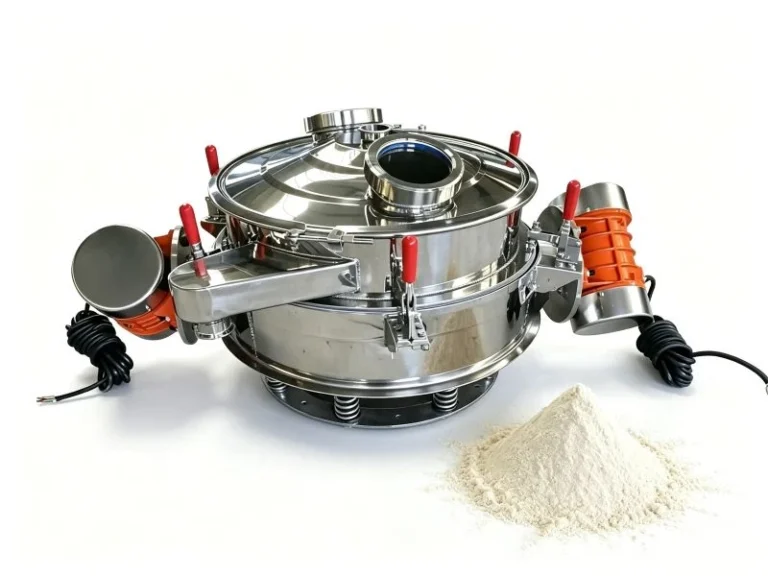
Fine powder screening requires high accuracy, stable performance, and efficient particle separation. A swing tumbler screen for fine powder is designed to handle challenging powder materials by using a gentle reciprocating motion that improves screening precision while reducing material damage and screen blockage.
The swing tumbler screen is widely used in the chemical, pharmaceutical, food, mineral, and other powder processing industries. It is suitable not only for the screening and filtration of various solid granular materials but also for the separation and purification of liquids and semi-fluids, making it a specialized piece of equipment for precision screening applications.
What Is a Swing Tumbler Screen for Fine Powder?
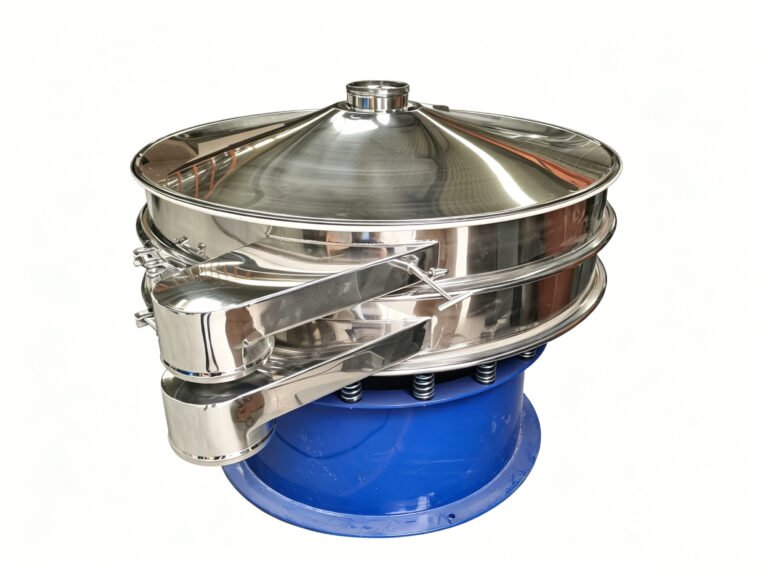
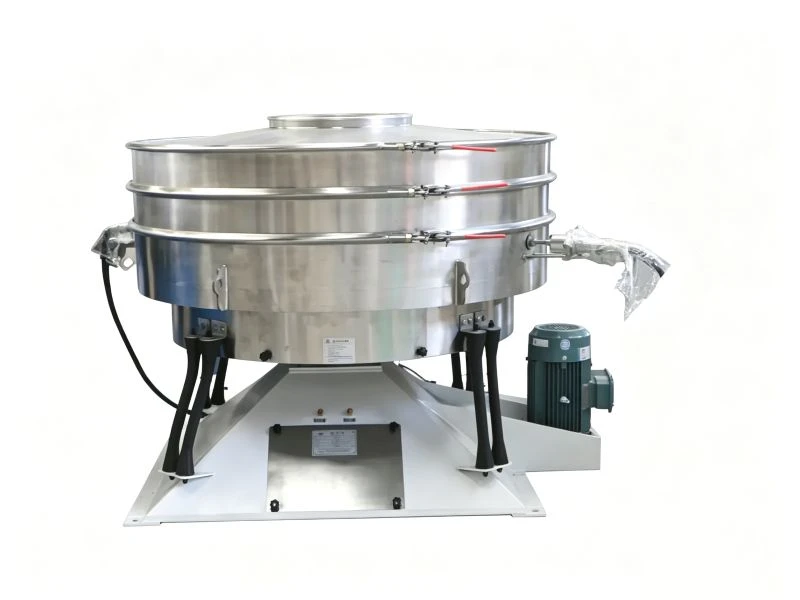
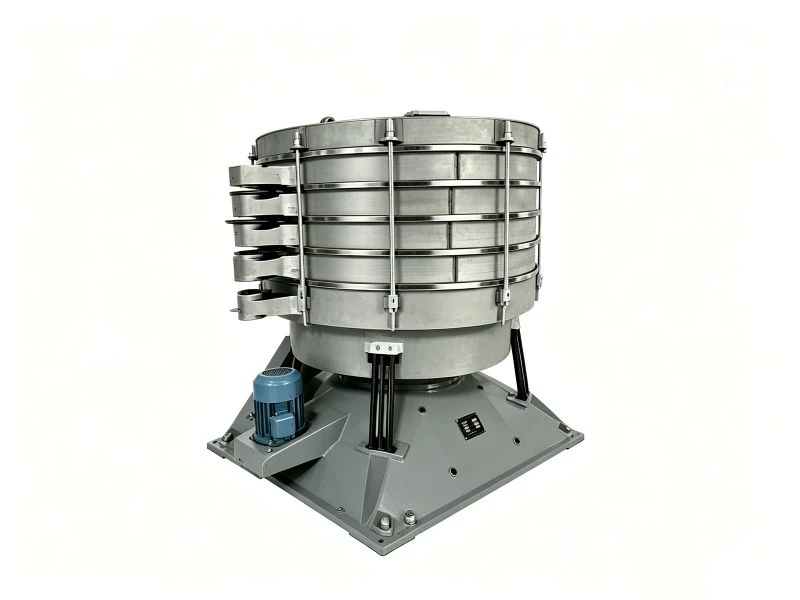
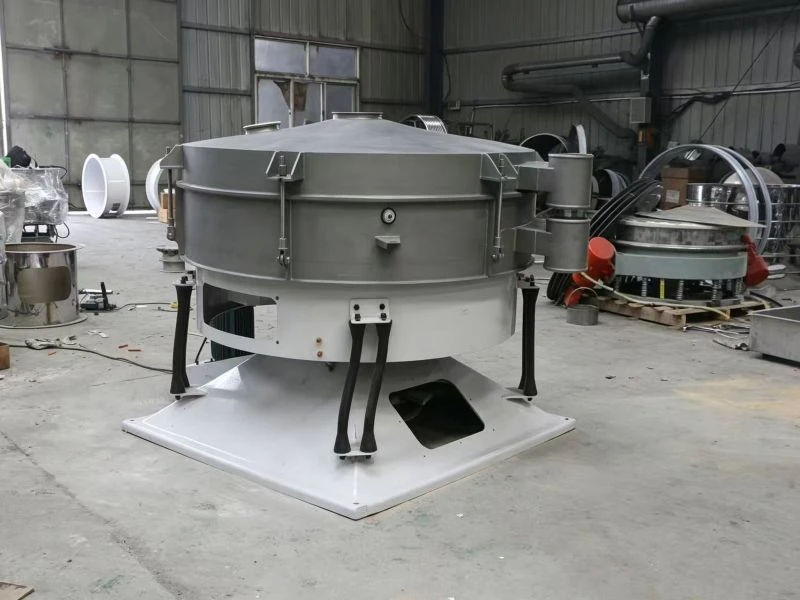
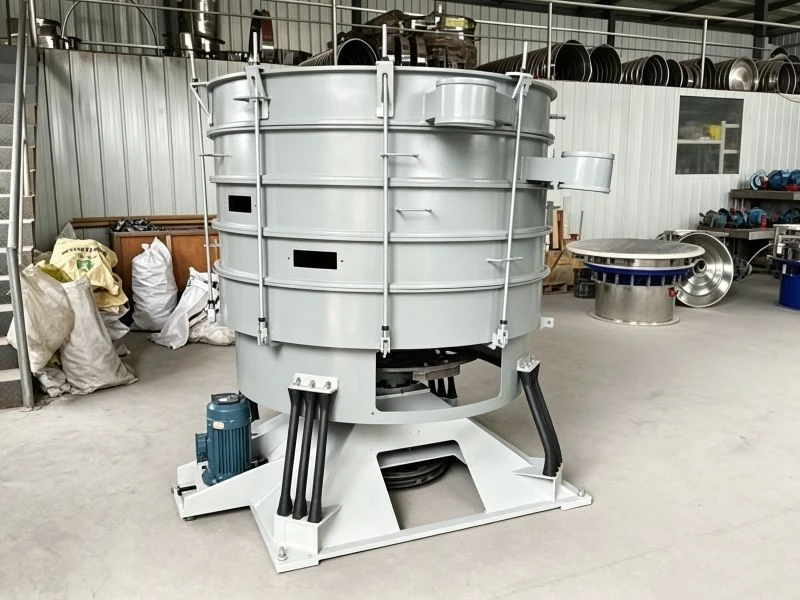
A swing tumbler screen for fine powder is a high-precision screening machine designed to separate fine particles. The swing screen uses a gentle swinging motion similar to manual sifting, allowing fine powders to pass through the screen more effectively while reducing material breakage and screen clogging. Screening accuracy can reach over 95 percent, with a processing capacity 3 to 5 times that of ordinary screeners and a screen mesh service life 5 to 10 times longer than that of conventional screening equipment. It is particularly suitable for screening processes involving difficult-to-handle materials, challenging screening tasks, and high-throughput applications.
Working Principle of Swing Tumbler Screen
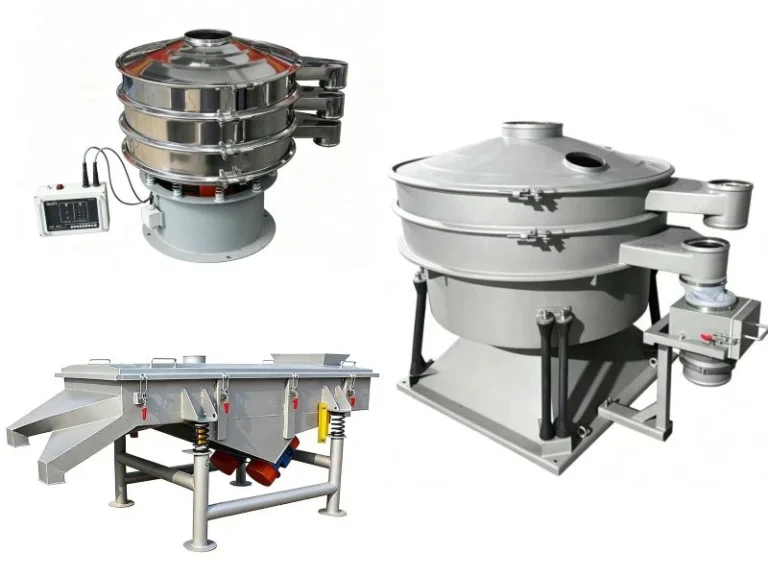
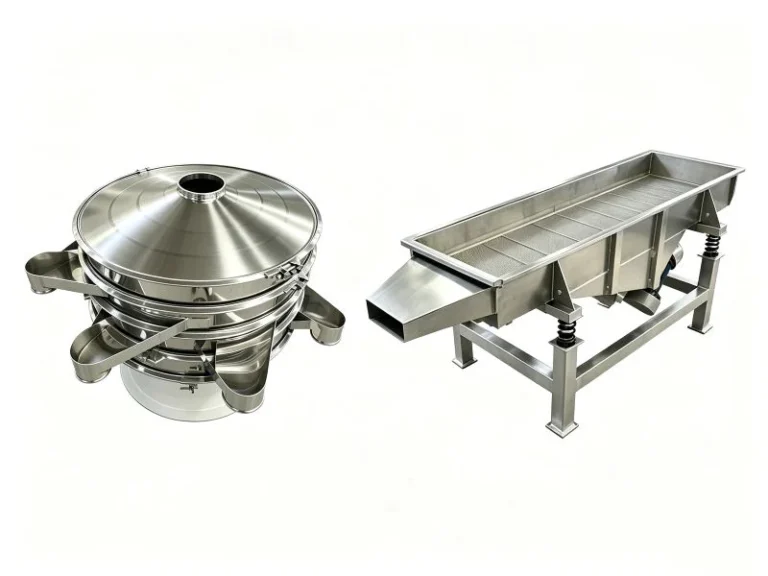
The circular tumbler sieve utilizes an exciter with an adjustable eccentric radius to generate a non-linear, three-dimensional motion, causing material to move in a spiral, tumbling pattern across the screen surface. Driven by centrifugal force, the material rapidly and evenly disperses, forming a stratified structure with larger particles on top and smaller ones below; fine particles pass through the mesh while coarse particles remain on the surface, ensuring efficient screening and classification.
Equipped as standard with silicone bouncing balls or an ultrasonic mesh cleaning system, the unit effectively prevents mesh blinding through continuous tapping or vibration, thereby reducing maintenance costs. Furthermore, by adjusting the amplitude, vibration frequency, and screen inclination angle, the material’s movement can be precisely controlled; this flexibility allows the equipment to adapt to diverse material characteristics and screening accuracy requirements, enhancing its overall versatility.
Why Fine Powders Need a Special Swing Tumbler Screen System
Fine powder screening presents several challenges that standard screening equipment may struggle to handle. Small particle sizes, static electricity, moisture, and material characteristics can reduce screening efficiency and cause unstable production.
Advantages of Swing Tumbler Screen for Fine Powder Screening:
Low breakage rate:
Breakage rate of hard particles ≤3%, preserving roundness and integrity
High accuracy:
For materials within 500 mesh, screening accuracy remains stable at 95%–99%
No screen clogging:
When used with bouncing balls or ultrasonic technology, even fine powders and sticky materials can pass through the screen smoothly
High throughput:
Capable of continuous 24-hour operation, with significantly higher production capacity than traditional screeners
Multi-layer classification:
Customizable with 1–5 layers of screens to separate multiple particle sizes in a single pass
For industries requiring precise powder separation, such as pharmaceuticals, food processing, chemicals, and mineral powders, choosing the right powder separation equipment for fine particles is essential to improve production efficiency and maintain product standards. A swing tumbler screen provides an effective solution for achieving accurate and reliable fine powder classification.
Applications of Swing Tumbler Screen for Fine Powder
1. Mineral Processing Industry – Sand, Gravel, and Powders
Typical materials: Quartz sand, silica sand, fracturing sand, talc powder, barite powder
Pain points: High-frequency vibration in traditional screens causes particle breakage and loss of roundness, preventing high-end sand/gravel from fetching premium prices
Advantages of Circular Tumbler Screens: Low-frequency tumbling motion; breakage rate ≤3%; precision classification up to 500 mesh with >95% accuracy; capable of separating multiple specifications in a single unit
2. Food Industry – Powders and Granules
Typical materials: Corn flour, starch, seasoning powders, sugar/salt, Sichuan pepper (separating seeds from leaves), coarse grain grading
Pain points: Strict food-grade requirements (no impurity contamination); screening process must not damage material texture
Advantages of Tumbler Sieve Machines: 304/316 stainless steel construction (GMP compliant); fully enclosed with no residue; gentle screening action preserves nutritional content
3. Chemical and Plastics Industries
Typical materials: Carbon powder, resin powder, PVC powder, PET granules, pigment powder, chemical additives
Pain points: Ultrafine powders tend to agglomerate and clog screens; chemical processing environments often require explosion-proof capabilities
Advantages of Swing Tumbler Screens: Thorough dispersion and stratification (95%–99% accuracy); explosion-proof customization available (e.g., explosion-proof motors)
4. Metallurgy and Abrasives – Hard Granules
Typical materials: Steel shot, emery (silicon carbide), polishing powder, metal powders
Pain points: High-hardness materials easily clog screen apertures and cause severe screen wear
Advantages of Swing Tumbler Screens: Bouncing ball self-cleaning system prevents clogging; low-speed operation extends screen lifespan
5. Ceramics and New Energy – High-End Fine Powders
Typical materials: Ceramic powder, lithium battery powder, cosmetic powders, pharmaceutical excipients
Pain points: Strict cleanliness requirements; must prevent airborne dust and impurity contamination
Advantages of ultrasonic tumbler screen: Fully enclosed design ensures no dust or contamination; compatible with dust-free feeding stations and vacuum loaders
Related videos
When Is It Essential to Use a Swing Tumbler Screen?
| Application Characteristics | Why Choose a Swing Vibrating Screen |
| Materials are fragile and require high-quality appearance | Low-frequency tumbling motion with a breakage rate ≤3% |
| Large mesh size range and need for multi-layer classification | Customized with 1–5 layers to separate multiple particle sizes in one operation |
| High fine powder content and easy screen clogging | Equipped with bouncing balls / ultrasonic mesh cleaning system to prevent clogging |
| 24-hour continuous and stable operation | Reliable structure with low failure rate |
| High-cleanliness applications such as food, pharmaceutical, and new energy industries | Fully enclosed design + stainless steel construction + GMP standards |
| Chemical industry with explosion-proof requirements | Supports customized explosion-proof solutions |
Factors to Consider When Choosing a Swing Tumbler Screen Manufacturer
1. Capability for independent adjustment (ERT parameters)
Key adjustment parameters for tumbler screens include eccentricity (25–40 mm), radial and tangential angles, and rotational speed (typically 120–260 rpm). Selecting a manufacturer that offers these adjustment capabilities allows for the flexible matching of motion trajectories and residence times to specific material properties (such as density, particle size, and viscosity), thereby enhancing screening efficiency.
2. Support for modular design and rapid screen replacement
Features such as quick-release clamp structures and pneumatic lifting devices eliminate the need for heavy lifting equipment, enabling two-person screen replacement in under five minutes. Such designs offer advantages in terms of regulatory compliance and production efficiency.
3. Compatibility with various materials of construction
Standard industrial applications typically use carbon steel with anti-corrosion coatings; chemical applications requiring corrosion resistance use 304 or 316L stainless steel (with optional Teflon coating); food and pharmaceutical applications require 316L stainless steel with a mirror-polished finish and food-grade silicone seals; and applications involving highly abrasive materials utilize high-manganese steel or high-chromium wear-resistant liners. Buyers should verify whether the manufacturer can customize materials based on specific operating conditions.
4. Capability to integrate multiple screen cleaning systems
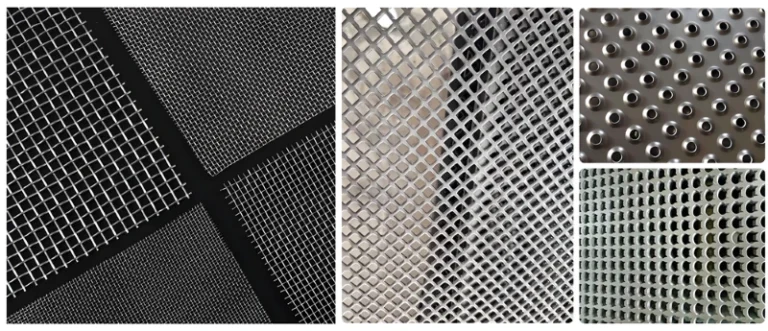
Mesh blinding is a common issue in fine screening. Established cleaning methods include: bouncing balls (for 10–200 mesh particles), ultrasonic systems (for ultrafine powders of 200–600+ mesh), and rotary brushes (for sticky or oily materials). Manufacturers offering a range of cleaning solutions are better equipped to resolve blinding issues across diverse material types.
Conclusion
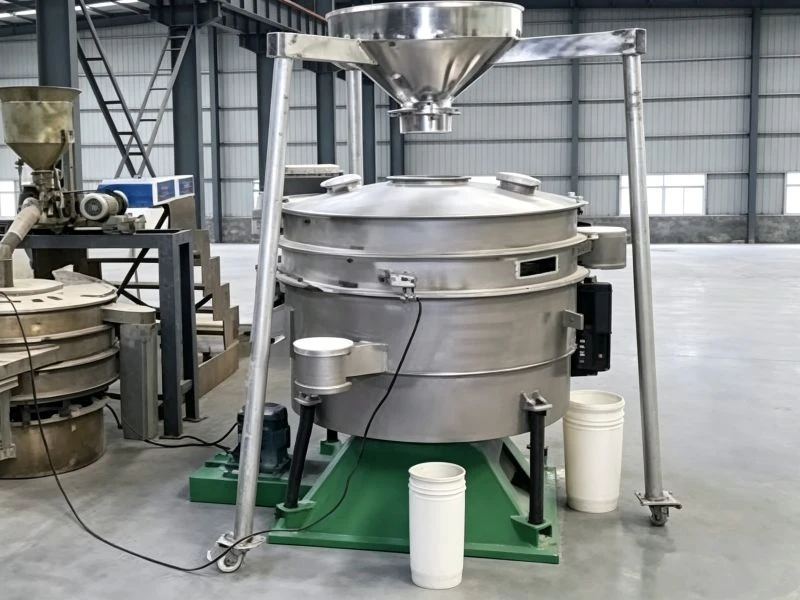
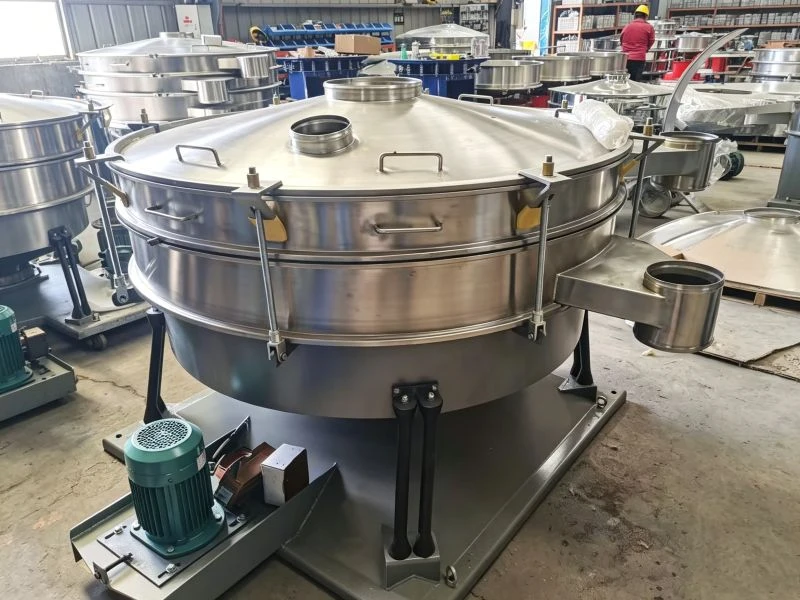
A swing tumbler screen for fine powder offers an effective solution for accurate particle separation, especially for applications that require gentle handling, high screening precision, and consistent performance. As a reliable fine powder screening machine, it helps industries such as chemical, pharmaceutical, food, and mineral processing improve product quality and production efficiency.
Selecting the right high precision powder screening machine depends on factors such as material properties, particle size, processing capacity, and specific screening requirements. Our team can provide a customized fine powder screening solution based on your application needs.
Contact us today to discuss your powder screening requirements and get a suitable swing tumbler screen recommendation for your production process.