Garlic Paste Screening with the GPS-800-1S
A customer from Argentina contacted us about garlic paste screening, specifying a 30-mesh screen and a target throughput of 140 kg/h.
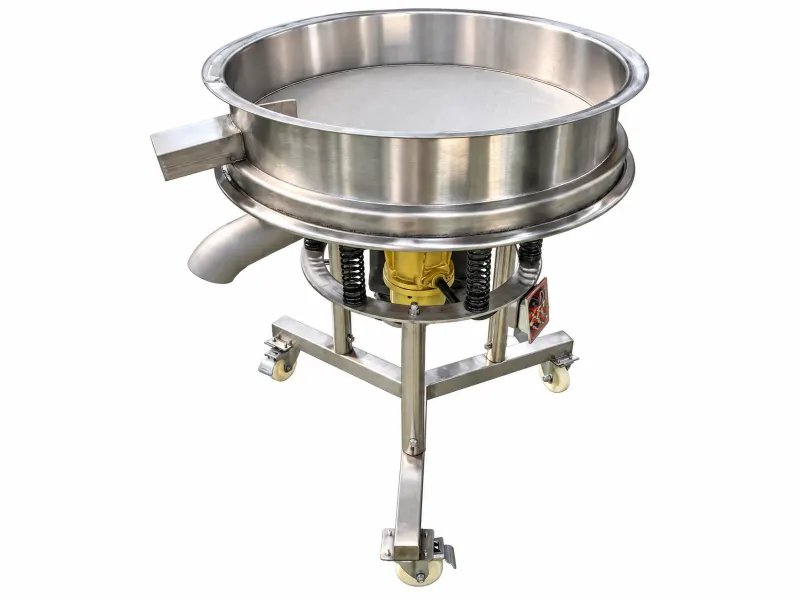
We recommended the GPS-800-1S high-frequency filter sieve with 304 stainless steel construction, a 0.55 kW motor, and base-mounted casters.
Project Overview
The paste needed to pass through a 30-mesh screen before the next production stage.
For garlic paste screening, mesh size is only part of the equipment selection. Viscosity, solids content, and feeding conditions also affect how the material passes through the screen.
As with other food processing applications, cleaning and equipment handling were also considered in the proposed configuration.
Customer Requirements
The initial inquiry specified:
- Material: Garlic paste
- Screen mesh: 30 mesh
- Required throughput: 140 kg/h
These three details formed the starting point for the garlic paste screening proposal. We then considered equipment suitable for wet filtration, along with the construction material and practical arrangements for cleaning and moving the machine.

Recommended Solution
We recommended the GPS-800-1S with a single-layer, 30-mesh screen.
A high-frequency vibrating screen was selected for its high-frequency, low-amplitude operation, which suits slurry filtration applications.
The garlic paste screening configuration was selected around the requested 140 kg/h throughput. This is the customer’s target rather than a measured result. Testing with the actual paste is needed to confirm capacity, since viscosity, solids content, feeding consistency, and screen condition can affect output.
For wet materials, selecting a liquid sifter machine also requires attention to how the material flows and passes through the mesh.
We specified 304 stainless steel construction for the food-processing application. Casters at the base allow the equipment to be repositioned for production or moved to a cleaning and maintenance area.
Equipment Specifications
| Item | Recommended Configuration |
|---|---|
| Equipment | High-frequency filter sieve |
| Model | GPS-800-1S |
| Material to be processed | Garlic paste |
| Screen mesh | 30 mesh |
| Required throughput | 140 kg/h |
| Screen layers | Single layer |
| Construction material | 304 stainless steel |
| Motor model | 8-2 |
| Motor power | 0.55 kW |
| Mobility | Base-mounted casters |
140 kg/h is the required throughput. Actual capacity remains subject to material testing and operating conditions.
Equipment Features for Garlic Paste Screening
High-Frequency, Low-Amplitude Operation
This operating principle suits wet filtration applications and was a key factor in recommending the machine for this 30-mesh requirement.
304 Stainless Steel Construction
The specified material suits the intended food-processing application and allows routine cleaning. For readers comparing material options, our stainless steel vibrating sieve page provides further information.
The customer’s production and hygiene procedures should determine the cleaning method and frequency.
0.55 kW Motor
The motor’s rated power is 0.55 kW. Actual electricity consumption depends on the load and running time.
Base-Mounted Casters
The casters make it easier to move the machine between working and cleaning areas. Before operation, the equipment needs to be secured in position.
Customer Feedback and Follow-Up
This garlic paste screening case currently covers the inquiry and equipment recommendation. Trial results and feedback after installation are not yet available.
During follow-up, we will check whether the machine consistently reaches 140 kg/h with the customer’s actual paste and whether the filtered material meets their requirements. We will also ask about cleaning and moving the equipment. Any adjustments will depend on those findings.
Discuss Your Screening Requirements
If you are planning a garlic paste screening project, contact our team with your material details, required mesh size, target throughput, and operating conditions.
We can recommend a model and configuration, then discuss testing with your material.