Ultrasonic Tumbler Screen Solution for 200-Mesh and 325-Mesh Quartz Powder
Overview
This project involves a fine quartz powder processing company based in California, USA. The client’s products serve the high-end electronics materials, functional fillers, and coatings industries, necessitating extremely strict standards for particle size distribution consistency and impurity control.Following in-depth communication and material testing, we ultimately recommended an ultrasonic tumbler screen to resolve the issues the client was facing.
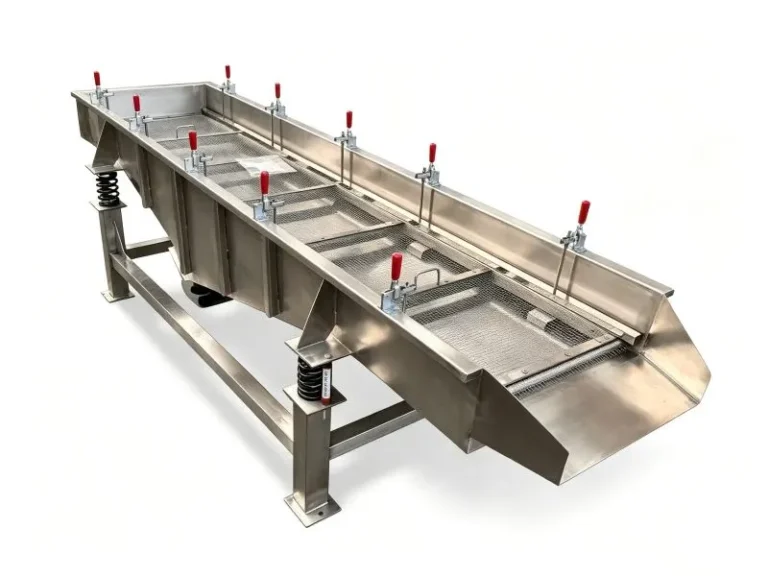
The client’s original production line utilized conventional vibrating screen equipment, which encountered significant bottlenecks when processing 200-mesh and 325-mesh quartz powders:
Severe agglomeration of fine particles
Frequent screen blinding
Declining screening efficiency during prolonged operation
Significant fluctuations in product particle size stability
Issues were particularly acute during 325-mesh processing, where frequent equipment shutdowns were required to clear the screens, severely disrupting the continuous production flow.
Customer Requirement Analysis
Following multiple rounds of technical discussions and an analysis of material properties, we have summarized the customer’s core requirements as follows:
Prevention of mesh blinding caused by ultra-fine powder
Quartz powder is characterized by high hardness, fine particle size, and slight electrostatic attraction. In the 200–325 mesh range, it is highly prone to mesh adhesion and particle agglomeration, leading to reduced screening throughput.
Enhanced screening stability
Stable pass rate of ≥95% for 200-mesh material; minimal fluctuation in particle size distribution for 325-mesh material; and sustained screening precision during prolonged operation.
Improved continuous production capability
Reduced downtime for mesh cleaning, higher hourly output, and greater batch-to-batch consistency.
Ultrasonic Tumbler Screen Solution (Technical Consultation)
3D tumbling motion
High-frequency ultrasonic de-agglomeration (36–38 kHz)
Gentle screening trajectory (low-impact screening)
This creates a dual screening mechanism combining mechanical dispersion and ultrasonic de-agglomeration.
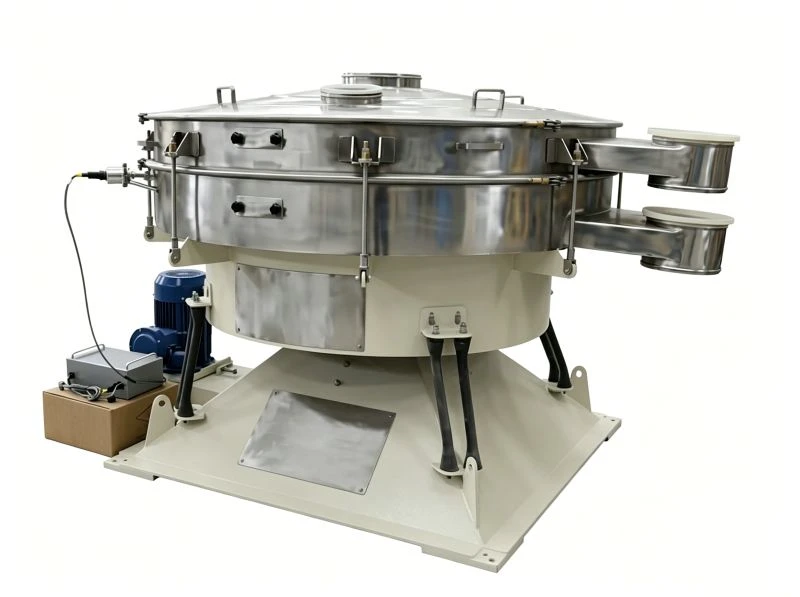
Therefore, our final recommendation is: Ultrasonic Tumbler Screen(Tumbler Screen + Ultrasonic Anti-Blinding System).
Equipment Specifications
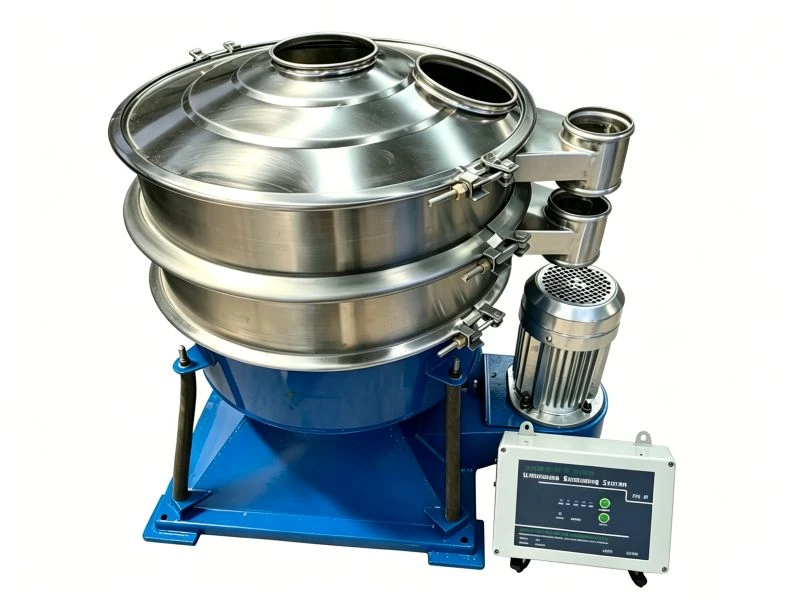
Ultrasonic Tumbler Screen
Material: Quartz powder
Mesh Size: 200 mesh / 325 mesh
Screening Method: 3D gyratory motion + rotary tumbling
Material: SUS304 / SUS316 (optional)
Screening System: Quick-tensioning structure + ultrasonic screen frame
Control System: Ultrasonic generator
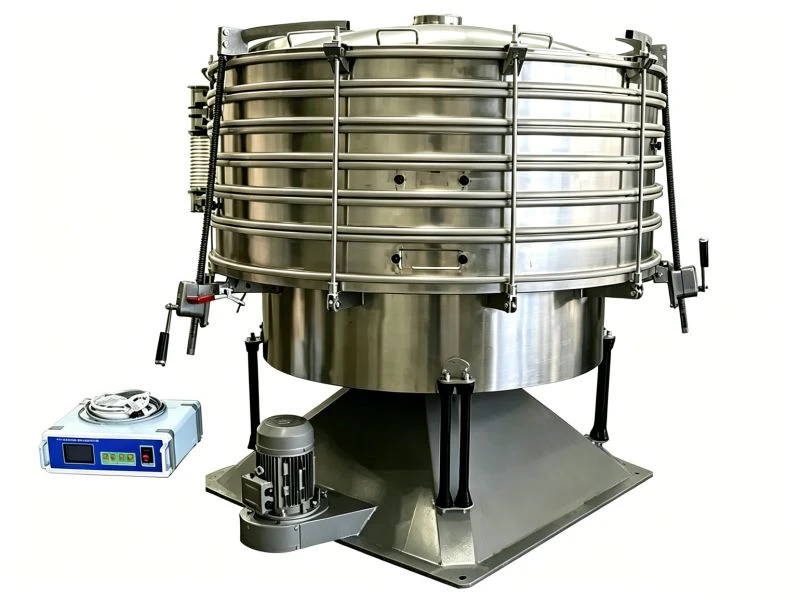
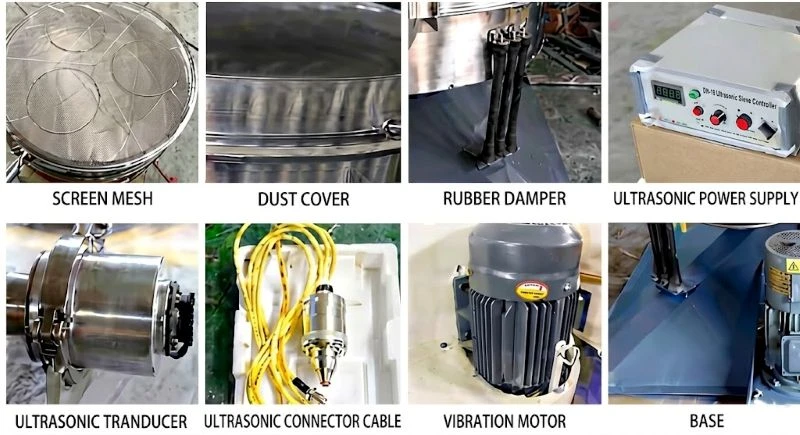
Ultrasonic Tumbler Screen Details
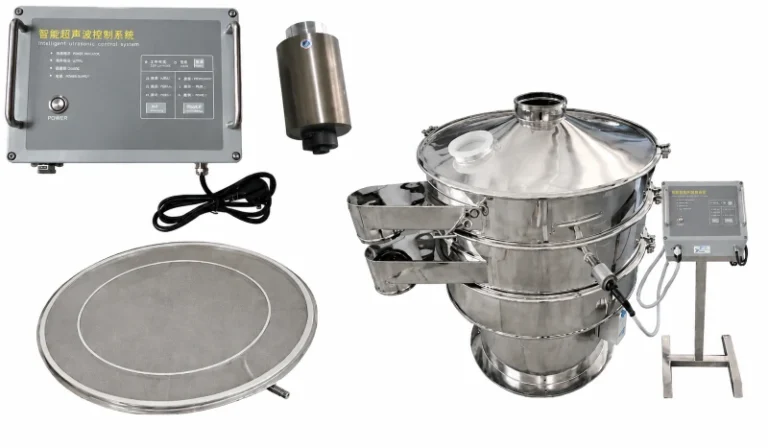
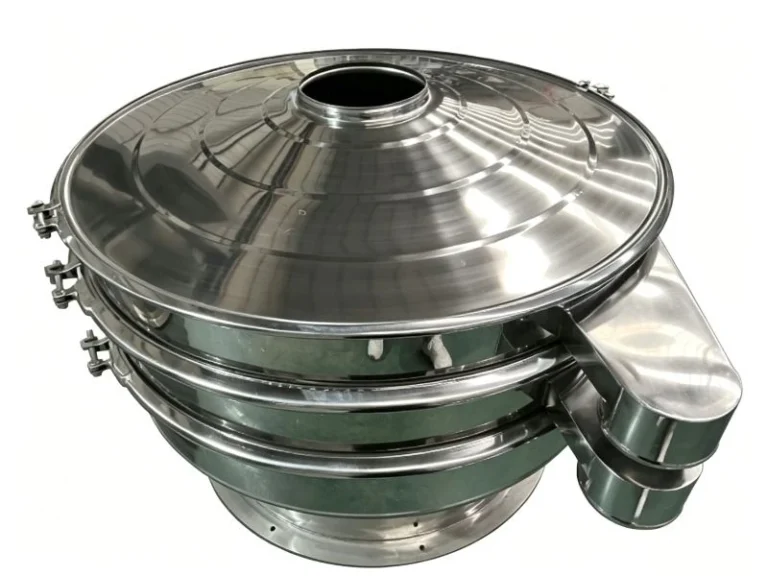
Screen Mesh: Circular, fine-mesh stainless steel screen for ultra-fine material screening
Dust Cover: Polished stainless steel lid; provides a dust-tight seal to prevent leakage
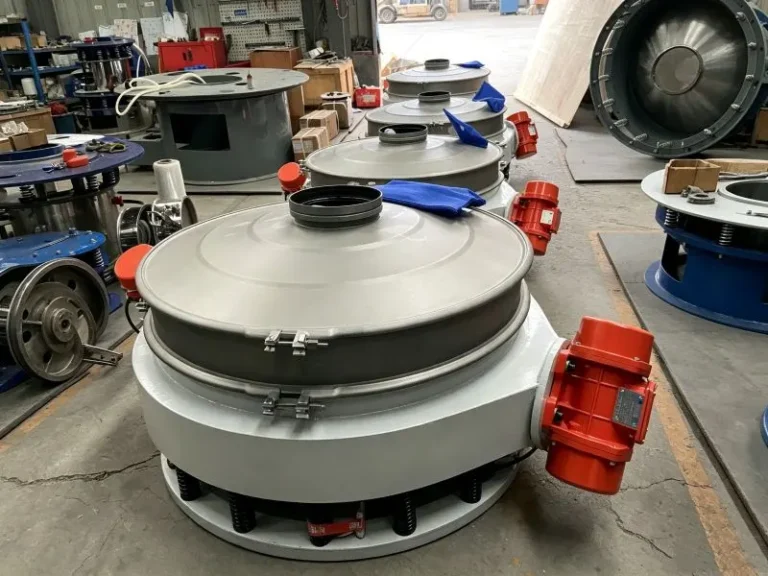
Rubber Shock-Absorbing Mounts: Rubber mounts with metal bases; dampen vibration, reduce noise, and prevent shifting
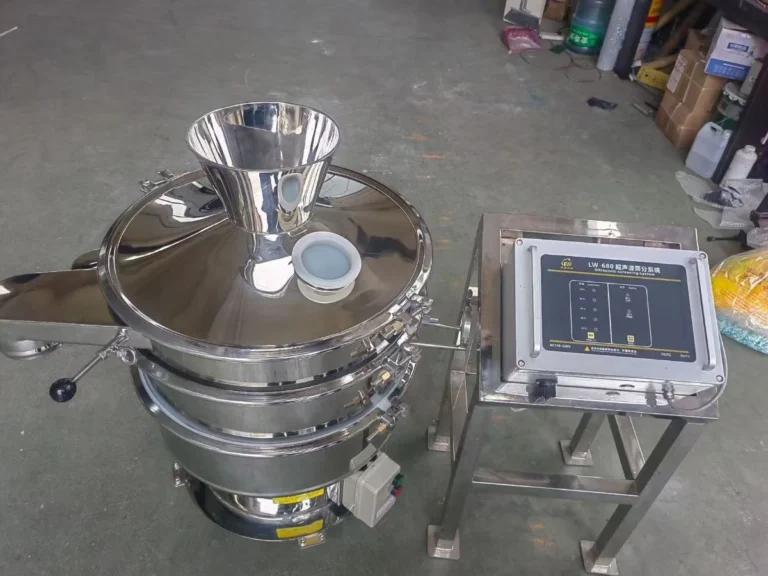
Ultrasonic Controller: Adjusts ultrasonic power and frequency; manages anti-clogging vibration
Ultrasonic Transducer: Stainless steel flanged unit; converts electrical signals into high-frequency ultrasonic waves to clear the screen mesh
Ultrasonic Connection Cable: Specialized yellow shielded cable; transmits ultrasonic power; vibration-resistant and interference-resistant
Vibration Motor: Industrial vertical vibration motor; provides primary rotary vibration power to drive material classification
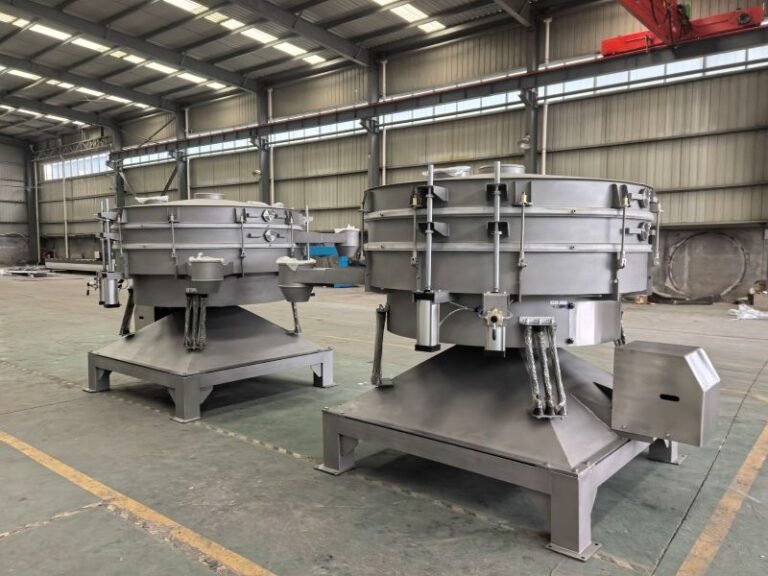
Base: Heavy-duty, powder-coated steel frame; supports the entire unit and features designated mounting points for shock absorbers
Ultrasonic Tumbler Screen Features
1. 3D Oscillating Screening Structure
Simulates manual screening patterns, causing material to spread laterally and distribute rotationally across the screen surface with low-impact rolling; effectively enhances the dispersion capability for ultra-fine powders.
2. Ultrasonic Anti-Clogging System
Continuous high-frequency vibration (36–38 kHz) applied to the screen mesh breaks up agglomerates and prevents mesh blinding, maintaining consistent permeability; ideal for ultra-fine powders (200 mesh and finer), powders prone to agglomeration, and materials with electrostatic properties.
3. High-Stability Continuous Operation
Significantly reduces the frequency of downtime for mesh cleaning, resulting in more stable screening efficiency and markedly improved batch-to-batch consistency.
4. Easy Maintenance
Features an independent ultrasonic system and a pneumatic cylinder lifting mechanism, making screen handling and maintenance quick and effortless.
Ultrasonic Tumbler Screen Video
Customer Feedback
After two weeks of operation, the customer provided interim feedback: “The tumbler motion significantly improved material dispersion, and the ultrasonic system completely eliminated mesh clogging.”
Mesh clogging issues: Virtually eliminated
Continuous runtime: Increased to 6–8 hours of stable operation
Screening efficiency: Improved by approximately 30%
Product consistency: Significantly improved
Frequency of downtime for mesh cleaning: Reduced by approximately 70%
The customer specifically emphasized: “This is the first time we can run 325-mesh quartz powder continuously without interruption.”
Conclusion
This solution upgrades the traditional “single-mode vibration screening” to a composite screening method combining “multi-dimensional motion” and an “ultrasonic anti-clogging system.” For typical ultra-fine powders that are difficult to screen—such as 200-mesh or 325-mesh quartz powder—this approach delivers superior stability, reduced maintenance costs, enhanced particle size control, and higher production output.
If you are facing challenges such as screen blinding, unstable throughput, or inconsistent particle size control during the screening of ultra-fine powders with a vibratory separator, our technical team can provide a tailored solution based on your material characteristics and process requirements. We invite you to contact us to discuss your project and obtain an ultrasonic tumbler screening solution customized to your specific production needs.