
Vibrating Sieving Machine for Industrial Powder Screening
Yuanjing vibrating screen equipment is suitable for industries such as food, pharmaceuticals, chemicals, metal powders, and mining. It supports a variety of screen mesh sizes, offers customizable designs, and is capable of continuous operation to meet the demands of various demanding screening applications. Whether you need ultra-fine powder screening, anti-clogging screening solutions, or high-capacity material classification, our equipment helps manufacturers improve product quality, reduce material waste, and enhance processing efficiency. We supply globally, including fast delivery to the USA, Europe, and Southeast Asia.
- High screening accuracy and stable throughput
- Efficient separation of powders, granules, and slurries
- Stainless steel and sanitary-grade options available
- Custom screening solutions for various industries
- Fast delivery and global technical support
- Yuanjing Machinery provides professional screening solutions at highly competitive factory prices.
What Is a Vibrating Sieving Machine?
The vibrating sieving machine is specially designed to improve the quality of your powder, granule or liquid products for inspection screening of your products. It is ideal for screening incoming ingredients and final production inspection of finished powders. By increasing the number of sieve layers, the product is sieved with different finenesses to achieve a precise particle size distribution.
How a Vibrating Sieving Machine Works
Material Feeding
Raw materials are fed into the machine through an inlet at the top or side.
Vibration Generation
A vibration motor creates high-frequency vibration in multiple directions (usually vertical and horizontal).
Particle Stratification
Materials are spread evenly across the screen surface. Smaller particles move downward while larger particles stay on top
Screen Separation
Fine particles pass through the mesh openings, while oversized particles are discharged separately.
Continuous Output
Separated materials are collected at different outlets for further processing or packaging.
This continuous operation allows high efficiency and stable performance in industrial production lines.
Types of Vibrating Sieving Machines
Vibrating sieving machines are used to separate powders, granules, and bulk materials by particle size. Different screening structures are designed for different materials, capacities, and accuracy requirements. Choosing the right model helps improve screening efficiency, reduce material loss, and maintain stable production.
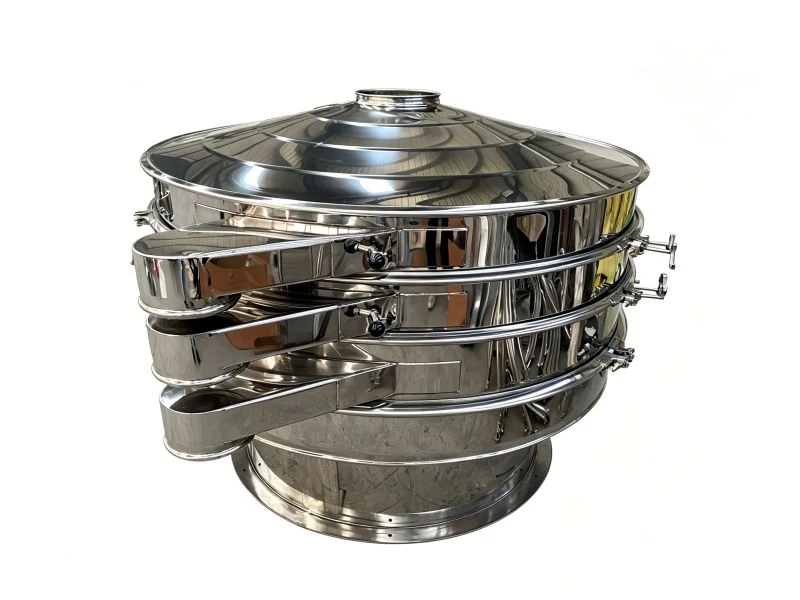
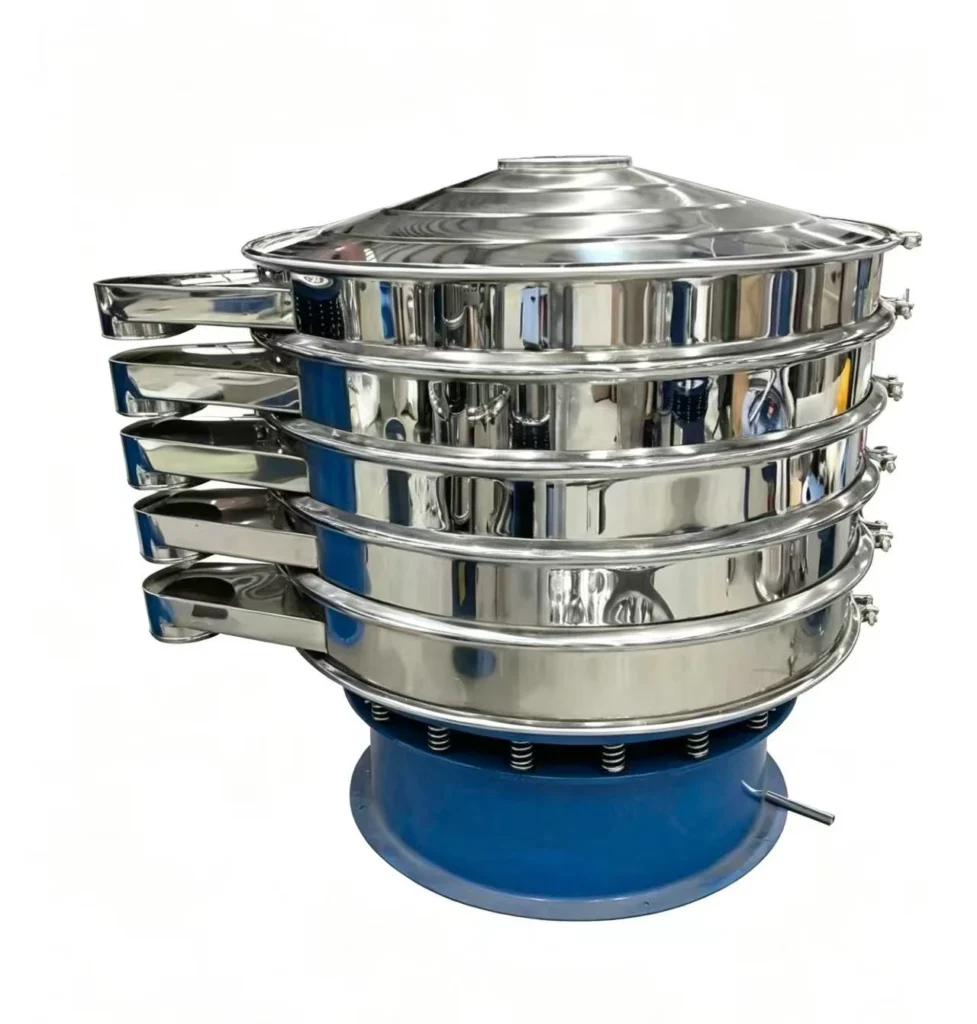
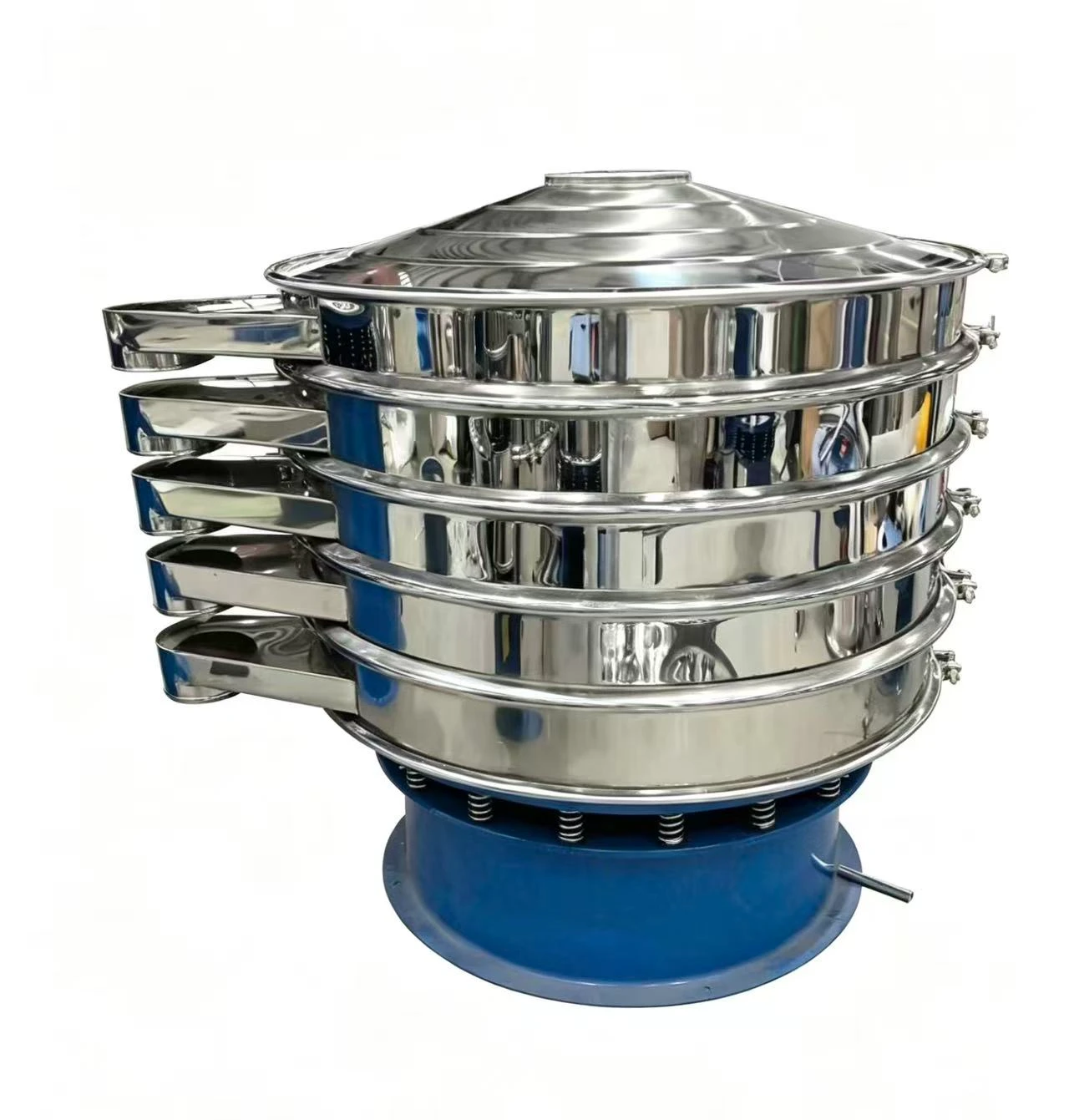
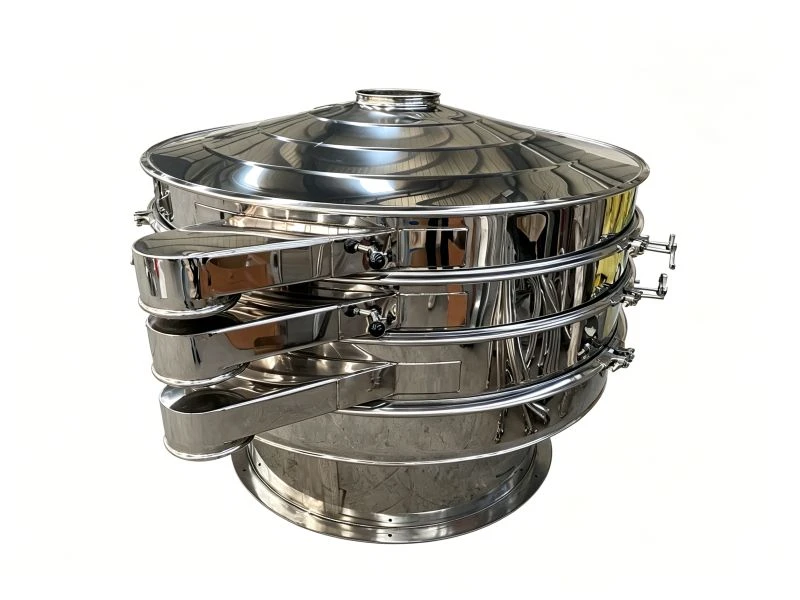
Rotary Vibrating Sieving Machine
Rotary vibrating sieving machines are widely used for fine powder,granule screening and liquid sifting solutions. The circular vibration motion provides stable material flow and high screening precision. Suitable for multi-layer classification and fine impurity removal.
Features: Compact structure, High screening accuracy, Multi-deck separation, Easy mesh replacement, Suitable for continuous operation
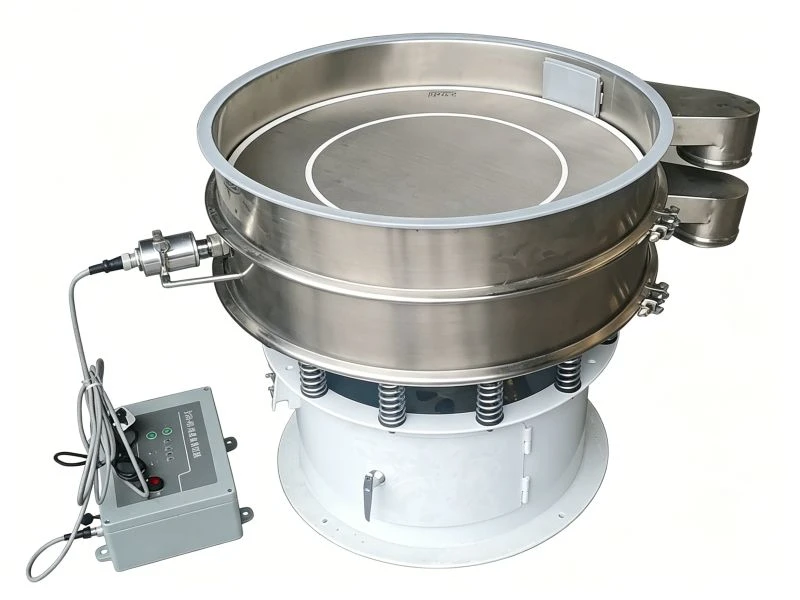
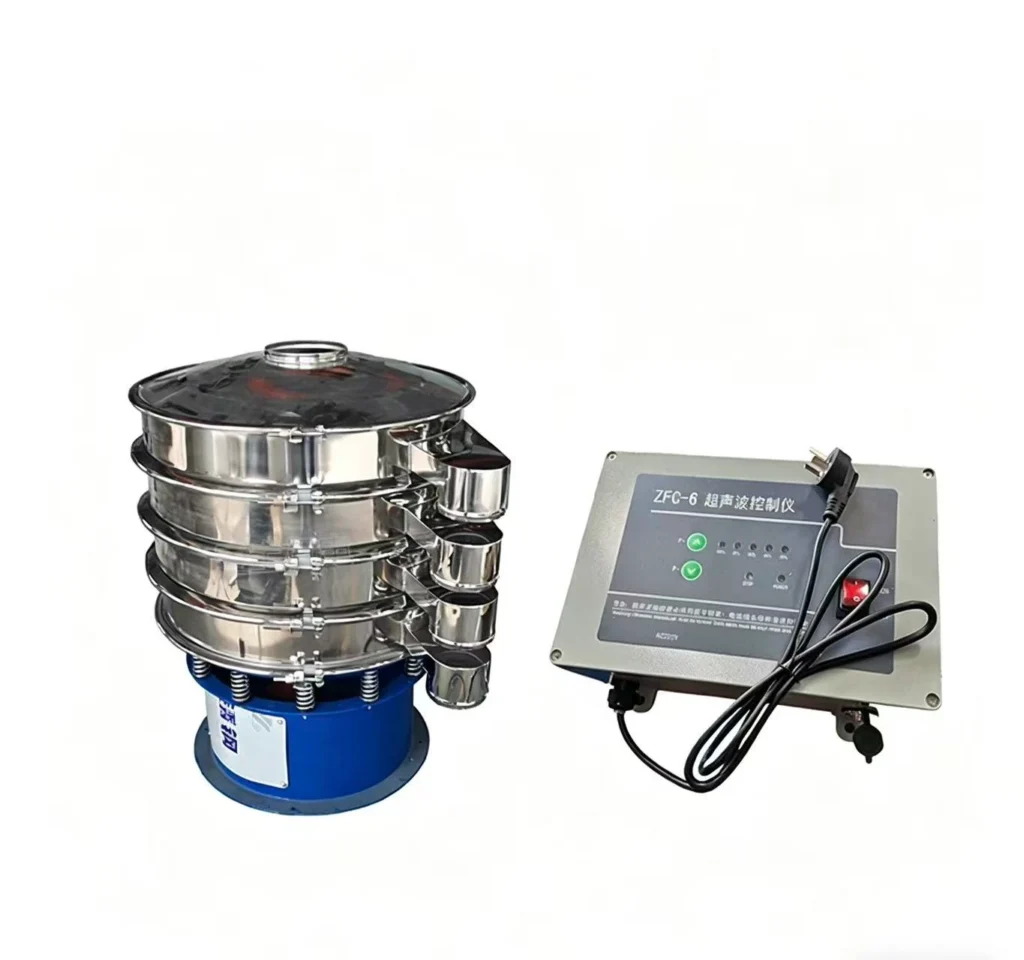
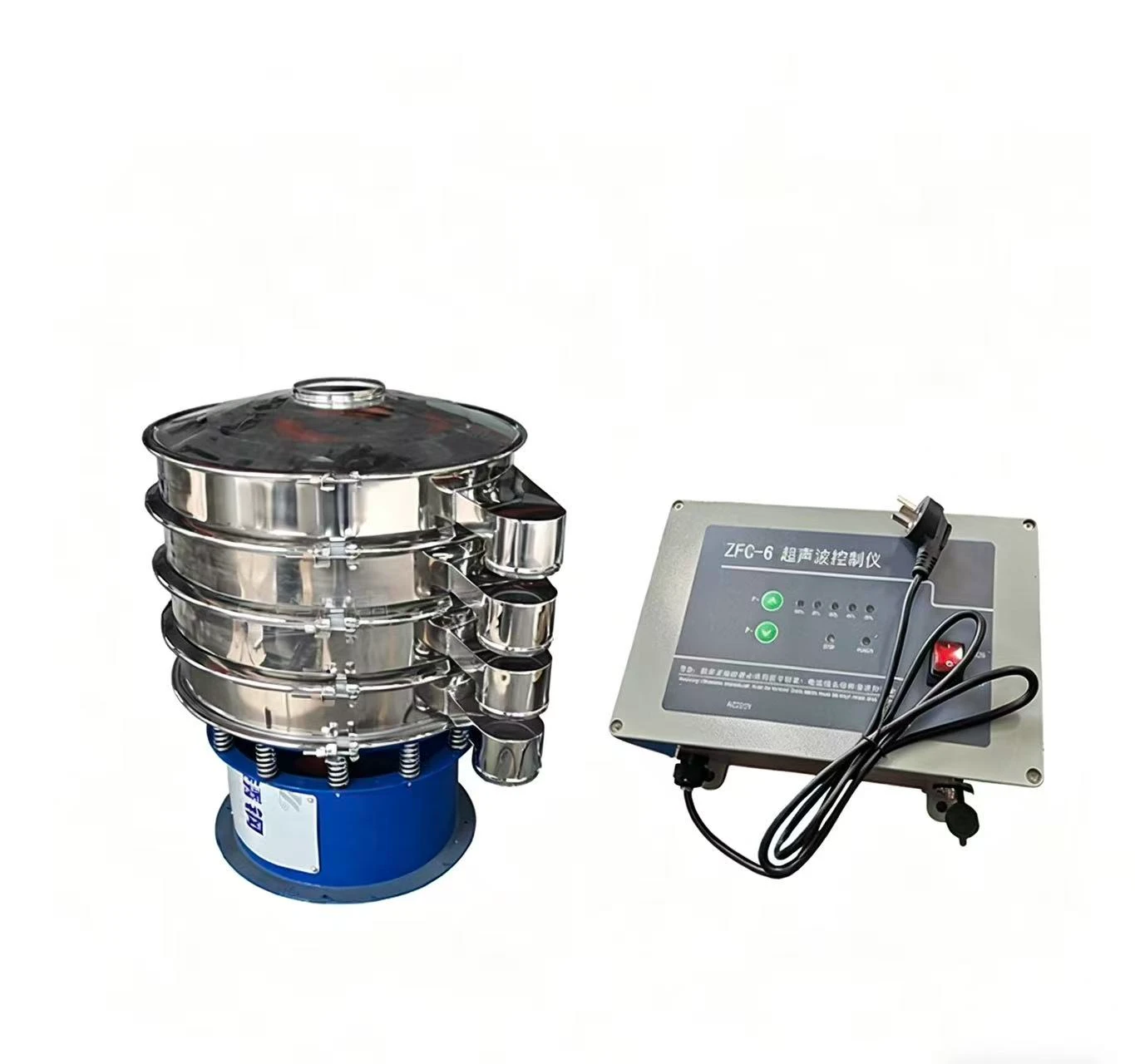
Ultrasonic Vibrating Sieving Machine
Ultrasonic vibrating sieving machines are designed for ultra-fine powders and difficult screening materials. The ultrasonic system reduces mesh blockage and improves the passing rate for lightweight or static materials.
Features: Prevents mesh clogging, Improves fine powder screening efficiency, Suitable for high-mesh screening, Stable screening performance
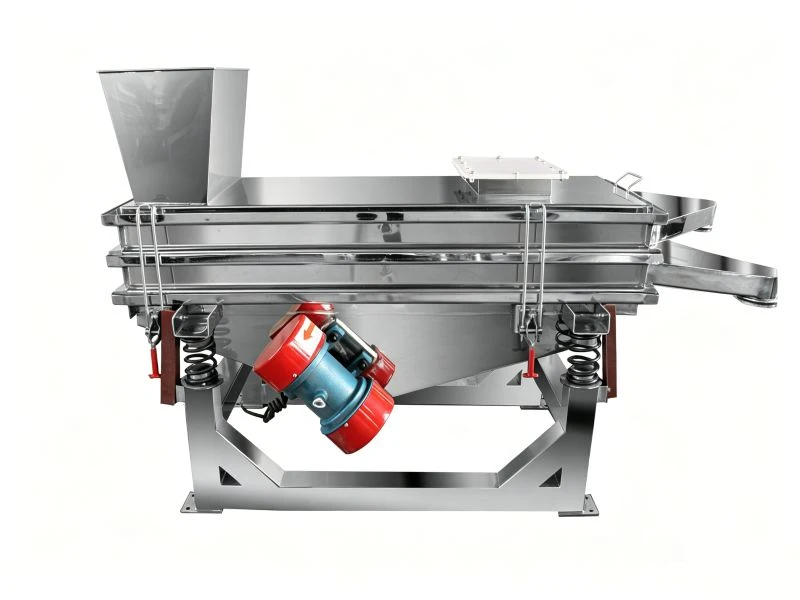
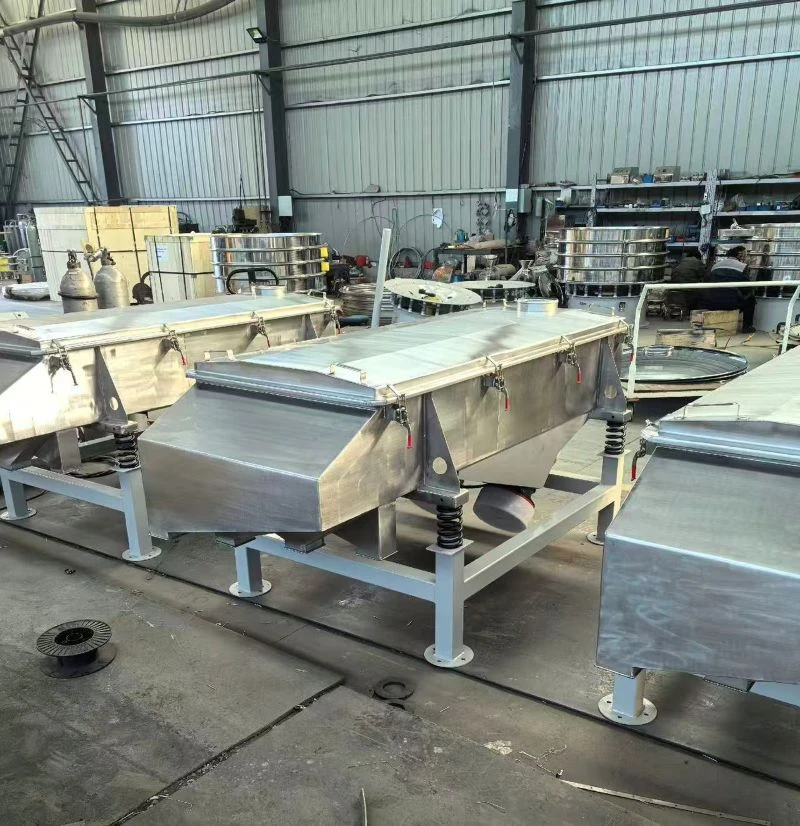
Linear Vibrating Sieving Machine
Linear vibrating sieving machines are commonly used for large-capacity screening and grading. Materials move forward in a straight line, making the machine suitable for bulk processing and coarse separation.
Features: Large handling capacity, Continuous discharge, Simple maintenance, Suitable for larger particle sizes
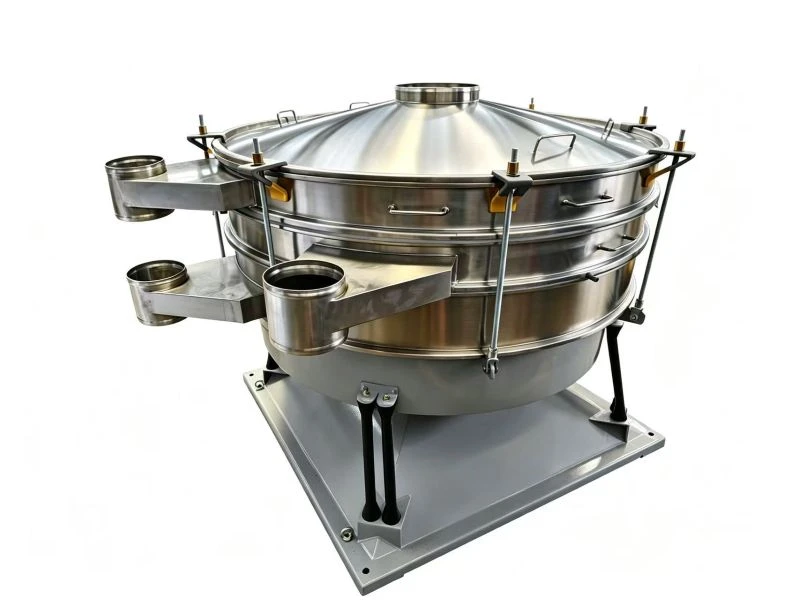
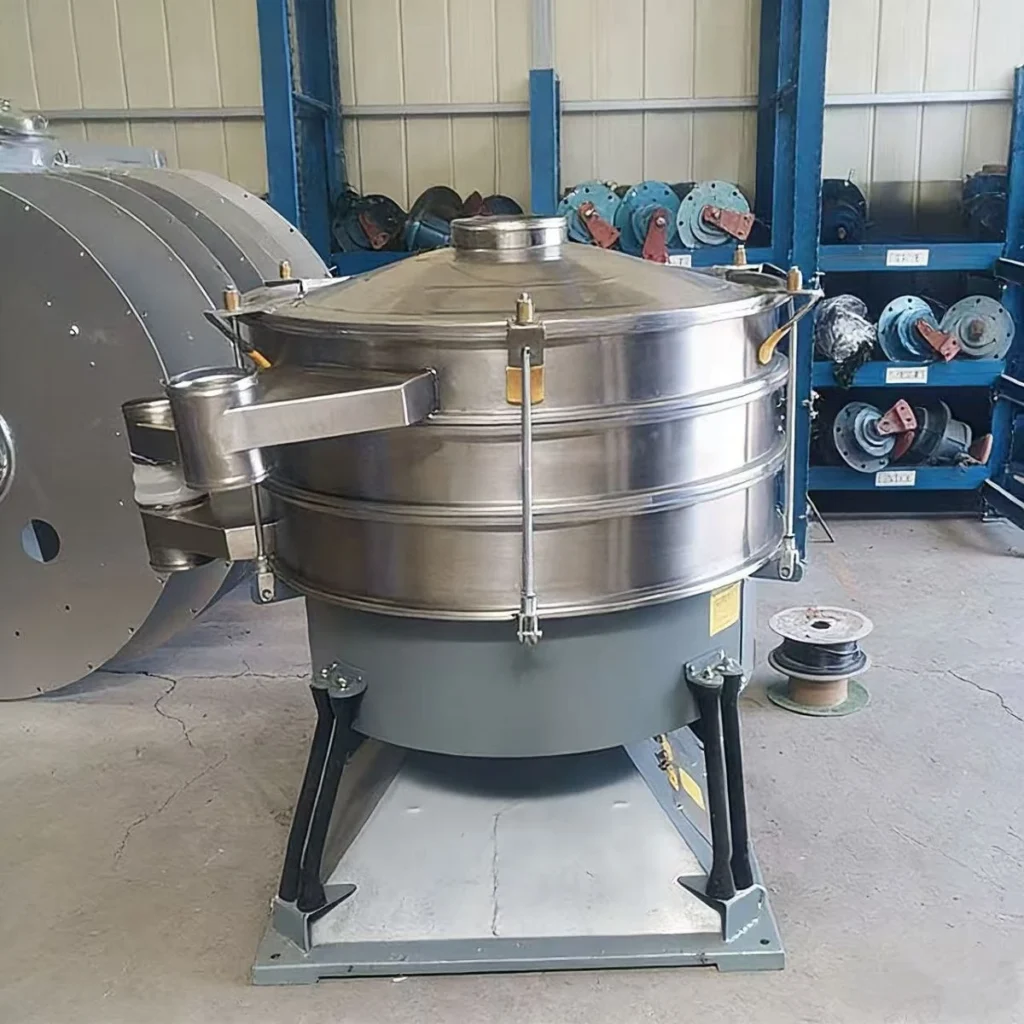
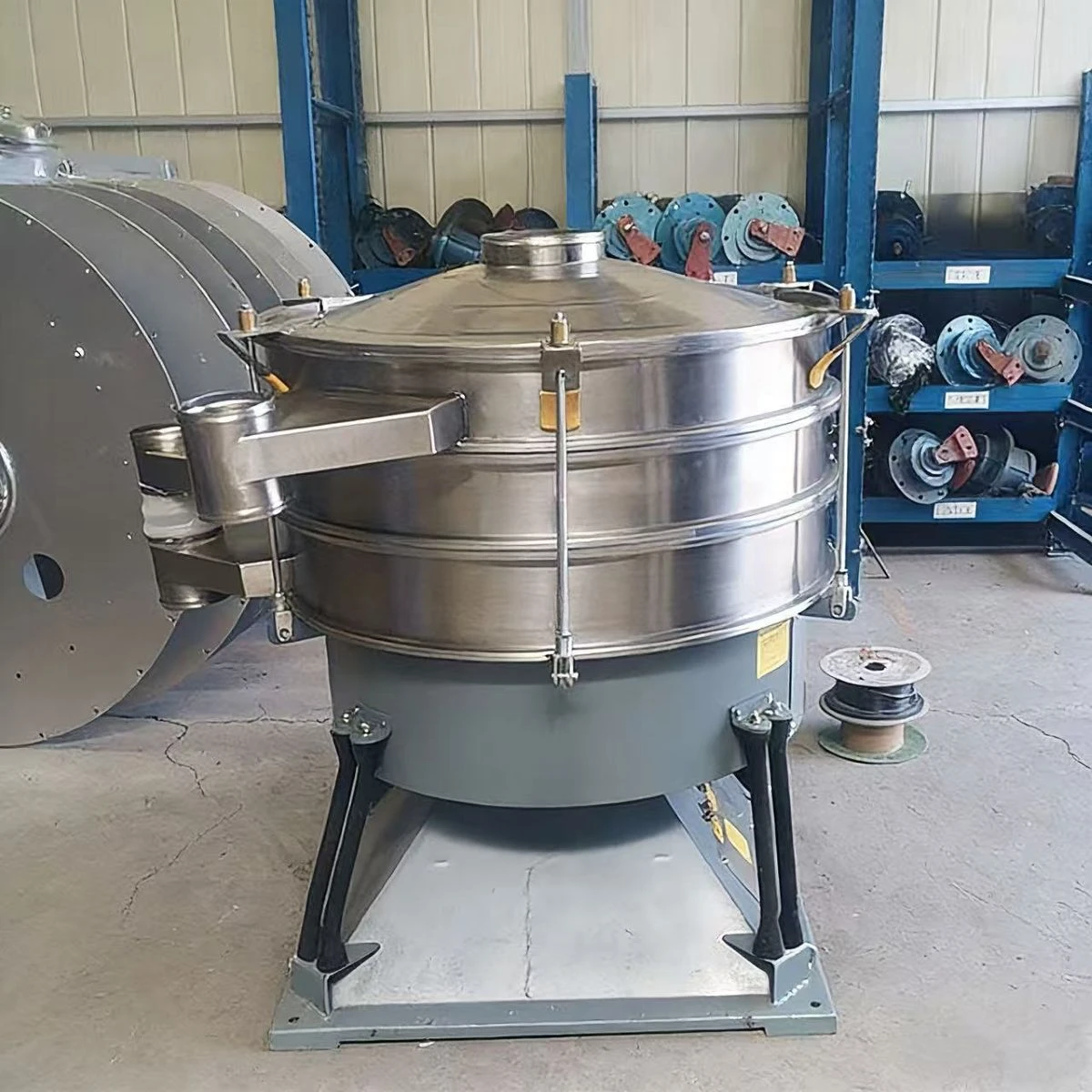
Tumbler Screening Machine
Tumbler screening machines are suitable for precision grading and high-purity separation. The screening motion is similar to manual sieving, which helps protect fragile materials and improve classification accuracy.
Features: High screening precision, Gentle material handling, Low material damage, Effective fine particle separation
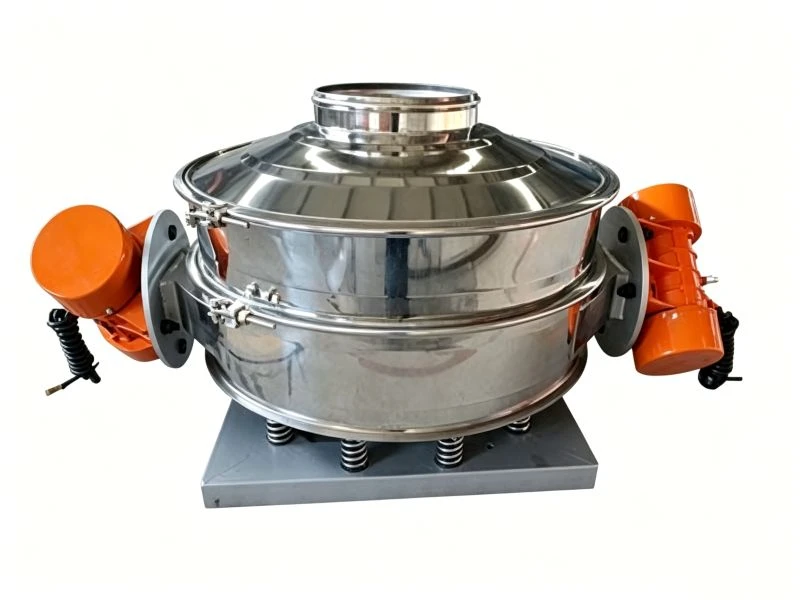
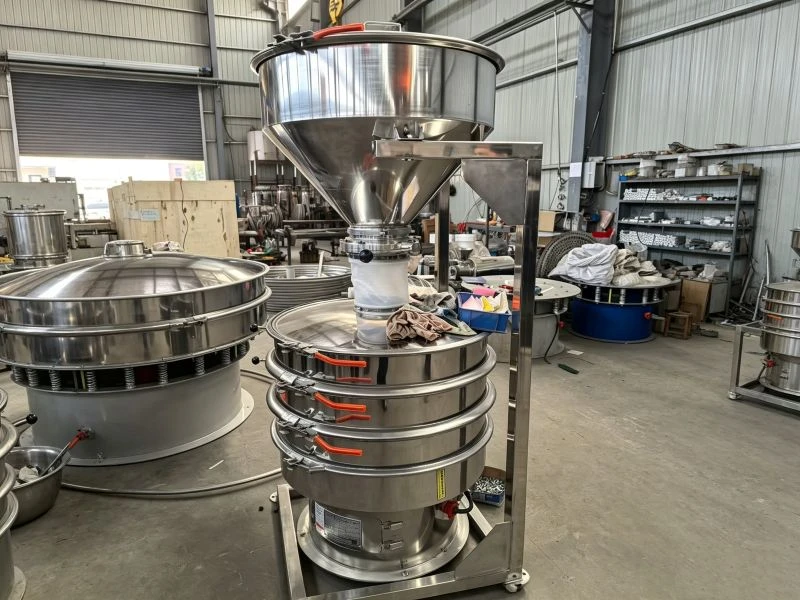
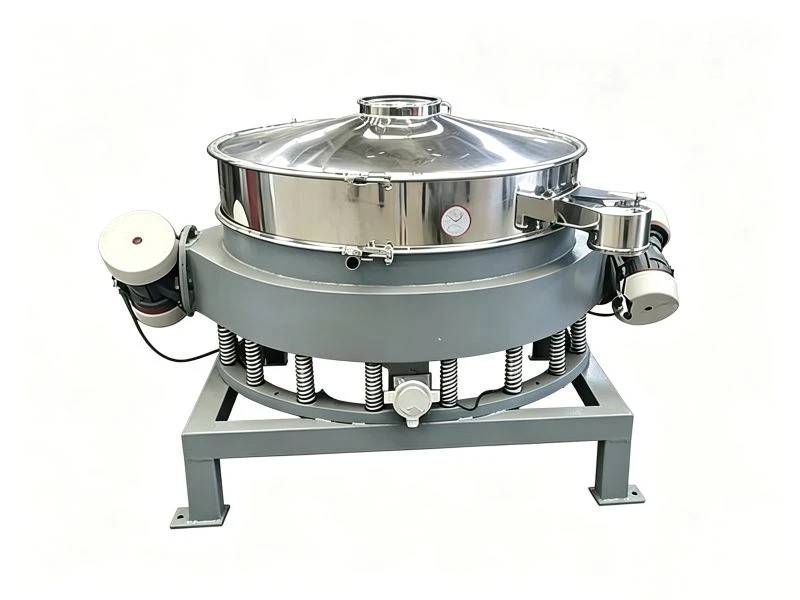
Inline vibratory screening machine
Inline vibratory screen machines are designed for rapid screening and impurity removal. The straight-through discharge structure is suitable for production lines requiring fast material flow.
Features: Large discharge outlet, High processing efficiency, Compact installation, Easy integration into production lines
Advantages
Vibrating sieving machines are designed for separating, grading, and filtering materials by particle size in continuous production processes. Their performance depends on stability, screening precision, and adaptability to different materials and working conditions.
High Screening Accuracy
Stable vibration motion ensures consistent particle separation and improves product uniformity.
Custom Mesh Sizes Available
Different mesh specifications can be configured to match material size requirements.
Continuous Operation
Supports long-time running with steady throughput in industrial production lines.
Durable Structure
Built with reinforced frames and wear-resistant materials for long service life.
Low Maintenance Requirement
A simple mechanical structure reduces downtime and routine maintenance work.
Multiple Material Compatibility
Handles dry powder, granules, and some semi-wet materials depending on configuration.
Customization
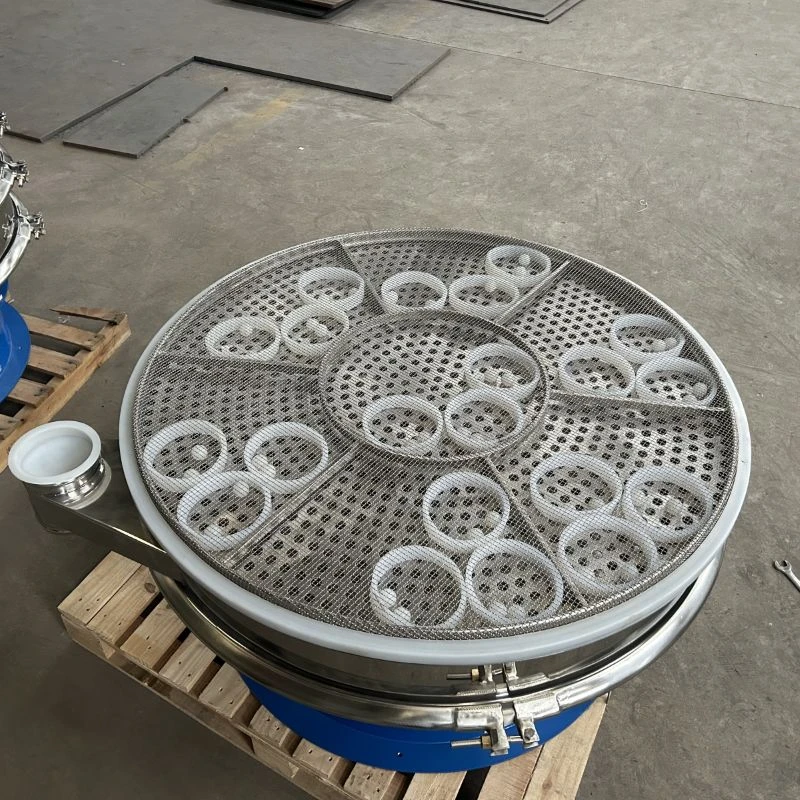 Bouncing Ball
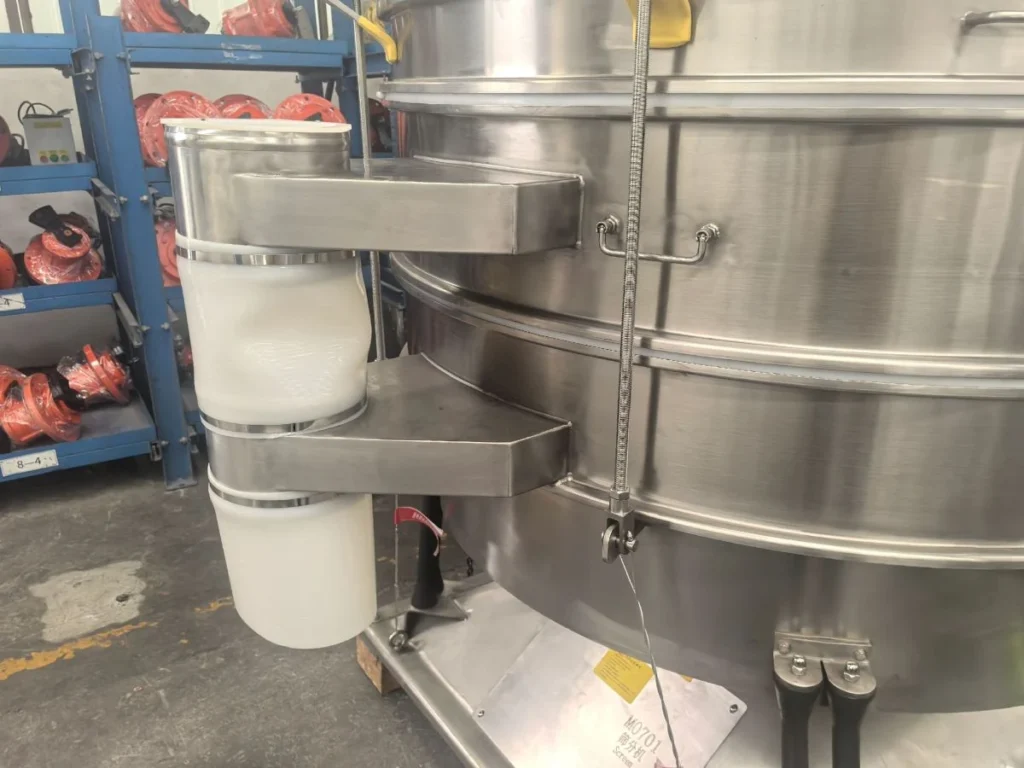 Discharge Port
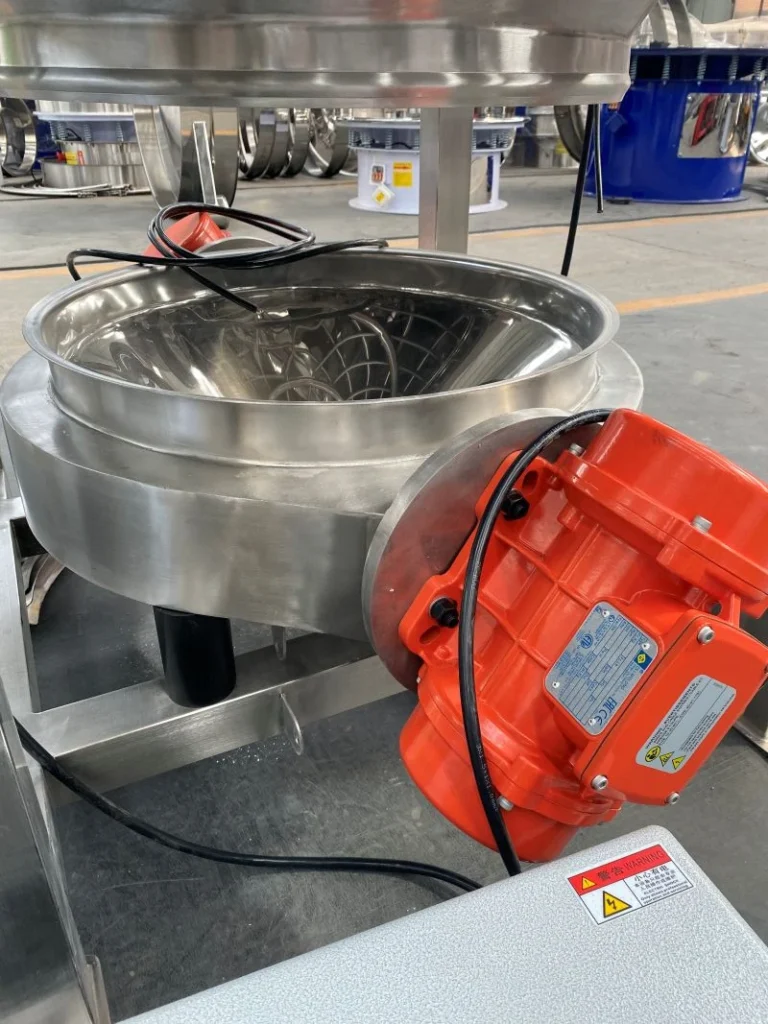 Motor
Motor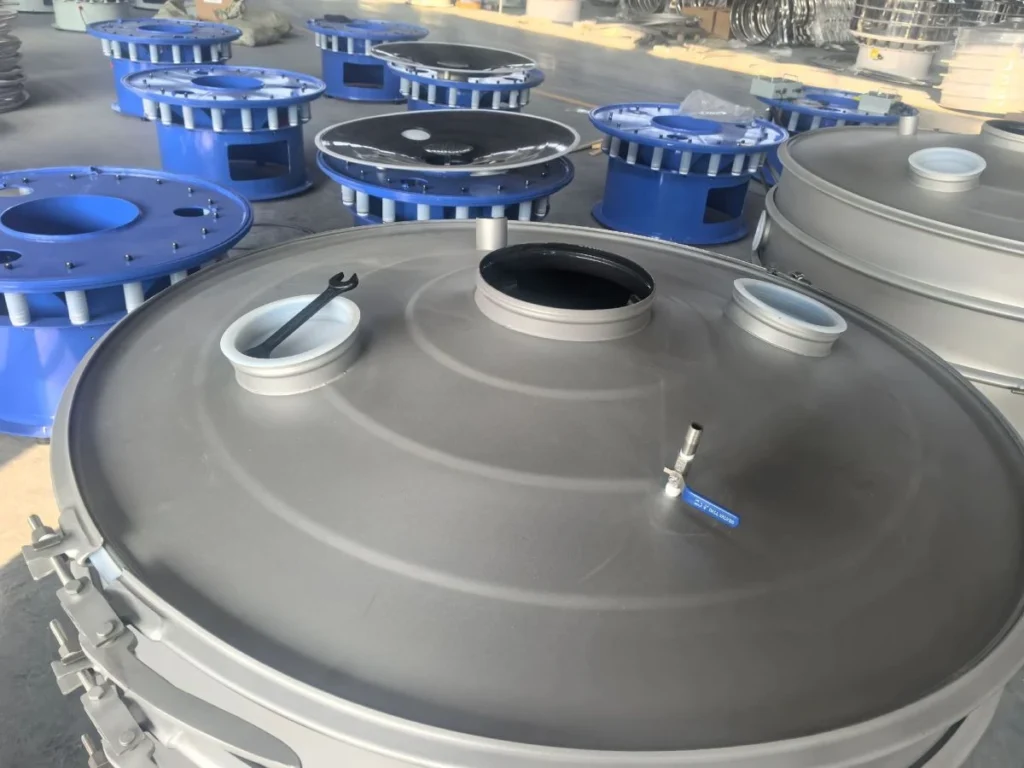 Observation Port
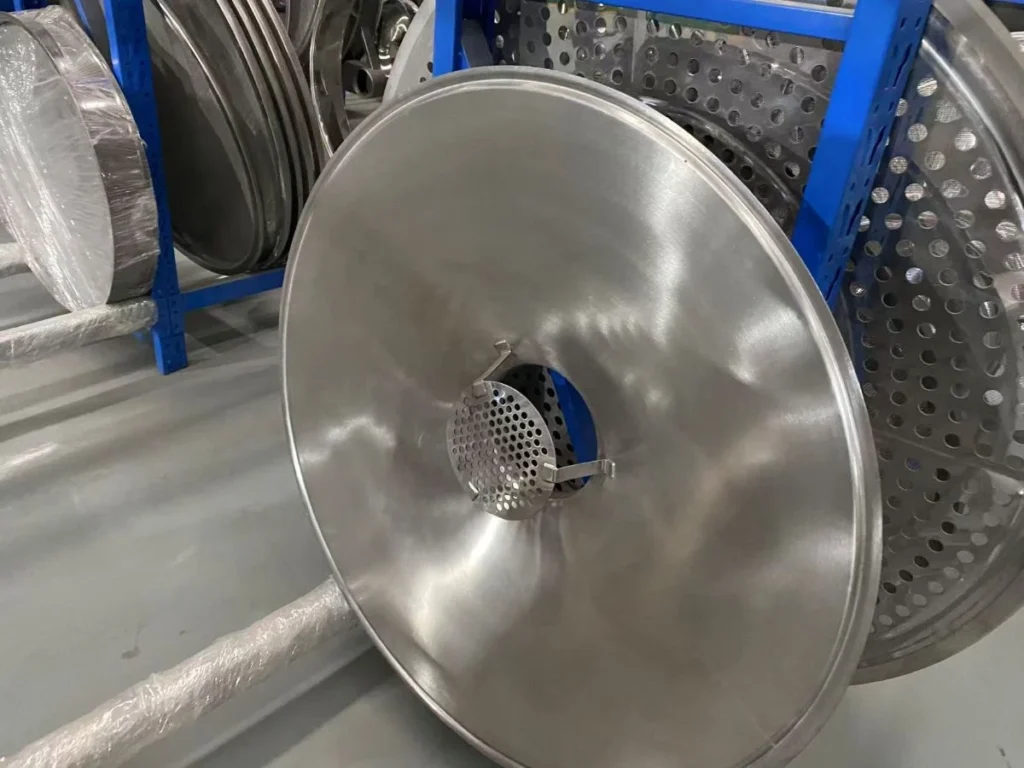 Top Cover
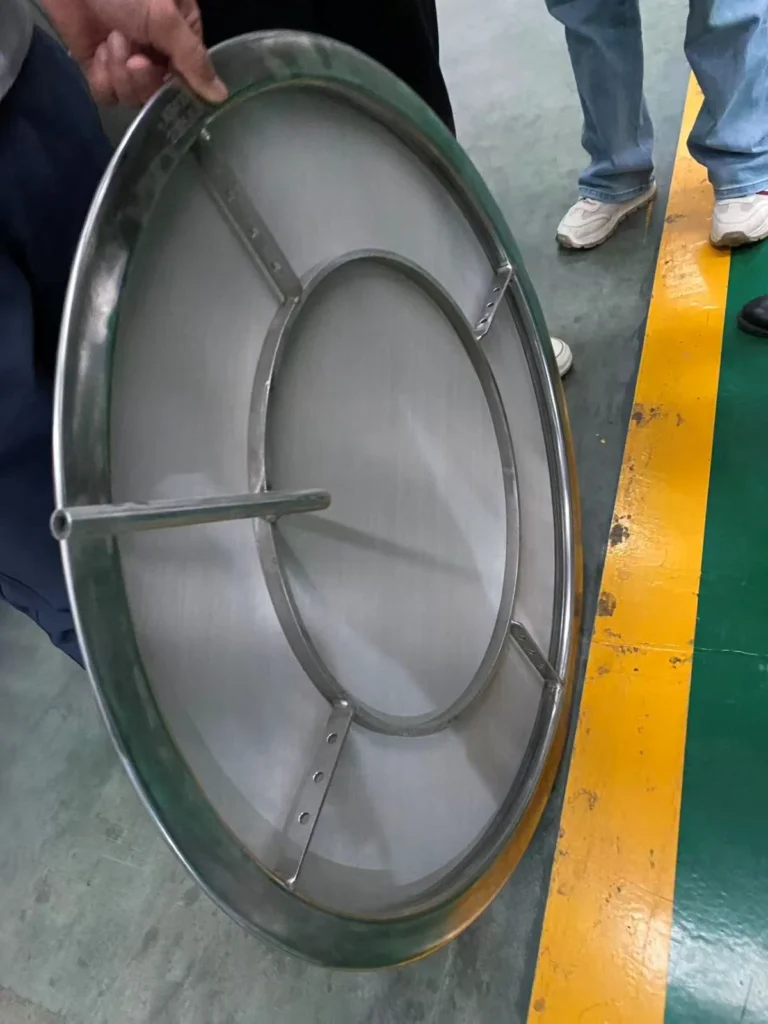 Ultrasonic Frame
Technical Specifications of Vibrating Sieving Machine
Below is a realistic specification table commonly used in industrial vibrating sieving machines (rotary vibro sifter / circular vibrating screen type). Values reflect typical engineering standards across food, chemical, pharmaceutical, and mineral industries.
- Machines under 800 mm in diameter are typically used for laboratory or small batch production.
- 1000–1500 mm models are the most widely used in industrial production lines.
- For fine powder below 200 mesh, ultrasonic systems are often required to prevent mesh clogging.
- In the food and pharmaceutical industries, SUS316L stainless steel + polished finish is the standard requirement.
- Multi-layer designs improve efficiency but require more stable feeding control to avoid overload.
| Parameter | Typical Range | Notes |
| Screen Diameter | 400 – 2000 mm | 600 / 800 / 1000 mm most common |
| Layers | 1 – 3 layers | Industrial standard configuration |
| Mesh Size | 2 – 500 mesh | Fine powder up to 600 mesh with ultrasonic system |
| Capacity | 50 – 5000 kg/h | Depends on material and mesh size |
| Motor Power | 0.18 – 4.0 kW | Larger size requires higher power |
| Material | SUS304 / SUS316L | SUS316L for food & pharma grade |
| Voltage | 110–480V | Customizable by region |
| Accuracy | 85% – 95% | Fine powder up to 600 mesh with an ultrasonic system |
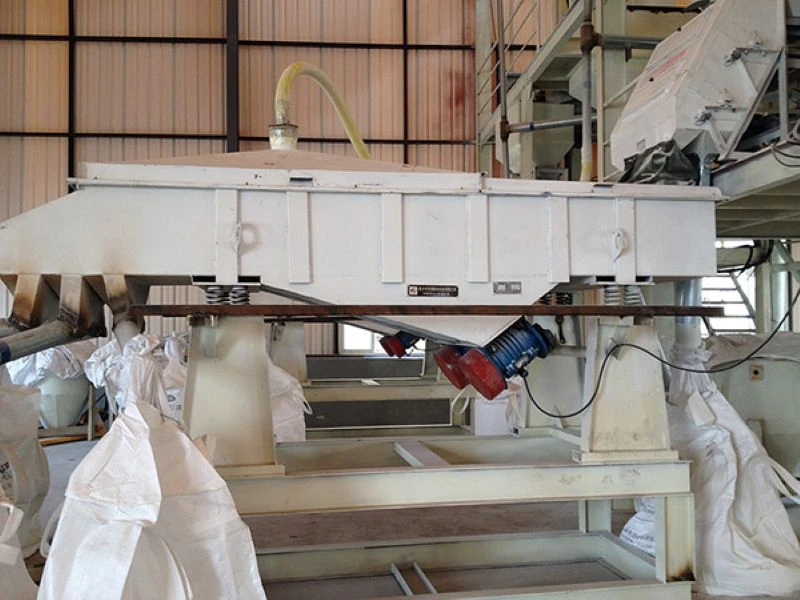
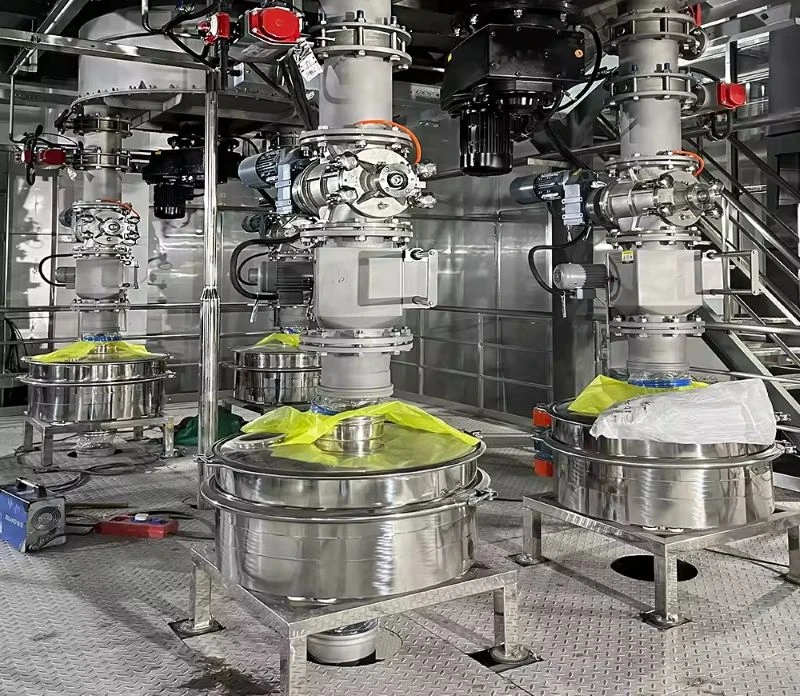
Application cases of different vibrating screens
Vibrating sieving machines are widely used in industries such as food, pharmaceuticals, chemicals, and agriculture for efficiently screening and grading materials including sesame seeds, starch, pepper powder, desiccated coconut, lithium battery powder and microcrystalline cellulose.
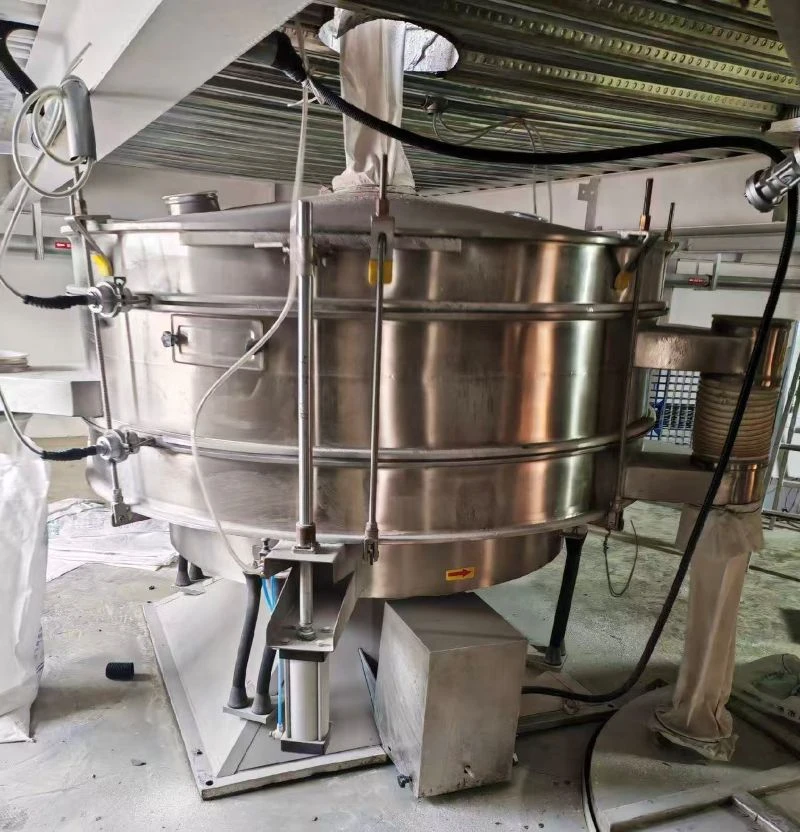
Common Screening Problems and Solutions for Vibrating Screens
Powder Leakage
Powder leakage is a common problem in food-grade and pharmaceutical vibrating screen applications, directly affecting product purity and yield.
Causes: Worn seals, loose screen frame, or improper assembly.
Solutions: Fully sealed stainless steel vibrating screen structure; Regularly replace seals and gaskets; Precision locking system for screen frame installation.
Low Screening Efficiency
Low capacity of vibrating screen equipment is usually caused by improper machine selection or unstable feeding conditions, especially on continuous production lines.
Causes: These include uneven material distribution, insufficient vibration force, or feed overload.
Solutions:Use a rotary vibrating screen for fine powder classification.Adjust the angle and amplitude of the vibrating motor to achieve a stable flow.
Screen Clogging
Fine materials such as flour, starch, milk powder, and chemical additives frequently cause screen clogging during continuous vibrating screen operation, reducing output and accuracy.
Causes: High moisture content, static electricity, and particle size close to the mesh size.
Solutions: Ultrasonic vibrating screen for ultrafine powder screening; Anti-clogging cleaning device (rubber balls or ultrasonic system); Selecting appropriate mesh size based on particle distribution; Pre-drying or improving material dispersion before feeding.
Uneven Material Flow
Uneven material distribution on the screen surface leads to unstable particle classification and reduced screening accuracy during powder separation.
Causes: Inhomogeneous feeding or incorrect vibration trajectory.
Solutions: Linear vibrating screen for uniform material movement; Material distributor to control feed direction; Optimize vibration angle and screening path.
Related Products
Rotary Vibrating Screen
Rotary Vibrating Screen | Vibro Sifter The rotary vibrating screen is designed for efficient separation of powders, granules, and liquids. It delivers stable performance, high screening accuracy, and reliable operation in continuous production. We offer flexible configurations, including multi-deck designs, ultrasonic systems, and food-grade materials to meet different processing requirements. YuanJing provides practical screening solutions…Inline Vibratory Screen
Inline Vibratory Screen for Continuous Production Lines Inline vibratory screens are built for continuous production lines, allowing powders and liquids to be screened directly in the pipeline. The compact design saves space while maintaining stable and accurate separation performance. They are widely used in food, pharmaceutical, and chemical processing. What is an inline vibratory screen?…Screw Conveyor
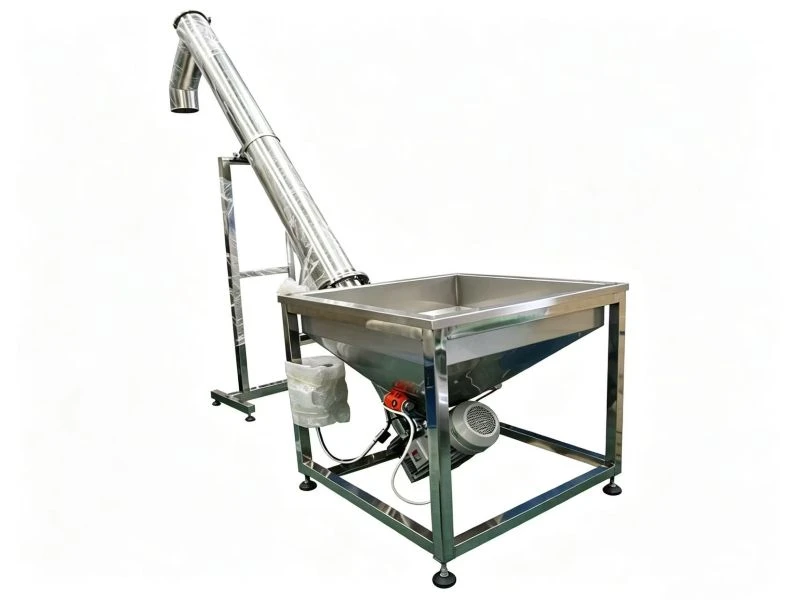
Industrial Screw Conveyor Systems for Bulk Material Handling Industrial screw conveyors are designed for continuous, efficient handling of bulk materials such as powders, granules, and semi-solids. With a compact structure and enclosed design, they ensure stable conveying performance, reduced dust emission, and low maintenance in various industrial applications. YuanJing provides customised screw conveyor solutions based…Vacuum Conveyor Feeder System
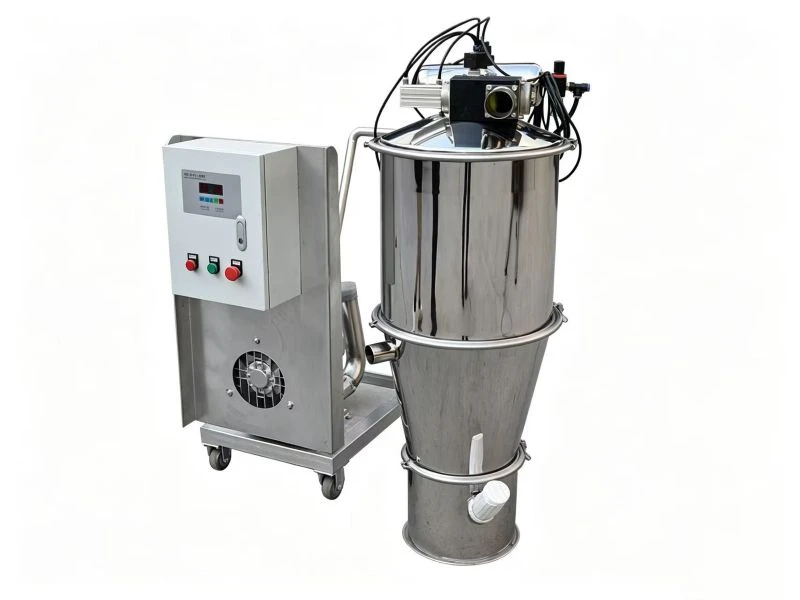
Industrial Vacuum Conveyor System Solutions for Powder & Bulk Materials Vacuum conveyor systems automatically transfer various materials into the hoppers of packaging machines, injection molding machines, and crushers. They can also feed mixed materials directly into mixers (such as V-type, 2D, and 3D mixers), significantly reducing manual labor and eliminating dust spillage during feeding. As…
Vibrating Screen and Conveyor Machine Manufacturer & Supplier
Built for precision screening, reliable performance, and flexible industrial applications,
Yuanjing rotary vibrating screens are trusted by customers worldwide.

Global Project Experience
Yuanjing products are exported to 50+ countries and regions, serving industries including food, chemicals, pharmaceuticals, mining, and new energy.
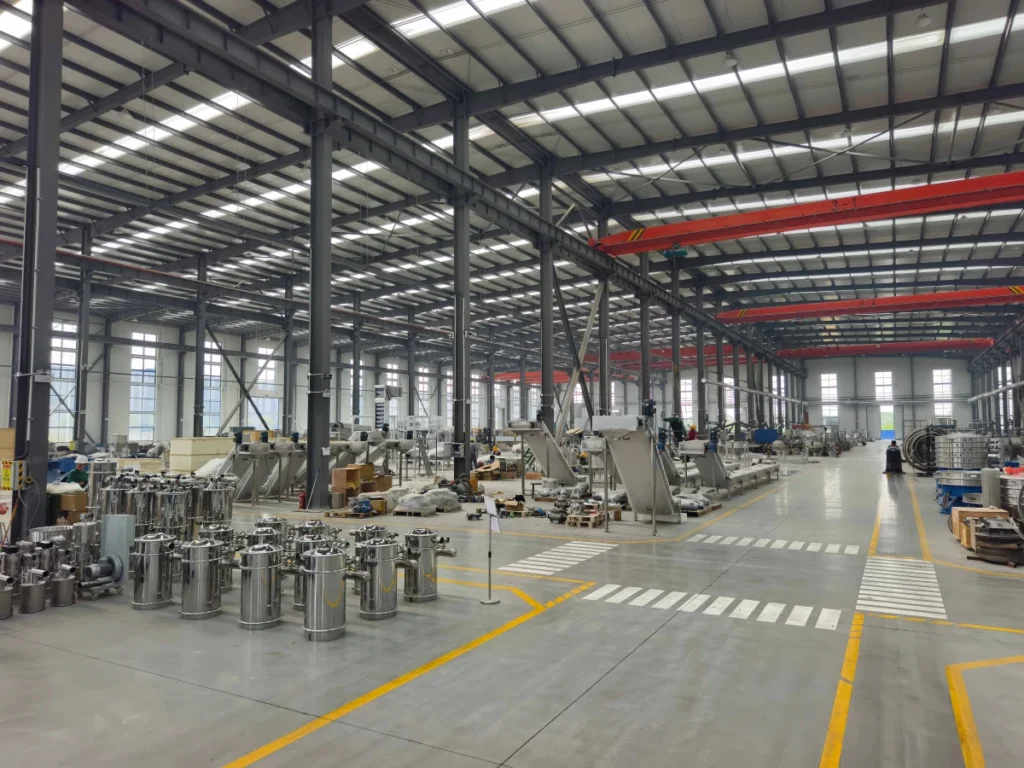
Strong Manufacturing Capability
Advanced production lines with laser cutting, CNC machining, automatic welding, and strict quality inspection ensure consistent product quality.
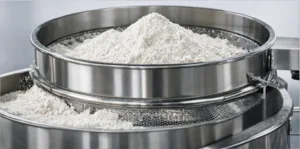
Accurate & Stable Separation
Optimized vibration design delivers even material flow, high screening accuracy, and stable long-term operation.
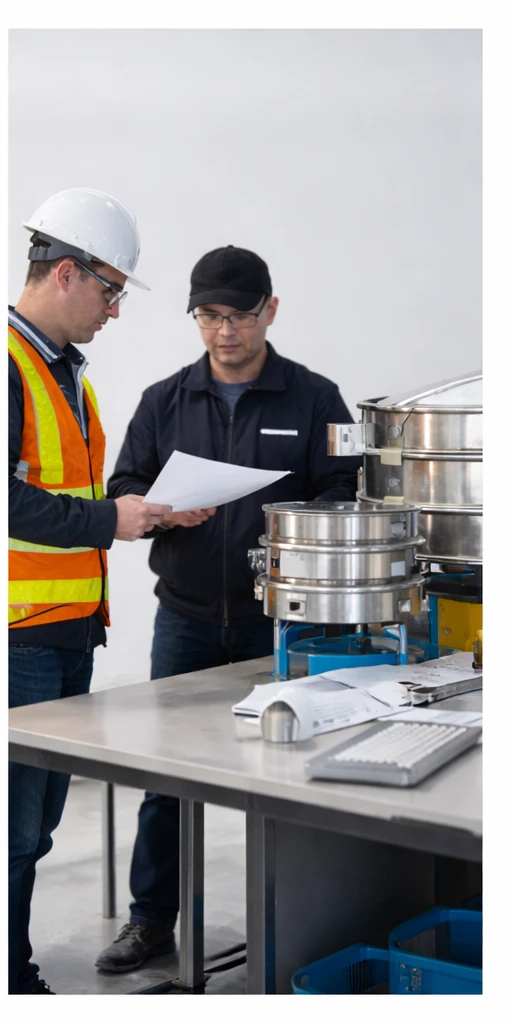
Customized Screening Solutions
Yuanjing offers flexible configurations in diameter, mesh size, deck layers, and material options to fit your exact process requirements.
FAQs
Get Custom Solution
We can provide customised screening and conveying equipment solutions tailored to different materials and production requirements.
Send us your requirements, and our team will provide the right solution and a fast quotation within 24 hours.